

Gesamtpreis (1 Artikel Artikel):
Versandziel:

julian mcclements (54 Ergebnisse)
Direkt zu den wichtigsten Suchergebnissen
Suchfilter
Produktart
- Alle Product Types
- Bücher (54)
- Magazine & Zeitschriften (Keine weiteren Ergebnisse entsprechen dieser Verfeinerung)
- Comics (Keine weiteren Ergebnisse entsprechen dieser Verfeinerung)
- Noten (Keine weiteren Ergebnisse entsprechen dieser Verfeinerung)
- Kunst, Grafik & Poster (Keine weiteren Ergebnisse entsprechen dieser Verfeinerung)
- Fotografien (Keine weiteren Ergebnisse entsprechen dieser Verfeinerung)
- Karten (Keine weiteren Ergebnisse entsprechen dieser Verfeinerung)
- Manuskripte & Papierantiquitäten (Keine weiteren Ergebnisse entsprechen dieser Verfeinerung)
Zustand Mehr dazu
Weitere Eigenschaften
- Erstausgabe (Keine weiteren Ergebnisse entsprechen dieser Verfeinerung)
- Signiert (Keine weiteren Ergebnisse entsprechen dieser Verfeinerung)
- Schutzumschlag (Keine weiteren Ergebnisse entsprechen dieser Verfeinerung)
- Angebotsfoto (18)
Sprache (2)
Gratisversand
Land des Verkäufers
Verkäuferbewertung
-

Meat Less: The Next Food Revolution (Copernicus Books)
Anbieter: Books From California, Simi Valley, CA, USA
Verkäuferbewertung 4 von 5 Sternen

paperback. Zustand: Acceptable. The binding is heavily worn. The copy is in otherwise clean condition.
-
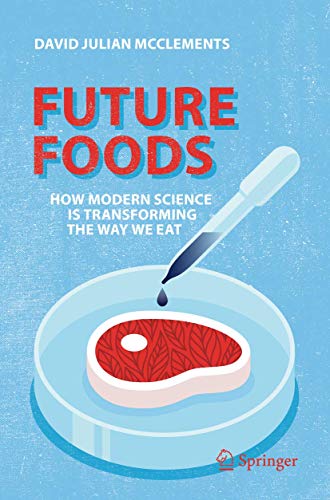
Future Foods: How Modern Science Is Transforming the Way We Eat
Anbieter: WorldofBooks, Goring-By-Sea, WS, Vereinigtes Königreich
Verkäuferbewertung 5 von 5 Sternen

EUR 20,38
EUR 6,44 Versand
Versand von Vereinigtes Königreich nach USAAnzahl: 1 verfügbar
In den WarenkorbPaperback. Zustand: Very Good. The book has been read, but is in excellent condition. Pages are intact and not marred by notes or highlighting. The spine remains undamaged.
-

Encapsulation Technologies and Delivery Systems for Food Ingredient and Nutraceuticals (Woodhead Publishing Series in Food Science, Technology and Nutrition)
Buch 137 von 282: Woodhead Publishing Series in Food Science, Technology and NutritionAnbieter: AwesomeBooks, Wallingford, Vereinigtes Königreich
Verkäuferbewertung 5 von 5 Sternen
EUR 25,91
EUR 5,74 Versand
Versand von Vereinigtes Königreich nach USAAnzahl: 2 verfügbar
In den WarenkorbHardcover. Zustand: Very Good. Encapsulation Technologies and Delivery Systems for Food Ingredient and Nutraceuticals (Woodhead Publishing Series in Food Science, Technology and Nutrition) This book is in very good condition and will be shipped within 24 hours of ordering. The cover may have some limited signs of wear but the pages are clean, intact and the spine remains undamaged. This book has clearly been well maintained and looked after thus far. Money back guarantee if you are not satisfied. See all our books here, order more than 1 book and get discounted shipping.
-
Encapsulation Technologies and Delivery Systems for Food Ingredient and Nutraceuticals (Woodhead Publishing Series in Food Science, Technology and Nutrition)
Buch 137 von 282: Woodhead Publishing Series in Food Science, Technology and NutritionAnbieter: Bahamut Media, Reading, Vereinigtes Königreich
Verkäuferbewertung 4 von 5 Sternen
EUR 25,91
EUR 8,03 Versand
Versand von Vereinigtes Königreich nach USAAnzahl: 2 verfügbar
In den WarenkorbHardcover. Zustand: Very Good. This book is in very good condition and will be shipped within 24 hours of ordering. The cover may have some limited signs of wear but the pages are clean, intact and the spine remains undamaged. This book has clearly been well maintained and looked after thus far. Money back guarantee if you are not satisfied. See all our books here, order more than 1 book and get discounted shipping.
-
Meat Less: The Next Food Revolution
Anbieter: Revaluation Books, Exeter, Vereinigtes Königreich
Verkäuferbewertung 5 von 5 Sternen
EUR 28,90
EUR 11,50 Versand
Versand von Vereinigtes Königreich nach USAAnzahl: 2 verfügbar
In den WarenkorbPaperback. Zustand: Brand New. 268 pages. 9.25x6.10x0.57 inches. In Stock.
-
Future Foods: How Modern Science Is Transforming the Way We Eat
Anbieter: Majestic Books, Hounslow, Vereinigtes Königreich
Verkäuferbewertung 4 von 5 Sternen
EUR 35,31
EUR 7,47 Versand
Versand von Vereinigtes Königreich nach USAAnzahl: 1 verfügbar
In den WarenkorbZustand: New. pp. 400.
-

Meat Less
Anbieter: PBShop.store UK, Fairford, GLOS, Vereinigtes Königreich
Verkäuferbewertung 4 von 5 Sternen
EUR 47,86
EUR 4,78 Versand
Versand von Vereinigtes Königreich nach USAAnzahl: 3 verfügbar
In den WarenkorbPAP. Zustand: New. New Book. Shipped from UK. Established seller since 2000.
-
PAP. Zustand: New. New Book. Shipped from UK. Established seller since 2000.
-
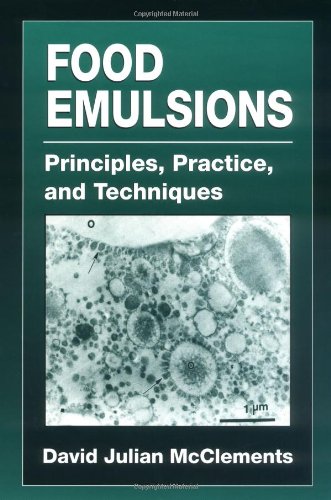
Food Emulsions: Principles, Practice, and Techniques
Anbieter: ThriftBooks-Dallas, Dallas, TX, USA
Verkäuferbewertung 5 von 5 Sternen
Hardcover. Zustand: Very Good. No Jacket. Former library book; May have limited writing in cover pages. Pages are unmarked. ~ ThriftBooks: Read More, Spend Less.
-

How to be a Successful Scientist: A Guide for Graduate Students, Postdocs, and Professors
Anbieter: Revaluation Books, Exeter, Vereinigtes Königreich
Verkäuferbewertung 5 von 5 Sternen
EUR 52,24
EUR 11,50 Versand
Versand von Vereinigtes Königreich nach USAAnzahl: 2 verfügbar
In den WarenkorbPaperback. Zustand: Brand New. 300 pages. 9.25x6.10x9.25 inches. In Stock.
-

How to Be a Successful Scientist: A Guide for Graduate Students, Postdocs, and Professors
Anbieter: Revaluation Books, Exeter, Vereinigtes Königreich
Verkäuferbewertung 5 von 5 Sternen
EUR 50,62
EUR 14,37 Versand
Versand von Vereinigtes Königreich nach USAAnzahl: 2 verfügbar
In den WarenkorbHardcover. Zustand: Brand New. 300 pages. 9.25x6.10x9.21 inches. In Stock.
-
Future Foods: How Modern Science Is Transforming the Way We Eat
Anbieter: Revaluation Books, Exeter, Vereinigtes Königreich
Verkäuferbewertung 5 von 5 Sternen
EUR 59,85
EUR 14,37 Versand
Versand von Vereinigtes Königreich nach USAAnzahl: 1 verfügbar
In den WarenkorbPaperback. Zustand: Brand New. 395 pages. 9.25x6.25x1.00 inches. In Stock.
-

Meat Less: The Next Food Revolution
Sprache: Englisch
Verlag: Springer, Berlin|Springer Nature Switzerland|Springer, 2024
ISBN 10: 3031239636 ISBN 13: 9783031239632
EUR 24,43
EUR 48,99 Versand
Versand von Deutschland nach USAAnzahl: Mehr als 20 verfügbar
In den WarenkorbKartoniert / Broschiert. Zustand: New.
-
Future Foods: How Modern Science Is Transforming the Way We Eat
Anbieter: Mooney's bookstore, Den Helder, Niederlande
Verkäuferbewertung 4 von 5 Sternen
Zustand: Very good.
-

Meat Less: The Next Food Revolution
Sprache: Englisch
Verlag: Springer Nature Switzerland, Springer Nature Switzerland Mär 2023, 2023
ISBN 10: 3031239636 ISBN 13: 9783031239632
Anbieter: buchversandmimpf2000, Emtmannsberg, BAYE, Deutschland
Verkäuferbewertung 5 von 5 Sternen
Taschenbuch. Zustand: Neu. Neuware -Reducing the amount of meat in our diet would have major environmental benefits, including reducing greenhouse gas emissions, pollution, deforestation, and biodiversity loss. Moreover, it would have wide-ranging ethical benefits by decreasing the huge number of livestock animals confined and killed each year for food. For consumers, there may also be health benefits from a meat-less diet, provided it was carefully planned. Advances in modern science and technology, including plant-based, microbial, lab-grown, and insect meats, are revolutionizing the food industry and making it easier for consumers worldwide to maintain a meat-less diet.In Meat Less: The Next Food Revolution I outline my own journey as a food scientist who became a vegetarian in solidarity with my daughter. In writing this book I take the viewpoint that there are no easy answers and that everyone must make the decision to eat meat or not based on their own values. The first chapters examine the impact of meat consumption on the environment, human health, and animal welfare, including the important questions of how much does eating meat really contribute to greenhouse gas emissions, pollution, and biodiversity loss, what are the ethical implications of raising and killing animals for food, and the impact of reducing meat consumption on human nutrition and health. I then discuss some of the new technologies that are being developed to create alternatives to meat, including plant-based meat, cultured (lab-grown) meat, microbial meat, and insect meat. I present the science behind these new technologies and their potential for making a difference to climate change and human health. In the final chapter, I discuss why I remain a vegetarian and have decided to dedicate the rest of my scientific career to finding sustainable and healthy alternatives to meat, presenting my vision of the human diet in 2050.Springer Verlag GmbH, Tiergartenstr. 17, 69121 Heidelberg 272 pp. Englisch.
-
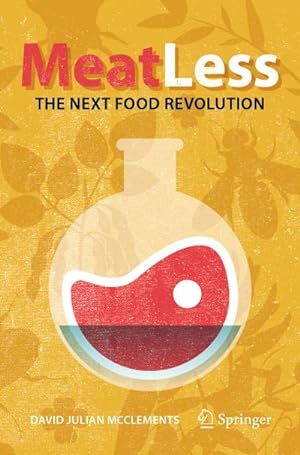
Meat Less: The Next Food Revolution
Sprache: Englisch
Verlag: Springer Nature Switzerland, Springer Nature Switzerland, 2023
ISBN 10: 3031239636 ISBN 13: 9783031239632
Anbieter: AHA-BUCH GmbH, Einbeck, Deutschland
Verkäuferbewertung 5 von 5 Sternen
Taschenbuch. Zustand: Neu. Druck auf Anfrage Neuware - Printed after ordering - Reducing the amount of meat in our diet would have major environmental benefits, including reducing greenhouse gas emissions, pollution, deforestation, and biodiversity loss. Moreover, it would have wide-ranging ethical benefits by decreasing the huge number of livestock animals confined and killed each year for food. For consumers, there may also be health benefits from a meat-less diet, provided it was carefully planned. Advances in modern science and technology, including plant-based, microbial, lab-grown, and insect meats, are revolutionizing the food industry and making it easier for consumers worldwide to maintain a meat-less diet.InMeat Less: The Next Food Revolution I outline my own journey as a food scientist who became a vegetarian in solidarity with my daughter.In writing this book I take the viewpoint that there are no easy answers and that everyone must make the decision to eat meat or not based on their own values. The first chapters examine the impact of meat consumption on the environment, human health, and animal welfare, including the important questions of how much does eating meat really contribute to greenhouse gas emissions, pollution, and biodiversity loss, what are the ethical implications of raising and killing animals for food, and the impact of reducing meat consumption on human nutrition and health. I then discuss some of the new technologies that are being developed to create alternatives to meat, including plant-based meat, cultured (lab-grown) meat, microbial meat, and insect meat. I present the science behind these new technologies and their potential for making a difference to climate change and human health.In the final chapter, I discuss why I remain a vegetarian and have decided to dedicate the rest of my scientific career to finding sustainable and healthy alternatives to meat, presenting my vision of the human diet in 2050.
-
Encapsulation Technologies and Delivery Systems for Food Ingredients and Nutraceuticals (Woodhead Publishing Series in Food Science, Technology and Nutrition)
Buch 137 von 282: Woodhead Publishing Series in Food Science, Technology and NutritionAnbieter: Phatpocket Limited, Waltham Abbey, HERTS, Vereinigtes Königreich
Verkäuferbewertung 5 von 5 Sternen
EUR 77,08
EUR 12,24 Versand
Versand von Vereinigtes Königreich nach USAAnzahl: 1 verfügbar
In den WarenkorbZustand: Good. Your purchase helps support Sri Lankan Children's Charity 'The Rainbow Centre'. Ex-library, so some stamps and wear, but in good overall condition. Our donations to The Rainbow Centre have helped provide an education and a safe haven to hundreds of children who live in appalling conditions.
-

Future Foods
Sprache: Englisch
Verlag: Springer International Publishing, Springer International Publishing Mai 2019, 2019
ISBN 10: 3030129942 ISBN 13: 9783030129941
Anbieter: buchversandmimpf2000, Emtmannsberg, BAYE, Deutschland
Verkäuferbewertung 5 von 5 Sternen
Taschenbuch. Zustand: Neu. Neuware -We are in the midst of an unprecedented era of rapid scientific and technological advances that are transforming the way our foods are produced and consumed. Food architecture is being used to construct healthier, tastier, and more sustainable foods. Functional foods are being created to combat chronic diseases such as obesity, cancer, diabetes, stroke, and heart disease. These foods are fortified with nutraceuticals or probiotics to improve our mood, performance, and health. The behavior of foods inside our guts is being controlled to increase their healthiness. Precision nutrition is being used to tailor diets to our unique genetic profiles, microbiomes, and metabolisms. Gene editing, nanotechnology, and artificial intelligence are being used to address modern food challenges such as feeding the growing global population,reducing greenhouse gas emissions, reducing waste, and improving sustainability. However, the application of these technologies is facing a backlash from consumers concerned about the potential risks posed to human and environmental health.Some of the questions addressed in this book are: What is food architecture How does sound and color impact taste Will we all have 3D food printers in all our homes Should nanotechnology and gene editing be used to enhance our foods Are these new technologies safe Would you eat bug-foods if it led to a more sustainable food supply Should vegetarians eat themselves Can nutraceuticals and probiotics stop cancer What is the molecular basis of a tasty sustainable burger David Julian McClements is a Distinguished Professor in food science who has used physics, chemistry, and biology to improve the quality, safety, and healthiness of foods for over 30years. He has published over 900 scientific articles and 10 books in this area and is currently the most highly cited food scientist in the world. He has won numerous scientific awards for his work. The aim of this book is to highlight the many exciting advances being made in the science of foods, and to show their application for solving important problems related to the modern food supply, such as tackling chronic diseases, feeding a global population, reducing food waste, and creating healthier and tastier foods.Springer Verlag GmbH, Tiergartenstr. 17, 69121 Heidelberg 420 pp. Englisch.
-

Future Foods : How Modern Science Is Transforming the Way We Eat
Sprache: Englisch
Verlag: Springer International Publishing, Springer Nature Switzerland, 2019
ISBN 10: 3030129942 ISBN 13: 9783030129941
Anbieter: AHA-BUCH GmbH, Einbeck, Deutschland
Verkäuferbewertung 5 von 5 Sternen
Taschenbuch. Zustand: Neu. Druck auf Anfrage Neuware - Printed after ordering - We are in the midst of an unprecedented era of rapid scientific and technological advances that are transforming the way our foods are produced and consumed.Food architectureis being used to construct healthier, tastier, and more sustainable foods.Functional foodsare being created to combat chronic diseases such as obesity, cancer, diabetes, stroke, and heart disease. These foods are fortified withnutraceuticalsorprobioticsto improve our mood, performance, and health. The behavior of foods inside our guts is being controlled to increase their healthiness.Precision nutritionis being used to tailor diets to our unique genetic profiles, microbiomes, and metabolisms.Gene editing,nanotechnology, andartificial intelligenceare being used to address modern food challenges such as feeding the growing global population,reducing greenhouse gas emissions, reducing waste, and improving sustainability. However, the application of these technologies is facing a backlash from consumers concerned about the potential risks posed to human and environmental health.Some of the questions addressed in this book are: What is food architecture How does sound and color impact taste Will we all have 3D food printers in all our homes Should nanotechnology and gene editing be used to enhance our foods Are these new technologies safe Would you eat bug-foods if it led to a more sustainable food supply Should vegetarians eat themselves Can nutraceuticals and probiotics stop cancer What is the molecular basis of a tasty sustainable burger David Julian McClements is a Distinguished Professor in food science who has used physics, chemistry, and biology to improve the quality, safety, and healthiness of foods for over 30years. He has published over 900 scientific articles and 10 books in this area and is currently the most highly cited food scientist in the world. He has won numerous scientific awards for his work. The aim of this book is to highlight the many exciting advances being made in the science of foods, and to show their application for solving important problems related to the modern food supply, such as tackling chronic diseases, feeding a global population, reducing food waste, and creating healthier and tastier foods.
-

Taschenbuch. Zustand: Neu. Future Foods | How Modern Science Is Transforming the Way We Eat | David Julian Mcclements | Taschenbuch | xxi | Englisch | 2019 | Palgrave Macmillan | EAN 9783030129941 | Verantwortliche Person für die EU: Springer Verlag GmbH, Tiergartenstr. 17, 69121 Heidelberg, juergen[dot]hartmann[at]springer[dot]com | Anbieter: preigu.
-

How to be a Successful Scientist
Sprache: Englisch
Verlag: Springer Nature Switzerland, Springer International Publishing Apr 2024, 2024
ISBN 10: 3031514017 ISBN 13: 9783031514012
Anbieter: buchversandmimpf2000, Emtmannsberg, BAYE, Deutschland
Verkäuferbewertung 5 von 5 Sternen
Buch. Zustand: Neu. Neuware -This book provides important advice to scientists at all stages of their careers on how to be a more effective and impactful researcher. It provides tips on: designing, performing, and analyzing experiments; writing, submitting and revising manuscripts; preparing and giving scientific talks and posters; writing grant proposals; and writing and defending a graduate thesis. It also provides advice on soft skills, like communication, networking, creativity, critical thinking, and working in teams. A major emphasis of the book is the importance of writing and publishing scientific manuscripts, as this is the main way that scientific knowledge is disseminated, as well as being an important element for building a strong curriculum vitae. The book should be an extremely valuable resource for graduate students throughout their studies but should also be useful for postdocs and professors who want to hone their research skills.The book is written by three scientists from the same family who are each at different stages in their careers and can therefore provide different perspectives. David Julian McClements is a distinguished professor who is currently the most highly cited author in Food Science in the world. He has published over 1300 scientific articles and numerous books. Jake McClements is beginning his career as a lecturer in the United Kingdom, while Isobelle Farrell McClements is just starting her career as a graduate student in the United States.Springer Verlag GmbH, Tiergartenstr. 17, 69121 Heidelberg 300 pp. Englisch.
-
How to be a Successful Scientist : A Guide for Graduate Students, Postdocs, and Professors
Sprache: Englisch
Verlag: Springer Nature Switzerland, Springer Nature Switzerland, 2025
ISBN 10: 3031514041 ISBN 13: 9783031514043
Anbieter: AHA-BUCH GmbH, Einbeck, Deutschland
Verkäuferbewertung 5 von 5 Sternen
Taschenbuch. Zustand: Neu. Druck auf Anfrage Neuware - Printed after ordering - This book provides important advice to scientists at all stages of their careers on how to be a more effective and impactful researcher. It provides tips on: designing, performing, and analyzing experiments; writing, submitting and revising manuscripts; preparing and giving scientific talks and posters; writing grant proposals; and writing and defending a graduate thesis. It also provides advice on soft skills, like communication, networking, creativity, critical thinking, and working in teams. A major emphasis of the book is the importance of writing and publishing scientific manuscripts, as this is the main way that scientific knowledge is disseminated, as well as being an important element for building a strong curriculum vitae. The book should be an extremely valuable resource for graduate students throughout their studies but should also be useful for postdocs and professors who want to hone their research skills.The book is written by three scientists from the same family who are each at different stages in their careers and can therefore provide different perspectives. David Julian McClements is a distinguished professor who is currently the most highly cited author in Food Science in the world. He has published over 1300 scientific articles and numerous books. Jake McClements is beginning his career as a lecturer in the United Kingdom, while Isobelle Farrell McClements is just starting her career as a graduate student in the United States.
-

How to be a Successful Scientist : A Guide for Graduate Students, Postdocs, and Professors
Sprache: Englisch
Verlag: Springer Nature Switzerland, 2024
ISBN 10: 3031514017 ISBN 13: 9783031514012
Anbieter: AHA-BUCH GmbH, Einbeck, Deutschland
Verkäuferbewertung 5 von 5 Sternen
Buch. Zustand: Neu. Druck auf Anfrage Neuware - Printed after ordering - This book provides important advice to scientists at all stages of their careers on how to be a more effective and impactful researcher. It provides tips on: designing, performing, and analyzing experiments; writing, submitting and revising manuscripts; preparing and giving scientific talks and posters; writing grant proposals; and writing and defending a graduate thesis. It also provides advice on soft skills, like communication, networking, creativity, critical thinking, and working in teams. A major emphasis of the book is the importance of writing and publishing scientific manuscripts, as this is the main way that scientific knowledge is disseminated, as well as being an important element for building a strong curriculum vitae. The book should be an extremely valuable resource for graduate students throughout their studies but should also be useful for postdocs and professors who want to hone their research skills.The book is written by three scientists from the same family who are each at different stages in their careers and can therefore provide different perspectives. David Julian McClements is a distinguished professor who is currently the most highly cited author in Food Science in the world. He has published over 1300 scientific articles and numerous books. Jake McClements is beginning his career as a lecturer in the United Kingdom, while Isobelle Farrell McClements is just starting her career as a graduate student in the United States.
-

Understanding and Controlling the Microstructure of Complex Foods (Woodhead Publishing Series in Food Science, Technology and Nutrition)
Buch 59 von 282: Woodhead Publishing Series in Food Science, Technology and NutritionAnbieter: Salish Sea Books, Bellingham, WA, USA
Verkäuferbewertung 5 von 5 Sternen
Zustand: Good. Good+; Hardcover; Covers are clean and glossy with a few minor handling-marks; Unblemished textblock edges; Highlighting/notes to about 35 pages, otherwise text pages are all clean and unmarked; The binding is excellent with a straight spine; This book will be shipped in a sturdy cardboard box with foam padding; Medium Format (8.5" - 9.75" tall); 2.8 lbs; Gray and tan covers with title in whiet lettering; 2007, Woodhead Publishing; 792 pages; "Understanding and Controlling the Microstructure of Complex Foods (Woodhead Publishing Series in Food Science, Technology and Nutrition)," by D. Julian McClements.
-

EUR 68,38
EUR 48,99 Versand
Versand von Deutschland nach USAAnzahl: Mehr als 20 verfügbar
In den WarenkorbZustand: New. David Julian McClements, University of Massachusetts, Amherst, USA. Nanotechnology is increasingly being utilized within the food industry to create innovative products with new or improved properties. This book introduces th.
-
Zustand: Gut. Zustand: Gut | Seiten: 272 | Sprache: Englisch | Produktart: Bücher | Reducing the amount of meat in our diet would have major environmental benefits, including reducing greenhouse gas emissions, pollution, deforestation, and biodiversity loss. Moreover, it would have wide-ranging ethical benefits by decreasing the huge number of livestock animals confined and killed each year for food. For consumers, there may also be health benefits from a meat-less diet, provided it was carefully planned. Advances in modern science and technology, including plant-based, microbial, lab-grown, and insect meats, are revolutionizing the food industry and making it easier for consumers worldwide to maintain a meat-less diet.In Meat Less: The Next Food Revolution I outline my own journey as a food scientist who became a vegetarian in solidarity with my daughter. In writing this book I take the viewpoint that there are no easy answers and that everyone must make the decision to eat meat or not based on their own values. The first chapters examine the impact of meat consumption on the environment, human health, and animal welfare, including the important questions of how much does eating meat really contribute to greenhouse gas emissions, pollution, and biodiversity loss, what are the ethical implications of raising and killing animals for food, and the impact of reducing meat consumption on human nutrition and health. I then discuss some of the new technologies that are being developed to create alternatives to meat, including plant-based meat, cultured (lab-grown) meat, microbial meat, and insect meat. I present the science behind these new technologies and their potential for making a difference to climate change and human health. In the final chapter, I discuss why I remain a vegetarian and have decided to dedicate the rest of my scientific career to finding sustainable and healthy alternatives to meat, presenting my vision of the human diet in 2050.
-
Zustand: Sehr gut. Zustand: Sehr gut | Seiten: 272 | Sprache: Englisch | Produktart: Bücher | Reducing the amount of meat in our diet would have major environmental benefits, including reducing greenhouse gas emissions, pollution, deforestation, and biodiversity loss. Moreover, it would have wide-ranging ethical benefits by decreasing the huge number of livestock animals confined and killed each year for food. For consumers, there may also be health benefits from a meat-less diet, provided it was carefully planned. Advances in modern science and technology, including plant-based, microbial, lab-grown, and insect meats, are revolutionizing the food industry and making it easier for consumers worldwide to maintain a meat-less diet.In Meat Less: The Next Food Revolution I outline my own journey as a food scientist who became a vegetarian in solidarity with my daughter. In writing this book I take the viewpoint that there are no easy answers and that everyone must make the decision to eat meat or not based on their own values. The first chapters examine the impact of meat consumption on the environment, human health, and animal welfare, including the important questions of how much does eating meat really contribute to greenhouse gas emissions, pollution, and biodiversity loss, what are the ethical implications of raising and killing animals for food, and the impact of reducing meat consumption on human nutrition and health. I then discuss some of the new technologies that are being developed to create alternatives to meat, including plant-based meat, cultured (lab-grown) meat, microbial meat, and insect meat. I present the science behind these new technologies and their potential for making a difference to climate change and human health. In the final chapter, I discuss why I remain a vegetarian and have decided to dedicate the rest of my scientific career to finding sustainable and healthy alternatives to meat, presenting my vision of the human diet in 2050.
-
Zustand: Hervorragend. Zustand: Hervorragend | Seiten: 272 | Sprache: Englisch | Produktart: Bücher | Reducing the amount of meat in our diet would have major environmental benefits, including reducing greenhouse gas emissions, pollution, deforestation, and biodiversity loss. Moreover, it would have wide-ranging ethical benefits by decreasing the huge number of livestock animals confined and killed each year for food. For consumers, there may also be health benefits from a meat-less diet, provided it was carefully planned. Advances in modern science and technology, including plant-based, microbial, lab-grown, and insect meats, are revolutionizing the food industry and making it easier for consumers worldwide to maintain a meat-less diet.In Meat Less: The Next Food Revolution I outline my own journey as a food scientist who became a vegetarian in solidarity with my daughter. In writing this book I take the viewpoint that there are no easy answers and that everyone must make the decision to eat meat or not based on their own values. The first chapters examine the impact of meat consumption on the environment, human health, and animal welfare, including the important questions of how much does eating meat really contribute to greenhouse gas emissions, pollution, and biodiversity loss, what are the ethical implications of raising and killing animals for food, and the impact of reducing meat consumption on human nutrition and health. I then discuss some of the new technologies that are being developed to create alternatives to meat, including plant-based meat, cultured (lab-grown) meat, microbial meat, and insect meat. I present the science behind these new technologies and their potential for making a difference to climate change and human health. In the final chapter, I discuss why I remain a vegetarian and have decided to dedicate the rest of my scientific career to finding sustainable and healthy alternatives to meat, presenting my vision of the human diet in 2050.
-

Gregor Sailer: Cockaigne
Anbieter: Studibuch, Stuttgart, Deutschland
Verkäuferbewertung 5 von 5 Sternen
hardcover. Zustand: Gut. 296 Seiten; 9783969002124.3 Gewicht in Gramm: 1.
-
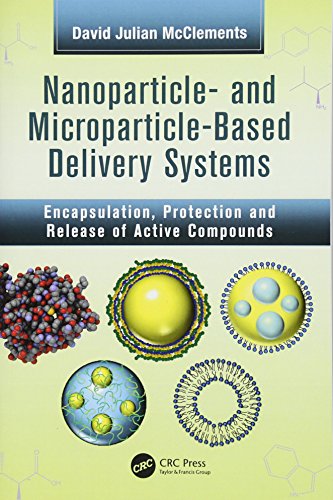
Nanoparticle- and Microparticle-based Delivery Systems
Anbieter: PBShop.store UK, Fairford, GLOS, Vereinigtes Königreich
Verkäuferbewertung 4 von 5 Sternen
EUR 136,83
EUR 6,75 Versand
Versand von Vereinigtes Königreich nach USAAnzahl: Mehr als 20 verfügbar
In den WarenkorbPAP. Zustand: New. New Book. Shipped from UK. Established seller since 2000.

