

Gesamtpreis (1 Artikel Artikel):
Versandziel:

9783930698141 - Carlo Scarpa - Layers von Schultz, Anne-Katrin (13 Ergebnisse)
Direkt zu den wichtigsten Suchergebnissen
Suchfilter
Produktart
- Alle Product Types
- Bücher (13)
- Magazine & Zeitschriften (Keine weiteren Ergebnisse entsprechen dieser Verfeinerung)
- Comics (Keine weiteren Ergebnisse entsprechen dieser Verfeinerung)
- Noten (Keine weiteren Ergebnisse entsprechen dieser Verfeinerung)
- Kunst, Grafik & Poster (Keine weiteren Ergebnisse entsprechen dieser Verfeinerung)
- Fotografien (Keine weiteren Ergebnisse entsprechen dieser Verfeinerung)
- Karten (Keine weiteren Ergebnisse entsprechen dieser Verfeinerung)
- Manuskripte & Papierantiquitäten (Keine weiteren Ergebnisse entsprechen dieser Verfeinerung)
Zustand Mehr dazu
- Neu (11)
- Wie Neu, Sehr Gut oder Gut Bis Sehr Gut (Keine weiteren Ergebnisse entsprechen dieser Verfeinerung)
- Gut oder Befriedigend (2)
- Ausreichend oder Schlecht (Keine weiteren Ergebnisse entsprechen dieser Verfeinerung)
- Wie beschrieben (Keine weiteren Ergebnisse entsprechen dieser Verfeinerung)
Einband
- alle Einbände
- Hardcover (13)
- Softcover (Keine weiteren Ergebnisse entsprechen dieser Verfeinerung)
Weitere Eigenschaften
- Erstausgabe (Keine weiteren Ergebnisse entsprechen dieser Verfeinerung)
- Signiert (Keine weiteren Ergebnisse entsprechen dieser Verfeinerung)
- Schutzumschlag (2)
- Angebotsfoto (4)
Sprache (1)
Preis
- Beliebiger Preis
- Weniger als EUR 20 (Keine weiteren Ergebnisse entsprechen dieser Verfeinerung)
- EUR 20 bis EUR 45
- Mehr als EUR 45
Gratisversand
- Kostenloser Versand nach USA (Keine weiteren Ergebnisse entsprechen dieser Verfeinerung)
Land des Verkäufers
Verkäuferbewertung
-
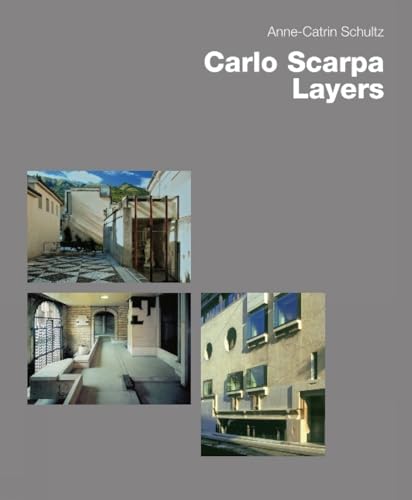
Carlo Scarpa: Layers
Anbieter: Anybook.com, Lincoln, Vereinigtes Königreich
Verkäuferbewertung 5 von 5 Sternen

EUR 34,60
EUR 15,61 Versand
Versand von Vereinigtes Königreich nach USAAnzahl: 1 verfügbar
In den WarenkorbZustand: Good. This is an ex-library book and may have the usual library/used-book markings inside.This book has hardback covers. In good all round condition. Dust jacket in good condition. Please note the Image in this listing is a stock photo and may not match the covers of the actual item,1100grams, ISBN:9783930698141.
-
Carlo Scarpa: Layers
Anbieter: Anybook.com, Lincoln, Vereinigtes Königreich
Verkäuferbewertung 5 von 5 Sternen
EUR 35,07
EUR 15,61 Versand
Versand von Vereinigtes Königreich nach USAAnzahl: 1 verfügbar
In den WarenkorbZustand: Good. This is an ex-library book and may have the usual library/used-book markings inside.This book has hardback covers. In good all round condition. Dust jacket in good condition. Please note the Image in this listing is a stock photo and may not match the covers of the actual item,1200grams, ISBN:9783930698141.
-
Carlo Scarpa--Layers
Anbieter: Majestic Books, Hounslow, Vereinigtes Königreich
Verkäuferbewertung 4 von 5 Sternen

EUR 49,12
EUR 7,46 Versand
Versand von Vereinigtes Königreich nach USAAnzahl: 3 verfügbar
In den WarenkorbZustand: New. pp. 344 152 Illus.
-
Carlo Scarpa--Layers
Anbieter: Ria Christie Collections, Uxbridge, Vereinigtes Königreich
Verkäuferbewertung 5 von 5 Sternen
EUR 44,53
EUR 13,75 Versand
Versand von Vereinigtes Königreich nach USAAnzahl: 4 verfügbar
In den WarenkorbZustand: New. In.
-
Carlo Scarpa
Anbieter: PBShop.store UK, Fairford, GLOS, Vereinigtes Königreich
Verkäuferbewertung 5 von 5 Sternen
EUR 52,56
EUR 7,76 Versand
Versand von Vereinigtes Königreich nach USAAnzahl: 4 verfügbar
In den WarenkorbHRD. Zustand: New. New Book. Shipped from UK. Established seller since 2000.
-
Zustand: New. 2007. Hardcover. Carlo Scarpa's layered architecture makes visible the process of becoming and the time-related sedimentation of material and meanings. This book examines Scarpa's fields of influence and intellectual roots and puts them in perspective with former theories and their interpretation of architecture as layered. Num Pages: 152 pages, 344 colour & b/w illus. BIC Classification: AMB. Category: (UF) Further/Higher Education. Dimension: 293 x 246 x 16. Weight in Grams: 1018. . . . . . Books ship from the US and Ireland.
-
CARLO SCARPA
Anbieter: Speedyhen, Hertfordshire, Vereinigtes Königreich
Verkäuferbewertung 5 von 5 Sternen
EUR 35,51
EUR 47,06 Versand
Versand von Vereinigtes Königreich nach USAAnzahl: 4 verfügbar
In den WarenkorbZustand: NEW.
-
Carlo Scarpa: Layers
Anbieter: Revaluation Books, Exeter, Vereinigtes Königreich
Verkäuferbewertung 5 von 5 Sternen
EUR 70,91
EUR 17,22 Versand
Versand von Vereinigtes Königreich nach USAAnzahl: 1 verfügbar
In den WarenkorbHardcover. Zustand: Brand New. new title edition. 148 pages. 11.25x9.25x0.75 inches. In Stock.
-
Carlo Scarpa: Layers
Anbieter: Revaluation Books, Exeter, Vereinigtes Königreich
Verkäuferbewertung 5 von 5 Sternen
EUR 69,89
EUR 17,22 Versand
Versand von Vereinigtes Königreich nach USAAnzahl: 1 verfügbar
In den WarenkorbHardcover. Zustand: Brand New. new title edition. 148 pages. 11.25x9.25x0.75 inches. In Stock.
-

Zustand: New. In recent decades, Carlo Scarpa s relevance has been steadily on the rise. At a time when architects have to use existing city and building structures as a point of departure for their work, his oeuvre remains a source of inspiration. Buildings such as the .
-

Carlo Scarpa - Layers
Sprache: Englisch
Verlag: Edition Axel Menges Gmbh Dez 2019, 2019
ISBN 10: 3930698145 ISBN 13: 9783930698141
Anbieter: buchversandmimpf2000, Emtmannsberg, BAYE, Deutschland
Verkäuferbewertung 5 von 5 Sternen
Buch. Zustand: Neu. Neuware -In recent decades, Carlo Scarpa's relevance has been steadily on the rise. At a time when architects have to use existing city and building structures as a point of departure for their work, his uvre remains a source of inspiration. Buildings such as the Castelvecchio in Verona show us that architecture is capable of communicating its own history, has meaning, and develops a contemporary dynamic of its own. Scarpa's layered architecture makes visible the process of becoming and the time-related sedimentation of material and meanings. It is especially at points of transition and interface that layering becomes a narrative element that elucidates the tectonic qualities of the building. Overlaying includes leaving a record of how an object came into being - either by means of the sediments of its history or through the intervention of the architect.In this book Anne-Catrin Schultz presents her research about the phenomenon of layering in Carlo Scarpa's architecture. Layering describes the physical composition of layers defining space as well as the parallel presence of cultural referrals and formal associations imbedded in the physical layers.Scarpa's work is an embodiment of multidimensional layeringand, at the same time, a focal point for architectural movements of his time that have stratification as their theme. In most buildings, the principle of layering may be regarded as something that is part of the nature of building. Functional conditions call for planes, elements, or 'layers' to provide the supporting structure, and others to protect from rain, cold or the heat of the sun. However, architectonic layering goes beyond merely fulfilling technical requirements the principle of layering may be used as a formative method that allows elements of different origins to be combined into a nonhierarchical whole. Layering exists in a realm of complexity and implies a capacity of being interpreted that goes beyond itself and creates references to the world at large.The first part of the book examines Scarpa's fields of influence and intellectual roots and puts them in perspective with former theories and their interpretation of architecture as layered, for example Gottfried Semper's theory of clothing. The second part displays an analysis of three major projects, Castelvecchio and Banca Popolare in Verona and the Querini Foundation in Venice.Anne-Catrin Schultz studied architecture in Stuttgart and Florence, and earned a Ph.D. in architecture theory at the University of Stuttgart. Following post-doctoral research at the MIT, she relocated to the San Francisco Bay Area and worked for several years with Turnbull Griffin Haesloop and Skidmore Owings & Merrill. She has taught as a lecturer at the University of California in Berkeley and is currently teaching at the California College of the Arts andat the San Francisco City College.Edition Axel Menges GmbH, Esslinger Straße 24, 70736 Fellbach 152 pp. Englisch.
-

Buch. Zustand: Neu. Carlo Scarpa - Layers | Anne-Catrin Schultz | Buch | 152 S. | Englisch | 2022 | Edition Axel Menges GmbH | EAN 9783930698141 | Verantwortliche Person für die EU: Edition Axel Menges, Esslingerstr. 24, 70736 Fellbach, axelmenges[at]aol[dot]com | Anbieter: preigu.
-
Carlo Scarpa - Layers
Sprache: Englisch
Verlag: Edition Axel Menges Gmbh Dez 2019, 2019
ISBN 10: 3930698145 ISBN 13: 9783930698141
Anbieter: AHA-BUCH GmbH, Einbeck, Deutschland
Verkäuferbewertung 5 von 5 Sternen
Buch. Zustand: Neu. Neuware - In recent decades, Carlo Scarpa's relevance has been steadily on the rise. At a time when architects have to use existing city and building structures as a point of departure for their work, his oeuvre remains a source of inspiration. Buildings such as the Castelvecchio in Verona show us that architecture is capable of communicating its own history, has meaning, and develops a contemporary dynamic of its own. Scarpa's layered architecture makes visible the process of becoming and the time-related sedimentation of mater- ial and meanings. It is especially at points of transition and interface that layering becomes a narrative element that elucidates the tectonic qualities of the building. Overlaying includes leaving a record of how an object came into being - either by means of the sediments of its history or through the intervention of the architect. In this book Anne-Catrin Schultz presents her research about the phenomenon of layering in Carlo Scarpa's architecture. Layering describes the physical composition of layers defining space as well as the parallel presence of cultural referrals and formal associations imbedded in the physical layers. Scarpa's work is an embodiment of multidimensional layering and, at the same time, a focal point for architectural movements of his time that have stratification as their theme. In most buildings, the principle of layering may be regarded as something that is part of the nature of building. Functional conditions call for planes, elements, or 'layers' to provide the supporting structure, and others to protect from rain, cold or the heat of the sun. However, architec- tonic layering goes beyond merely fulfilling technical requirements the principle of layering may be used as a formative method that allows elements of different origins to be combined into a nonhierarchical whole. Layering exists in a realm of complexity and implies a capacity of being interpreted that goes beyond itself and creates references to the world at large. The first part of the book examines Scarpa's fields of influence and intellectual roots and puts them in perspective with former theories and their interpretation of architecture as layered, for example Gottfried Semper's theory of clothing. The second part displays an analysis of three major projects, Castelvecchio and Banca Popolare in Verona and the Querini Foundation in Venice. Anne-Catrin Schultz studied architecture in Stuttgart and Florence, and earned a Ph.D. in architecture theory at the University of Stuttgart. Following post-doctoral research at the MIT, she relocated to the San Francisco Bay Area and worked for several years with Turnbull Griffin Haesloop and Skidmore Owings & Merrill. She has taught as a lecturer at the University of California in Berkeley and is currently teaching at the California College of the Arts and at the San Francisco City College.

