

Gesamtpreis (1 Artikel Artikel):
Versandziel:

9781108418942 - Science, Form, and the Problem of Induction in British Romanticism (Cambridge Studies in Romanticism, 120, Band 120) von Dahlia Porter (5 Ergebnisse)
Direkt zu den wichtigsten Suchergebnissen
Suchfilter
Produktart
- Alle Product Types
- Bücher (5)
- Magazine & Zeitschriften (Keine weiteren Ergebnisse entsprechen dieser Verfeinerung)
- Comics (Keine weiteren Ergebnisse entsprechen dieser Verfeinerung)
- Noten (Keine weiteren Ergebnisse entsprechen dieser Verfeinerung)
- Kunst, Grafik & Poster (Keine weiteren Ergebnisse entsprechen dieser Verfeinerung)
- Fotografien (Keine weiteren Ergebnisse entsprechen dieser Verfeinerung)
- Karten (Keine weiteren Ergebnisse entsprechen dieser Verfeinerung)
- Manuskripte & Papierantiquitäten (Keine weiteren Ergebnisse entsprechen dieser Verfeinerung)
Zustand Mehr dazu
- Neu (4)
- Wie Neu, Sehr Gut oder Gut Bis Sehr Gut (Keine weiteren Ergebnisse entsprechen dieser Verfeinerung)
- Gut oder Befriedigend (1)
- Ausreichend oder Schlecht (Keine weiteren Ergebnisse entsprechen dieser Verfeinerung)
- Wie beschrieben (Keine weiteren Ergebnisse entsprechen dieser Verfeinerung)
Einband
Weitere Eigenschaften
- Erstausgabe (Keine weiteren Ergebnisse entsprechen dieser Verfeinerung)
- Signiert (Keine weiteren Ergebnisse entsprechen dieser Verfeinerung)
- Schutzumschlag (Keine weiteren Ergebnisse entsprechen dieser Verfeinerung)
- Angebotsfoto (1)
Sprache (1)
Preis
- Beliebiger Preis
- Weniger als EUR 20 (Keine weiteren Ergebnisse entsprechen dieser Verfeinerung)
- EUR 20 bis EUR 40
- Mehr als EUR 40
Gratisversand
- Kostenloser Versand nach USA (Keine weiteren Ergebnisse entsprechen dieser Verfeinerung)
Land des Verkäufers
Verkäuferbewertung
-

Science, Form, and the Problem of Induction in British Romanticism: 120 (Cambridge Studies in Romanticism, Series Number 120)
Buch 83 von 104: Cambridge Studies in RomanticismSprache: Englisch
Verlag: Cambridge University Press, 2018
ISBN 10: 1108418945 ISBN 13: 9781108418942
Anbieter: WorldofBooks, Goring-By-Sea, WS, Vereinigtes Königreich
Verkäuferbewertung 5 von 5 Sternen

EUR 20,34
EUR 9,01 Versand
Versand von Vereinigtes Königreich nach USAAnzahl: 2 verfügbar
In den WarenkorbPaperback. Zustand: Very Good. The book has been read, but is in excellent condition. Pages are intact and not marred by notes or highlighting. The spine remains undamaged.
-
Science, Form, and the Problem of Induction in British Romanticism (Cambridge Studies in Romanticism, Series Number 120)
Buch 83 von 104: Cambridge Studies in RomanticismSprache: Englisch
Verlag: Cambridge University Press, 2018
ISBN 10: 1108418945 ISBN 13: 9781108418942
Anbieter: Ria Christie Collections, Uxbridge, Vereinigtes Königreich
Verkäuferbewertung 5 von 5 Sternen
EUR 114,41
EUR 13,84 Versand
Versand von Vereinigtes Königreich nach USAAnzahl: Mehr als 20 verfügbar
In den WarenkorbZustand: New. In.
-
Science, Form, and the Problem of Induction in British Romanticism: 120 (Cambridge Studies in Romanticism, Series Number 120)
Buch 83 von 104: Cambridge Studies in RomanticismSprache: Englisch
Verlag: Cambridge University Press, 2018
ISBN 10: 1108418945 ISBN 13: 9781108418942
Anbieter: Kennys Bookstore, Olney, MD, USA
Verkäuferbewertung 5 von 5 Sternen
EUR 162,92
EUR 8,92 Versand
Versand innerhalb von USAAnzahl: Mehr als 20 verfügbar
In den WarenkorbZustand: New.
-
Science, Form, and the Problem of Induction in British Romanticism
Buch 83 von 104: Cambridge Studies in RomanticismSprache: Englisch
Verlag: Cambridge University Press, 2018
ISBN 10: 1108418945 ISBN 13: 9781108418942
Anbieter: Revaluation Books, Exeter, Vereinigtes Königreich
Verkäuferbewertung 5 von 5 Sternen
EUR 164,49
EUR 14,44 Versand
Versand von Vereinigtes Königreich nach USAAnzahl: 2 verfügbar
In den WarenkorbHardcover. Zustand: Brand New. 293 pages. 9.25x6.25x1.00 inches. In Stock.
-
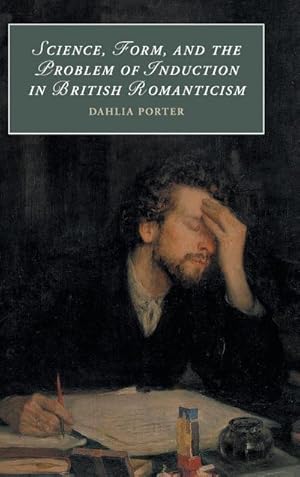
Science, Form, and the Problem of Induction in British Romanticism
Buch 83 von 104: Cambridge Studies in RomanticismSprache: Englisch
Verlag: Cambridge University Press, 2018
ISBN 10: 1108418945 ISBN 13: 9781108418942
Anbieter: AHA-BUCH GmbH, Einbeck, Deutschland
Verkäuferbewertung 5 von 5 Sternen
Buch. Zustand: Neu. Druck auf Anfrage Neuware - Printed after ordering - Exploring a topic at the intersection of science, philosophy and literature in the late eighteenth century Dahlia Porter traces the history of induction as a writerly practice - as a procedure for manipulating textual evidence by selective quotation - from its roots in Francis Bacon's experimental philosophy to its pervasiveness across Enlightenment moral philosophy, aesthetics, literary criticism, and literature itself. Porter brings this history to bear on an omnipresent feature of Romantic-era literature, its mixtures of verse and prose. Combining analyses of printed books and manuscripts with recent scholarship in the history of science, she elucidates the compositional practices and formal dilemmas of Erasmus Darwin, Robert Southey, Charlotte Smith, Maria Edgeworth, and Samuel Taylor Coleridge. In doing so she re-examines the relationship between Romantic literature and eighteenth-century empiricist science, philosophy, and forms of art and explores how Romantic writers engaged with the ideas of Enlightenment empiricism in their work.
