Gesamtpreis (1 Artikel Artikel):
Versandziel:

Direkt zu den wichtigsten Suchergebnissen
Suchfilter
Produktart
- Alle Product Types
- Bücher (6)
- Magazine & Zeitschriften (Keine weiteren Ergebnisse entsprechen dieser Verfeinerung)
- Comics (Keine weiteren Ergebnisse entsprechen dieser Verfeinerung)
- Noten (Keine weiteren Ergebnisse entsprechen dieser Verfeinerung)
- Kunst, Grafik & Poster (Keine weiteren Ergebnisse entsprechen dieser Verfeinerung)
- Fotografien (Keine weiteren Ergebnisse entsprechen dieser Verfeinerung)
- Karten (Keine weiteren Ergebnisse entsprechen dieser Verfeinerung)
- Manuskripte & Papierantiquitäten (Keine weiteren Ergebnisse entsprechen dieser Verfeinerung)
Zustand Mehr dazu
- Neu (Keine weiteren Ergebnisse entsprechen dieser Verfeinerung)
- Wie Neu, Sehr Gut oder Gut Bis Sehr Gut (1)
- Gut oder Befriedigend (3)
- Ausreichend oder Schlecht (Keine weiteren Ergebnisse entsprechen dieser Verfeinerung)
- Wie beschrieben (2)
Einband
Weitere Eigenschaften
- Erstausgabe (Keine weiteren Ergebnisse entsprechen dieser Verfeinerung)
- Signiert (Keine weiteren Ergebnisse entsprechen dieser Verfeinerung)
- Schutzumschlag (Keine weiteren Ergebnisse entsprechen dieser Verfeinerung)
- Angebotsfoto (1)
Sprache (4)
Gratisversand
Land des Verkäufers
Verkäuferbewertung
-
Prize-winning stories from China, 1980-1981
Anbieter: Wonder Book, Frederick, MD, USA
Verkäuferbewertung 5 von 5 Sternen

Zustand: Good. Good condition. A copy that has been read but remains intact. May contain markings such as bookplates, stamps, limited notes and highlighting, or a few light stains.
-

Dragon Year File (Chinese Edition)
Sprache: Chinesisch
Verlag: Jiangsu Phoenix Literature and Art Publishing, LTD, 2018
ISBN 10: 7559416403 ISBN 13: 9787559416407
Anbieter: ThriftBooks-Dallas, Dallas, TX, USA
Verkäuferbewertung 5 von 5 Sternen
Hardcover. Zustand: Good. No Jacket. Former library book; Pages can have notes/highlighting. Spine may show signs of wear. ~ ThriftBooks: Read More, Spend Less.
-

The Latest Memory (Selected Prose Works of Ke Yunlu) (Chinese Edition)
Sprache: Chinesisch
Verlag: Writers Publishing House, 2016
ISBN 10: 7506382997 ISBN 13: 9787506382991
Anbieter: ThriftBooks-Dallas, Dallas, TX, USA
Verkäuferbewertung 5 von 5 Sternen
Paperback. Zustand: Good. No Jacket. Former library book; Pages can have notes/highlighting. Spine may show signs of wear. ~ ThriftBooks: Read More, Spend Less 1.01.
-

Zustand: Sehr gut. Zustand: Sehr gut | Seiten: 240 | Sprache: Türkisch | Produktart: Bücher | Keine Beschreibung verfügbar.
-
Zustand: Hervorragend. Zustand: Hervorragend | Seiten: 240 | Sprache: Türkisch | Produktart: Bücher | Keine Beschreibung verfügbar.
-
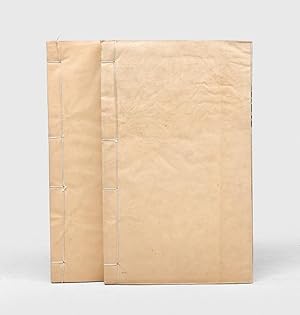
Qinding Manzhou jishen jitian dianli ("Imperially Commissioned Manchu Rites for Sacrifices to the Spirits and to Heaven").
Verlag: China: [c.1850], 1850
Anbieter: Peter Harrington. ABA/ ILAB., London, Vereinigtes Königreich
Verbandsmitglied: ABA ILAB PBFA
Verkäuferbewertung 5 von 5 Sternen
EUR 4.728,93
EUR 25,25 shipping
Versand von Vereinigtes Königreich nach USAAnzahl: 1 verfügbar
In den WarenkorbAn attractive late-Qing manuscript copy of this important text of Manchu shamanism, including songs, chants, and illustrations of ritual spaces and vessels. For the emperor Qianlong, the longest-serving of the Qing Manchu emperors, this codification project was intertwined with his broader efforts to consolidate political power and "shape the cultural orientation of court and country" (McDermott, p. 355), Imperially Commissioned Manchu Rites, which aimed to enshrine traditional Manchu folklore and religious practices, including the key role played by women in rituals, was compiled in the Manchu language in 1747 under the supervision of senior court figures including Prince Yunlu (1695-1767), Agui (1717-1797), and Yu Minzhong (1714-1779). Qianlong (1711-1799) took a keen interest throughout, personally supervising the editing and polishing of the final text. To integrate Manchu customs with China's overarching official bureaucracy, a Chinese translation was first printed three decades later and entered into the Siku Quanshu, the monumental and authoritative encyclopaedic catalogue of Chinese texts completed in the early 1780s. For the Manchus, shamanism was one of the few traditional practices which outlasted their cultural Sinicization. After the fall of the Qing dynasty in 1911, the rituals endured, still enjoying perhaps as many as one million practitioners today. The English word "shaman" is ultimately derived from the Manchu-Tungus word "saman". We have traced only a few editions of the Chinese text printed in the Qing dynasty, testifying to the ongoing role played by manuscript copies. Provenance: with a contemporary seal at the head of each volume's first leaf reading, in xiaozhuan small seal script, "Suo bao wei xian" ("treasure only sages"). This was a favoured motto of Qianlong and appeared on several of his personal jade seals; its presence and prominent placement here suggests a conscious homage to one of China's greatest patrons of the arts. Joseph P. McDermott, State and Court Ritual in China, 1999. 6 parts in 2 vols, quarto (315 x 190 mm). Manuscript illustrations in vol. II. Original brown paper wrappers, white thread xianzhuang stitching, spine ends capped in yellow silk, 283 manuscript leaves. Housed in contemporary blue cloth folding case, manuscript title label, bone toggles. Contemporary red seal on title label. Wrappers lightly creased, thread split at head of vol. I, binding sturdiness unaffected, bright internally, old faint tidemarks at head of around 30 leaves in vol. I, not impeding legibility. A near-fine example in the well-preserved case with some rubbing and staining, light wear to lining, and toggles pleasingly still present.