

Gesamtpreis (1 Artikel Artikel):
Versandziel:

watanabe yuko (10 Ergebnisse)
Direkt zu den wichtigsten Suchergebnissen
Suchfilter
Produktart
- Alle Product Types
- Bücher (10)
- Magazine & Zeitschriften (Keine weiteren Ergebnisse entsprechen dieser Verfeinerung)
- Comics (Keine weiteren Ergebnisse entsprechen dieser Verfeinerung)
- Noten (Keine weiteren Ergebnisse entsprechen dieser Verfeinerung)
- Kunst, Grafik & Poster (Keine weiteren Ergebnisse entsprechen dieser Verfeinerung)
- Fotografien (Keine weiteren Ergebnisse entsprechen dieser Verfeinerung)
- Karten (Keine weiteren Ergebnisse entsprechen dieser Verfeinerung)
- Manuskripte & Papierantiquitäten (Keine weiteren Ergebnisse entsprechen dieser Verfeinerung)
Zustand Mehr dazu
- Neu (1)
- Wie Neu, Sehr Gut oder Gut Bis Sehr Gut (1)
- Gut oder Befriedigend (4)
- Ausreichend oder Schlecht (Keine weiteren Ergebnisse entsprechen dieser Verfeinerung)
- Wie beschrieben (4)
Einband
Weitere Eigenschaften
- Erstausgabe (2)
- Signiert (Keine weiteren Ergebnisse entsprechen dieser Verfeinerung)
- Schutzumschlag (Keine weiteren Ergebnisse entsprechen dieser Verfeinerung)
- Angebotsfoto (5)
Sprache (3)
Gratisversand
- Kostenloser Versand nach USA (Keine weiteren Ergebnisse entsprechen dieser Verfeinerung)
Land des Verkäufers
Verkäuferbewertung
-
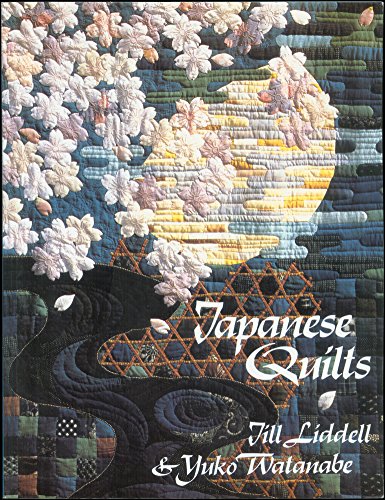
Japanese Quilts
Anbieter: WorldofBooks, Goring-By-Sea, WS, Vereinigtes Königreich
Verkäuferbewertung 5 von 5 Sternen

EUR 8,06
EUR 6,48 Versand
Versand von Vereinigtes Königreich nach USAAnzahl: 1 verfügbar
In den WarenkorbPaperback. Zustand: Very Good. The book has been read, but is in excellent condition. Pages are intact and not marred by notes or highlighting. The spine remains undamaged.
-
![Bild des Verkäufers für Japanese Quilts [English Edition] zum Verkauf von Antiquariat Weber](https://pictures.abebooks.com/inventory/md/md30813020003.jpg)
Japanese Quilts [English Edition]
Sprache: Englisch
Verlag: E. P. Dutton Publishers, New York, 1988
ISBN 10: 0525483861 ISBN 13: 9780525483861
Anbieter: Antiquariat Weber, Hamburg, HH, Deutschland
Verbandsmitglied: GIAQ
Verkäuferbewertung 5 von 5 Sternen
kart. Zustand: Gut. 28 cm ; Großformatige englischsprachige Paperbackausgabe, X, 142 Seiten mit zahlreichen Abbildungen. Gutes Exemplar (good Condition). hw1117 ISBN: 0525483861.
-
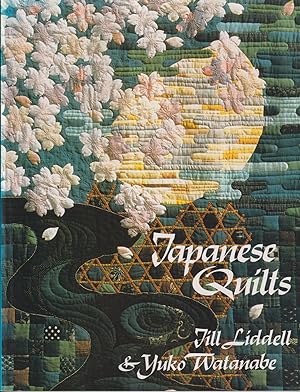
Japanese Quilts
Anbieter: timkcbooks, Penzance, Vereinigtes Königreich
Verbandsmitglied: PBFA
Verkäuferbewertung 5 von 5 Sternen
Erstausgabe
EUR 7,16
EUR 23,16 Versand
Versand von Vereinigtes Königreich nach USAAnzahl: 1 verfügbar
In den WarenkorbFirst edition, second printing. Near fine paperback original.
-

How To Draw Manga Deluxe Official Kit
Anbieter: Mooney's bookstore, Den Helder, Niederlande
Verkäuferbewertung 4 von 5 Sternen

Zustand: Very good.
-
broché. Zustand: Comme neuf.
-

Japanese quilts.
Anbieter: FIRENZELIBRI SRL, Reggello, FI, Italien
Verkäuferbewertung 5 von 5 Sternen
Zustand: BUONO. London, Studio Vista cm.22x28,5, pp.142, 135 ill.e tavv.a col.nt. legatura ed.in tutta tela.
-

Shakaijin no tame no sangyo soshiki shinrigaku nyumon.
Sprache: Japanisch
Verlag: Sangyonoritsudaigakushuppanbu., 2013
ISBN 10: 4382056969 ISBN 13: 9784382056961
Anbieter: Revaluation Books, Exeter, Vereinigtes Königreich
Verkäuferbewertung 5 von 5 Sternen
EUR 34,18
EUR 14,47 Versand
Versand von Vereinigtes Königreich nach USAAnzahl: 1 verfügbar
In den WarenkorbTankobon Softcover. Zustand: Brand New. Japanese language. 8.27x5.91x1.02 inches. In Stock.
-
Types japonais
Verlag: Sans nom d'éditeur, 1886
Anbieter: Librairie Le Feu Follet, Paris, Frankreich
Verbandsmitglied: ILAB
Verkäuferbewertung 5 von 5 Sternen
Erstausgabe
Couverture rigide. Sans nom d'éditeur | T?ky? 1886 | 29.5 x 21.5 cm | Relié | Rare édition originale consistant en une belle suite de 40 lithographies de Yuko Watanabe, en deux tons, présentant des types japonais, des scènes de la vie traditionnelle, des costumes, etc. : Ronin, hara-kiri, samurai, attentat contre le shogun Nobunaga, visite d'une geisha, jeunes filles en visite, une partie de go. Pas dans Colas, ni Hiler & Hiler, manque à la Bn, pas dans Nipponalia, ni Cordier. Wenckstern, I, p. 228 (donne l'adresse de Yokohama, sans date et annonce 2 vol., le deuxième - dont nous n'avons trouvé aucune trace - avec 25 pl.) Reliure en pleine toile beige, dos lisse muet, lithographie appliquée sur le premier plat, reliure du XXème siècle. Accrocs à 3 planches renmargées et au dernier feuillet doublé, quelques petites rousseurs, petite tache d'encre verte affectant la plupart des gravures en leur marge, sans atteinte au motif. | [ENGLISH DESCRIPTION FOLLOWS] Rare first edition comprising a fine series of 40 two-tone lithographs by Yuko Watanabe depicting Japanese types, scenes of traditional life, costumes, and more: Ronin, hara-kiri, samurai, the attack on Shogun Nobunaga, a geisha's visit, young women paying a call, a game of go. Not in Colas, nor Hiler & Hiler; lacking from the Bn; not in Nipponalia or Cordier. Wenckstern, I, p. 228 (gives the Yokohama address, undated, and mentions two volumes, the secondof which no trace could be foundcontaining 25 plates). Bound in full beige cloth, smooth spine without lettering, lithograph mounted on the upper cover; twentieth-century binding. Minor tears affecting three remargined plates and the final leaf (backed); a few small spots of foxing; small green ink stain touching most of the prints in the margin only, not affecting the image. * in-4 oblong ; 2 ff.n.ch., 40 planches numérotées sous serpentes, 1 f.n.ch.
-
TYPES JAPONAIS. Quarante Planches Dessinees et Lithographs. DAI NIPPON TEIKOKU K.
Anbieter: RARE ORIENTAL BOOK CO., ABAA, ILAB, Aptos, CA, USA
Verkäuferbewertung 5 von 5 Sternen
Tokio 1886. Black cloth spine over original illustrated boards, very solid, corner wear, 40 lithographic plates,[40] pages, 28.5 x 20.5 cm.,most with tissue guards,each numbered a nice copy ! FIRST & ONLY VERY RARE EDITION ! . *** **** *** . . AN EXCELLENT AND RARE EXAMPLE OF A JAPANESE WOMAN ARTIST'S . . GRAPHIC WORK IN THE MEIJI PERIOD: . This is an RARE example of a Japanese woman's drawing and depictions of native Japanese life in the mid-1880's. . Each drawing is numbered, with caption, and signed by the artist in the stone. . All images are with buff background, and black outline sketched, with charming skill and sensitivity. . One is "signed" by the artist in Romaji with a back wards "n" in a quaint display of the "avant-garde" use of Western alphabet during the Meiji period. Obviously anyone etching anything on stone means the opposite or 'mirror image' is what turns out to be the print. When the artist signed her work its fully expected that her name would read back wards. All others are stone-signed in Romaji by her. . SUBJECTS OF THE DRAWINGS: . A very nice insight to the Japanese at their daily life, chores, activities and diversions, including Kendo [a kind of sword fighting practice], warriors, workers, musicians, nobility, a humble shoe maker, a hair dresser and a host of Japanese women wearing the traditional Kimono in their daily life activities. . *** WHO WAS THE ARTIST WATANABE YUKOH: . Watanabe Yukoh [1856-1942] was a painter, daughter of Goseda Horyu. Pupil of her father and of her brother, Yoshimatsu. Wife of Watanabe Bunzaburo. She exhibited her work at sponsored exhibitions. She taught Western-style painting at a girl's school, became a pioneer in women's education. Specialized in portraiture, but also made lithographs of Japanese genre scenes, this work is an excellent example. * The cover of this album shows a very nice example of a self-portrait of the artist in her studio, painting what looks like a Buddhist Monk or Shinto Priest. In the lower left are two cinnabar-red Hanko [seals], most likely her own Hanko [seals or chops]. . *** THE GENRE OF THE MEIJI PERIOD: At this very early time in Meiji Japan, there were very few women artists who openly produced and provided art work for her own book. This is a great example of a liberated and most independent-minded Japanese woman's production of examples of her art for the world audience. The title page is written in French, indicating consideration that her book would be distributed in France. Indeed a very rare example. . Few other Japanese women left their artistic in terms of a published and illustrated book, leaving her mark on this period in Japanese art history. . *** LISTED IN A CHRISTIE'S SWIRE SALE: . This item was listed in sale Code: "Trade-21" sale of October 9, 1990, Hong Kong as item 1539, p. 132, with an illustration, estimates of HK$13,000-18,000 = U.S.$1680-2300. . *** REFERENCES: Yokohama Bijutsu Kan: BAKUMATSU, MEIJI NO YOKOHAMA TEN: YOKOHAMA 1859-1899: New Visions, New Representations, she is listed on pp. 131-132, diagram numbers 173-174, cited & illustrated. * ROBERTS, Laurance P.: A DICTIONARY OF JAPANESE ARTISTS: PAINTING, SCULPTURE, CERAMICS, PRINTS, LACQUER, lists her on p.194. * YOKOHAMA MUSEUM OF ART.:SELECTED WORKS FROM THE COLLECTION, 1989. see p.66-67,#29, with biography of the artist in English & Japanese. ***.
-
TYPES JAPONAIS. Quarante Planches Dessinees et Lithographs. DAI NIPPON TEIKOKU K.
Anbieter: RARE ORIENTAL BOOK CO., ABAA, ILAB, Aptos, CA, USA
Verkäuferbewertung 5 von 5 Sternen
Tokio 1886. Black cloth spine over original illustrated boards, very solid, corner wear, 40 lithographic plates,[40] pages, bookplate, 28.5 x 20.5 cm., tissue guards. FIRST & ONLY EDITION . *** **** *** . . AN EXCELLENT AND RARE EXAMPLE OF A JAPANESE WOMAN ARTIST'S . . GRAPHIC WORK IN THE MEIJI PERIOD: . This is an RARE example of a Japanese woman's drawing and depictions of native Japanese life in the mid-1880's. . Each drawing is numbered, with caption, and signed by the artist in the stone. . All images are with buff background, and black outline sketched, with charming skill and sensitivity. . One is "signed" by the artist in Romaji with a back wards "n" in a quaint display of the "avant-garde" use of Western alphabet during the Meiji period. Obviously anyone etching anything on stone means the opposite or 'mirror image' is what turns out to be the print. When the artist signed her work its fully expected that her name would read back wards. All others are stone-signed in Romaji by her. . SUBJECTS OF THE DRAWINGS: . A very nice insight to the Japanese at their daily life, chores, activities and diversions, including Kendo [a kind of sword fighting practice], warriors, workers, musicians, nobility, a humble shoe maker, a hair dresser and a host of Japanese women wearing the traditional Kimono in their daily life activities. . *** WHO WAS THE ARTIST WATANABE YUKOH: . Watanabe Yukoh [1856-1942] was a painter, daughter of Goseda Horyu. Pupil of her father and of her brother, Yoshimatsu. Wife of Watanabe Bunzaburo. She exhibited her work at sponsored exhibitions. She taught Western-style painting at a girl's school, became a pioneer in women's education. Specialized in portraiture, but also made lithographs of Japanese genre scenes, this work is an excellent example. * The cover of this album shows a very nice example of a self-portrait of the artist in her studio, painting what looks like a Buddhist Monk or Shinto Priest. In the lower left are two cinnabar-red Hanko [seals], most likely her own Hanko [seals or chops]. . *** THE GENRE OF THE MEIJI PERIOD: At this very early time in Meiji Japan, there were very few women artists who openly produced and provided art work for her own book. This is a great example of a liberated and most independent-minded Japanese woman's production of examples of her art for the world audience. The title page is written in French, indicating consideration that her book would be distributed in France. Indeed a very rare example. . Few other Japanese women left their artistic in terms of a published and illustrated book, leaving her mark on this period in Japanese art history. . *** LISTED IN A CHRISTIE'S SWIRE SALE: . This item was listed in sale Code: "Trade-21" sale of October 9, 1990, Hong Kong as item 1539, p. 132, with an illustration, estimates of HK$13,000-18,000 = U.S.$1680-2300. . *** REFERENCES: Yokohama Bijutsu Kan: BAKUMATSU, MEIJI NO YOKOHAMA TEN: YOKOHAMA 1859-1899: New Visions, New Representations, she is listed on pp. 131-132, diagram numbers 173-174, cited & illustrated. * ROBERTS, Laurance P.: A DICTIONARY OF JAPANESE ARTISTS: PAINTING, SCULPTURE, CERAMICS, PRINTS, LACQUER, lists her on p.194. * YOKOHAMA MUSEUM OF ART.:SELECTED WORKS FROM THE COLLECTION, 1989. see p.66-67,#29, with biography of the artist in English & Japanese. ***.


