

Gesamtpreis (1 Artikel Artikel):
Versandziel:

walker duncan editor (4 Ergebnisse)
Direkt zu den wichtigsten Suchergebnissen
Suchfilter
Produktart
- Alle Product Types
- Bücher (4)
- Magazine & Zeitschriften (Keine weiteren Ergebnisse entsprechen dieser Verfeinerung)
- Comics (Keine weiteren Ergebnisse entsprechen dieser Verfeinerung)
- Noten (Keine weiteren Ergebnisse entsprechen dieser Verfeinerung)
- Kunst, Grafik & Poster (Keine weiteren Ergebnisse entsprechen dieser Verfeinerung)
- Fotografien (Keine weiteren Ergebnisse entsprechen dieser Verfeinerung)
- Karten (Keine weiteren Ergebnisse entsprechen dieser Verfeinerung)
- Manuskripte & Papierantiquitäten (Keine weiteren Ergebnisse entsprechen dieser Verfeinerung)
Zustand Mehr dazu
- Neu (Keine weiteren Ergebnisse entsprechen dieser Verfeinerung)
- Wie Neu, Sehr Gut oder Gut Bis Sehr Gut (1)
- Gut oder Befriedigend (1)
- Ausreichend oder Schlecht (Keine weiteren Ergebnisse entsprechen dieser Verfeinerung)
- Wie beschrieben (2)
Einband
- alle Einbände
- Hardcover (4)
- Softcover (Keine weiteren Ergebnisse entsprechen dieser Verfeinerung)
Weitere Eigenschaften
- Erstausgabe (2)
- Signiert (Keine weiteren Ergebnisse entsprechen dieser Verfeinerung)
- Schutzumschlag (1)
- Angebotsfoto (1)
Sprache (2)
Preis
- Beliebiger Preis
- Weniger als EUR 20 (Keine weiteren Ergebnisse entsprechen dieser Verfeinerung)
- EUR 20 bis EUR 45
- Mehr als EUR 45
Gratisversand
Land des Verkäufers
Verkäuferbewertung
-
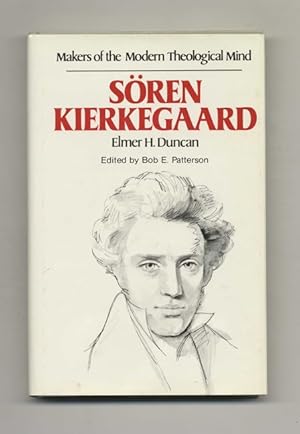
Sören Kierkegaard - 1st Edition/1st Printing
Buch 1 von 6: Makers of the Modern Theological MindSprache: Englisch
Verlag: Hendrickson Publishers [1976], Peabody, MA, 1976
ISBN 10: 094357563X ISBN 13: 9780943575636
Anbieter: Books Tell You Why - ABAA/ILAB, Summerville, SC, USA
Verkäuferbewertung 2 von 5 Sternen

Erstausgabe
Hardcover. Zustand: Fine. Zustand des Schutzumschlags: Fine. First Edition; First Printing. A lovely first edition/first printing in Fine condition with minor soiling to top edge in alike dust-jacket; Kierkegaard, the father of existentialism, is generally acknowledged to be one of the great thinkers of the nineteenth century ; Makers of the Modern Theological Mind; 8vo; 155 pages.
-

CELEBRATION OF THE ONE HUNDREDTH ANNIVERSARY OF THE LAYING OF THE CORNER STONE OF THE CAPITOL OF THE UNITED STATES : WITH ACCOUNTS OF THE LAYING OF THE ORIGINAL CORNER STONE, IN 1793, AND OF THE CORNER STONE OF THE EXTENSION IN 1851
Verlag: Government Printing Office, Washington, 1896
Anbieter: Second Story Books, ABAA, Rockville, MD, USA
Verkäuferbewertung 4 von 5 Sternen

Hardcover. Quarto, 152 pages. In Fair condition. Spine is green with gold print. Boards in green cloth; fraying to spine caps and corners. Text block has cracked hinges, spine crack at page 80, foxing to plate tissue guards, frontispiece, and rear plate. Illustrated: b&w frontispiece and plates (drawings), 1 color plate, b&w text illustrations. [Oversized book(s). Additional postage necessary for expedited/international orders. Economy International shipping unavailable due to size/weight restrictions. For international/expedited customers, please inquire for rates]. NOTE: Shelved in Locked Annex in quarto column. 1410838. FP New Rockville Stock.
-
Celebration of the One Hundredth Anniversary of the Laying of the Corner Stone of the Capitol of the United States.
Anbieter: Antiquaria Bok & Bildantikvariat AB, Göteborg, Schweden
Verkäuferbewertung 5 von 5 Sternen

With Accounts of the Laying of the Original Corner Stone, in 1793, and of the Corner Stone of the Extension, in 1851. Washington 1896. 152 pp + maps and tables, some in color. Publisher's cloth with stains on boards. 30 x 20 cm.[#\29847].
-
Celebration of the One Hundredth Anniversary of the Laying of the Corner Stone of the Capitol of the United States; With Accounts of the Laying of the Original Corner Stone, in 1793, and of the Corner Stone of the Extension, in 1851
Verlag: Government Printing Office, Washington DC, 1896
Anbieter: Ground Zero Books, Ltd., Silver Spring, MD, USA
Verkäuferbewertung 5 von 5 Sternen
Erstausgabe
Hardcover. Zustand: Good. Presumed First Edition, First printing. 155 pages. Oversized book, measuring 11-1/2 inches by 8 inches. Some wear to cover and spine. Front flyleaves partially separated. Includes 64 illustrations (black and white), Prefatory Note, Organization and work of the General Committee, Subcommittees, Officers of the Parade, and the Joint Committee; The Programme, including Concerts by Centennial Chimes, route of Parade, exercises at the Capitol, Evening Concert, Decorations and Illumination, Grand Stands, Street Decorations, centennial Medal, Souvenir Invitations, The Tablet, and Cost of the Celebration; The Parade: Formation, Route, Etc. At the Capitol: The Invocation, Chairman Gardner's Introduction, President Cleveland's Address, William Wirt Henry's Oration, The Vice President's Address, Speaker Crisp's Address, Justice Brown's Address, Commissioner Parker's Address, and Night Concert; [continuation] The Joint Committee: Personnel, Action, Etc. Congressional Action: Authorizing the Celebration, Appointment of the Joint Committee; Making the Day a Holiday, Granting Use of Flags, etc.; Resolutions to Attend, Attendance at the Celebration; The Tablet; Printing the Proceedings; The Capitol: With Some Notice of Its Architects; The First Corner Stone: A Brief Account from a Contemporaneous Source; Extension Corner Stone: The Programme, The Procession, Ceremonies at the Capitol, Corner Stone Laid, Address of B. B. French, and Daniel Webster's Oration. Also includes 43 black and white illustrations in the text. The official programme of the ceremonies included a civic and military parade over the route taken by the procession on September 18, 1793; prayer by the Right Reverend William Paret, Bishop of Maryland, an address by President Grover Cleveland, and address on "The United States Senate," by Adlai Ewing Stevenson, Vice-President of the United States, an address on "The United States House of Representatives," by Charles Frederick Crisp, Speaker of the House, The vocal music was rendered by a trained "Centennial Chorus" of fifteen hundred adult voices, and the instrumental music by the United States Marine Band. Duncan Stephen Walker (November 11, 1841 - June 3, 1912) was a Union Army lieutenant colonel and assistant adjutant general during the American Civil War. He resigned his commission on May 12, 1865. In 1866, he was nominated and confirmed for appointment as a brevet brigadier general, to rank from March 13, 1865. The grandson of Revolutionary War veteran and U.S. District Judge Jonathan Hoge Walker and son of U.S. Senator Robert John Walker (1801-1869), he was educated at Georgetown University, Lafayette College, and Princeton University. Initially commissioned as a captain of volunteers, Walker served as an assistant adjutant-general during the American Civil War, on the staffs of Major Gen. Nathaniel P. Banks and later Brig. Gen. William H. Emory and Major Gen. Winfield Scott Hancock. On February 21, 1866, President Andrew Johnson nominated Walker for appointment to the grade of brevet brigadier general of volunteers, to rank from March 13, 1865, and the United States Senate confirmed the appointment on April 10, 1866. He was the great-great-grandson of Benjamin Franklin.


