

Gesamtpreis (1 Artikel Artikel):
Versandziel:

tianjin (31 Ergebnisse)
Direkt zu den wichtigsten Suchergebnissen
Suchfilter
Produktart
- Alle Product Types
- Bücher (24)
- Magazine & Zeitschriften (Keine weiteren Ergebnisse entsprechen dieser Verfeinerung)
- Comics (Keine weiteren Ergebnisse entsprechen dieser Verfeinerung)
- Noten (Keine weiteren Ergebnisse entsprechen dieser Verfeinerung)
- Kunst, Grafik & Poster (5)
- Fotografien (Keine weiteren Ergebnisse entsprechen dieser Verfeinerung)
- Karten (2)
- Manuskripte & Papierantiquitäten (Keine weiteren Ergebnisse entsprechen dieser Verfeinerung)
Zustand Mehr dazu
- Neu (8)
- Wie Neu, Sehr Gut oder Gut Bis Sehr Gut (2)
- Gut oder Befriedigend (7)
- Ausreichend oder Schlecht (Keine weiteren Ergebnisse entsprechen dieser Verfeinerung)
- Wie beschrieben (14)
Einband
Weitere Eigenschaften
Sprache (4)
Gratisversand
Land des Verkäufers
Verkäuferbewertung
-

Stephen Hawking's Universe (Chinese Edition)
Sprache: Chinesisch
Verlag: Hainan Publishing House, 2016
ISBN 10: 7544364763 ISBN 13: 9787544364768
Anbieter: ThriftBooks-Dallas, Dallas, TX, USA
Verkäuferbewertung 5 von 5 Sternen

Paperback. Zustand: Very Good. No Jacket. May have limited writing in cover pages. Pages are unmarked. ~ ThriftBooks: Read More, Spend Less.
-

geniuses Hua Qi Fang Miao Governance (Paperback)(Chinese Edition)
Sprache: Chinesisch
Verlag: Tianjin Science and Technology Press; 1 edition (J, 2009
ISBN 10: 7530850873 ISBN 13: 9787530850879
Anbieter: ThriftBooks-Atlanta, AUSTELL, GA, USA
Verkäuferbewertung 5 von 5 Sternen
JP Oversized. Zustand: Very Good. No Jacket. May have limited writing in cover pages. Pages are unmarked. ~ ThriftBooks: Read More, Spend Less.
-

Traveler's Notebook Tianjin: 6x9 Travel Journal or Diary with prompts, Checklists and Bucketlists perfect gift for your Trip to Tianjin (China) for every Traveler
Anbieter: Revaluation Books, Exeter, Vereinigtes Königreich
Verkäuferbewertung 5 von 5 Sternen
EUR 15,05
EUR 14,44 Versand
Versand von Vereinigtes Königreich nach USAAnzahl: 1 verfügbar
In den WarenkorbPaperback. Zustand: Brand New. 119 pages. 9.00x6.00x0.30 inches. In Stock.
-
The Best Specimens of Imperial Garden on the Qing Dynasty
Anbieter: avelibro OHG, Dinkelscherben, Deutschland
Verbandsmitglied: BOEV
Verkäuferbewertung 5 von 5 Sternen
4°, gebundene Ausgabe. Zustand: Gut. 192 Seiten Seiten altersgemäß angedunkelt, Schnitt stockfleckig, sonst mit geringen Gebrauchsspuren und sehr gut erhalten, in englischer und chinesischer Sprache B05-01-01B Sprache: Englisch Gewicht in Gramm: 741.
-
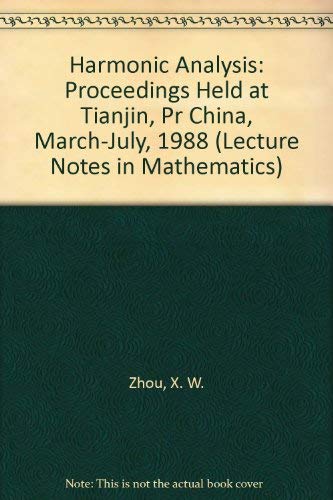
Harmonic Analysis
Anbieter: Majestic Books, Hounslow, Vereinigtes Königreich
Verkäuferbewertung 4 von 5 Sternen

EUR 40,84
EUR 7,51 Versand
Versand von Vereinigtes Königreich nach USAAnzahl: 1 verfügbar
In den WarenkorbZustand: New. pp. ix + 226.
-

Die katholische Kirche in Tientsin. Äußere Ansicht mit figürlicher Staffage.
Verlag: Holzstich aus dem Jahr., 1900
Anbieter: Antiquariat Hild, Weilburg, Deutschland
Verkäuferbewertung 4 von 5 Sternen
Bildgröße 9,5x14 cm.
-
Fort des Gouverneurs von Tientsin. Ansicht vom Wasser aus.
Verlag: Holzstich aus dem Jahr., 1900
Anbieter: Antiquariat Hild, Weilburg, Deutschland
Verkäuferbewertung 4 von 5 Sternen
Bildgröße 9,5x18 cm.
-

Lecture Notes on String Theory, Field Theory and Holographic Theory, vol. 1 of the Frontiers in Theoretical Physics series
Verlag: International Press of Boston, 2024
ISBN 10: 1571464468 ISBN 13: 9781571464460
Anbieter: Books From California, Simi Valley, CA, USA
Verkäuferbewertung 4 von 5 Sternen
paperback. Zustand: Very Good.
-
Der große Kanal mit den europäischen Niederlassungen. Ansicht vom Wasser aus.
Verlag: Holzstich aus dem Jahr., 1901
Anbieter: Antiquariat Hild, Weilburg, Deutschland
Verkäuferbewertung 4 von 5 Sternen
Bildgröße 9x12 cm.
-
Boote auf dem Pei-ho. Ansicht mit Tschunken im Vordergrund.
Verlag: Holzstich aus dem Jahr., 1901
Anbieter: Antiquariat Hild, Weilburg, Deutschland
Verkäuferbewertung 4 von 5 Sternen
Bildgröße 10x13 cm.
-

Chinese Herbal Medicine for Beginners
Anbieter: Revaluation Books, Exeter, Vereinigtes Königreich
Verkäuferbewertung 5 von 5 Sternen
EUR 44,14
EUR 14,44 Versand
Versand von Vereinigtes Königreich nach USAAnzahl: 1 verfügbar
In den WarenkorbPaperback. Zustand: Brand New. 504 pages. Chinese language. 8.50x5.50x1.14 inches. In Stock.
-

CD Musica Etnica Naxi music From Lijiang
Verlag: Nimbus, 2000
Anbieter: Librodifaccia, Alessandria, AL, Italien
Verkäuferbewertung 5 von 5 Sternen
Zustand: Buone. inglese.
-

Tianjin China
Verlag: China Intercontinental Press
Anbieter: Wonder Book, Frederick, MD, USA
Verkäuferbewertung 5 von 5 Sternen
Erstausgabe
Zustand: Very Good. Beijing: China Intercontinental Press, 2001. 1st edition, 1st printing. 4to hardcover. 134pp. Illustrations. Very Good book. Very Good dust jacket. [9787801139825] (Tianjin, China, Travel) Inquire if you need further information.
-

EUR 52,47
EUR 48,99 Versand
Versand von Deutschland nach USAAnzahl: Mehr als 20 verfügbar
In den WarenkorbZustand: New.
-

REACTION ENGINEERING
Anbieter: Majestic Books, Hounslow, Vereinigtes Königreich
Verkäuferbewertung 4 von 5 Sternen
EUR 107,08
EUR 7,51 Versand
Versand von Vereinigtes Königreich nach USAAnzahl: 1 verfügbar
In den WarenkorbZustand: New.
-

Sur le matérialisme dialectique.
Verlag: Editions du centenaire, 1977
Couverture souple. Zustand: bon. R100068713: 1977. In-12. Broché. Etat d'usage, Couv. convenable, Dos satisfaisant, Papier jauni. 233 pages. . . . Classification Dewey : 100-PHILOSOPHIE ET DISCIPLINES CONNEXES.
-

Sur le matérialisme dialectique.
Verlag: Editions du centenaire, 1977
Couverture souple. Zustand: bon. R100066908: 1977. In-12. Broché. Etat d'usage, Couv. convenable, Coiffe en pied abîmée, Papier jauni. 233 pages. . . . Classification Dewey : 100-PHILOSOPHIE ET DISCIPLINES CONNEXES.
-

Wireless Power Transfer For Unmanned Aircraft: Fundamentals, Design, And Control
Sprache: Englisch
Verlag: Cambridge University Press, 2025
ISBN 10: 1108472435 ISBN 13: 9781108472432
Anbieter: Revaluation Books, Exeter, Vereinigtes Königreich
Verkäuferbewertung 5 von 5 Sternen
EUR 124,90
EUR 11,55 Versand
Versand von Vereinigtes Königreich nach USAAnzahl: 2 verfügbar
In den WarenkorbHardcover. Zustand: Brand New. 145 pages. 6.69x0.38x9.61 inches. In Stock.
-

EUR 204,59
EUR 48,99 Versand
Versand von Deutschland nach USAAnzahl: Mehr als 20 verfügbar
In den WarenkorbGebunden. Zustand: New.
-

Advances in Traffic Transportation and Civil Architecture : Proceedings of the 5th International Symposium on Traffic Transportation and Civil Architecture (ISTTCA 2022), Suzhou, China, 19-20 November 2022
Sprache: Englisch
Verlag: Taylor & Francis Ltd Jun 2023, 2023
ISBN 10: 1032514388 ISBN 13: 9781032514383
Anbieter: AHA-BUCH GmbH, Einbeck, Deutschland
Verkäuferbewertung 5 von 5 Sternen
Buch. Zustand: Neu. Neuware - Advances in Traffic Transportation and Civil Architecture focuses on the research of traffic infrastructure. Subjects in this proceedings include: - Road Engineering- Bridge Engineering- Tunneling- Construction Technology and Processes.
-

Chinese porcelain collection and appreciation of the book (Set 2 Volumes) (Hardcover)(Chinese Edition)
Verlag: Tianjin Ancient Books Publishing, 2007
ISBN 10: 7806961151 ISBN 13: 9787806961155
Anbieter: Books From California, Simi Valley, CA, USA
Verkäuferbewertung 4 von 5 Sternen
hardcover. Zustand: Very Good. 2 volumes.
-

Tien-tsin. Gesamtansicht vom Hafen aus.
Anbieter: Antiquariat Martin Barbian & Grund GbR, Saarbruecken, Deutschland
Verkäuferbewertung 5 von 5 Sternen
Kunst / Grafik / Poster
Holzstich von Moynet, um 1880, 15x22 cm (rückseitig ebenfalls bedruckt).
-

Les Affaires de Chine. La signature du traite de Tien-Tsin (fac-simile d une gravure chinoise). + Tien-Tsin, vue prise de l ancien consulat de France; le Péi-Ho et ses deux confluents.
Anbieter: Antiquariat Martin Barbian & Grund GbR, Saarbruecken, Deutschland
Verkäuferbewertung 5 von 5 Sternen
Kunst / Grafik / Poster
Holzstich, um 1885, 28x38 cm (Gesamtblattgröße), mittig Faltspur, rückseitig ebenfalls bedruckt.
-
Sketches in China. The Peiho Forts, Tien-Tsin; The British Consulate, from the Peiho River; stopping and inundation of the Peiho; Tower for dead infants.[caption titles]
Verlag: Illustrated London News. March 29,1873., London., 1873
Anbieter: Asia Bookroom ANZAAB/ILAB, Canberra, ACT, Australien
Verkäuferbewertung 5 von 5 Sternen
Four engravings (two half page 16.4 x 23.8 cm) on a folding newspaper leaf, complete descriptive text overleaf, marginal spotting and discolouration, but in very good condition. Four engravings prepared for the Illustrated London News depicting the aftermath of flooding of the Peiho (Hai) River in the Treaty Port of Tianjin. Sold with an unrelated engraving. From the Estate of the late collector and scholar Arthur Hacker.
-
Extensively signed certificate of appreciation presented to Leo Gershevich.
Verlag: Tianjin: 9 September, 1937, 1937
Anbieter: Peter Harrington. ABA/ ILAB., London, Vereinigtes Königreich
Verbandsmitglied: ABA ILAB PBFA
Verkäuferbewertung 5 von 5 Sternen
Erstausgabe Signiert
EUR 7.434,03
EUR 25,41 Versand
Versand von Vereinigtes Königreich nach USAAnzahl: 1 verfügbar
In den WarenkorbA gift commemorating Gershevich's two decades of service as the backbone of Tianjin's thriving Jewish diaspora. The signatories include the representatives of the city's seven leading Jewish organizations and twenty-eight other prominent individuals. Of these seven groups, he served as the honorary president of four: Tientsin Hebrew Association, Tientsin Jewish School, the Jewish Club ("Kunst"), and the Jewish Benevolent Society. Leo Gershevich (1878-1950) played a central part in establishing a safe, vibrant community in Tianjin. At the start of the 20th century, less than a dozen Jewish families lived in the city. The Russian Revolution brought a fresh wave of migrants to China, and the number of families soon surpassed 500. In 1920, under Gershevich's leadership, the community formed the Hebrew Association of Tientsin, and in subsequent years it also established a hospital, the benevolent society to help new arrivals, and the school (1925). The dramatic society, formed in 1928, rapidly evolved into a social club named Kunst, boasting a restaurant, meeting spaces, a library of 5,000 volumes, and a theatre. In 1933, a new Tientsin Hebrew Association, run by the heads of the various groups, was established to co-ordinate all activities. Having nurtured Jewish civil society for over a decade, Gershevich accepted the position of the association's first chairman and remained at the heart of daily life for the next four years, until he decided to emigrate with his wife to the United States. This souvenir is signed twice by each representative, at the foot of the English and Russian texts. They include A. C. Izgur, the director of the Hebrew Association, the community's doctor M. Pertzel (on behalf of the school, where he taught), and a future vice-president of the association, Joe Morris, on behalf of the benevolent society. The other groups named on the certificate are the Free Loan Society, the United Zionist Associations of Tientsin, and the Berit Trumpeldor Organization (BETAR), which was extremely active in China during the 1920s and 1930s. The 28 additional signatories include many with whom Gershevich worked closely, such as O. Patack (BETAR), B. M. Friedman (a member of the school's staff and a fur and wool trader), and F. J. Lerman, the president of the Tianjin Hebrew Association Religious Committee. Provenance: although unmarked as such, this piece is from the collection of Arnie Druck, a collector of Israeli and Jewish history with wide-ranging interests. The Druck Collection was dispersed in 2013. Folio (400 x 280 mm). Contents in English and Russian within decorative borders, all printed in green. Original black leatherette portfolio, front cover laid-down silver-plated metal sheet, decoratively engraved and lettered in English and Russian, inner covers lined with brown moiré silk, housing two textured card bofolia, printed on four pages only, bound in with black chord tie as issued. Metal plate bright with a few abrasions, front cover of portfolio worn at one place along top edge and bumped at fore edge, bifolia slightly torn at head and foot of folds where pulling against chord, couple of faint stains: a well-preserved piece.
-
Album of sketches made in Tianjin by Ensign Francis Sadleir Brereton.
Verlag: Tientsin: 1861, 1861
Anbieter: Peter Harrington. ABA/ ILAB., London, Vereinigtes Königreich
Verbandsmitglied: ABA ILAB PBFA
Verkäuferbewertung 5 von 5 Sternen
EUR 8.920,84
EUR 25,41 Versand
Versand von Vereinigtes Königreich nach USAAnzahl: 1 verfügbar
In den WarenkorbHighly engaging album, the core of which comprises 26 sketches of Tientsin (Tianjin) in 1861, sketched by Ensign Francis Sadleir Brereton, the year following the conclusion of the Second Opium War; with additional views of Singapore and Java. A unique visual record of Qing dynasty Tianjin, as seen through the eyes of a young British army officer. Brereton (1838-1911) was commissioned ensign in the Royal North Gloucestershire Militia in November 1855, transferring to the 2nd Battalion, 60th Rifles in December of the same year. Even among sharpshooters he was clearly a crack shot, serving as inspector of musketry and winning both the Ladies' Purse and Challenge Prize. In 1857 he sailed with his battalion to South Africa. Following service in India during the Rebellion and in China during the Second Opium War, he resigned his commission in 1865. He afterwards practised as an architect with his father-in-law, Frederick Beeston, then independently as an architect and surveyor. In 1889 he was elected to serve on the first London County Council. During the 18th century drawing masters were established at the military training centres at Woolwich, Chatham, High Wycombe, and Addiscombe, with the aim of instructing officer cadets in drawing and watercolour. Although there is no record of Brereton having studied in this way his sketchbook comprises an accomplished series of views very much in the tradition of the soldier-artist. In light of his subsequent career, his interest in architectural detail is evident in a number of highly worked and painstaking sketches of temples and cityscapes, occasionally employing dense hachures and some interesting compositional framing. To the modern eye they have a haunted quality reminiscent of the deserted vistas of Giorgio de Chirico. Views are, in the main, captioned on verso, some at lower right of image, all of Tientsin, each dated 1861 and initialled, unless otherwise noted: [View of traditional roundhouses in a landscape] "Head Quarters Square, 2/60th R[oyal] Rifles" "South West angle, Tien Tsin Wall" "Mahomedan Temple" "Bell Temple" "Treaty Joss House" "Pallisir's Grave" (Lieut. John R. Palliser, 2. Battalion, 1st (Royal) Foot, died of fever after taking part in the capture of the Taku Forts) "Old Castle near Tien Tsin" [View of wall and fort] [View of fortified tower] [Three temples] "South Forts" (double-sheet panorama) "Angles of Treaty Joss House" "Treaty Joss House" "Tien Tsin from West Gate" "West Gate from the Wall" "Tien Tsin from East Gate" "Tien Tsin from North Gate" "North Gate Tien Tsin from street" "Tien Tsin from South Gate" "English burial ground & Treaty Joss House from South Gate" "Chinese Graves French Side Tien Tsin" "South Forts Tien Tsin" "South Taku Fort" "2nd North Taku Fort" "Chinamans Houses French Side Tien Tsin" 59th Regiment graveyard "Singapore" (seascape), "Singapore, Nov. 16, 1861" (double-sheet panorama of the coastline, showing junks and ships) Java (double-sheet panorama with shipping in the foreground) [View of palm trees in a mountainous landscape] Plus another 26 views and sketches (6 double-sheet) executed later, with appealing panoramas in the west of Scotland (Dunoon, Tarbert, Dumbarton, Bowling) and elsewhere. The album is accompanied by a typed letter by the popular boys author Lt.-Col. F. S. Brereton (1872-1957), reading in full: "These sketches were made by my father Ensign Frank Sadleir Brereton, 2nd Battn. 60th Rifles, when on service with his regiment in China, 1861. The first action in which he was engaged was, I believe, an attack on the Taku Forts, when he and a small command went over the side and waded ashore" (undated, personal stationery). Albums such as this are certainly not common on the open market and this is a particularly attractive exemplar. Landscape octavo (105 x 182 mm). Contemporary dark red roan sketchbook by Henry Penny (metal clasp stamped with his name, label to front pocket), gilt patterned endpapers, marbled edges; some 60 leaves in all (26 with views of Tientsin and environs) plus blanks, one of two leaves toward the end excised. Housed in a burgundy cloth flat-back box by the Chelsea Bindery. Loss of leather at foot of spine, minor scuffing, expected rubbing and signs of handling, otherwise remarkably well preserved.
-
Plan de l embouchure du Pai-Ho et de ses défenses. Intinéraire suivi de Ta-Kou à Tche-Fou. 2 Pläne auf 1 Blatt. + Kleine Nebenkarte "Entrée du fleuve Ta-Tsin-Ho.
Anbieter: Antiquariat Martin Barbian & Grund GbR, Saarbruecken, Deutschland
Verkäuferbewertung 5 von 5 Sternen
Kunst / Grafik / Poster
Plan von Tanggu mit den Fortanlagen (Taku-Forts) und der Mündung des Hai He in den Golf von Bohai. Küstenlinie des Golfes von Tanggu bis Weihai. Lithographie von Erhard, veröffentlicht durch das Dépôt de la Marine, gedruckt bei Auguste Bry, Paris, 1863, 61x44,5 cm (Mittelfalte).
-
Plan de l occupation de Tien-Tsin par la Flotille Anglo-Francaise de 24 Aout 1860 dressé sous la direction de Mr. Pallu. Plan von Tientsin.
Anbieter: Antiquariat Martin Barbian & Grund GbR, Saarbruecken, Deutschland
Verkäuferbewertung 5 von 5 Sternen
Kunst / Grafik / Poster
Lithographie von Erhard, veröffentlicht durch das Dépôt de la Marine, gedruckt bei Auguste Bry, Paris, 1863, 36x30 cm.
-

Plan of the Foreign Concessions. Tientsin. Drawn for Crow's 'Handbook for China.'
Erscheinungsdatum: 1921
Anbieter: Geographicus Rare Antique Maps, Brooklyn, NY, USA
Verbandsmitglied: ABAA ESA ILAB
Verkäuferbewertung 4 von 5 Sternen
Karte
Very good. Wear along original fold lines. Light toning. Blank on verso. Size 6.5 x 12.5 Inches. This is a c. 1913 Carl Crow city map or plan of the foreign concessions in Tianjin (Tientsin), China. The map, which is bisected by the Hai River, depicts the international concession zone, from the Austria-Hungarian concession at left to the Japanese and Belgian concessions at right. A Closer Look The map is oriented towards the east, with north at left and south at right. Some of the streets are labeled, mostly in the British Concession, as well the German barracks, the Russian consulate, and the railway station, etc. The Austro-Hungarian, Japanese, French, Italian, Russian, German, British, and Belgian concessions are indicated. The concessions cover 5 miles and are all located along the river. Tianjin as Gateway to Beijing and Northern China Tianjin's location at the intersection of the Grand Canal and the Hai, often known as the Peiho River in Western sources, connecting Beijing and the Bohai Bay, made it one of the most important ports in China. Grain shipments from southern China had to travel up the canal and through Tianjin to reach the capital (Dadu or Khanbaliq under the Mongol Yuan Dynasty and Beijing under their successors, the Ming). Here, the historic walled city sits to the left (north) of the Japanese concession. Before the 19th century, the Chinese restricted European trade because of fears that such activity would upset order in the empire. After the Second Opium War (1856 - 1860), with the Treaty of Tianjin (1858) and Convention of Beijing (1860), the ruling Qing dynasty was forced to open Tianjin as a treaty port, as had already happened to several ports further south. The first concessions in Tianjin were granted to the British and the French and the others followed between 1895 and 1900. Tianjin was the site of fighting during the Boxer Uprising in the summer of 1900, when the rebels briefly seized most of the city and cut off its connections with Beijing before being driven out by a multinational force known as the Eight Nation Alliance. Some of the countries with concessions in Tianjin (Austria-Hungary, Italy, Belgium) did not have concessions elsewhere in China, a relic of Austria-Hungary's (rather paltry) contribution to the Eight Nation Alliance and the indemnities granted to Belgium and Italy for violence against Catholic missionaries following the Boxer Uprising. As occurred in other treaty ports, competition between Western nations was acted out on the local scene, often at the expense of China's beleaguered government. For instance, in the early 1910s, upset by an earlier expansion of the British Concession, the French Consulate and French Catholic missionaries conspired to enlarge the French Concession to Laoxikai, bordering the bottom-left portion of the British Concession here, near the Isolation Hospital and cantonment. The naked land grab was opposed by nearly everyone, including Chinese Catholics and the Holy See, and numerous rallies and a press campaign against the expansion drew considerable attention, but the presence of French police and military forces rendered it a fait accompli . In the late Qing and Republican periods, foreign trade and investment led to Tianjin growing rapidly into one of China's most advanced and wealthiest cities. Chinese reformers of the Self-Strengthening Movement had put hopes in several projects at Tianjin in the late 19th century, including a military academy and a Western-style university (Peiyang University). Following the suppression of the Boxers, new projects could be launched more easily, notably Yuan Shikai's (1859 - 1916) plan for a new urban district in Tianjin to the north of the walled city (just outside the scope of this map). Yuan controlled the most modern and competent army in China, stationed nearby in Shandong, and built a grand European-style mansion in the Austro-Hungarian Concession in the early 20th century. Other leading Chinese political.
-
![Bild des Verkäufers für [Latest Detailed Map of Tianjin]. zum Verkauf von Geographicus Rare Antique Maps](https://pictures.abebooks.com/inventory/md/md32068515305.jpg)
[Latest Detailed Map of Tianjin].
Erscheinungsdatum: 1924
Anbieter: Geographicus Rare Antique Maps, Brooklyn, NY, USA
Verbandsmitglied: ABAA ESA ILAB
Verkäuferbewertung 4 von 5 Sternen
Karte
Very good. Light wear along original folds. Size 19.75 x 13.5 Inches. An unrecorded map of Tianjin (Tientsin), China, printed in 1924 by an unknown creator. It depicts the city at the height of the treaty port era (1842 - 1943), when foreign concessions divided the city into separate administrative zones. A Closer Look Color-shading is used throughout the map to designate Tianjin's foreign concessions and the function of buildings, creating a kaleidoscopic effect. Though the color coding is not entirely consistent, generally speaking, temples, government offices, and factories are shaded red, schools are shaded yellow, and parks, businesses, hutongs , and cemeteries are shaded green. The Japanese, Italian (written as ??? in the table but as the homophonic ??? on the map), French, Belgian, and British Concessions are denoted, as are 'special administrative zones' which replaced the former Russian, German, and Austo-Hungarian concessions following World War I (1914 - 1918) and the dissolution of those empires. The former American Concession of Tianjin, which was never formalized in diplomatic documents, was absorbed into the British Concession in 1902 in the wake of the Boxer Uprising, an arrangement similar to the International Concession in Shanghai, though the American presence in Tianjin was considerably smaller. A legend at top-right explains symbols used throughout, providing information on the city's waterways and terrain, as well as roads, railroads, streetcars, canals, dikes, military garrisons, police stations, and so on. Statistics are provided in a table at bottom-left on each concession with the population of foreigners and Chinese noted, with the latter number always being larger. The Japanese boasted the largest foreign population, over 1,800 residents, while Belgium managed only 34. The 'Chinese city' at left had undergone dramatic changes in the preceding years, growing rapidly as the main gateway to Beijing and an outlet for foreign interaction for all of northern China. One stipulation of the foreign occupation of Tianjin at the end of the Boxer Uprising was the demolition of the city's walls, which by the time of this map's publication were replaced by a streetcar line. The northern part of the city was developed as a pet project of Yuan Shikai, who sought to implement the latest methods of urban planning and bureaucratic administration developed in the West. Tianjin as Gateway to Beijing and Northern China Tianjin's location at the intersection of the Grand Canal and the Hai River, also known (including here) as the Baihe (??, Peiho River in Western sources), connecting Beijing and Bohai Bay, made it one of the most important ports in China. Grain shipments from southern China had to travel up the canal and through Tianjin to reach the capital (Dadu or Khanbaliq under the Mongol Yuan Dynasty and Beijing under their successors, the Ming and Qing). Before the 19th century, the Qing restricted European trade because of fears that such activity would upset order in the empire. After the Second Opium War (1856 - 1860), with the Treaty of Tianjin (1858) and Convention of Beijing (1860), the Qing dynasty was forced to open Tianjin as a treaty port, as had already happened to several ports further south. The first concessions in Tianjin were granted to the British and the French, and the others followed quickly at the turn of the 20th century. Tianjin was the site of fighting during the Boxer Uprising in the summer of 1900, when the rebels briefly seized most of the city and cut off its connections with Beijing before being driven out by a multinational force known as the Eight Nation Alliance. Some of the countries with concessions in Tianjin (Austria-Hungary, Italy, Belgium) did not have concessions elsewhere in China, a relic of Austria-Hungary's rather paltry contribution to the Eight Nation Alliance and the indemnities granted to Belgium and Italy for violence against Catholic missionaries following the Boxer U.


![Bild des Verkäufers für Sketches in China. The Peiho Forts, Tien-Tsin; The British Consulate, from the Peiho River; stopping and inundation of the Peiho; Tower for dead infants.[caption titles] zum Verkauf von Asia Bookroom ANZAAB/ILAB](https://pictures.abebooks.com/inventory/md/md31360653739.jpg)


