
Thomas tindale (25 Ergebnisse)

- Softcover
Anbieter: PBShop.store US, Wood Dale, IL, USAPBShop.store US
Verkäufer/-in kontaktierenVerkäufer/-in mit 5 SternenZustand: Neu
EUR 17,04
Versand nach gratisVersand innerhalb von USAAnzahl: 15 verfügbar
PAP. Zustand: New. New Book. Shipped from UK. Established seller since 2000.
- Softcover
Anbieter: PBShop.store UK, Fairford, GLOS, Vereinigtes KönigreichPBShop.store UK
Verkäufer/-in kontaktierenVerkäufer/-in mit 5 SternenZustand: Neu
EUR 16,57
EUR 3,87 VersandVersand von Vereinigtes Königreich nach USAAnzahl: 15 verfügbar
PAP. Zustand: New. New Book. Shipped from UK. Established seller since 2000.

- Softcover
Anbieter: PBShop.store US, Wood Dale, IL, USAPBShop.store US
Verkäufer/-in kontaktierenVerkäufer/-in mit 5 SternenZustand: Neu
EUR 25,08
Versand nach gratisVersand innerhalb von USAAnzahl: 15 verfügbar
PAP. Zustand: New. New Book. Shipped from UK. Established seller since 2000.
- Softcover
Anbieter: PBShop.store UK, Fairford, GLOS, Vereinigtes KönigreichPBShop.store UK
Verkäufer/-in kontaktierenVerkäufer/-in mit 5 SternenZustand: Neu
EUR 24,98
EUR 3,87 VersandVersand von Vereinigtes Königreich nach USAAnzahl: 15 verfügbar
PAP. Zustand: New. New Book. Shipped from UK. Established seller since 2000.

- Softcover
Anbieter: Ria Christie Collections, Uxbridge, Vereinigtes KönigreichRia Christie Collections
Verkäufer/-in kontaktierenVerkäufer/-in mit 5 SternenZustand: Neu
EUR 19,14
EUR 14,10 VersandVersand von Vereinigtes Königreich nach USAAnzahl: Mehr als 20 verfügbar
Zustand: New. In.

- Softcover
Anbieter: Ria Christie Collections, Uxbridge, Vereinigtes KönigreichRia Christie Collections
Verkäufer/-in kontaktierenVerkäufer/-in mit 5 SternenZustand: Neu
EUR 19,14
EUR 14,10 VersandVersand von Vereinigtes Königreich nach USAAnzahl: Mehr als 20 verfügbar
Zustand: New. In.

- Hardcover
Anbieter: PBShop.store US, Wood Dale, IL, USAPBShop.store US
Verkäufer/-in kontaktierenVerkäufer/-in mit 5 SternenZustand: Neu
EUR 34,39
Versand nach gratisVersand innerhalb von USAAnzahl: 15 verfügbar
HRD. Zustand: New. New Book. Shipped from UK. Established seller since 2000.
- Hardcover
Anbieter: PBShop.store UK, Fairford, GLOS, Vereinigtes KönigreichPBShop.store UK
Verkäufer/-in kontaktierenVerkäufer/-in mit 5 SternenZustand: Neu
EUR 33,46
EUR 4,89 VersandVersand von Vereinigtes Königreich nach USAAnzahl: 15 verfügbar
HRD. Zustand: New. New Book. Shipped from UK. Established seller since 2000.

- Softcover
Anbieter: moluna, Greven, Deutschlandmoluna
Verkäufer/-in kontaktierenVerkäufer/-in mit 5 SternenZustand: Neu
EUR 20,55
EUR 48,99 VersandVersand von Deutschland nach USAAnzahl: Mehr als 20 verfügbar
Zustand: New. KlappentextrnrnUnlike some other reproductions of classic texts (1) We have not used OCR(Optical Character Recognition), as this leads to bad quality books with introduced typos. (2) In books where there are images such as portraits, maps, sketc.

- Softcover
Anbieter: moluna, Greven, Deutschlandmoluna
Verkäufer/-in kontaktierenVerkäufer/-in mit 5 SternenZustand: Neu
EUR 25,63
EUR 48,99 VersandVersand von Deutschland nach USAAnzahl: Mehr als 20 verfügbar
Zustand: New.

- Softcover
Anbieter: moluna, Greven, Deutschlandmoluna
Verkäufer/-in kontaktierenVerkäufer/-in mit 5 SternenZustand: Neu
EUR 25,63
EUR 48,99 VersandVersand von Deutschland nach USAAnzahl: Mehr als 20 verfügbar
Zustand: New.

- Softcover
Anbieter: moluna, Greven, Deutschlandmoluna
Verkäufer/-in kontaktierenVerkäufer/-in mit 5 SternenZustand: Neu
EUR 27,14
EUR 48,99 VersandVersand von Deutschland nach USAAnzahl: Mehr als 20 verfügbar
Zustand: New. KlappentextrnrnThis scarce antiquarian book is a facsimile reprint of the original. Due to its age, it may contain imperfections such as marks, notations, marginalia and flawed pages. Because we believe this work is culturally important, we have.

- Hardcover
Anbieter: moluna, Greven, Deutschlandmoluna
Verkäufer/-in kontaktierenVerkäufer/-in mit 5 SternenZustand: Neu
EUR 35,95
EUR 48,99 VersandVersand von Deutschland nach USAAnzahl: Mehr als 20 verfügbar
Gebunden. Zustand: New.

- Hardcover
Anbieter: moluna, Greven, Deutschlandmoluna
Verkäufer/-in kontaktierenVerkäufer/-in mit 5 SternenZustand: Neu
EUR 35,95
EUR 48,99 VersandVersand von Deutschland nach USAAnzahl: Mehr als 20 verfügbar
Gebunden. Zustand: New.

Sprache: Englisch
Verlag: British Library, Historical Print Editions Mär 2011, 2011
- Softcover
Anbieter: AHA-BUCH GmbH, Einbeck, DeutschlandAHA-BUCH GmbH
Verkäufer/-in kontaktierenVerkäufer/-in mit 5 SternenZustand: Neu
EUR 25,02
EUR 60,80 VersandVersand von Deutschland nach USAAnzahl: 2 verfügbar
Taschenbuch. Zustand: Neu. Neuware.

Sprache: Englisch
Verlag: British Library, Historical Print Editions Feb 2011, 2011
- Softcover
Anbieter: AHA-BUCH GmbH, Einbeck, DeutschlandAHA-BUCH GmbH
Verkäufer/-in kontaktierenVerkäufer/-in mit 5 SternenZustand: Neu
EUR 25,02
EUR 60,80 VersandVersand von Deutschland nach USAAnzahl: 2 verfügbar
Taschenbuch. Zustand: Neu. Neuware.

- Softcover
Anbieter: AHA-BUCH GmbH, Einbeck, DeutschlandAHA-BUCH GmbH
Verkäufer/-in kontaktierenVerkäufer/-in mit 5 SternenZustand: Neu
EUR 32,38
EUR 60,60 VersandVersand von Deutschland nach USAAnzahl: 1 verfügbar
Taschenbuch. Zustand: Neu. Neuware - This scarce antiquarian book is a facsimile reprint of the original. Due to its age, it may contain imperfections such as marks, notations, marginalia and flawed pages. Because we believe this work is culturally important, we have made it available as part of our commitment for protecting, pr…eserving, and promoting the world's literature in affordable, high quality, modern editions that are true to the original work.

- Hardcover
Anbieter: AHA-BUCH GmbH, Einbeck, DeutschlandAHA-BUCH GmbH
Verkäufer/-in kontaktierenVerkäufer/-in mit 5 SternenZustand: Neu
EUR 45,54
EUR 61,41 VersandVersand von Deutschland nach USAAnzahl: 2 verfügbar
Buch. Zustand: Neu. Neuware - This work has been selected by scholars as being culturally important, and is part of the knowledge base of civilization as we know it. This work was reproduced from the original artifact, and remains as true to the original work as possible. Therefore, you will see the original copyright references…, library stamps (as most of these works have been housed in our most important libraries around the world), and other notations in the work.This work is in the public domain in the United States of America, and possibly other nations. Within the United States, you may freely copy and distribute this work, as no entity (individual or corporate) has a copyright on the body of the work.As a reproduction of a historical artifact, this work may contain missing or blurred pages, poor pictures, errant marks, etc. Scholars believe, and we concur, that this work is important enough to be preserved, reproduced, and made generally available to the public. We appreciate your support of the preservation process, and thank you for being an important part of keeping this knowledge alive and relevant.

- Hardcover
Anbieter: AHA-BUCH GmbH, Einbeck, DeutschlandAHA-BUCH GmbH
Verkäufer/-in kontaktierenVerkäufer/-in mit 5 SternenZustand: Neu
EUR 45,54
EUR 61,43 VersandVersand von Deutschland nach USAAnzahl: 2 verfügbar
Buch. Zustand: Neu. Neuware - This work has been selected by scholars as being culturally important, and is part of the knowledge base of civilization as we know it. This work was reproduced from the original artifact, and remains as true to the original work as possible. Therefore, you will see the original copyright references…, library stamps (as most of these works have been housed in our most important libraries around the world), and other notations in the work.This work is in the public domain in the United States of America, and possibly other nations. Within the United States, you may freely copy and distribute this work, as no entity (individual or corporate) has a copyright on the body of the work.As a reproduction of a historical artifact, this work may contain missing or blurred pages, poor pictures, errant marks, etc. Scholars believe, and we concur, that this work is important enough to be preserved, reproduced, and made generally available to the public. We appreciate your support of the preservation process, and thank you for being an important part of keeping this knowledge alive and relevant.
- Hardcover
Anbieter: Buchpark, Trebbin, DeutschlandBuchpark
Verkäufer/-in kontaktierenVerkäufer/-in mit 5 SternenZustand: Gebraucht
EUR 21,82
EUR 105,00 VersandVersand von Deutschland nach USAAnzahl: 1 verfügbar
Zustand: Hervorragend. Zustand: Hervorragend | Sprache: Englisch | Produktart: Bücher | Keine Beschreibung verfügbar.

Verlag: Parkhouse, Woodville, 1933
- Hardcover
- Erstausgabe
Anbieter: Arapiles Mountain Books - Mount of Alex, Castlemaine, VIC, AustralienArapiles Mountain Books - Mount of Alex
Verkäufer/-in kontaktierenVerkäufer/-in mit 5 SternenZustand: Gebraucht
EUR 314,48
EUR 30,63 VersandVersand von Australien nach USAAnzahl: 1 verfügbar
In den WarenkorbHard Cover. No Jacket. First Edition. Undated, but 1933/1935. 2 vols. 8vo. original blindstamped brown cloth gilt (endpapers a trifle offset/spotted, else clean & bright throughout; lacks dustwrappers, if issued); pp. viii (last blank), 176; vi, 48. A fine copy. Volume 2 was edited by Norman Tindale after the Thomas Parkhouse's…death in 1935. a newspaper clipping covering the publication of volume 1 is loosely enclosed.
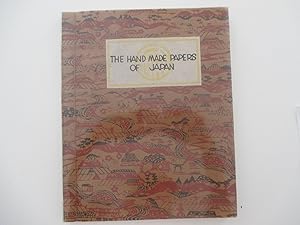
Verlag: Rutland and Tokyo, Tuttle., 1952
- Hardcover
- Erstausgabe
Anbieter: Michael Steinbach Rare Books, Wien, ÖsterreichMichael Steinbach Rare Books
Verkäufer/-in kontaktierenVerkäufer/-in mit 5 SternenZustand: Gebraucht
EUR 3.800,00
EUR 19,50 VersandVersand von Österreich nach USAAnzahl: 1 verfügbar
In den WarenkorbVolumes 1 - 3 (off 4) 34 : 27,5 cm With 34 photographic plates, papermaking fibers, 6 lithographed plates of papermaking plants , 326 specimen samples Coloured illustrated Japanese stitch bound boards. First edition, a superb copy of the classic work on Japanese papermaking. Only published in a small edition. ''The handmade Pape…rs of Japan is one of the finest studies on Japanese paper; it is replete with specimens, including old and rare papers'' . Vol. 1 : The Handmade Papers of Japan .62 pages, 35 photographic b/w plates ( including 32 numbered showing ' a papermaking village'), a folding plate with samples showing the process of making shifu, 5 b/w plates of papermaking plants, XXIII pages. With hand-coloured reproduction of ''Kamisuki Taigiai'' (general outline of papermaking, the oldest Japanese illustrated work on papermaking dating from 1784) with English translation. Complete (though without the envelope of fibres). - Vol II: The Seki collection. XI, 127 pages, photographic frontispiece-portrait of Yoshikuni seki, 187 mounted original paper specimens from Mr. Seki's collection, dating from Nara period(710-793) to 1923 (each paper has been carefully authenticated, with complete description, type method of manufacture noted 9, 2 folding'' papermaking maps of Old and New Japan'' , complete. - Vol. III:The contemporary collection. XXVI pages, 139 full-page specimens of modern papers from 18 prefectures, complete. -Missing Vol. IV on watermarks. -Hand-stencilled paper covers and endpaper illustrations made especially for this book by Keisuke Serizawa. - A fine copy of a fascinanting work.
 Weitere Bilder
Anbieter: RARE ORIENTAL BOOK CO., ABAA, ILAB, Aptos, CA, USARARE ORIENTAL BOOK CO., ABAA, ILAB
Verkäufer/-in kontaktierenVerkäufer/-in mit 5 SternenZustand: Gebraucht
EUR 90,14
EUR 10,50 VersandVersand innerhalb von USAAnzahl: 1 verfügbar
In den Warenkorb[Japan c. 1920's, n.p.]. A group of wonderful color papers, each 22.5 x 23.5 cm., uniquely decorated in color, charming examples of Japanese creativity & style, Some likely used to cover sliding Fusuma type doors, or as packaging for native . *** **** *** . . AN EXCELLENT EXAMPLES OF JAPAN'S FINEST COLOR DESIGNS . . . SUPERBLY &… BEAUTIFUL EXAMPLES STENCIL PRINTED . . . . SOME PRINTED USING THE RARE SILVER COLOR . * A fine example of Japan's most brilliant design skills, stenciled in full color. Excellent group of native Japanese traditional designs. . Themes include bamboo, ocean waves, birds, butterflies, geometric patterns as found on summer Yukata [Kimono like cotton gown], and for use in a host of other Japanese textiles. Beautifully done. . *** PROVENANCE: This group of papers were from a collection of other various Japanese decorated papers & handmade papers acquired from Thomas K. Tindale. He was a famous author of the most exhaustive Japanese Handmade Paper sample book. Please inquire with us for more and others by, about and from the Tindale collection posted to our website. . *** Color photos are posted to our network. . *.
Anbieter: RARE ORIENTAL BOOK CO., ABAA, ILAB, Aptos, CA, USARARE ORIENTAL BOOK CO., ABAA, ILAB
Verkäufer/-in kontaktierenVerkäufer/-in mit 5 SternenZustand: Gebraucht
EUR 766,16
EUR 10,50 VersandVersand innerhalb von USAAnzahl: 1 verfügbar
In den Warenkorb[Tokyo 1952, Tindale]. Cloth covered accordion folded album, size 9 x 29 cm.,with two 8th century specimens and 12 others from 1180~1632 C.E., plus 14 other 1950's examples, clean & solid, no issues. *A UNIQUE GROUP OF PRIMITIVE WASHI PAPERS* . *** **** *** . . ORIGINAL PAPER SPECIMENTS FROM THE "SEKI COLLECTION" . . . CONTAINS…PRIMITIVE EXAMPLES FROM 8TH ~ TO 17TH CENTURIES . . . PLUS 14 1950'S SPECIMENS, NEATLY TIPPED IN TO AN ALBUM . . . WITH A TOTAL 0F 30 SPECIMENS IN ALL . . . FIRST & ONLY HAND-NUMBERED EDITION OF 3 COPIES ! . * This group of original period specimens are from what remained after Thomas K. Tindale compiled his historic and landmark volume 2 of a 4 volume set; THE HAND MADE PAPERS OF JAPAN, published in 1952 in a LIMITED EDITION OF 250 copies. . The highlight of Tindale's book was his acquisition of the SEKI Yoshikuni collection of authentic, ancient paper specimens, beginning in 626 & 740 C.E., down to the mid-seventeenth century. In all there are 15 ancient specimens tipped in. The last is a sample of the end papers of the SEKI COLLECTION volume, in color stencil by SERIZAWA Keisuke, a leading exponent of the Japanese folk-art or " "Sosaku" movement of the 1960's. . This specimen book is arranged by SEKI COLLECTION page numbers, not chronologically. The specimens follow exactly the order that Tindale arranged each example, organized by geographical location of the Washi [handmade fiber] paper maker's village, by "Kuni" [prefecture/state]. . The album begins with a tipped-in, blind-stamped embossed Tindale logo on Washi paper on the first fly-leaf. . The two stunning 8th century C.E. examples are exceedingly RARE and unfound in any other Japanese paper making reference book. The 'one-and-only' place these authenticated originals are found are in the SEKI COLLECTION. . During the years 1977~1979, we acquired the Tindale private collection of Washi papers. Among this collection were the remnants and remaining duplicates for the SEKI COLLECTION volume 2 of the full set. . The few remaining specimens have been gently tipped in to an accordion folding 1960's Chinese album, with brocade cloth covers. . The specimens continue from 1180 C.E., down to 1632 C.E. The full list of 15 specimens are: . Page # Name, period, name of Japanese fiber ____ _ ____ ______ ______________________ . 2. KOMASHI made in the twelfth year of Tempyo [740] . 4. HAKUMASHI made in the early years of the Kamakura . Period [ca. 1200], made of Kozo . 5. KONSHI made at the beginning of the Kamakura period . [ca. 1186], made of Gampi . 6. KONSHI made during the Kwan-ei era [1624-1643], made . of Gampi . 7. KAJIGAMI taken from the Abidon-ron, a Buddhist sacred . writings copied by the Priest Kokaku & others in . the sixth year of Tempyo-Hoji [726], made of Kozo, . backed with Kozo paper . 8. HISHI made in the third year of Bumpo [1329], made of . Gampi . 9. CHOSHI made in the second year of Tai-ei [1522], made . of Kozo . 10. CHOSHI dating from the late Heian period [ca. 1180], . made of Kozo . 11. KOCHOSHI second year of Gennin [1225] made of Kozo. . 12. CHOSHI made in the second year of Shochu [1325], made . of Kozo . 13. KOCHOSHI made in the ninth year of Oei [1402], made of . Kozo . 14. SUKIKAESHI-GAMI made at the beginning of the Kamakura . period [ca. 1186] remade of Kozo paper . 16. KASUGA-BAN paper made sometime between the later years . of the Kamakura period [1184-1134] and the later . years of the Nambokucho period [1336-1393], made of . Kozo . 17. KASUGA-BAN paper made in the seventeenth year of Oei . [1410], made of Kozo . 18. KOYA-BAN paper made in the ninth year of Kwan-ei . [1632], made of Kozo . The Last Sample: SERIZAWA, Keisuke: samples of the handmade Washi end-papers, with color stenciled designs by the "Living National Treasure," designated by the Japanese Government as found in all end-papers of the three specimen volumes of the Tindale set. . . * * * In addition to the above, the specimen book continues with 14 contempo.
Anbieter: RARE ORIENTAL BOOK CO., ABAA, ILAB, Aptos, CA, USARARE ORIENTAL BOOK CO., ABAA, ILAB
Verkäufer/-in kontaktierenVerkäufer/-in mit 5 SternenZustand: Gebraucht
EUR 4.506,80
EUR 10,50 VersandVersand innerhalb von USAAnzahl: 1 verfügbar
In den Warenkorb[Tokyo, 1952, Tindale]. Stitched stiff stencil-printed wrs., excellent, RARE "MANUSCRIPT DUMMY" unique "one-of-a-kind" original item, 27.4 30.4 cm.,[117p.], 185 original specimens tipped-in, an excellent example.* RARE ORIGINAL MANUSCRIPT * . *** **** *** . . THOMAS K. TINDALE'S MANUSCRIPT COPY OF THE FAMOUS . . . SEKI COLLECTIO…N OF 185 ORIGINAL TIPPED-IN WASHI SPECIMENS . . . HIS HAND-MADE "MOCK-UP DUMMY" COPY WITH ANNOTATIONS . . . "ONE-OF-A-KIND MANUSCRIPT LAYOUT" OF HIS VOLUME 2 . . . THE FIRST & ONLY MANUSCRIPT LIMITED TO ONE COPY ! . . * . . "THE SEKI COLLECTION" . . WITH SEKI YASUKUNI'S FULL-PAGE PHOTO & BRUSHED AUTOGRAPH . * This title is part of the most ambitious research project ever conceived on the subject of Handmade Papers of Japan, It was the 'brain child' of Thomas Tindale, an American civil servant employed in occupied Japan from ca. 1947-1952. . This title took Tindale several years to research while in Japan, where he acquired a remarkable collection of 187 authenticated Washi [handmade] Japanese fiber specimen papers. The results of this most exhaustive study was the monumental and impressive set of four volumes entitled THE HANDMADE PAPERS OF JAPAN. It was the most ambitious and prolific monograph on the subject, it was published in 1952, in a FIRST & ONLY LIMITED EDITION OF 250 COPIES. A scan of the pre-publication publisher's prospectus is posted to our website. It mistakenly states the edition to be 150 copies in two places. According to Tindale archives, actually 252 were printed in all. . The corner-stone of the four-volume set, was Tindale's stunning acquisition of the famous SEKI COLLECTION, from the celebrated and most well-known researcher & Washi paper scholar, SEKI Yoshikuni, a Shinto priest & celebrated ancient Japanese Washi paper collector. . . *** THE SEKI COLLECTION contains an introduction by Tindale, followed by a foreword by Seki Yoshikuni. The book is divided into two parts: . Part I: PAPERS USED FOR THE COPYING OF BUDDHIST SACRED WRITINGS. . Part II: PROCESSED PAPERS . THE CONTENTS: This collection contains a superb collection of 185 authenticated and original paper specimens from the most amazing & earliest Washi papers ever made in Japan. Beginning with a Komashi dated 740 C.E. The specimens continues with several other very early C.E. samples, i.e.: Kajigami 762; Choshi 1180; Konshi & Sukikaeshi-gami; 1186; Hakumashi 1200; Kochoshi; 1225; Hishi 1319, Choshi 1325; and onwards down to 1951. With two fascinating stiff paper money specimens: Nagasawa Hanasatsu 1730 & Yanagimoto Hanasatsu 1830, printed on two sides. . *** THIS UNIQUE "MANUSCRIPT" COPY WAS CREATED BY TINDALE, IT WAS HIS FIRST & ONLY "MOCK-UP" GIVEN TO HIS PUBLISHER: . We now offer for the first time this important and impressive volume: THE SEKI COLLECTION manuscript 'mock-up dummy' volume from Tindale's personal collection. . This copy contains Tindale's personal blind-stamped embossed logo tipped-in to the first fly-leaf of this example. The red-cinnabar printed logo was printed on the title pages of the other volumes of his THE HANDMADE PAPERS OF JAPAN. While it is the same logo, only his blind-stamped, embossed logo is found on books from his personal library collection. . The embossed logo, was actually impressed on books in his personal library. It is similar to the Hanko [seal/chop] which was found on all title pages of his book, but printed in red-cinnabar ink. This manuscript copy did not yet have his red Hanko, but he penciled in a circle on the title page, indicating where the red logo was his it was to be placed. It was left blank. . This copy has many of Tindale's personal penciled notes and other marks indicating what subtitles, contents titles and other notes to the publisher indicating the 'lay-out' of the book contents. There are also penned numbers throughout the manuscript indicating paper specimen numbers. . The manuscript texts and descriptions were created from either typed pages, 'scotch-taped' in.


