Gesamtpreis (1 Artikel Artikel):
Versandziel:

tammy grimes (6 Ergebnisse)
Direkt zu den wichtigsten Suchergebnissen
Suchfilter
Produktart
- Alle Product Types
- Bücher (2)
- Magazine & Zeitschriften (Keine weiteren Ergebnisse entsprechen dieser Verfeinerung)
- Comics (Keine weiteren Ergebnisse entsprechen dieser Verfeinerung)
- Noten (Keine weiteren Ergebnisse entsprechen dieser Verfeinerung)
- Kunst, Grafik & Poster (Keine weiteren Ergebnisse entsprechen dieser Verfeinerung)
- Fotografien (1)
- Karten (Keine weiteren Ergebnisse entsprechen dieser Verfeinerung)
- Manuskripte & Papierantiquitäten (3)
Zustand Mehr dazu
- Neu (Keine weiteren Ergebnisse entsprechen dieser Verfeinerung)
- Wie Neu, Sehr Gut oder Gut Bis Sehr Gut (Keine weiteren Ergebnisse entsprechen dieser Verfeinerung)
- Gut oder Befriedigend (3)
- Ausreichend oder Schlecht (Keine weiteren Ergebnisse entsprechen dieser Verfeinerung)
- Wie beschrieben (3)
Einband
Weitere Eigenschaften
- Erstausgabe (Keine weiteren Ergebnisse entsprechen dieser Verfeinerung)
- Signiert (Keine weiteren Ergebnisse entsprechen dieser Verfeinerung)
- Schutzumschlag (Keine weiteren Ergebnisse entsprechen dieser Verfeinerung)
- Angebotsfoto (4)
Sprache (2)
Gratisversand
Land des Verkäufers
Verkäuferbewertung
-
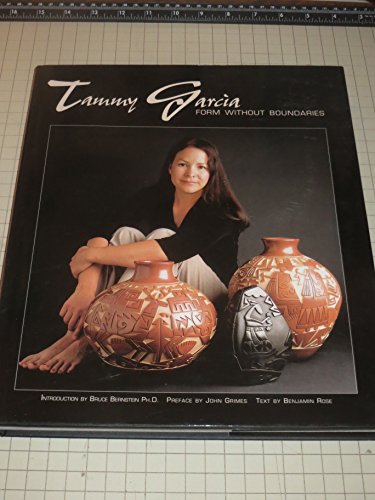
Tammy Garcia : Form Without Boundaries
Anbieter: Better World Books, Mishawaka, IN, USA
Verkäuferbewertung 5 von 5 Sternen

Zustand: Good. Pages intact with minimal writing/highlighting. The binding may be loose and creased. Dust jackets/supplements are not included. Stock photo provided. Product includes identifying sticker. Better World Books: Buy Books. Do Good.
-
Tammy Garcia : Form Without Boundaries
Anbieter: Better World Books: West, Reno, NV, USA
Verkäuferbewertung 5 von 5 Sternen
Zustand: Good. Former library copy. Pages intact with minimal writing/highlighting. The binding may be loose and creased. Dust jackets/supplements are not included. Includes library markings. Stock photo provided. Product includes identifying sticker. Better World Books: Buy Books. Do Good.
-
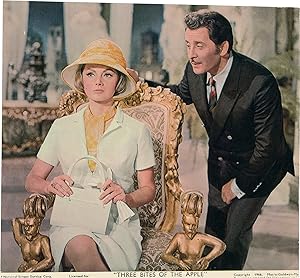
Three Bites of the Apple (Two original photographs from the 1967 film)
Verlag: Metro-Goldwyn-Mayer [MGM], Beverly Hills, CA, 1966
Anbieter: Royal Books, Inc., ABAA, Baltimore, MD, USA
Verkäuferbewertung 5 von 5 Sternen
Fotografie
Two vintage color studio still photographs from the 1967 film. A British tourist wins a large amount of money gambling in Italy. He tries to smuggle the money through a Swiss bank account so he does not lose any of the money to British taxes. A woman he met at the casino offers to help but wants the money herself. Set in the Italian Riviera, shot on location in Veneto, and Liguria, Italy. One photograph 7.5 x 7.25 inches, one photograph 8.5 x 7 inches, both photographs trimmed. Very Good plus, one photograph with creasing at the corners.
-

Announcement for the Memorial Service for Philippe Halsman on July 25, 1979, together with a list of the 14 speakers
Verlag: New York: Society for Ethical Culture., 1979
Anbieter: Wittenborn Art Books, San Francisco, CA, USA
Verkäuferbewertung 5 von 5 Sternen
Manuskript / Papierantiquität
Zustand: Good. Printed card 9 x 12.5cm. and letter size list of speakers. Dated October 20, 1974. .Text below by Mary Panzer,Curator of PhotographsNational Portrait Gallery, Smithsonian Institution.Philippe Halsman (1906-1979) was born in Riga, Latvia. He studied engineering in Dresden before moving to Paris, where he set up his photographic studio in 1932. Halsman's bold, spontaneous style won him many admirers. His portraits of actors and authors appeared on book jackets and in magazines; he worked with fashion (especially hat designs), and filled commissions for private clients. By 1936, Halsman was known as one of the best portrait photographers in France.From the 1940s through the 1970s, Philippe Halsman's sparkling portraits of celebrities, intellectuals, and politicians appeared on the covers and pages of the big picture magazines, including Look, Esquire, the Saturday Evening Post, Paris Match, and especially Life. His work also appeared in advertisements and publicity for clients like Elizabeth Arden cosmetics, NBC, Simon & Schuster, and Ford. Photographers, amateur as well as professional, admired Halsman's stunning images. In 1958, a poll conducted by Popular Photography named Halsman one of the "World's Ten Greatest Photographers" along with Irving Penn, Richard Avedon, Ansel Adams, Henri Cartier-Bresson, Alfred Eisenstaedt, Ernst Haas, Yousuf Karsh, Gjon Mili, and Eugene Smith. Altogether, Halsman's images form a vivid picture of prosperous American society in the middle years of the twentieth century. "Philippe Halsman: A Retrospective" is the first historical survey of his work.Halsman's career came to a dramatic halt in the summer of 1940, when Hitler's troops invaded Paris. Albert EinsteinHis wife, daughter, sister, and brother-in-law, who all held French passports, immigrated to America, but as a Latvian citizen, Philippe Halsman could not obtain a visa. For several long months he waited in Marseilles along with many others who were forced to escape fascist Europe. Finally, through the intervention of Albert Einstein (who had met Halsman's sister in the 1920s), Halsman obtained permission to enter the United States, and he arrived in New York in November 1940 with little more than his camera.Halsman's big break came when he met Connie Ford, a striking young model who agreed to pose in exchange for prints for her portfolio.Constance Ford When publicists at Elizabeth Arden saw Halsman's photograph of Ford against an American flag, they used the image to launch a national campaign for "Victory Red" lipstick. A year later, in the fall of 1942, Life asked Halsman to shoot a story on new hat design. To Halsman's delight, his portrait of the model smiling through a feathery brim landed on the cover. One hundred more covers followed before the magazine ceased weekly publication in 1972.When Halsman began working for Life, the magazine was only six years old, and photojournalism was still a new field. Before the existence of Life and its competitors, Americans learned about the world from newspapers, radio, and newsreels. But the new picture magazines published pages filled with bright, dramatic photographs, bringing Americans vivid information that no other media could match. Frank SinatraIn the spirit of a variety show, or a world's fair, magazines combined stories about international politics, everyday life, news events, celebrities, exotic scenery, and humor to prove that "so much of the world, so judiciously selected, had never been seen before in one place." Today, to understand the significance of those great magazines, we need only look at the many forms of mass media that have come to replace them. Now, we find photographs on television and billboards; in special publications devoted to news, people, fashion, or sports; in newspapers; in museums and galleries; and on the Internet. And, ironically, the more places there are to see photographs, the harder it is to attract viewers. But in 1942, when Philippe Halsman's portrait simply appeared on the cover of Life and immediately reached a large, united audience.Surrealism:.In Paris, Halsman studied the work of other artists and photographers, especially the surrealists, from whom he learned to make images that surprised his viewers. By including homely, and ultimately disturbing, details, he gave his subjects memorable tension. Through subtle lighting, sharp focus, and close cropping, he turned formal fashion shots into serious investigations of character. When Halsman posed NBC comedians against bare white paper, eliminating all defining context, their isolation made them look both frail and funny.Salvidor Dali Most important of all, from the surrealists' exploration of the erotic unconscious, Halsman learned how to combine glamour, sex, and wholesome energy in one portrait. This unusual ability made him Life's favorite photographer for sensual stars like Marilyn Monroe and Brigitte Bardot. Halsman's sympathy for surrealism also led to his long, productive friendship with Salvador Dali. Halsman met Dali on assignment in 1941, and over the next three decades they became partners on many projects, including a series of playful tableaux that had all the disturbing irrationality of dreams or a painting by Dali. Their most notable production was "Dali Atomicus", in which the artist, his canvas, furniture, cats, and water all appear suspended in air.Psychological Portraiture:.Over the course of his career, Halsman enjoyed comparing his work to that of a good psychologist who regards his subjects with special insight. With his courtly manners and European accent, Halsman also fit the popular stereotype at a time when Americans regarded psychology with fascinated skepticism. In fact, Halsman was proud of his ability to reveal the character of his sitters. As he explained, "It can't be done by pushing the person into position or arranging his head at a certain angle. It must be accomplished by provoking the victim, amusing him with jokes, lullin.
-
'Twas the Night Before Christmas (Original screenplay for the 1974 animated Christmas television special)
Verlag: Rankin/Bass Productions, Los Angeles, 1974
Anbieter: Royal Books, Inc., ABAA, Baltimore, MD, USA
Verkäuferbewertung 5 von 5 Sternen
Manuskript / Papierantiquität
Draft script for the 1974 animated Christmas television special, originally aired on CBS on December 8, 1974. From the archive of screenwriter Jerome Coopersmith. A children's Christmas tale loosely based on Clement Moore's classic 1823 poem. Although produced in the US, the special was animated in Japan by Topcraft, an animation studio later linked to Studio Ghibli. Topcraft would collaborate numerous times with Rankin/Bass throughout the 1970s and 1980s, most notably on "The Hobbit" (1977) and "The Last Unicorn" (1982). Script housed in a mylar folder with a navy blue binding. Pink titled William Morris Agency wrappers. Title page present, dated 3-12-74, with credits for Moore and screenwriter Jerome Coopersmith. 36 leaves, with last page of text numbered 34. Mimeograph duplication, rectos only. Pages Near Fine, wrappers Near Fine, bound internally with three silver brads.
-
The Borrowers (Original screenplay for the 1973 television movie)
Verlag: Vineyard Films, New York, 1973
Anbieter: Royal Books, Inc., ABAA, Baltimore, MD, USA
Verkäuferbewertung 5 von 5 Sternen
Manuskript / Papierantiquität
Draft script for the 1973 television movie. Working copy belonging to an unidentified crew member, with annotations in manuscript pencil on virtually all of the pages, most underlining scenes and many denoting moments requiring blue screen and other elements needed for special effects shots. With five printed black-and-white illustrations from the source novel bound in before the script. Not to be confused with the 1997 film. Based on the 1952 Carnegie Medal-winning children's novel by Mary Norton, about a young boy who discovers the Clocks, a family of tiny people, living under the floorboards of his home. Originally aired on December 14, 1973, on NBC. Nominated for five Primetime Emmy Awards, winning one for Achievement in Children's Programming. Shot partially on location in Whitby, Ontario. Mustard titled Studio Duplicating Service wrappers. Title page present, undated, with credits for Norton and screenwriter Jay Presson Allen. 158 leaves, with last page of text numbered 154. Mimeograph duplication, rectos only. Pages Near Fine, wrapper Very Good, bound with two gold screw brads.