

Gesamtpreis (1 Artikel Artikel):
Versandziel:

shmida (4 Ergebnisse)
Direkt zu den wichtigsten Suchergebnissen
Suchfilter
Produktart
- Alle Product Types
- Bücher (4)
- Magazine & Zeitschriften (Keine weiteren Ergebnisse entsprechen dieser Verfeinerung)
- Comics (Keine weiteren Ergebnisse entsprechen dieser Verfeinerung)
- Noten (Keine weiteren Ergebnisse entsprechen dieser Verfeinerung)
- Kunst, Grafik & Poster (Keine weiteren Ergebnisse entsprechen dieser Verfeinerung)
- Fotografien (Keine weiteren Ergebnisse entsprechen dieser Verfeinerung)
- Karten (Keine weiteren Ergebnisse entsprechen dieser Verfeinerung)
- Manuskripte & Papierantiquitäten (Keine weiteren Ergebnisse entsprechen dieser Verfeinerung)
Zustand Mehr dazu
- Neu (1)
- Wie Neu, Sehr Gut oder Gut Bis Sehr Gut (1)
- Gut oder Befriedigend (2)
- Ausreichend oder Schlecht (Keine weiteren Ergebnisse entsprechen dieser Verfeinerung)
- Wie beschrieben (Keine weiteren Ergebnisse entsprechen dieser Verfeinerung)
Einband
- alle Einbände
- Hardcover (4)
- Softcover (Keine weiteren Ergebnisse entsprechen dieser Verfeinerung)
Weitere Eigenschaften
- Erstausgabe (Keine weiteren Ergebnisse entsprechen dieser Verfeinerung)
- Signiert (Keine weiteren Ergebnisse entsprechen dieser Verfeinerung)
- Schutzumschlag (Keine weiteren Ergebnisse entsprechen dieser Verfeinerung)
- Angebotsfoto (4)
Sprache (1)
Gratisversand
- Kostenloser Versand nach USA (Keine weiteren Ergebnisse entsprechen dieser Verfeinerung)
Land des Verkäufers
Verkäuferbewertung
-
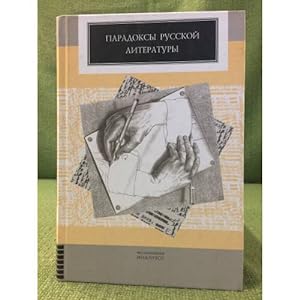
Paradoksy russkoj literatury. Sbornik statej
Verlag: Inapress. Sankt-Peterburg. 2001, 2001
Anbieter: ISIA Media Verlag UG | Bukinist, Leipzig, Deutschland
Verkäuferbewertung 5 von 5 Sternen

Hardcover/Hardback. Zustand: As New. Sbornik osnovyvaetsya na simpoziume, sostoyavshemsya v oktyabre 1999 goda v Gamburge, sobravshem dlya diskussij vydayushchikhsya filologov. Avtory sbornika zanyaty izucheniem paradoksalnosti russkoj literatury raznykh epokh - ot pozdnego srednevekovya do rannego postmodernizma.
-
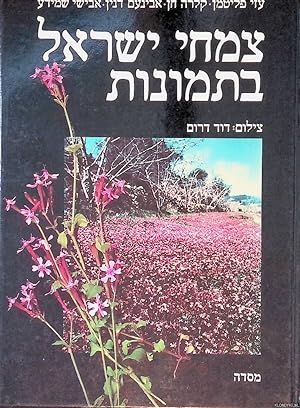
Pictorial Flora of Israel (Hebrew edition)
Verlag: Jerusalem : The Hebrew University/Massade Limited, 1983
Zustand: Good. Original pictorial boards, richly illusrrated with colour photographs, text in Hebrew, Preface, Index and captions also in English, small 4to.
-
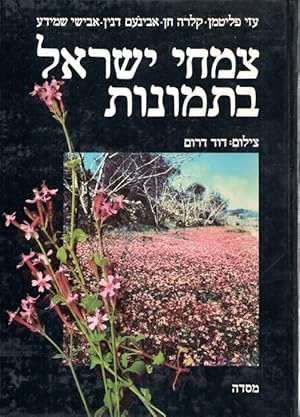
Pictorial Flora of Israel
Verlag: Hebrew University, Jerusalem, 1982
Anbieter: PEMBERLEY NATURAL HISTORY BOOKS BA, ABA, Iver, Vereinigtes Königreich
Verbandsmitglied: ABA ILAB PBFA
Verkäuferbewertung 5 von 5 Sternen
EUR 59,57
EUR 25,45 Versand
Versand von Vereinigtes Königreich nach USAAnzahl: 1 verfügbar
In den WarenkorbZustand: Very Good. 338, numerous col photos, distribution maps. . HB. Vg. Text Hebrew with English preface and index.
-
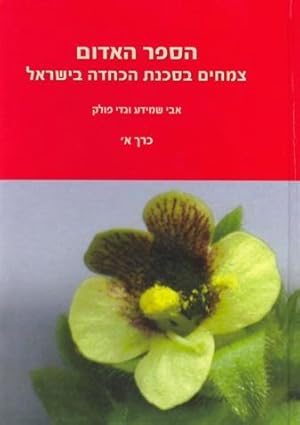
ha-Sefer ha-adom : Tsemahim be-sakanat hakhhadah be-Yisra'el = Red Data Book: Endangered Plants of Israel Volume 1
Verlag: Israel Nature & National Parks, 2007
ISBN 10: 9659046669 ISBN 13: 9789659046669
Anbieter: Joseph Burridge Books, Dagenham, Vereinigtes Königreich
Verkäuferbewertung 5 von 5 Sternen
EUR 131,06
EUR 31,23 Versand
Versand von Vereinigtes Königreich nach USAAnzahl: 1 verfügbar
In den WarenkorbHardcover. Zustand: New. 496 pages : illustrations, color maps ; 25 cm. in Hebrew. Introductory matter and index in English. 'Four-hundred-thirteen Plant species are endangered in Israel, including 36 species that have been extinct since the 1960s. Many of these plants are very rare, some are endemic to Israel, and others have been declining due to habitat destruction. The Red Data Book presents all the information about these endangered species, including a detailed description, global and local distribution, biogeographical and systematic aspects, present conservation status, and recommedations for management. A distribution map and a photograph of the plant accompany the text. Each "red plant" is charecterized by the "Red Number", determined by six quantative criteria based on extensive field surveys: rarity, vulnerability, endemism, attractiveness, peripherality, and disjunctiveness. The Red Number grades the extinction risk of each plant, where 0 denotes no risk and 10 the highest.'.
