

Gesamtpreis (1 Artikel Artikel):
Versandziel:

scandal (24 Ergebnisse)
Direkt zu den wichtigsten Suchergebnissen
Suchfilter
Produktart
- Alle Product Types
- Bücher (22)
- Magazine & Zeitschriften (Keine weiteren Ergebnisse entsprechen dieser Verfeinerung)
- Comics (Keine weiteren Ergebnisse entsprechen dieser Verfeinerung)
- Noten (Keine weiteren Ergebnisse entsprechen dieser Verfeinerung)
- Kunst, Grafik & Poster (Keine weiteren Ergebnisse entsprechen dieser Verfeinerung)
- Fotografien (Keine weiteren Ergebnisse entsprechen dieser Verfeinerung)
- Karten (Keine weiteren Ergebnisse entsprechen dieser Verfeinerung)
- Manuskripte & Papierantiquitäten (2)
Zustand Mehr dazu
- Neu (8)
- Wie Neu, Sehr Gut oder Gut Bis Sehr Gut (1)
- Gut oder Befriedigend (8)
- Ausreichend oder Schlecht (Keine weiteren Ergebnisse entsprechen dieser Verfeinerung)
- Wie beschrieben (7)
Einband
Weitere Eigenschaften
Sprache (4)
Gratisversand
Land des Verkäufers
Verkäuferbewertung
-
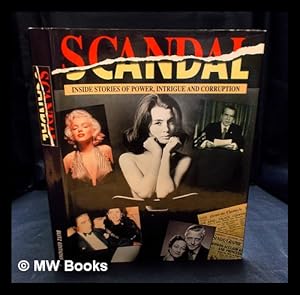
First Edition. Very good copy in illustrated boards, in a very good, if slightly edge-nicked and dust-toned dust-wrapper, now mylar-sleeved. Remains particularly well-preserved overall. Physical Description: 296 pages : illustrations (some color) ; 31 cm. Subjects: Histoire Miscellanées; History; History Miscellanea; Scandales; Scandales Histoire; Scandals; Scandals History; Trivia and miscellanea. 3 Kg.
-

White, T. H.
Verlag: G. P. Putnum's Sons, N.Y., 1952
Anbieter: G. F. Wilkinson Books, member IOBA, GRASS VALLEY, CA, USA
Verbandsmitglied: IOBA
Verkäuferbewertung 5 von 5 Sternen

Erstausgabe
Hardcover. Zustand: Very Good. Zustand des Schutzumschlags: Very Good. 1st Edition. Cloth with moderate foxing top edge, in dust jacket with small 'printed in England' stamp front flap; soil to back panel; minor foxing to jacket at leading edges.
-

Forbidden Embraces (Intimate Confessions)
Anbieter: Ria Christie Collections, Uxbridge, Vereinigtes Königreich
Verkäuferbewertung 5 von 5 Sternen
EUR 14,95
EUR 13,81 Versand
Versand von Vereinigtes Königreich nach USAAnzahl: Mehr als 20 verfügbar
In den WarenkorbZustand: New. In.
-

Intimate Confessions
Anbieter: Ria Christie Collections, Uxbridge, Vereinigtes Königreich
Verkäuferbewertung 5 von 5 Sternen
EUR 14,95
EUR 13,81 Versand
Versand von Vereinigtes Königreich nach USAAnzahl: Mehr als 20 verfügbar
In den WarenkorbZustand: New. In.
-

Sinful Pleasures: An Anthology of Erotic Tales
Anbieter: Ria Christie Collections, Uxbridge, Vereinigtes Königreich
Verkäuferbewertung 5 von 5 Sternen
EUR 16,15
EUR 13,81 Versand
Versand von Vereinigtes Königreich nach USAAnzahl: Mehr als 20 verfügbar
In den WarenkorbZustand: New. In.
-

There's No Happy Ending
Anbieter: Ria Christie Collections, Uxbridge, Vereinigtes Königreich
Verkäuferbewertung 5 von 5 Sternen
EUR 18,34
EUR 13,81 Versand
Versand von Vereinigtes Königreich nach USAAnzahl: Mehr als 20 verfügbar
In den WarenkorbZustand: New. In.
-
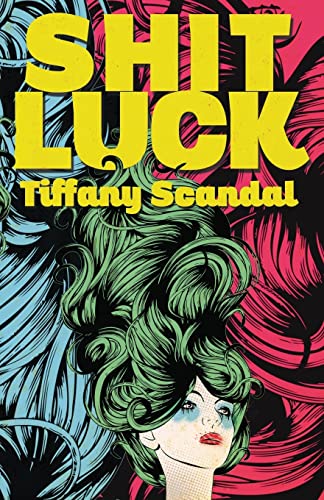
Shit Luck
Anbieter: Ria Christie Collections, Uxbridge, Vereinigtes Königreich
Verkäuferbewertung 5 von 5 Sternen
EUR 19,52
EUR 13,81 Versand
Versand von Vereinigtes Königreich nach USAAnzahl: Mehr als 20 verfügbar
In den WarenkorbZustand: New. In.
-

Nasty Vol. 2
Anbieter: Revaluation Books, Exeter, Vereinigtes Königreich
Verkäuferbewertung 5 von 5 Sternen
EUR 21,88
EUR 11,52 Versand
Versand von Vereinigtes Königreich nach USAAnzahl: 1 verfügbar
In den WarenkorbPaperback. Zustand: Brand New. 174 pages. 8.00x5.00x0.40 inches. In Stock.
-

Monstruos bizarros: 7 (Midian)
Anbieter: Kennys Bookstore, Olney, MD, USA
Verkäuferbewertung 5 von 5 Sternen
Zustand: New.
-
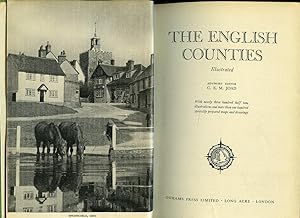
The English Counties
Verlag: Published by Odhams Press Limited, London reprinted edition. 1949., 1949
Anbieter: Little Stour Books PBFA Member, Canterbury, Vereinigtes Königreich
Verbandsmitglied: PBFA
Verkäuferbewertung 5 von 5 Sternen
EUR 8,91
EUR 34,57 Versand
Versand von Vereinigtes Königreich nach USAAnzahl: 1 verfügbar
In den WarenkorbHard back green cloth covers. 512 pp. 300 half tone illustrations, 100 maps and drawings of Kent by Richard Church. Former message to the front free end paper. In Very Good condition, no dust wrapper. Member of the P.B.F.A. RURAL VILLAGE LIFE.
-
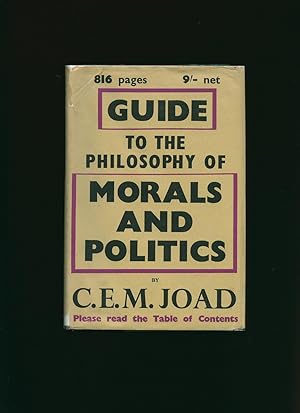
Guide To The Philosophy of Morals and Politics
Verlag: Published by Victor Gollancz Ltd., 14 Henrietta Street, Covent Garden, London Fifth Impression February . London 1945., 1945
Anbieter: Little Stour Books PBFA Member, Canterbury, Vereinigtes Königreich
Verbandsmitglied: PBFA
Verkäuferbewertung 5 von 5 Sternen
EUR 9,50
EUR 34,57 Versand
Versand von Vereinigtes Königreich nach USAAnzahl: 1 verfügbar
In den WarenkorbHard back binding in publisher's original sky blue cloth covers, gilt title and author lettering to the spine. 8vo. 7½'' x 5¼''. Contains 816 printed pages of text. Corners creased, sun bleaching to the upper and lower spine ends where pieces of the wrapper are missing, age darkened page edges. Near Very Good condition book in Very Good condition dust wrapper with small chips to the upper and lower spine end. Dust wrapper supplied in archive acetate film protection, this preserves and prolongs the life of the paper, it is not adhered to the book or to the dust wrapper. Member of the P.B.F.A. PHILOSOPHY.
-
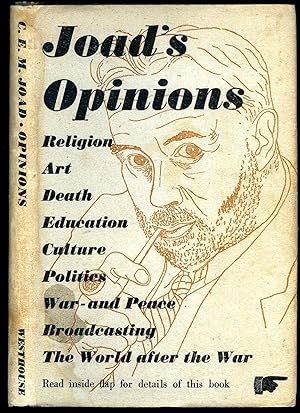
Joad's Opinions
Verlag: Published by Westhouse Ltd., 49 Chancery Lane, London, First Edition . 1945., 1945
Anbieter: Little Stour Books PBFA Member, Canterbury, Vereinigtes Königreich
Verbandsmitglied: PBFA
Verkäuferbewertung 5 von 5 Sternen
Erstausgabe
EUR 10,68
EUR 34,57 Versand
Versand von Vereinigtes Königreich nach USAAnzahl: 1 verfügbar
In den WarenkorbFirst edition hard back binding in publisher's original black cloth covers, gilt title and author lettering to the spine. 8vo. 9'' x 6''. Contains 198 + index printed pages of text. Very Good condition book in Very Good condition dust wrapper with slight age darkening of the paper down the spine, not price clipped, 9/6. Dust wrapper supplied in archive acetate film protection. Member of the P.B.F.A. PHILOSOPHY.
-
Le procès du Panama
Verlag: Charaire, 1900
Anbieter: LIBRAIRIE GIL-ARTGIL SARL, RODEZ, Frankreich
Verkäuferbewertung 4 von 5 Sternen
 Sonderangebot
EUR 9,00
EUR 37,00 Versand
Versand von Frankreich nach USAAnzahl: 1 verfügbar
In den WarenkorbParis, Charaire Vers 1900. Plaquette in-8 broché de 31 pages illustrées. Petite tache sur l'angle inférieur des pages.
-

Zustand: New.
-

LAURA LA PLANTE (1904-96) US-amerikanische Schauspielerin. Bereits mit 20 war sie der größte Star der Universal Studios und wurde meist als das nette Mädchen von nebenan in Komödien eingesetzt. 1923 wurde sie einer der WAMPAS Baby Stars des Jahres; u.a. in : 1926: Charleston ist Trumpf (Skinner?s Dress Suit) 1926: Die Tänzerin des Zaren (The Midnight Sun) 1927: Spuk im Schloß (The Cat and the Canary) 1929: Showboat (Show Boat) 1929: Die Liebesfalle (The Love Trap) 1929: Die letzte Warnung (The Last Warning) 1929: Zarte Schultern (Scandal)
Anbieter: Herbst-Auktionen, Detmold, Deutschland
Verkäuferbewertung 3 von 5 Sternen

Signiert
Autogrammkarte (blanko, Leinen) mit eigenhändiger Alters-Unterschrift signiert - mit Repro-Porträtfoto unter bordeauxrotes Passepartout (4 to) gerahmt.
-
![Bild des Verkäufers für Kertas Hitam Skandal BMF. Kerajaan BN. [BMF Scandal Black Paper. BN Government]. zum Verkauf von Asia Bookroom ANZAAB/ILAB](https://pictures.abebooks.com/inventory/md/md32379353424.jpg)
Kertas Hitam Skandal BMF. Kerajaan BN. [BMF Scandal Black Paper. BN Government].
Verlag: Partai Sosialis Rakyat Malaysia. (Circa1983)., Johor Bahru., 1983
Anbieter: Asia Bookroom ANZAAB/ILAB, Canberra, ACT, Australien
Verkäuferbewertung 5 von 5 Sternen
Black and white photographic and line illustrations, 56pp. Text in Malay. 15 x 10cm. A compact discussion of the BMF corruption scandal.
-
The Scandal of Father Brown
Verlag: Cassell and Company, Ltd, London, 1935
Anbieter: The First Edition Rare Books, LLC, Cincinnati, OH, USA
Verbandsmitglied: ABAA ILAB IOBA MWABA
Verkäuferbewertung 5 von 5 Sternen
Erstausgabe
Cloth. Zustand: Near fine. First edition of The Scandal of Father Brown by G.K. Chesterton. (illustrator). First Edition, First Impression. Octavo, 248pp. Full blue cloth with title in gilt on spine. Stated "First Published 1935" on copyright page. Previous ownership stamp to front endpaper. Slight lean to text block, dust remnants to top edge, a near fine example. The Father Brown detective series, published between 1910 and 1936, revolves around the adventures of Father Brown, a humble Catholic priest with a remarkable talent for solving crimes. The compilations of his mysteries are titled: The Innocence of Father Brown, The Wisdom ., The Incredulity ., The Secret ., and The Scandal of Father Brown.
-
The Credit Mobilier of America; A Paper Read Before The Rhode Island Historical Society, Tuesday Evening, February 22, 1881
Verlag: Sidney S. Rider, Providence, 1881
Anbieter: The First Edition Rare Books, LLC, Cincinnati, OH, USA
Verbandsmitglied: ABAA ILAB IOBA MWABA
Verkäuferbewertung 5 von 5 Sternen
Erstausgabe Signiert
Cloth. Zustand: Very good. From the Executive Mansion library of President James A. Garfield, The Credit Mobilier of America by Rowland Hazard, a railroad construction scandal that almost ended Garfield's political aspirations. (illustrator). First Edition. Octavo, [2], 42pp, [2]. Pebbled brown cloth, title in gilt on the front cover. Historical society stamp on title page and page [43]. Small loss to linen on the spine, offsetting to front endpaper. This paper was issued in half morocco, brown cloth and paper wraps. Bookplate of James A. Garfield, which reads: "Library of James A. Garfield. Inter Folia Fructus" on the front pastedown. This copy is inscribed by the author on the copyright page: "The Executive Mansion Library / Washington DC / from the author / R. Hazard." The Crédit Mobilier scandal of 1872 involved the Union Pacific Railroad and the Crédit Mobilier construction company, whose executives created a scheme to inflate construction costs of a portion of the Transcontinental Railroad, which was backed by government grants. The stockholders retained the profits and bribed members of Congress with discounted stock options to prevent investigation. When the scandal broke publicly in 1872, it implicated several prominent politicians. Representative James A. Garfield was accused of accepting ten shares of Crédit Mobilier stock, though he denied wrongdoing and maintained that he had merely been offered the shares but never received them. While no conclusive evidence proved Garfield profited, the controversy damaged his reputation, though he weathered it politically and continued to rise in public office. Signed.
-
ORIGINAL TYPED MANUSCRIPTS by CHARLES VAN DOREN, consisting of 2 typescripts and 2 carbon typescripts for stories and 2 poems.
Verlag: 393 Bleeker Street, New York, possibly late 1950's or early 1960's., 1960
Anbieter: Blue Mountain Books & Manuscripts, Ltd., Cadyville, NY, USA
Verkäuferbewertung 5 von 5 Sternen
Zustand: Good. 393 Bleeker Street, New York, possibly late 1950's or early 1960's. . Good. - Original typed manuscripts consisting of 99 pages in all typed on 11 inch high by 8-1/2 inch wide off-white paper, with his name and address typed at the top of the first page of the first 3 stories. The first is a 17 page story titled "Lonesome Road" with his name and address typed at the top. The story's main character is Mark who, unknown to us is introduced in a flashback after the discovery of a car wreck, "When the old truck came around the corner of the road the wheel on the overturned car was still spinning. The truck stopped, and two men go out to look at the wreck. 'Jesus, Tom,' one of them said. 'Jesus, what a mess.'." The story goes on to relate how Mark, now driving drunk with a gun, has discovered that his wife is cheating with his best friend. Driving away after the heated painful confrontation, Mark encounters a dog "In front of Marston's barn a large black dog ran out into the road and began to bark shrilly. It got a head start, and ran alongside him as he tried to maneuver the curving hill beyond Marston's house. . Suddenly the animal swerved playfully toward his left front wheel, an Mark turned sharply to the right. He did not know why, nor could he have explained in what way it was right and proper that is should be so, but suddenly it had became terribly important not to hit the dog. It had become more important than anything in the world." There are a few corrections in pencil throughout and Charles has penciled a note at the top of the front page, possibly to his father Mark Van Doren, "This is changed at the end pursuant to your suggestion. Satisfy you? I think is better." There are paper clip indentations at the top left and the first page is slightly soiled with some minor chips to the top and left edges. The corners of a few pages are lightly creased and the front edges of the last two pages are chipped. The second is a 14 page carbon typescript of a story titled "The Game" in which, at the start of the story the protagonist, a traveling salesman, is cheating at solitaire while pondering his life and slowly losing his mind, or is he? "The kind of solitaire he was playing, which is called by some enthusiasts Klondike and by others Canfield, is a simple game; it was the money angle that made it interesting to Ray. He is interrupted by a phone call from Janet who is concerned about him and in the middle of the conversation Ray exclaims "'My hand's alive,' he said. 'Ray, I can't stand it! You make me terribly nervous. Now what are you talking about?'." Charles Van Doren's name and address are typed at the top and there are a few typed corrections. There are indentations from a paper clip at the top left and the pages are soiled with staining to the top corner of the first page and chipping to the edges of several pages. The third is a 10 page carbon typescript of a story titled "The Great Caterpillar War". "The other day I read in the TIMES that there is going to be a great infestation of tent caterpillars this summer--the worst in many years, the article said. I was reminded of a previous attack the caterpillars made on our society, and was dismayed that two of the most stalwart defenders of our way of life from caterpillars had given up the battle and would not compete this year." "The two warriors were my brother and myself, and the time must have been about 1936, when I was ten and he was eight years old." Charles Van Doren's name and address are typed at the top of the first page. There are indentations from a paper clip at the top of the pages and the top corner and front edge of the first page are darkened. There is some soiling and the front edges of the last 2 pages are slightly chipped. The fourth is a 56 page story titled "Summer Afternoon". "The sun was shining brightly in at the window when Philip Turner opened his eyes. He realized that he had not pulled down the shades the night before, which negligence he deeply regretted as he lay on his back, eyes half closed, for Sunday morning was when you should sleep and it wasn't fair to wake up at half-past nine---he glanced at the clock-- when there wasn't really any reason to get up at all, the whole day long." Charles Van Doren has made corrections in pencil throughout. There is a rust stain from a large paper clip to the first and last page and some soiling throughout. The edges of a few pages are chipped. Charles Van Doren has additionally translated 2 poems. The first carbon typescript is of the three stanzas of Johann Wolfgang von Goethe's lyric poem "Mignon", the first stanza of which reads: "Dost thou know the land where the citron blooms? / Where in the dark foliage the golden orange gleams? / Where the wind is soft in the blue sky / And silent myrtles and the tall laurel sway? / Dost thou know it well? / It is there, there! ? That I would be with thee, O Beloved -- there!". The second carbon typescript is a translation of Charles Baudelaire's poem in 4 stanzas "Eyes of Jet", translated from "Je te donne ces vers afin que si mon non.", the first stanza of which reads: "I give you these lines in order that, should my name / Happily descend to distant times / And cause a human mind, some evening, to dream / (Like a ship favored by the cold north wind,." The edges of both pages are darkened, soiled and chipped with pieces out along the bottom edges. UNIQUE. We have not been able to find a record of these stories having been published. Charles Van Doren submitted short stories to periodicals, one of which, a science fiction story titled "S.R.", was published in the July 1957 issue of "The Magazine of Fantasy and Science Fiction". another "And Now We Meet Again" appeared in the March 1956 issue of McCall's. Charles' father Mark Van Doren bought the Bleeker Street home in February of 1929, where he, his wife novelist Dorothy Graffe and son Charles took up residence. The American author and editor Charles Van Doren (1926-2019) w.
-

A record of the famous Castlehaven sodomy trial in 1631. The 2nd Earl of Castlehaven was convicted of abetting the rape of his wife and of committing sodomy with his male servants and the trial was a spectacular sex scandal, resulting in the execution of Castlehaven and his servants. Light age yellowing, occasional spotting, 3 leaves trimmed, evident glue stain from repair at gutter throughout, modern blue cloth, new endpapers, a little rubbed. Bookseller's description tipped on to rear pastedown (from 1948).
-
![Bild des Verkäufers für Typescript document signed 'Vali Tandogan', sent to "Ankara Konservatuvar Direktörlügü'ne" [i.e. The Directorate Ankara Conservatory], to request a representative for celebration of 'May 19'. zum Verkauf von Khalkedon Rare Books ABA, ILAB, IOBA, ESA](https://pictures.abebooks.com/inventory/md/md30845240020.jpg)
Typescript document signed 'Vali Tandogan', sent to "Ankara Konservatuvar Direktörlügü'ne" [i.e. The Directorate Ankara Conservatory], to request a representative for celebration of 'May 19'.
Sprache: Türkisch
Verlag: TLS - Letterhead ''TC Ankara Kültür Direktörlügü", Ankara, 1939
Anbieter: Khalkedon Rare Books ABA, ILAB, IOBA, ESA, Istanbul, Türkei
Verbandsmitglied: ABA ESA ILAB IOBA
Verkäuferbewertung 5 von 5 Sternen
Manuskript / Papierantiquität Signiert
Soft cover. Zustand: Very Good. Original TLS by Nevzat Tandogan. Oblong: 16,5x20 cm. In Turkish. 1 p. Punching holes on right side folded traces. Dated 9/V/1939. Six lines. Tandogan was the fourth mayor and governor of Ankara serving between 1929 and 1946. He committed suicide upon a political scandal he was involved in. Abdullah Nevzat Tandogan was born into a wealthy family in 1894 in Istanbul, then Ottoman Empire. His father was from Sarajevo and his mother from Belgrade. He completed his education at Istanbul Law School, today Istanbul University Faculty of Law. After the Surname Law was enacted in Turkey in 1934, he adopted the family name Tandogan. He was married and had two children. During World War I, he served as an intelligence officer in the Ottoman Army in Istanbul. In the later years of the war, he began a career as a school teacher in Istanbul. In 1918, he entered police service. After serving at leading posts in various police departments, he quit. He became Governor of Malatya in 1925 before he entered politics from the Republican People's Party) (CHP) and was elected into the Grand National Assembly as deputy of Konya in the 1927 general election. On November 4, 1929, he resigned from his parliamentary seat to take office as Governor of Ankara. Serving also as the acting city mayor, he was uninterrupted 17 years long in this position. Tandogan was a civil servant and politician of the single-party era (1923-1945). The political philosophy of the era was understood so as "the government has the authority to determine and to do what is useful and best for the country, knowing better than everyone, especially the folk". Tandogan's political attitude is described best with his words he said to a young man as "We constitute Communism in this country if it is necessary". Tandogan had a dissenting opinion to the 1929 Jansen Plan by German architect and urban planner Hermann Jansen(1869-1945). The plan proposed the integration of green belts and areas within the rapid-growing new capital of the newly established Republic for promoting a healthy urban environment. The realization of Ankara's master plan as different from the Jansen Plan is his practice. In 1945, a murder occurred in Ankara, which became known as the "Ankara Murder" (Turkish: Ankara Cinayeti). Tandogan was accused of intentionally and deliberately covering the murder case, in which Ha?met Orbay, the son of the then Chief of the General Staff Kâzim Orbay, was involved. Tandogan was summoned to court to testify after the case was discussed in a question time in the parliament. It was believed that calling a high-ranked civil servant or politician to the witness stand in a court trial was unthinkable during the single-party era before 1945. The next day, on July 9, 1946, Nevzat Tandogan committed suicide by shooting himself at home with a firearm. The main square in Ankara, which hosted many political party rallies and protests, was named in his honor. In 2012, the city council of the metropolitan municipality changed the square's initial name from "Nevzat Tandogan Square" to "Tandogan Square". A public park in Batikent neighborhood of Yenimahalle, Ankara as well as a street in Kavaklidere neighborhood of Çankaya, Ankara is also named after him. Signed by Author(s).
-
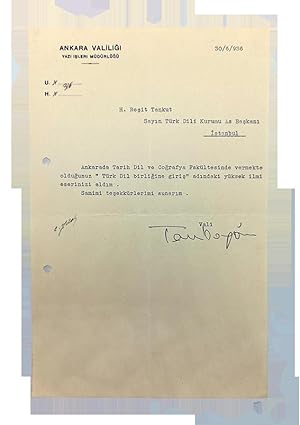
Typescript document signed 'Vali Tandogan', sent to H. Resit Tankut, (1891-1980).
Sprache: Türkisch
Verlag: TLS - Letterhead 'Ankara Valiligi Yazi Isleri Müdürlügü' [i.e. Governorship of Ankara], Ankara, 1936
Anbieter: Khalkedon Rare Books ABA, ILAB, IOBA, ESA, Istanbul, Türkei
Verbandsmitglied: ABA ESA ILAB IOBA
Verkäuferbewertung 5 von 5 Sternen
Manuskript / Papierantiquität Signiert
Soft cover. Zustand: Very Good. Original TLS by Nevzat Tandogan. 27,5x18 cm. In Turkish. 1 p. Punching holes on right side folded traces. A fine paper. Dated 30/6/1936. Seven lines. Letter/document sent to H[asan] Resit Tankut, (1891-1980), who was a Turkish historian and statesman when Tankut was a director of TDK (Türk Dil Kurumu [i.e. Turkish Language Society]). The letter says his thanks for Tankut's book titled 'Introduction to Turkish Linguistic Union' that he sent to Tandogan. Tandogan was the fourth mayor and governor of Ankara serving between 1929 and 1946. He committed suicide upon a political scandal he was involved in. Abdullah Nevzat Tandogan was born into a wealthy family in 1894 in Istanbul, then Ottoman Empire. His father was from Sarajevo and his mother from Belgrade. He completed his education at Istanbul Law School, today Istanbul University Faculty of Law. After the Surname Law was enacted in Turkey in 1934, he adopted the family name Tandogan. He was married and had two children. During World War I, he served as an intelligence officer in the Ottoman Army in Istanbul. In the later years of the war, he began a career as a school teacher in Istanbul. In 1918, he entered police service. After serving at leading posts in various police departments, he quit. He became Governor of Malatya in 1925 before he entered politics from the Republican People's Party) (CHP) and was elected into the Grand National Assembly as deputy of Konya in the 1927 general election. On November 4, 1929, he resigned from his parliamentary seat to take office as Governor of Ankara. Serving also as the acting city mayor, he was uninterrupted 17 years long in this position. Tandogan was a civil servant and politician of the single-party era (1923-1945). The political philosophy of the era was understood so as "the government has the authority to determine and to do what is useful and best for the country, knowing better than everyone, especially the folk". Tandogan's political attitude is described best with his words he said to a young man as "We constitute Communism in this country if it is necessary". Tandogan had a dissenting opinion to the 1929 Jansen Plan by German architect and urban planner Hermann Jansen(1869-1945). The plan proposed the integration of green belts and areas within the rapid-growing new capital of the newly established Republic for promoting a healthy urban environment. The realization of Ankara's master plan as different from the Jansen Plan is his practice. In 1945, a murder occurred in Ankara, which became known as the "Ankara Murder" (Turkish: Ankara Cinayeti). Tandogan was accused of intentionally and deliberately covering the murder case, in which Ha?met Orbay, the son of the then Chief of the General Staff Kâzim Orbay, was involved. Tandogan was summoned to court to testify after the case was discussed in a question time in the parliament. It was believed that calling a high-ranked civil servant or politician to the witness stand in a court trial was unthinkable during the single-party era before 1945. The next day, on July 9, 1946, Nevzat Tandogan committed suicide by shooting himself at home with a firearm. The main square in Ankara, which hosted many political party rallies and protests, was named in his honor. In 2012, the city council of the metropolitan municipality changed the square's initial name from "Nevzat Tandogan Square" to "Tandogan Square". A public park in Batikent neighborhood of Yenimahalle, Ankara as well as a street in Kavaklidere neighborhood of Çankaya, Ankara is also named after him. Signed by Author(s).
-
Enquiries concerning the Nature of a metallic Substance lately sold in London, as a new Metal, under the Title of Palladium. read May 12, 1803.
Anbieter: Herman H. J. Lynge & Søn ILAB-ABF, Copenhagen, Dänemark
Verkäuferbewertung 4 von 5 Sternen
Erstausgabe
(London, W. Bulmer and Co., 1803). 4to. No wrappers as extracted from "Philosophical Transactions" 1803 - Part II. Pp.290-320. A few faint brownspots to margins. First printing of this controversial paper in the history of chemistry."In 1803 an anonymous handbill was circulated among British scientists. It announced the isolation of a new chemical element, palladium or "new silver", and offered the metal for sale. Chenevix, believing the announcement to be a fraud, purchased the whole stock. He set about analyzing it with the preconceived notion that it was an alloy of platinum and mercury. After a series of laborious experiments, he concluded that palladium was in fact an amalgam of platinum made in some peculier way. His report to the Royal Society (the paper offered) caused a sensation. Not long after, Wollaston read to the society a paper in which he declared himself the author of the handbill and the discoverer of two new elements in crude platinum ore - namely, palladium and rhodium. About 1804, with his scientific reputation badly damaged, Chenevix left England and went to France, where he lived for the remainder of his life."(DSB III, p. 232).A paper by Thomas Andrew Knight is printed together with Chenevix' paper: "Account of some Experiments on the Sescent of the Sap in Trees.", pp. 277-289 a. 1 engraved plate.
-

Watergate Hotel
Verlag: Personality Posters, Inc, New York, 1973
Anbieter: Lorne Bair Rare Books, ABAA, Winchester, VA, USA
Verbandsmitglied: ABAA ILAB IOBA
Verkäuferbewertung 5 von 5 Sternen
Original lithographed poster, offset printed in black on white stock, measuring 58.5cm x 74xm (23" x 29"). A few tiny nicks and tears to extremities; unbacked, Near Fine. Humorous poster depicting the nearly-nude figure of Richard Nixon, with a Watergate Hotel bath towel covering the goods. Not separately listed in OCLC, though we do find an example at the Center for the Study of Political Graphics. 83023.


