Gesamtpreis (1 Artikel Artikel):
Versandziel:

romano stella (7 Ergebnisse)
Direkt zu den wichtigsten Suchergebnissen
Suchfilter
Produktart
- Alle Product Types
- Bücher (7)
- Magazine & Zeitschriften (Keine weiteren Ergebnisse entsprechen dieser Verfeinerung)
- Comics (Keine weiteren Ergebnisse entsprechen dieser Verfeinerung)
- Noten (Keine weiteren Ergebnisse entsprechen dieser Verfeinerung)
- Kunst, Grafik & Poster (Keine weiteren Ergebnisse entsprechen dieser Verfeinerung)
- Fotografien (Keine weiteren Ergebnisse entsprechen dieser Verfeinerung)
- Karten (Keine weiteren Ergebnisse entsprechen dieser Verfeinerung)
- Manuskripte & Papierantiquitäten (Keine weiteren Ergebnisse entsprechen dieser Verfeinerung)
Zustand Mehr dazu
- Neu (2)
- Wie Neu, Sehr Gut oder Gut Bis Sehr Gut (Keine weiteren Ergebnisse entsprechen dieser Verfeinerung)
- Gut oder Befriedigend (3)
- Ausreichend oder Schlecht (Keine weiteren Ergebnisse entsprechen dieser Verfeinerung)
- Wie beschrieben (2)
Einband
Weitere Eigenschaften
- Erstausgabe (Keine weiteren Ergebnisse entsprechen dieser Verfeinerung)
- Signiert (Keine weiteren Ergebnisse entsprechen dieser Verfeinerung)
- Schutzumschlag (Keine weiteren Ergebnisse entsprechen dieser Verfeinerung)
- Angebotsfoto (3)
Sprache (3)
Gratisversand
Land des Verkäufers
Verkäuferbewertung
-

Mediterranean Diet Cookbook for Beginners: A Quick and Easy Guide to Creating Nutrient Rich, Heart Healthy Dishes in 30 Minutes or Less | Includes 7 Day Quick Start Meal Plan
Anbieter: WorldofBooks, Goring-By-Sea, WS, Vereinigtes Königreich
Verkäuferbewertung 5 von 5 Sternen

EUR 7,20
EUR 6,48 Versand
Versand von Vereinigtes Königreich nach USAAnzahl: 2 verfügbar
In den WarenkorbPaperback. Zustand: Very Good. The book has been read, but is in excellent condition. Pages are intact and not marred by notes or highlighting. The spine remains undamaged.
-

Eupolis. Il pensiero sistemico per un nuovo governo delle trasformazioni urbane e territoriali (Arti visive, architettura e urbanistica)
Anbieter: libreriauniversitaria.it, Occhiobello, RO, Italien
Verkäuferbewertung 4 von 5 Sternen

Zustand: NEW.
-
Eupolis. Il pensiero sistemico per un nuovo governo delle trasformazioni urbane e territoriali (Italian)
Anbieter: Brook Bookstore, Milano, MI, Italien
Verkäuferbewertung 4 von 5 Sternen
Zustand: new.
-

Codice penale dei contrasti
Verlag: Lex Iuris editore, 2023
Anbieter: Librodifaccia, Alessandria, AL, Italien
Verkäuferbewertung 5 von 5 Sternen
Zustand: Buone. italiano Condizioni dell'esterno: Ottime Condizioni dell'interno: Ottime.
-
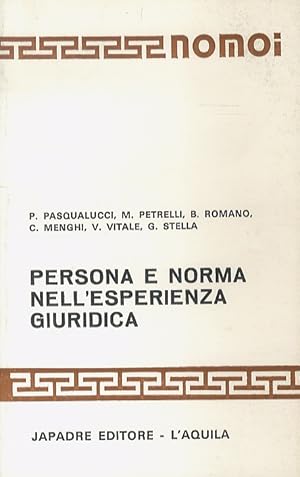
Persona e norma nell'esperienza giuridica. A cura di S. Cotta.
Anbieter: Libreria Oreste Gozzini snc, Firenze, FI, Italien
Verkäuferbewertung 5 von 5 Sternen
L'Aquila, Japadre Editore, 1986, in-16, brossura editoriale, pp. 255. Ottime condizioni.
-
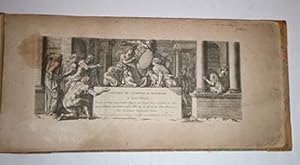
L'entrée de l'Empereur Sigismond à Mantoue? ;Gravé en 25 feuilles,d'après une longue Frise executée en Stuc dans le Palais du T.de la meme Ville, sur un dessin de Jules Romain, Par Antoinette Bouzonnet Stella. First edition.
Verlag: Paris: Chez Joubert, graveur et marchand d'estampes, rue des Mathurins, aux 2. Piliers d'Or : Aux Galleries du louvre avec privil. du Roy et chez Chereau et Joubert, 1675,, 1675
Anbieter: Wittenborn Art Books, San Francisco, CA, USA
Verkäuferbewertung 5 von 5 Sternen
Zustand: Good. Oblong folio. 55 x 25.7cm. Engraved title and 24 plates, numbered 1-25. Light surface soiling to title, some light scattered foxing, patch of staining within image of first 13 plates, later half calf, and marbled boards rubbed. .OCLC Number420623459.? A copy of the 60 metre-long stucco relief by Giulio Romano in the Sala degli stucchi, Palazzo del Tè, Mantua.Series of engravings after drawings of a stucco frieze, depicting the entrance of Emperor Sigismund into Mantua in 1432. The reliefs were created between 1526 and 1532 in the Sala degli Stucchi of the Palazzo del Te, probably by Primaticcio, possibly working with Giulio Romano.
-

L'Entree de l'Empereur Sigismond a Mantoue; Grave en Vingt cinq feuilles, d'apres une longue Frise executee en Stuc dans le Palais du T. de la meme Ville, sur un dessin de Jules Romain, par Antoinette Bauzonnet Stella.
Verlag: Paris: Chez Joubert, [1675]., 1675
Anbieter: Arader Galleries - AraderNYC, New York, NY, USA
Verkäuferbewertung 5 von 5 Sternen
Soft cover. Oblong folio (9 4/8 x 18 inches). Engraved allegorical title-page (trimmed and laid down), and 24 numbered engraved plates (some browning and spotting). 19th-century calf backed marbled paper boards (extremities a bit worn). Provenance: from the library of H.R.H. The Prince Henry, Duke of Gloucester KG, KT, KP, his sale Christie's, London 27th January 2006; from the Collection of Prince and Princess Henry De la Tour d'Auvergne Lauraguais, their sale Sotheby's London, 3rd May, 2012, lot 322 This suite of magnificent plates reproduce one of the outstanding works of Giulio Romano, a favourite pupil of Raphael, his stylistic deviations from high Renaissance classicism helped to define the 16th-century Mannerist style. Contemporary engravings of Giulio's drawings were a significant contribution to the spread of 16th-century Italian style throughout Europe. Guilio's fresco of the entrée of Emperor Sigismund into Mantua in 1432 can still be seen as a stucco frieze that wraps around the Sala degli Stucchi (Room of the Stuccos) in the famous Palazzo del Te, Giulio's acknowledged masterwork, constructed between 1524-1534 for Federico II Gonzaga, Marquess of Mantua. The frieze, and Stella's engravings narrate a crucial event in Mantua's history: in 1433, Holy Roman Emperor Sigismond visited the city and bestowed the title of marquis on Gianfrancesco I Gonzaga. The frieze aggrandizes Sigismond's visit by portraying him at the center of a Roman adventus, or triumphal entrance into a city. Sigismond, dressed in the armor of Rome, enters Mantua flanked by soldiers, musicians, river gods, sacrificial animals, slaves, and spoils of war. The celebrated write Vasari in his "Le Vite de' più eccellenti pittori, scultori, e architettori da Cimabue insino a' tempi nostril" writes of his meeting with Guilio "On meeting, they recognised each other as though they had met a thousand times before. Giulio was so delighted that he spent four days in showing Vasari all his works, especially the plans of ancient buildings at Rome, Naples, Pozzuolo, Campagna, and all the other principal antiquities designed partly by him and partly by others. Then, opening a great cupboard, he showed him plans of all the buildings erected from his designs in Mantua, Rome and all Lombardy, so beautiful that I do not believe that more original, fanciful or convenient buildings exist". Antoinette Bauzonnet, called Stella after her more famous uncle Jacques Stella, was one of a number of artistically gifted siblings based in Lyon, in the second half of the 17th century. Berlin 4074; Lipperheide 2735.