

Gesamtpreis (1 Artikel Artikel):
Versandziel:

nead robert (2 Ergebnisse)
Direkt zu den wichtigsten Suchergebnissen
Suchfilter
Produktart
- Alle Product Types
- Bücher (2)
- Magazine & Zeitschriften (Keine weiteren Ergebnisse entsprechen dieser Verfeinerung)
- Comics (Keine weiteren Ergebnisse entsprechen dieser Verfeinerung)
- Noten (Keine weiteren Ergebnisse entsprechen dieser Verfeinerung)
- Kunst, Grafik & Poster (Keine weiteren Ergebnisse entsprechen dieser Verfeinerung)
- Fotografien (Keine weiteren Ergebnisse entsprechen dieser Verfeinerung)
- Karten (Keine weiteren Ergebnisse entsprechen dieser Verfeinerung)
- Manuskripte & Papierantiquitäten (Keine weiteren Ergebnisse entsprechen dieser Verfeinerung)
Zustand Mehr dazu
- Neu (1)
- Wie Neu, Sehr Gut oder Gut Bis Sehr Gut (Keine weiteren Ergebnisse entsprechen dieser Verfeinerung)
- Gut oder Befriedigend (Keine weiteren Ergebnisse entsprechen dieser Verfeinerung)
- Ausreichend oder Schlecht (Keine weiteren Ergebnisse entsprechen dieser Verfeinerung)
- Wie beschrieben (1)
Einband
- alle Einbände
- Hardcover (1)
- Softcover (Keine weiteren Ergebnisse entsprechen dieser Verfeinerung)
Weitere Eigenschaften
- Erstausgabe (Keine weiteren Ergebnisse entsprechen dieser Verfeinerung)
- Signiert (Keine weiteren Ergebnisse entsprechen dieser Verfeinerung)
- Schutzumschlag (Keine weiteren Ergebnisse entsprechen dieser Verfeinerung)
- Angebotsfoto (1)
Sprache (2)
Preis
- Beliebiger Preis
- Weniger als EUR 20 (Keine weiteren Ergebnisse entsprechen dieser Verfeinerung)
- EUR 20 bis EUR 45 (Keine weiteren Ergebnisse entsprechen dieser Verfeinerung)
- Mehr als EUR 45
Gratisversand
- Kostenloser Versand nach USA (Keine weiteren Ergebnisse entsprechen dieser Verfeinerung)
Land des Verkäufers
Verkäuferbewertung
-
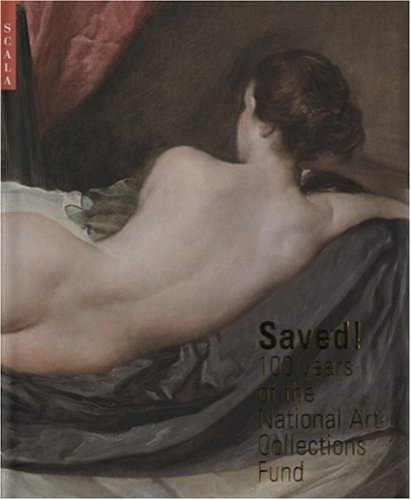
Saved! 100 Years of the National Art Collections Fund
Anbieter: Revaluation Books, Exeter, Vereinigtes Königreich
Verkäuferbewertung 5 von 5 Sternen

EUR 54,29
EUR 23,11 Versand
Versand von Vereinigtes Königreich nach USAAnzahl: 1 verfügbar
In den WarenkorbHardcover. Zustand: Brand New. 288 pages. 11.25x9.50x1.50 inches. In Stock.
-
[Collection of photographs: The Persian Gulf Command and the lend-lease mission to the Soviet Union during World War II].
Verlag: Iran, 1942-1946., 1946
Anbieter: Antiquariat INLIBRIS Gilhofer Nfg. GmbH, Vienna, A, Österreich
Verbandsmitglied: ILAB VDA VDAO
Verkäuferbewertung 5 von 5 Sternen
260 silver gelatin photographs (various sizes: 40 x 51 mm - 166 x 244 mm), some captioned in English on the reverse; a diary (132 ms. pp. next to several blank pp.), a letter, several Christmas cards, and a few ephemera. The personal archive of Private Robert C. Nead (b. 1918) from Kansas City, Missouri, who served on the Persian Gulf Command during World War II. The mission of the Command was to assure the supply of U.S. lend-lease war material to the Soviet Union through the Persian Corridor, a mission involving drivers like Nead who hauled war supplies across the treacherous Iranian desert and the snowy mountain passes of the Caucasus. - The present collection consists of 260 black-and-white photographs, including a few small picture postcards, illustrating the work of the Persian Gulf Command. Among the most striking images appear countless piles of boxed war supplies, construction material and tyres, heavily loaded trucks, American and Russian camps, army barracks and tents, Nead posing in front of his truck or with his army buddies, views of the desert and the Caucasus, as well as shots of the native population and children in particular. - In his diary, which is also present here, Nead describes how convoys kept moving day and night, hauling weapons, ammunition and other material as fast as possible in time for the Red Army, facing all kinds of obstacles driving across hot deserts or through blinding winter blizzards that swept the mountain passes, pushing their semi-tractor trailers, six by fours, and 10-ton Mack diesels from Khorramshahr to Andimeshk - 155 miles of winding road over difficult terrain. They were frequently ambushed by local tribes looking for firearms: "The native tribes are causing quite a bit of trouble now (Arabs and other tribes). They attack convoys and take supplies. They seem to want guns and amunition mostly." In addition, there were plenty of physical, mental, medical, and environmental hardships for personnel assigned to the PGC, which also becomes clear from Nead's diary. Soldiers frequently came down with heat exhaustion and dehydration as well as malaria and sand fly fever. The rainy season was followed by temperatures that rose as high as 170 degrees Fahrenheit (77 Centigrade) in the desert sun, accompanied by sand storms that persisted for as long as a week. - During its entire period of operation, the PGC delivered over 2.5 million tonnes of material to the Soviet Union. In all, the Persian Corridor was the route for 4,159,117 tonnes of cargo delivered to the Soviet Union during World War II. - Many photographs removed from an album, a few still with their photo corners. Some images slightly faded, worn around the margins, or warped. A rare survival shedding light on a nearly forgotten aspect of the war.

![Bild des Verkäufers für [Collection of photographs: The Persian Gulf Command and the lend-lease mission to the Soviet Union during World War II]. zum Verkauf von Antiquariat INLIBRIS Gilhofer Nfg. GmbH](https://pictures.abebooks.com/inventory/md/md32090900049.jpg)