

Gesamtpreis (1 Artikel Artikel):
Versandziel:

maller peter (11 Ergebnisse)
Direkt zu den wichtigsten Suchergebnissen
Suchfilter
Produktart
- Alle Product Types
- Bücher (11)
- Magazine & Zeitschriften (Keine weiteren Ergebnisse entsprechen dieser Verfeinerung)
- Comics (Keine weiteren Ergebnisse entsprechen dieser Verfeinerung)
- Noten (Keine weiteren Ergebnisse entsprechen dieser Verfeinerung)
- Kunst, Grafik & Poster (Keine weiteren Ergebnisse entsprechen dieser Verfeinerung)
- Fotografien (Keine weiteren Ergebnisse entsprechen dieser Verfeinerung)
- Karten (Keine weiteren Ergebnisse entsprechen dieser Verfeinerung)
- Manuskripte & Papierantiquitäten (Keine weiteren Ergebnisse entsprechen dieser Verfeinerung)
Zustand Mehr dazu
- Neu (9)
- Wie Neu, Sehr Gut oder Gut Bis Sehr Gut (1)
- Gut oder Befriedigend (1)
- Ausreichend oder Schlecht (Keine weiteren Ergebnisse entsprechen dieser Verfeinerung)
- Wie beschrieben (Keine weiteren Ergebnisse entsprechen dieser Verfeinerung)
Einband
Weitere Eigenschaften
- Erstausgabe (Keine weiteren Ergebnisse entsprechen dieser Verfeinerung)
- Signiert (Keine weiteren Ergebnisse entsprechen dieser Verfeinerung)
- Schutzumschlag (Keine weiteren Ergebnisse entsprechen dieser Verfeinerung)
- Angebotsfoto (4)
Sprache (2)
Gratisversand
Land des Verkäufers
Verkäuferbewertung
-
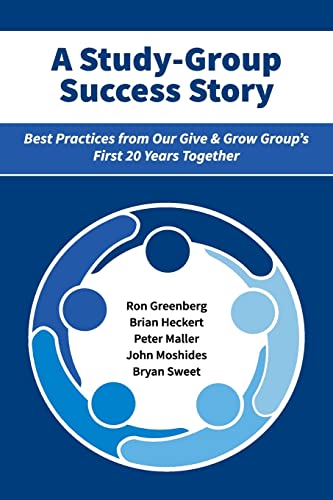
A Study-Group Success Story: Best Practices from Our Give & Grow Group's First 20 Years Together
Sprache: Englisch
Verlag: CreateSpace Independent Publishing Platform (edition 2), 2018
ISBN 10: 198741568X ISBN 13: 9781987415681
Paperback. Zustand: Very Good. 2. It's a well-cared-for item that has seen limited use. The item may show minor signs of wear. All the text is legible, with all pages included. It may have slight markings and/or highlighting.
-

Gibt es was wichtigeres als Salsa Notizbuch: Klasse für alle Tänzer, Ballerina und allen Tanzschüler die Ihre Übungen beim lernen festhalten wollen.
Anbieter: Revaluation Books, Exeter, Vereinigtes Königreich
Verkäuferbewertung 5 von 5 Sternen

EUR 15,06
EUR 11,78 Versand
Versand von Vereinigtes Königreich nach USAAnzahl: 1 verfügbar
In den WarenkorbPaperback. Zustand: Brand New. 110 pages. German language. 9.00x6.00x0.25 inches. In Stock.
-

Spare das Drama fu r die Bu hne auf Notizbuch: Klasse für alle angehenden Bühnenkünstler mit Hang zur Selbstdarstellung
Anbieter: Revaluation Books, Exeter, Vereinigtes Königreich
Verkäuferbewertung 5 von 5 Sternen
EUR 15,10
EUR 11,78 Versand
Versand von Vereinigtes Königreich nach USAAnzahl: 1 verfügbar
In den WarenkorbPaperback. Zustand: Brand New. 110 pages. German language. 9.00x6.00x0.25 inches. In Stock.
-

Meister der Gelenke Notizbuch: Klasse für jeden Physiotherapeuten, Chiropraktiker oder Masseur zum festhalten von Kundenterminen
Anbieter: Revaluation Books, Exeter, Vereinigtes Königreich
Verkäuferbewertung 5 von 5 Sternen
EUR 15,10
EUR 11,78 Versand
Versand von Vereinigtes Königreich nach USAAnzahl: 1 verfügbar
In den WarenkorbPaperback. Zustand: Brand New. 110 pages. German language. 9.00x6.00x0.25 inches. In Stock.
-
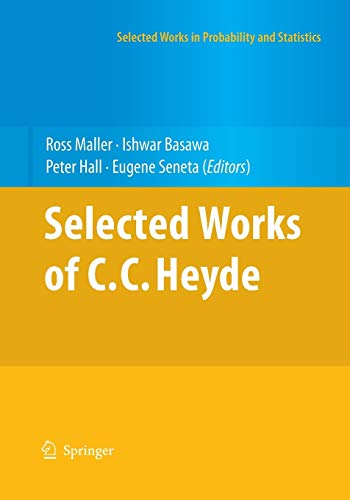
Selected Works of C.C. Heyde (Selected Works in Probability and Statistics)
Anbieter: Ria Christie Collections, Uxbridge, Vereinigtes Königreich
Verkäuferbewertung 5 von 5 Sternen
EUR 167,19
EUR 14,11 Versand
Versand von Vereinigtes Königreich nach USAAnzahl: Mehr als 20 verfügbar
In den WarenkorbZustand: New. In.
-
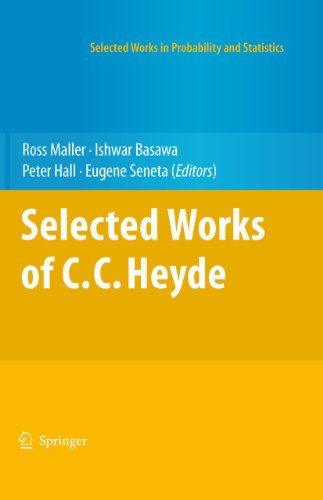
Selected Works of C.C. Heyde (Selected Works in Probability and Statistics)
Anbieter: Ria Christie Collections, Uxbridge, Vereinigtes Königreich
Verkäuferbewertung 5 von 5 Sternen
EUR 167,19
EUR 14,11 Versand
Versand von Vereinigtes Königreich nach USAAnzahl: Mehr als 20 verfügbar
In den WarenkorbZustand: New. In English.
-
EUR 137,26
EUR 48,99 Versand
Versand von Deutschland nach USAAnzahl: Mehr als 20 verfügbar
In den WarenkorbGebunden. Zustand: New.
-

EUR 180,97
EUR 48,99 Versand
Versand von Deutschland nach USAAnzahl: Mehr als 20 verfügbar
In den WarenkorbZustand: New.
-
Zustand: Sehr gut. Zustand: Sehr gut | Seiten: 504 | Sprache: Englisch | Produktart: Bücher | Keine Beschreibung verfügbar.
-

Selected Works of C.C. Heyde
Anbieter: AHA-BUCH GmbH, Einbeck, Deutschland
Verkäuferbewertung 5 von 5 Sternen
Buch. Zustand: Neu. Druck auf Anfrage Neuware - Printed after ordering - In 1945, very early in the history of the development of a rigorous analytical theory of probability, Feller (1945) wrote a paper called 'The fundamental limit theorems in probability' in which he set out what he considered to be 'the two most important limit theorems in the modern theory of probability: the central limit theorem and the recently discovered . 'Kolmogoroff's cel ebrated law of the iterated logarithm' '. A little later in the article he added to these, via a charming description, the 'little brother (of the central limit theo rem), the weak law of large numbers', and also the strong law of large num bers, which he considers as a close relative of the law of the iterated logarithm. Feller might well have added to these also the beautiful and highly applicable results of renewal theory, which at the time he himself together with eminent colleagues were vigorously producing. Feller's introductory remarks include the visionary: 'The history of probability shows that our problems must be treated in their greatest generality: only in this way can we hope to discover the most natural tools and to open channels for new progress. This remark leads naturally to that characteristic of our theory which makes it attractive beyond its importance for various applications: a combination of an amazing generality with algebraic precision.
-

Selected Works of C.C. Heyde
Sprache: Englisch
Verlag: Springer Nature B.V. Aug 2016, 2016
ISBN 10: 1493940597 ISBN 13: 9781493940592
Anbieter: AHA-BUCH GmbH, Einbeck, Deutschland
Verkäuferbewertung 5 von 5 Sternen
Taschenbuch. Zustand: Neu. Neuware - In 1945, very early in the history of the development of a rigorous analytical theory of probability, Feller (1945) wrote a paper called 'The fundamental limit theorems in probability' in which he set out what he considered to be 'the two most important limit theorems in the modern theory of probability: the central limit theorem and the recently discovered . 'Kolmogoroff's cel ebrated law of the iterated logarithm' '. A little later in the article he added to these, via a charming description, the 'little brother (of the central limit theo rem), the weak law of large numbers', and also the strong law of large num bers, which he considers as a close relative of the law of the iterated logarithm. Feller might well have added to these also the beautiful and highly applicable results of renewal theory, which at the time he himself together with eminent colleagues were vigorously producing. Feller's introductory remarks include the visionary: 'The history of probability shows that our problems must be treated in their greatest generality: only in this way can we hope to discover the most natural tools and to open channels for new progress. This remark leads naturally to that characteristic of our theory which makes it attractive beyond its importance for various applications: a combination of an amazing generality with algebraic precision.
