Gesamtpreis (1 Artikel Artikel):
Versandziel:

malcolm 1925 1965 (3 Ergebnisse)
Direkt zu den wichtigsten Suchergebnissen
Suchfilter
Produktart
- Alle Product Types
- Bücher (2)
- Magazine & Zeitschriften (Keine weiteren Ergebnisse entsprechen dieser Verfeinerung)
- Comics (Keine weiteren Ergebnisse entsprechen dieser Verfeinerung)
- Noten (Keine weiteren Ergebnisse entsprechen dieser Verfeinerung)
- Kunst, Grafik & Poster (Keine weiteren Ergebnisse entsprechen dieser Verfeinerung)
- Fotografien (Keine weiteren Ergebnisse entsprechen dieser Verfeinerung)
- Karten (Keine weiteren Ergebnisse entsprechen dieser Verfeinerung)
- Manuskripte & Papierantiquitäten (1)
Zustand Mehr dazu
- Neu (Keine weiteren Ergebnisse entsprechen dieser Verfeinerung)
- Wie Neu, Sehr Gut oder Gut Bis Sehr Gut (Keine weiteren Ergebnisse entsprechen dieser Verfeinerung)
- Gut oder Befriedigend (1)
- Ausreichend oder Schlecht (Keine weiteren Ergebnisse entsprechen dieser Verfeinerung)
- Wie beschrieben (2)
Einband
Weitere Eigenschaften
- Erstausgabe (Keine weiteren Ergebnisse entsprechen dieser Verfeinerung)
- Signiert (1)
- Schutzumschlag (Keine weiteren Ergebnisse entsprechen dieser Verfeinerung)
- Angebotsfoto (2)
Sprache (2)
Gratisversand
- Kostenloser Versand nach USA (Keine weiteren Ergebnisse entsprechen dieser Verfeinerung)
Land des Verkäufers
Verkäuferbewertung
-
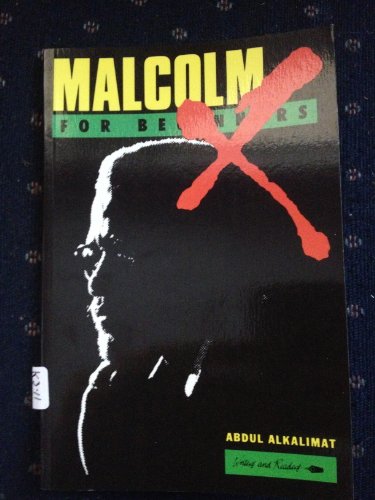
Malcolm X for Beginners (The beginners series)
Sprache: Englisch
Verlag: Writers and Readers Publishing, Incorporated, 1991
ISBN 10: 086316143X ISBN 13: 9780863161438
Anbieter: Robinson Street Books, IOBA, Binghamton, NY, USA
Verbandsmitglied: IOBA
Verkäuferbewertung 4 von 5 Sternen

Paperback. Zustand: Good. Harlem River Trucking Company (illustrator). Prompt Shipment, shipped in Boxes, Tracking PROVIDEDMinor creasing, used book, still very good.
-
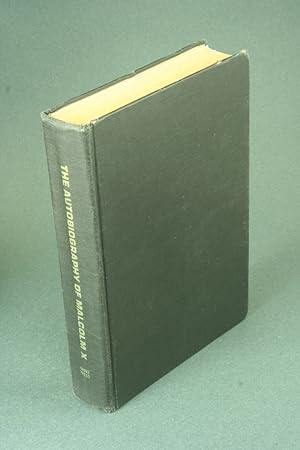
Autobiography of Malcolm X. With the assistance of Alex Haley. Introduction by M. S. Handler. Epilogue by Alex Haley
Verlag: New York: Grove Press Inc., 1965, 1965
Anbieter: Steven Wolfe Books, Newton Centre, MA, USA
Verkäuferbewertung 5 von 5 Sternen

worn but good black cloth, both hinges rather wobbly. previous owner's name and address in ink on front endpaper. X, MALCOLM. Autobiography of Malcolm X. With the assistance of Alex Haley. Introduction by M. S. Handler. Epilogue by Alex Haley. New York: Grove Press Inc., 1965, Fourth Printing, xvi, 455pp., . Published in collaboration with Parallax Publishing Company, Inc.
-
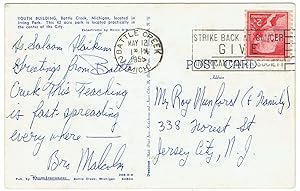
Autograph Note Signed, "Bro Malcolm,".
Verlag: Battle Creek, 12 May 1955 [from postmark], 1955
Anbieter: Kotte Autographs GmbH, Roßhaupten, Deutschland
Verkäuferbewertung 5 von 5 Sternen
Manuskript / Papierantiquität Signiert
EUR 17.500,00
EUR 20,00 Versand
Versand von Deutschland nach USAAnzahl: 1 verfügbar
In den WarenkorbOblong-small-8vo. 1 page, minor scattered soiling, with cancelled 2-cent postage stamp featuring bust of Thomas Jefferson (inverted, presumably in protest). Autograph Note Signed, "Bro Malcolm," to Roy Munford, on a postcard: "As Salaam Alaikum, Greetings from Battle Creek. This Teaching is fast-spreading everywhere." On verso is a photograph showing the entrance to the Youth Building in the Irving Park neighborhood of Battle Creek, MI. On January 24, 1965, just weeks before being murdered, Malcolm X delivered a speech in Harlem in which he encouraged a critical review of the narrative surrounding America's "founding fathers," picking out Thomas Jefferson as being especially worthy of condemnation by pointing out that his believing in the words he authored--"all men are created equal"--while owning slaves, implied that he did not intend those words to apply to the enslaved. Because of this hypocrisy, Malcolm X said, African-Americans should look upon Jefferson with the same contempt he showed them. Malcolm X on Afro-American History (1965).