
Lorentz hendrik einstein (16 Ergebnisse)

Das Relativitätsprinzip: Eine Sammlung Von Abhandlungen, Mit Anmerkungen (German Edition)
Einstein, Albert; Minkowski, Hermann; Lorentz, Hendrik Antoon
- Softcover
Anbieter: Ria Christie Collections, Uxbridge, Vereinigtes KönigreichRia Christie Collections
Verkäufer/-in kontaktierenVerkäufer/-in mit 5 SternenZustand: Neu
EUR 16,71
EUR 13,91 VersandVersand von Vereinigtes Königreich nach USAAnzahl: Mehr als 20 verfügbar
Zustand: New. In.

Relativity Theory: Its Origins And Impact On Modern Thought
Williams, Pearce; Articles By Isaac Newton, Ernst Mach, Albert A. Michelson And Edward W. Morley, Hendrik A. Lorentz, Jules Henry Poincare, Albert Einstein, Edmund Whittaker, Gerald Holton, Adolf Grunbaum, William F. Magie, Louis Trenchard More, Arthur Stanleyy Eddington, H. Wildon Carr, Hugh Elliot, Thomas Jewell Craven, Paul Chatham Squires, Jose Ortega Y Gasset
- Hardcover
- Erstausgabe
Anbieter: Arroyo Seco Books, Pasadena, Member IOBA, Pasadena, CA, USAArroyo Seco Books, Pasadena, Member IOBA
Verkäufer/-in kontaktierenVerkäufer/-in mit 4 SternenVerbandsmitglied: IOBA
Zustand: Gebraucht - Sehr gut
EUR 63,46
EUR 7,04 VersandVersand innerhalb von USAAnzahl: 1 verfügbar
Hardcover. Zustand: Fine. 1st Edition. X, 159 Pp Including Short Bibliography At End. Orange Cloth, Hardcover. Second Printing. Fine.

- Softcover
Anbieter: AHA-BUCH GmbH, Einbeck, DeutschlandAHA-BUCH GmbH
Verkäufer/-in kontaktierenVerkäufer/-in mit 5 SternenZustand: Neu
EUR 22,66
EUR 60,82 VersandVersand von Deutschland nach USAAnzahl: 2 verfügbar
Taschenbuch. Zustand: Neu. Neuware.

Das Relativitätsprinzip: Eine Sammlung Von Abhandlungen, Mit Anmerkungen (German Edition)
Einstein, Albert; Minkowski, Hermann; Lorentz, Hendrik Antoon
- Hardcover
Anbieter: Ria Christie Collections, Uxbridge, Vereinigtes KönigreichRia Christie Collections
Verkäufer/-in kontaktierenVerkäufer/-in mit 5 SternenZustand: Neu
EUR 31,33
EUR 13,91 VersandVersand von Vereinigtes Königreich nach USAAnzahl: Mehr als 20 verfügbar
Zustand: New. In.

Sprache: Deutsch
Verlag: Wissenschaftliche Buchgesellschaft, Darmstadt 1982
- Hardcover
Anbieter: Antiquariat Renner OHG, Albstadt, DeutschlandAntiquariat Renner OHG
Verkäufer/-in kontaktierenVerkäufer/-in mit 5 SternenVerbandsmitglied: BOEV
Zustand: Gebraucht - Gut
EUR 8,00
EUR 45,00 VersandVersand von Deutschland nach USAAnzahl: 1 verfügbar
Hardcover. Zustand: Gut. Beitrrag von H. Weyl und Anmerkungen von A. Sommerfeld. Vorwort von O. Blumenthal. 8. Aufl. = unveränd. Nachdr. 1982 der 5. Aufl. 1923. Darmstadt, WBG 1982. 159 S. OLwd. (gering fleckig, Ecken leicht bestoßen).
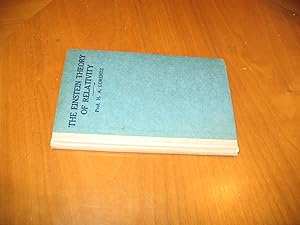
The Einstein Theory of Relativity: A Concise Statement
Lorentz, H. A. (Hendrik Antoon) [With Quotations From Albert Einstein, Henry Norris Russell)
Sprache: Englisch
Verlag: Brentano's, New York 1920
- Hardcover
- Erstausgabe
Anbieter: Arroyo Seco Books, Pasadena, Member IOBA, Pasadena, CA, USAArroyo Seco Books, Pasadena, Member IOBA
Verkäufer/-in kontaktierenVerkäufer/-in mit 4 SternenVerbandsmitglied: IOBA
Zustand: Gebraucht - Gut
EUR 180,63
EUR 7,04 VersandVersand innerhalb von USAAnzahl: 1 verfügbar
Cloth. Zustand: Very Good +. No Jacket. First Edition. 64 Pp. Beige Cloth Over Green Boards Printed In Black. First English Language Book Publication Specifically On Einstein's Theory Of Relativity. Translated From The Original Publication 11/19/1919 In The Nieuwe Rotterdamsche Courant, And Including Long Quotations From Einstei…n Of Conversations With Lorentz. Lightly Used, Clean, No Names Or Marks Or Stains Or Fading, Hinges Tight. No Jacket.
Sprache: Deutsch
Verlag: Wissenschaftliche Buchgesellschaft, Darmstadt
- Hardcover
Anbieter: Antiquariat Renner OHG, Albstadt, DeutschlandAntiquariat Renner OHG
Verkäufer/-in kontaktierenVerkäufer/-in mit 5 SternenVerbandsmitglied: BOEV
Zustand: Gebraucht - Sehr gut
EUR 20,00
EUR 45,00 VersandVersand von Deutschland nach USAAnzahl: 1 verfügbar
Hardcover. Zustand: Sehr gut. 9. Aufl. (Nachdruck der 5. A. 1923). Darmstadt, WBG (ohne Jahr). 159 S. OLwd. Sehr gut erhalten.

Das Relativitätsprinzip: Eine Sammlung Von Abhandlungen, Mit Anmerkungen
Einstein, Albert, Hermann Minkowski und Hendrik Antoon Lorentz:
Sprache: Deutsch
Verlag: Ulan Press 09.2012. 2012
- Softcover
Anbieter: Antiquariat Jochen Mohr -Books and Mohr-, Oberthal, DeutschlandAntiquariat Jochen Mohr -Books and Mohr-
Verkäufer/-in kontaktierenVerkäufer/-in mit 5 SternenZustand: Gebraucht - Sehr gut
EUR 13,50
EUR 59,99 VersandVersand von Deutschland nach USAAnzahl: 1 verfügbar
paperback. Zustand: Sehr gut. 104 Seiten Wir verkaufen nur, was wir auch selbst lesen würden. Sprache: Deutsch Gewicht in Gramm: 275.

Das Relativitätsprinzip: Eine Sammlung von Abhandlungen (Fortschritte der mathematischen Wissenschaften in Monographien)
Lorentz Hendrik, Antoon, Albert Einstein und Hermann Minkowski:
- Softcover
Anbieter: butzle, Buttenwiesen, DE, Deutschlandbutzle
Verkäufer/-in kontaktierenVerkäufer/-in mit 5 SternenZustand: Gebraucht - Gut
EUR 67,40
EUR 9,95 VersandVersand von Deutschland nach USAAnzahl: 1 verfügbar
paperback. Zustand: Gut. 168 Seiten; Ausgabe von 1982 B2459-28 3663193721 Sprache: Deutsch Gewicht in Gramm: 500.

Das Relativitätsprinzip: Eine Sammlung von Abhandlungen (Fortschritte der mathematischen Wissenschaften in Monographien) (German Edition)
Lorentz, Hendrik Antoon; Einstein, Albert; Minkowski, Hermann
- Softcover
Anbieter: Ria Christie Collections, Uxbridge, Vereinigtes KönigreichRia Christie Collections
Verkäufer/-in kontaktierenVerkäufer/-in mit 5 SternenZustand: Neu
EUR 72,97
EUR 13,91 VersandVersand von Vereinigtes Königreich nach USAAnzahl: Mehr als 20 verfügbar
Zustand: New. In German.
Das Relativitätsprinzip: Eine Sammlung Von Abhandlungen
Lorentz, Hendrik Antoon/ Einstein, Albert/ Minkowski, Hermann
- Softcover
Anbieter: Revaluation Books, Exeter, Vereinigtes KönigreichRevaluation Books
Verkäufer/-in kontaktierenVerkäufer/-in mit 5 SternenZustand: Neu
EUR 99,16
EUR 11,61 VersandVersand von Vereinigtes Königreich nach USAAnzahl: 2 verfügbar
Paperback. Zustand: Brand New. 5th reprint edition. 164 pages. German language. 9.25x6.10x0.36 inches. In Stock.
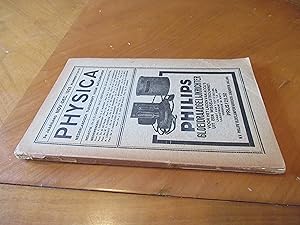
Sprache: Niederländisch
Verlag: Physica / Nederlaandsch Tijdscrift Voor Natuurkunde 1925
- Softcover
- Erstausgabe
Anbieter: Arroyo Seco Books, Pasadena, Member IOBA, Pasadena, CA, USAArroyo Seco Books, Pasadena, Member IOBA
Verkäufer/-in kontaktierenVerkäufer/-in mit 4 SternenVerbandsmitglied: IOBA
Zustand: Gebraucht - Gut
EUR 361,25
EUR 7,04 VersandVersand innerhalb von USAAnzahl: 1 verfügbar
Soft cover. Zustand: Very Good. 1st Edition. Double Issue Nov-Dec 1925. Einstein Article Is In German. Einstein Temporarily Abandons The Search For A Unified Theory. Original Grey Card Covers Printed In Black, Small "Lorentz" Printed On Label On Spine. Lightly Used, Some Loss Of Paper On Spine, Corner Crease On Front Cover Begin…ning To Split.
 Weitere Bilder
Électrons et Photons. Rapports et Discussions du Cinquieme Conseil de Physique tenu a Bruxelles du 24 au 29 Octobre 1927 sous les Auspices de L'Institut International de Physique de Solvay. Publiés par la Commission administrative de l'Institut
[BOHR, Niels; BORN, Max; BRAGG, William Lawrence; COMPTON, Arthur; DE BROGLIE, Louis; DIRAC, Paul; EINSTEIN, Albert; HEISENBERG, Werner; LORENTZ, Hendrik; SCHRÖDINGER, Erwin; et al.]
Verlag: Gauthier Villars, Paris 1928
- Softcover
- Erstausgabe
Anbieter: SOPHIA RARE BOOKS, Koebenhavn V, DänemarkSOPHIA RARE BOOKS
Verkäufer/-in kontaktierenVerkäufer/-in mit 5 SternenZustand: Gebraucht
EUR 3.173,00
Versand nach gratisVersand von Dänemark nach USAAnzahl: 1 verfügbar
First edition. The Bohr-Einstein Debate Begins. First edition, rare in the original printed wrappers, of the proceedings of the fifth Solvay Congress, where the debate between Bohr and Einstein on the consistency and completeness of quantum mechanics began. It was at this, the most famous of the Solvay conferences, that Einstein…, disenchanted with Heisenberg's uncertainly principle, made his famous remark that "God does not play dice," to which Niels Bohr replied, "Einstein, stop telling God what to do!" Seventeen of the twenty-nine attendees, which included nearly all the principal architects of the old and the new quantum theory, were or became Nobel Prize winners. "The three and a half years since the fourth Solvay Conference . were marked by enormous progress in quantum physics. Partly based on discoveries and ideas that had been available already before 1924 ? such as the Compton effect and matter waves ? the new atomic theory had arisen, which did more than throw new light on the difficulties discussed at the 1924 conference: quantum or wave mechanics went right to the heart of the problems posed by atomic phenomena. The two subjects put programmatically into the title of the fifth Solvay Conference ? electrons and photons ? designated the crucial points of interest, because 'electrons' also stood for the smallest, massive constituents of matter, and they now became associated with waves, and 'photons' (a name given only recently, in October 1926 by the physical chemist Gilbert N. Lewis, to Einstein's light-quanta) characterized the quantum-theoretical aspect of electromagnetic radiation. It was the declared intention of the Scientific Committee of the Institut International dePhysique Solvay to contribute by scientific reports and discussions about them to the clarification of the scientific concepts in the physics of the day. In retrospect, one may indeed attribute an important success to the 1927 Solvay Conference in marking the completion of the ideas that had first been discussed in the international physics community sixteen years previously at the first Solvay Conference of 1911" (Mehra & Rechenberg, pp. 233-4). Following a 'Notice nécrologique' by Lorentz, the present volume contains the following reports, and discussions about them by the participants (all articles in French): 'The Intensity of the Reflection of X-rays,' by Bragg; 'Disagreement between Experience and the Electromagnetic Theory of Radiation,' by Compton; 'The New Dynamics of Quanta,' by de Broglie; 'The Mechanics of Quanta,' by Born and Heisenberg; 'The Mechanics of Waves,' by Schrödinger; 'The Quantum Postulate and the New Development of Atomic Theory,' by Bohr. No copies located in auction records. In 1911 the Belgian industrialist Ernest Solvay invited a group of the world's most prominent physicists, including Einstein, Planck, Lorentz, Sommerfeld, Rutherford and Marie Curie, to participate in a scientific conference on the difficulties of reconciling classical physics with quantum theory. The conference "set the style for a new type of scientific meetings, in which a select group of the most well informed experts in a given field would meet to discuss the problems at its frontiers, and would seek to define the steps for their solution" (Mehra, Solvay Conferences, p. xv). The first Solvay Conference-widely considered a turning point in the history of modern physics-was so successful that in the following year Solvay established a foundation, now known as the International Solvay Institutes for Physics and Chemistry, "to encourage the researches which would extend and deepen the knowledge of natural phenomena" (ibid.) and to sponsor further conferences. The next two Solvay Conferences met in 1913 and 1921; subsequent conferences have been held every three years except during wartime. "From amongst the members of the Scientific Committee [of the 1927 Congress], two had already played a leading role in 1911: the Chairman Hendrik Lorentz and Albert Einstein; th.
Das Relativitatsprinzip. Eine Sammlung Von Abhandlungen.
Lorentz, H A; Einstein, Albert; Minkowski, Hermann; Lorentz, Hendrik Antoon
- Softcover
Anbieter: Kennys Bookstore, Olney, MD, USAKennys Bookstore
Verkäufer/-in kontaktierenVerkäufer/-in mit 5 SternenZustand: Neu
EUR 106,76
EUR 9,24 VersandVersand innerhalb von USAAnzahl: 15 verfügbar
Zustand: New. Series: Fortschritte Der Mathematischen Wissenschaften in Monographi. Num Pages: 160 pages, black & white illustrations, bibliography. BIC Classification: PHVG. Category: (G) General (US: Trade). Dimension: 234 x 156 x 9. Weight in Grams: 245. . 1923. 5. Paperback / so. . . . . Books ship from the US and Ireland.
Sprache: Deutsch
Verlag: Teubner, Leipzig 1913
- Hardcover
Anbieter: Antiquariat Renner OHG, Albstadt, DeutschlandAntiquariat Renner OHG
Verkäufer/-in kontaktierenVerkäufer/-in mit 5 SternenVerbandsmitglied: BOEV
Zustand: Gebraucht - Gut
EUR 125,00
EUR 45,00 VersandVersand von Deutschland nach USAAnzahl: 1 verfügbar
Hardcover. Zustand: Gut. Lpz., Teubner 1913. gr.8°. 1 Porträt (Minkowski). 2 Bl., 89 S. OLwd. (gebräunt, leicht fleckig, Rücken etwas ausgeblichen, Vorderdeckel mit Lichtrand). Fortschritte der Mathematischen Wissenschaften, 2.- 1. Ausgabe.- Enthält: Lorentz Interferenzversuch Michelsons.- Elektromagnetische Erscheinungen in ein…em System, das sich mit beliebiger, die des Lichtes nicht erreichender Geschwindigkeit bewegt.- Das Relativitätsprinzip und seine Anwendung auf einige besondere physikalische Erscheinungen. Einstein, Zur Elektrodynamik bewegter Körper.- Ist die Trägheit eines Körpers von seinem Energieinhalt abhängig? Minkowski Raum und Zeit. Sommerfeld: Anmerkungen zu Minkowski, Raum und Zeit.- PMM No.401; Weil 59.- Vorsätze gebräunt, durchgehend leicht gebräunt, ansonsten innen gut erhalten.
 Weitere Bilder
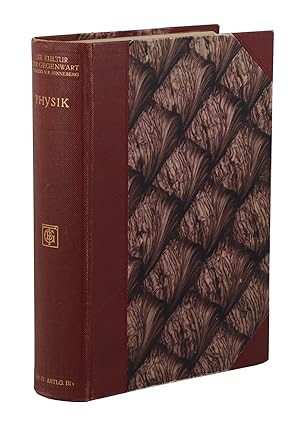
Einstein's "Theoretische Atomistik" and "Die Relativitätstheorie" in Physik (Die Kultur der Gegenwart, Erster Band)
Einstein, Albert; E. Warburg [Editor]; Hendrik Lorentz; Max Planck; Pieter Zeeman
Verlag: B.G. Teubner, Leipzig & Berlin 1915
- Erstausgabe
Anbieter: Burnside Rare Books, ABAA, Portland, OR, USABurnside Rare Books, ABAA
Verkäufer/-in kontaktierenVerkäufer/-in mit 5 SternenZustand: Gebraucht
EUR 1.359,86
Versand nach gratisVersand innerhalb von USAAnzahl: 1 verfügbar
First edition. First edition. [iv], viii, 762, 8 pp. Bound in publisher's three quarter maroon cloth with marbled paper sides, gilt spine lettering. Near Fine with rubbing along edges; a few marks to prelims, text otherwise free of markings; hint of foxing to edges. Bookplate on paste down. A German-language physics review with…the first book publication of two articles by Albert Einstein as well as work by a number of famous physicists of the early 20th century.


