
Kritt brian (15 Ergebnisse)

Verlag: CNG, Lancaster 1996
- Hardcover
Anbieter: Kolbe and Fanning Numismatic Booksellers, Gahanna, USAKolbe and Fanning Numismatic Booksellers
Verkäufer/-in kontaktierenVerkäufer/-in mit 5 SternenZustand: Gebraucht
EUR 27,48
EUR 6,03 VersandVersand innerhalb von USAAnzahl: 1 verfügbar
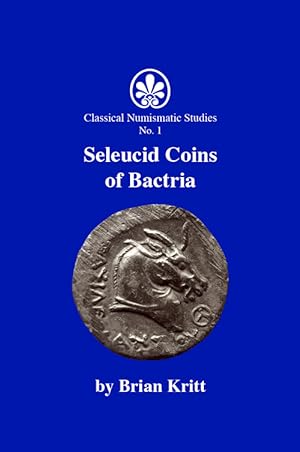
In den Warenkorb8vo, original black cloth, gilt; jacket. x, 70 pages including 5 plates. New. Classical Numismatic Studies No. 1.

Verlag: CNG, Lancaster 2015
- Hardcover
Anbieter: Kolbe and Fanning Numismatic Booksellers, Gahanna, USAKolbe and Fanning Numismatic Booksellers
Verkäufer/-in kontaktierenVerkäufer/-in mit 5 SternenZustand: Gebraucht
EUR 49,65
EUR 6,03 VersandVersand innerhalb von USAAnzahl: 2 verfügbar
In den Warenkorb8vo, original blue cloth, gilt; jacket. xiv, 147, (1) pages; illustrated. New. Classical Numismatic Studies, No. 8.

- Hardcover
Anbieter: online-buch-de, Dozwil, Schweizonline-buch-de
Verkäufer/-in kontaktierenVerkäufer/-in mit 5 SternenZustand: Gebraucht - Gut
EUR 60,80
EUR 36,00 VersandVersand von Schweiz nach USAAnzahl: 1 verfügbar
Hardcover. Zustand: gebraucht; gut. wenige kleine Bleistiftmarkierungen , allgemein gepflegter Zustand.
Sprache: Englisch
Verlag: Lancaster : Classical Numismatic Group, Inc. 1996
- Hardcover
Anbieter: Joseph Burridge Books, Dagenham, Vereinigtes KönigreichJoseph Burridge Books
Verkäufer/-in kontaktierenVerkäufer/-in mit 5 SternenZustand: Neu
EUR 178,62
EUR 31,22 VersandVersand von Vereinigtes Königreich nach USAAnzahl: 1 verfügbar
Hardcover. Zustand: New. Zustand des Schutzumschlags: New. x, 70 pages : illustrations ; 24 cm.

Sprache: Englisch
Verlag: Lancaster, Pennsylvania : Classical Numismatic Group, Inc. 2015
- Hardcover
- Erstausgabe
Anbieter: Joseph Burridge Books, Dagenham, Vereinigtes KönigreichJoseph Burridge Books
Verkäufer/-in kontaktierenVerkäufer/-in mit 5 SternenZustand: Neu
EUR 184,58
EUR 31,22 VersandVersand von Vereinigtes Königreich nach USAAnzahl: 2 verfügbar
Hardcover. Zustand: New. Zustand des Schutzumschlags: New. 1st Edition. 162 pp., consisting of 14 pages of prefatory material, and 148 pages of text and illustrations. 37 plates, including three colour plates, and numerous in-text illustrations and coin photographs. In his last book, Dynastic Transitions in the Coinage of Bactri…a, Brian Kritt built on the Diodotid coinage model established by Frank Holt, and extended this analysis to produce the first detailed and comprehensive system for the attribution of the coinages of Euthydemus, the succeeding Greek king of Bactria. In the process, he has continued his studies of the eastern bronzes of the Seleucids and their successors in Bactria, developing further his interpretations of the role and significance of the recently discovered Seleucid colony of Aï Khanoum, in the far northeastern corner of what is today Afghanistan. Since that publication, a fabulous new hoard of Bactrian gold staters of the Diodotids and Euthydemus was discovered in the Ganges river valley of India, which has added a substantial amount of new information from coins which had previously been extremely rare, or unknown. Found in the village of Vaisali in Bihar, this treasure has famously dominated many of the auctions of Greek coins sold in the last dozen years or so, while failing to receive any detailed or systematic study of its contents or their implications. That is the challenge Dr. Kritt has undertaken in this current volume. The internal structure and composition of the hoard, when numismatically analyzed, has produced numerous unexpected discoveries, and revealed interesting details concerning the virtually unknown history of this distant eastern kingdom in the later years of the third century BC. Some monetary practices and innovations that are encoded in the internal dynamics of the hoard have also come to light. In addition, some of the elements discovered have required modifications and new interpretations of previous models of the coinages of the Bactrian dynasties. Some individual new bronze coins have also been discovered since Dynastic Transitions was published and are discussed here. One truly remarkable Aï Khanoum bronze has the only representation of a river-god ever found on the coinage of the Seleucid Empire, the god of the Oxus river, while some new Parthian bronzes have shed light on more details of the eastern campaign of conquest undertaken by Antiochus III near the end of the third century BC, as well as providing a chronological fixed point in the early Parthian coinages. Evaluations of some new competing theories of the Diodotid coinages has led to some novel interpretations and understanding of some of the perplexing Bactrian Pedigree coins. An examination of inscribed seals written in the ancient language forms of the remote Indus valley culture has led to surprising connections to the control marks and symbols employed on the coins and dedications at Aï Khanoum. This unexpected discovery has required exotic and controversial conclusions involving an apparent influence from a remarkably distant era.
- Hardcover
- Erstausgabe
Anbieter: Joseph Burridge Books, Dagenham, Vereinigtes KönigreichJoseph Burridge Books
Verkäufer/-in kontaktierenVerkäufer/-in mit 5 SternenZustand: Neu
EUR 250,07
EUR 31,22 VersandVersand von Vereinigtes Königreich nach USAAnzahl: 1 verfügbar
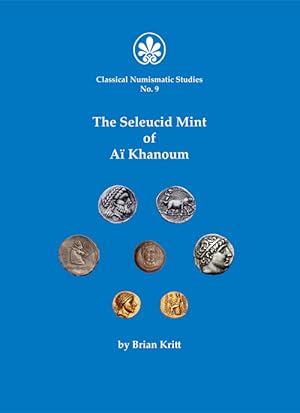
Hardcover. Zustand: New. Zustand des Schutzumschlags: New. 1st Edition. Hardbound with dust jacket. 183 total pp., consisting of 19 coin catalog listings, and 63 plates of numismatically-related material, as well as in-text illustrations and coin photographs. In his previous works, Brian Kritt has explored the coinages of the re…cently discovered Seleucid Colony at Ai Khanoum in far northest Afghanistan. Based on his detailed analysis of the bronze coins found in the excavations at this site, he has shown that this was the mint of origin of the extensive series of the Seleucid coinages bearing the control mark and its many variant forms - a coinage which had been previously attributed by Newell and others to Bactra. Now he has undertaken a corpus and die study of the complete range of Seleucid precious metal coinages of Ai Khanoum, for the entire period of Seleucid control of Bactria, from the gold staters down to the smallest silver fractions. Not only has this never before been attempted, but even the corpus of the known specimens has not been advanced with any serious effort since the time of Edwart T. Newell. This study has coincided with the recent appearances of a large number of new varieties and dies for the coinage. Needless to say, the resulting data base has vastly exceeded anything known previously. The die study has led to a new understanding of the nature and internal structure of the coinage, and has resulted in some significant new discoveries. The identification of portrait models in this coinage has resulted in a clearer understanding of the relationship of the mint of Ai Khanoum to the other eastern Seleucid mints. Along with type and control connections, this has extended the previous hints from the coinages of the presence of an overall Seleucid imperial administrative policy. A number of examples are revealed of Seleucid officials traveling to the new Bactrian mints to assist with the establishment of their coinages. But more generally, we begin to see the fluidity of the continuing interplay between the Eastern Seleucid mints with regard to coinage matters. In addition, the die study has led to a new detailed internal chronology for the coinage issues of Ai Khanoum. In this regard one series of issues from the reign of Antiochus I has been identified as a rapid burst of intense coinage, likely connected to historical events in the early 260 s BC. An examination of the die and control progressions during the reign of Antiochus I has led to a rationalization of the perplexing mix of old and youthful portraits in his coinage. The role of the Ai Khanoum gold issues has been studied, with regard to the dominance of this coinage against the backdrop of an extremely low contemporary gold production at other mints in the empire. The coinage of the enigmatic Bactrian dynast named Sophytes has been examined, previously dated to the fourth century BC by all of the prominent scholars who have studied it going back to the nineteenth century. But this coinage is now shown to have many parallels to the Bactrian Seleucid coinages, in particular to those of Ai Khanoum. The Sophytes coinage has now been successfuly downdated to the time of the operation of the Seleucid Bactrian mints, and for the first time it has been identified as that of a trading partner of Seleucid Ai Khanoum. This analysis is closely interwoven with that of a somewhat cryptic anepigraphic Ai Khanoum bronze issue, which has been used by previous researchers to suggest a now unsupportable early foundation date for the Seleucid colony at Ai Khanoum.

Verlag: CNG, Lancaster 2024
- Hardcover
Anbieter: Kolbe and Fanning Numismatic Booksellers, Gahanna, USAKolbe and Fanning Numismatic Booksellers
Verkäufer/-in kontaktierenVerkäufer/-in mit 5 SternenZustand: Gebraucht
EUR 71,81
EUR 6,03 VersandVersand innerhalb von USAAnzahl: 3 verfügbar
In den Warenkorb4to, original pictorial boards; jacket. 124 pages; 41 color plates; illustrated in color. New. The first major study since the author's "The Early Seleucid Mint of Susa" to examine the coins of the second half of the reign of Seleucus I. Identifies many new varieties, some of which affect our understanding of the history and chr…onology of Susa. Classical Numismatic Studies No. 16.

Verlag: CNG, Lancaster 2021
- Hardcover
Anbieter: Kolbe and Fanning Numismatic Booksellers, Gahanna, USAKolbe and Fanning Numismatic Booksellers
Verkäufer/-in kontaktierenVerkäufer/-in mit 5 SternenZustand: Gebraucht
EUR 71,81
EUR 6,03 VersandVersand innerhalb von USAAnzahl: 2 verfügbar
In den WarenkorbSmall 4to, original gray cloth, gilt; jacket. xii, 94 pages; illustrated in color. New. An important publication bringing to light the discovery of Seleucid coins from Aï Khanoum at Samarqand, and discussing the evidence now existing for discussing the Seleucid presence in Sogdiana. The book also acts as a supplement to the auth…or's previous work on Aï Khanoum.
Verlag: CNG, Lancaster 2022
- Hardcover
Anbieter: Kolbe and Fanning Numismatic Booksellers, Gahanna, USAKolbe and Fanning Numismatic Booksellers
Verkäufer/-in kontaktierenVerkäufer/-in mit 5 SternenZustand: Gebraucht
EUR 71,81
EUR 6,03 VersandVersand innerhalb von USAAnzahl: 2 verfügbar
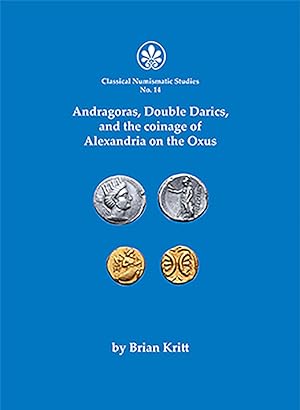
In den Warenkorb4to, original pictorial boards; jacket. 128 pages; 50 plates. New. Classical Numismatic Studies No. 14. Explores the connections between the coin types of the Sophytes sequence and the Seleucid coinage of the mint of Aï Khanoum, providing for the first time a realiable chronology for these mysterious issues.
Verlag: CNG, Lancaster 2023
- Hardcover
Anbieter: Kolbe and Fanning Numismatic Booksellers, Gahanna, USAKolbe and Fanning Numismatic Booksellers
Verkäufer/-in kontaktierenVerkäufer/-in mit 5 SternenZustand: Gebraucht
EUR 71,81
EUR 6,03 VersandVersand innerhalb von USAAnzahl: 2 verfügbar
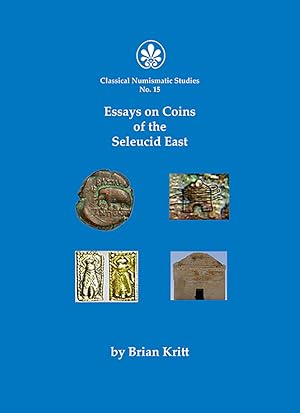
In den Warenkorb4to, original pictorial boards; jacket. 94 pages; 27 plates. New. Classical Numismatic Studies No. 15. A new collection, covering topics including imitations, the Aï Khanoum coinage and Samarqand, a hoard of bronze coins of Antiochus III, the appearance of the tomb of Cyrus the Great on a Susa bronze of Antiochus I, and much els…e.

Verlag: Lancaster, Pennsylvania (Classical Numismatic Group) 2015
Anbieter: Ars Libri, Ltd. (ABAA), Charlestown, USAArs Libri, Ltd. (ABAA)
Verkäufer/-in kontaktierenVerkäufer/-in mit 4 SternenZustand: Gebraucht
EUR 66,49
EUR 6,46 VersandVersand innerhalb von USAAnzahl: 1 verfügbar
In den Warenkorbxiv, 147pp. Prof. illus. Sm. 4to. Cloth. D.j.

Verlag: Classical Numismatic Group : Lancaster, PA, and London 2021
- Hardcover
Anbieter: Joseph Burridge Books, Dagenham, Vereinigtes KönigreichJoseph Burridge Books
Verkäufer/-in kontaktierenVerkäufer/-in mit 5 SternenZustand: Neu
EUR 178,62
EUR 31,22 VersandVersand von Vereinigtes Königreich nach USAAnzahl: 2 verfügbar
Hardcover. Zustand: New. Zustand des Schutzumschlags: New. XII-94 pages : illustrations. ; 27 cm. The recent publication of ancient coins found at the site of ancient Samarqand sheds remarkable new light onthe little-known history of Sogdiana in the period following the death of Alexander the Great. Scholars have attempted to un…derstand the status of this region during the period of the Seleucids and their Greek successors in Bactria, posing and unable to decide upon theories of whether Sogdiana fell under the control of these Greek dynasties. Lacking any definitive ancient accounts, they turned to numismatics to try to decide the issue. Unfortunately, the finds of coins from the relevant period had been scant, and misunderstood. The new finds at Samarqand provide a dramatic parade of bronze coins struck at the Seleucid colony at Aï Khanoum in Bactria, spanning the entire period of the Seleucid presence in Bactria, and beyond. The succession of the known types of these coins is remarkably well represented at Samarqand, providing the first detailed picture of the relationship between Seleucid Bactria and contemporary Sogdiana. The results include the discovery of a Greek colony at Samarqand in the Seleucid period, with extensive contacts and interaction with Aï Khanoum. The lack of such finds elsewhere in Sogdiana indicates that the Seleucids had no substantive contact with the non-Greek areas, and thus had no interest in the conquering of all of Sogdiana. Another important piece of the historical picture is revealed by the results of the recent excavations at the archeological site of the Uzundara Fortress in southern Sogdiana. The extensive finds of bronze coins of Euthydemus at Uzundara show the status of affairs involving the Greeks and the uprisings of natives from the north in the period of the invasion of Bactria by the Seleucid king Antiochus III during his eastern campaign. These and many other ramifications of these new coin finds are explored in Part A of this book. Part B is an updated recording of the many new gold and silver coins of Aï Khanoum that have come tolight since the publication of The Seleucid Mint of Aï Khanoum in 2016, with the identification of the new dies, and their rational incorporation into the corpus which was established in that treatise.

Verlag: Classical Numismatic Group : Lancaster, PA, and London 2024
- Hardcover
- Erstausgabe
Anbieter: Joseph Burridge Books, Dagenham, Vereinigtes KönigreichJoseph Burridge Books
Verkäufer/-in kontaktierenVerkäufer/-in mit 5 SternenZustand: Neu
EUR 178,62
EUR 31,22 VersandVersand von Vereinigtes Königreich nach USAAnzahl: 2 verfügbar
Hardcover. Zustand: New. Zustand des Schutzumschlags: New. 1st Edition. 94 total pages and 27 plates. This new book presents essays on topics related to coins of various types in the Seleucid east. Here are the basic contents of the essays, by chapter: 1. New imitative coinages from Sogdiana, copying Seleucid coins from Bactria,… particularly those which copy Greek names and monograms. 2. Identification of the crude Crab/bee bronzes from Samarqand as Scythian burial Tokens. 3. New finds of coins supporting the theory of directed transmission of Aï Khanoum bronzes to Samarqand. 4. A challenge to the interpretation of an Antiochus III Aï Khanoum bronze found in Ustrushana as supporting the presence of forces of Antiochus near Samarqand. 5. A new Diodotus I bronze coinage of Aï Khanoum, with Diodotus inscription, matching that of some Diodotus I gold staters from the Vaisali hoard. 6. A hoard of Antiochus III bronzes, closely co-ordinated with the movements of his forces on his eastern anabasis. 7. The presence on an Antiochus I bronze coin of Susa of a small, intentionally inconspicuous representation of the Tomb of Cyrus the Great, presumably placed there by a local Persian die cutter at the mint of Susa. This Persian partisan added a traditional feature to the image: the rows of pairs of horns of divinity, which had been current at Susa for buildings, at least since the fourth millennium BC, and for millennia afterwards. This defiant act took place about twenty years after the Persid revolt from the Seleucids in the south, which led to Persid control of Pasargadae, and the Cyrus Tomb. This scenario is supported by an earlier example of a Susa die cutter, who secreted, inside a monogram on a Seleucus I tetradrachm, an image of the horns of a Persid fire temple, accompanied by an Aramaic letter.

Verlag: Classical Numismatic Group : Lancaster, PA, and London 2024
- Hardcover
- Erstausgabe
Anbieter: Joseph Burridge Books, Dagenham, Vereinigtes KönigreichJoseph Burridge Books
Verkäufer/-in kontaktierenVerkäufer/-in mit 5 SternenZustand: Neu
EUR 178,62
EUR 31,22 VersandVersand von Vereinigtes Königreich nach USAAnzahl: 2 verfügbar
Hardcover. Zustand: New. Zustand des Schutzumschlags: New. 1st Edition. 132 total pages and 44 plates : 26 cm. "In recent years, there have been several studies of the Seleucus I coinages of Susa, but mostly focused on coins of the first half of the reign: the Trophy coins and Alexanders. Although a large number of new coins of…those types have appeared since my publication of ESMS, very few new control varieties have been discovered, none for the Trophy tetradrachms. This book is the first major study since ESMS of the coins of the second half of the reign, what I call the Elephant Chariot Period. Besides the elephant chariot coins, this includes a number of related issues: Zeus / elephant staters, Artemis biga gold staters, Baal / lion staters, and others. Many new varieties of this period have now been identified, including ten new varieties with elephant types, and a new Baal / lion stater variety of Susa,the first since the time of Newell. These varieties have important consequences for the relative and absolute chronologies of Susa in this period, as well as opening windows into its history: such as the first known transfer of a magistrate from Babylon to Susa, and the identification of SCB Mint A in Bactria as a likely colony of Susa. In addition, a new concept has been introduced here: the Susa Type/Variety cluster, a burst of exotic coin types in a short time interval. These can elucidate local events across mint lines. One such cluster from the time just before the Elephant Chariot Period, Cluster C, importantly, has shown the involvement of Antiochus I as new co-regent in reconfiguring the coinage of Susa at the time of the Persid Revolt. Another cluster (Cluster 2) has provided details into the foundation of the city and mint of Bactrian Mint A. In a related issue (Chapter 4), the analysis here uses chronologically identifiable elements at Susa and Aï Khanoum to provide the first internal chronology for Mint A. In Chapter 5, some new Bactrian coins appearing on the market have been discussed, and a new type of Sogdian imitations of Seleucid coins has been identified. The extensive new, fully illustrated die studies of these coinages developed here provide a useful tool for identification and cataloging of the coinage issues of this very important period in Seleucid history at one of the most storied cities in Hellenistic antiquity.".

Verlag: Classical Numismatic Group : Lancaster, PA, and London 2022
- Hardcover
- Erstausgabe
Anbieter: Joseph Burridge Books, Dagenham, Vereinigtes KönigreichJoseph Burridge Books
Verkäufer/-in kontaktierenVerkäufer/-in mit 5 SternenZustand: Neu
EUR 208,39
EUR 31,22 VersandVersand von Vereinigtes Königreich nach USAAnzahl: 1 verfügbar
Hardcover. Zustand: New. Zustand des Schutzumschlags: New. 1st Edition. 128 total pages and 50 plates. There is a series of Bactrian coins that have baffled numismatists since their discovery in the nineteenth century, the "Sophytes sequence" a variety of coins, including imitations of Athenian coin types, and others, with group…s of coins each bearing one of the names: Andragoras or Sophytes. There are ambiguous references to the first name in literary sources, as well as a name similar to the second. These sources however, are very misleading, and difficult to relate to the coins, which so far have resisted independent dating from their intrinsic numismatic identities. In The Seleucid Mint of Aï Khanoum (2016), the present author happened upon two different coin types of the Sophytes sequence which were directly copied from datable Seleucid coins from the mint of Aï Khanoum, providing the first chronological fixed points for the Sophytes sequence. The more comprehensive study in this book has yielded a number of new connections of the Sophytes sequence coinagesto those of Aï Khanoum, and more generally, to the Seleucids. This has led to a complete and detailed new absolute chronology for the entire Sophytes sequence, and all of its component series. A previously known coin type is now shown for the first time to be an unrecognized series of the Sophytes sequence: Bactrian versions of Persian style gold double darics, mostly from finds in the Oxus river valley, and India. These new coins have control links to various points in the Sophytes sequence. Some examples extend back in time to a point before the beginning of the previously known (silver) coins of the Sophytes sequence, and have numerous control connections to the Seleucid coinages of Babylon from the end of the fourth century. This reveals a direct Seleucid intervention in the establishing of the coinages of the mint of the Sophytes sequence, including the transmission of the Babylon gold double daric type, originally created by Alexander the Great at Babylon, to this pre-existing city on the Oxus river. All evidence points to that city being the long sought Bactrian colony of Alexander, Alexandria on the Oxus river. Many related historical details also follow from this analysis, including direct involvements of the Seleucids with this city for decades, until the outbreak of hostilities put an end to this relationship, and to the reign of the last known ruler of the colony, Sophytes.


