Gesamtpreis (1 Artikel Artikel):
Versandziel:

kerssenbroch hermann (8 Ergebnisse)
Direkt zu den wichtigsten Suchergebnissen
Suchfilter
Produktart
- Alle Product Types
- Bücher (8)
- Magazine & Zeitschriften (Keine weiteren Ergebnisse entsprechen dieser Verfeinerung)
- Comics (Keine weiteren Ergebnisse entsprechen dieser Verfeinerung)
- Noten (Keine weiteren Ergebnisse entsprechen dieser Verfeinerung)
- Kunst, Grafik & Poster (Keine weiteren Ergebnisse entsprechen dieser Verfeinerung)
- Fotografien (Keine weiteren Ergebnisse entsprechen dieser Verfeinerung)
- Karten (Keine weiteren Ergebnisse entsprechen dieser Verfeinerung)
- Manuskripte & Papierantiquitäten (Keine weiteren Ergebnisse entsprechen dieser Verfeinerung)
Zustand Mehr dazu
- Neu (2)
- Wie Neu, Sehr Gut oder Gut Bis Sehr Gut (1)
- Gut oder Befriedigend (1)
- Ausreichend oder Schlecht (Keine weiteren Ergebnisse entsprechen dieser Verfeinerung)
- Wie beschrieben (4)
Einband
Weitere Eigenschaften
- Erstausgabe (Keine weiteren Ergebnisse entsprechen dieser Verfeinerung)
- Signiert (Keine weiteren Ergebnisse entsprechen dieser Verfeinerung)
- Schutzumschlag (Keine weiteren Ergebnisse entsprechen dieser Verfeinerung)
- Angebotsfoto (7)
Sprache (3)
Preis
- Beliebiger Preis
- Weniger als EUR 20 (Keine weiteren Ergebnisse entsprechen dieser Verfeinerung)
- EUR 20 bis EUR 45
- Mehr als EUR 45
Gratisversand
- Kostenloser Versand nach USA (Keine weiteren Ergebnisse entsprechen dieser Verfeinerung)
Land des Verkäufers
Verkäuferbewertung
-

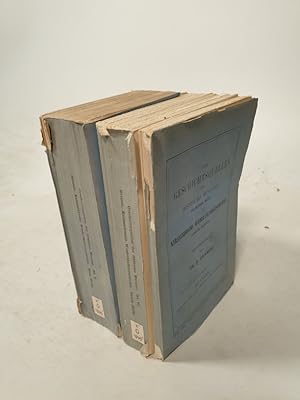
Anabaptistici Furoris Monasterium Inclitam Westphaliae Metropolim Evertentis. Historica Narratio. Im Auftrage des Vereins für vaterländische Geschichte und Altertumskunde herausgegeben von H. Detmer. Zweite Hälfte.
Sprache: Latein
Verlag: Münster: Theissing, 1899
Anbieter: Antiquariat Axel Kurta, Berlin, Deutschland
Verkäuferbewertung 5 von 5 Sternen

Zustand: Sehr gut. Band 2 (von 2). 8°. Seite 385 - 997. Halbleinen. Ein sauberes Exemplar! (Die Geschichtsquellen des Bisthums Münster. 6,2) (Kressenbrochs Widertäufergeschichte. 2) Der Haupttext in Latein, mit ausführlichen deutschsprachigen Anmerkungen.
-

Anabaptistici Furoris. Monasterium inclitam Westphaliae metropolim evertentis. Historica narratio. 2 Bände. Von Hermann Kerssenbroch. Im Auftrage des Vereins für vaterländische Geschichte und Altertumskunde herausgegeben von H. Detmer. (= Die Geschichtsquellen des Bisthums Münster, Bände 5 und 6).
Verlag: Münster: Theissing 1899-1900., 1899
Anbieter: Antiquariat Kretzer, Kirchhain-Emsdorf, Deutschland
Verbandsmitglied: GIAQ ILAB VDA
Verkäuferbewertung 5 von 5 Sternen
Zustand: Gut. 2 Bände (komplett). XII, 462, 380; Seiten 380-997. Ehemalige Bibliotheksexemplare mit Rückensignaturen, Inventarnummern und Stempeln auf Schnitten, Vorsatz- und Titelblättern. - Ansonsten gut erhaltene Exemplare. la Gewicht in Gramm: 2600 8° (17,5-22,5 cm). Bibliotheks-Halbleinenbände. [Hardcover / fest gebunden].
-

Anabaptistici furoris monasterium inclitam westphaliae metropolim evertentis historica narratio. Im Auftrage des Vereins für Vaterländische Geschichte und altertumskunde herausgegeben von H. Detmer.
Verlag: Münster, Theissing ,, 1899
Anbieter: Antiquariat Gothow & Motzke, Berlin, Deutschland
Verkäuferbewertung 3 von 5 Sternen

Zweite Hälfte. S. 387 - 997, HLn., gutes Exemplar, (Die Geschichtsquellen des Bisthums Münster 6.2), Sprache: deutsch.
-

EUR 50,94
EUR 48,99 Versand
Versand von Deutschland nach USAAnzahl: Mehr als 20 verfügbar
In den WarenkorbZustand: New. KlappentextrnrnThis scarce antiquarian book is a facsimile reprint of the original. Due to its age, it may contain imperfections such as marks, notations, marginalia and flawed pages. Because we believe this work is culturally important, we have.
-
Anabaptistici Furoris. Monasterium inclitam westphaliae metropolim evertentis. Historica narratio. (Kerssenbrochs Wiedertäufergeschichte). 1. und 2. Hälfte. (= Geschichtsquellen des Bisthums Münster. Bd. 5-6.).
Sprache: Latein
Verlag: Münster: Aschendorff 1899/1900., 1899
Anbieter: Antiquariat Bookfarm, Löbnitz, Deutschland
Verkäuferbewertung 5 von 5 Sternen
8°. 997 S. Bd. 5-6. 1. und 2 Hälfte, 1 in 2 gebunden. Broschuren. Ehemalige Bibliotheksexemplare mit Stempel innen und Bibliothekssignatur auf Einband. Einband berieben und bestoßen, Papier altersüblich nachgedunkelt. Bd. V Bindung fest, Bd. VI Bindung gebrochen. Seiten nicht ebarbiert. Text sauber. Kbx mbx 8° O 1045 fu051648 la Gewicht in Gramm: 2400.
-

Kerssenbroch Hermann: Hermanni A Kerssenbroch Anabaptistici
Anbieter: AHA-BUCH GmbH, Einbeck, Deutschland
Verkäuferbewertung 5 von 5 Sternen
Taschenbuch. Zustand: Neu. Neuware - This scarce antiquarian book is a facsimile reprint of the original. Due to its age, it may contain imperfections such as marks, notations, marginalia and flawed pages. Because we believe this work is culturally important, we have made it available as part of our commitment for protecting, preserving, and promoting the world's literature in affordable, high quality, modern editions that are true to the original work.
-
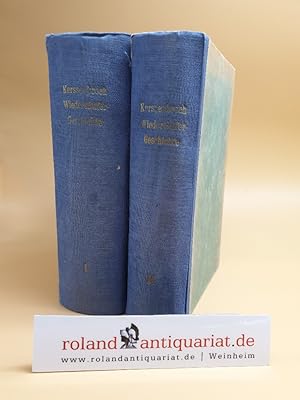
Hermanni a Kerssenboch: Anabaptisti furoris/ Monasterrium inclitam Westphaliae metropolim evertentis/ Historica narratio. Hälfte 1-2 (vollständiges Ex.!) Hg. von H. Detmer.
Anbieter: Roland Antiquariat UG haftungsbeschränkt, Weinheim, Deutschland
Verkäuferbewertung 5 von 5 Sternen
Münster: Theissing, 1899/1900. XII/462*/997 S., priv.HLn. (4/insgeamt ordentliches, fest gebundenes Ex./ minimale Bleistiftunerstreichungen/ Einband verblasst und verzogen und am Kapiatl etwas eingerissen) Sprache: Deutsch Gewicht in Gramm: 1000.
-
Historia Anabaptistarum Monasteriensium.
Erscheinungsdatum: 1576
Anbieter: Antiquariaat FORUM BV, Houten, Niederlande
Verkäuferbewertung 5 von 5 Sternen
EUR 18.000,00
EUR 25,00 Versand
Versand von Niederlande nach USAAnzahl: 1 verfügbar
In den WarenkorbA fine and carefully executed 18th-century manuscript copy by an unknown writer of Hermann von Kerssenbroch's Historia Monasteriensis, the most important contemporary chronicle of the Anabaptist rising in Münster (1534-1535) and of the religious and civic turmoil surrounding it.Von Kerssenbroch was a teacher, humanist, historian, and - most importantly - a pivotal figure in 16th-century Westphalia. Born near Barntrup around 1520, he studied in Paderborn, Münster, and Cologne, and spent much of his career as rector of the Pauline Gymnasium in Münster. His educational reforms revitalised the region's declining school system, though his uncompromising scholarship and caustic wit made him many enemies. His Historia Monasteriensis, begun under episcopal patronage, became his life's great work and the source of both his renown and his downfall. The Historia Monasteriensis, composed between 1567 and 1573, offers an exceptionally vivid account of Münster's transformation during the Reformation and the catastrophic Anabaptist revolt which followed. Writing from a Catholic perspective, Von Kerssenbroch drew on a vast range of sources, archival records, eyewitness testimony, and his own recollections, to produce a monumental narrative covering the years 1524 to 1554. His prose is learned and energetic, steeped in classical allusion, and often passionately polemical.The work's fate was nearly as dramatic as its subject. When Von Kerssenbroch sent his manuscript to Cologne for printing in 1573, the Münster city council intervened, condemning its contents and forbidding publication. He was forced, under oath, to surrender all copies, to swear that none remained, and to promise never again to write a book, upon pain of a heavy fine of 200 thalers. As a result, the Historia Monasteriensis survived only in a handful of manuscript copies, and was never printed in full. Only a incomplete edition appeared in 1730, followed by another in 1750, before Heinrich Detmer's definitive edition of 1899-1900 finally restored the text to scholarship.The present manuscript, dated 3 July 1734, preserves the complete text up to the year 1553, corresponding closely with Detmer's authoritative version, but contains additional material absent from any printed edition. Of special value is the supplement (ll. 345-362), recording the Acta disputationis de Anabaptistis, the Acts of the "Täuferdisputation" held in Münster on 7-8 August 1533, known to survive in only a few manuscript copies. This is followed by the separately foliated Acta ab Anno 1573 inter Senatum Monasteriensem et M. Hermannum a Kerssenbroick ., the documents relating to Kerssenbroch's own conflict with the Münster Senate over his history of the Anabaptists.With a manuscript inscription in Latin on the front pastedown. It records information about the book, including its intended purpose, contents, and notable features. The text mentions that the book contains anecdotal and unique material not found elsewhere, praises Kerssenbroch of Paderborn, and notes a person or institute named Thomas. The inscription concludes with a date and place of completion: 3 July 1734. A second inscription, just one line below, notes that the book was completed by the Von Kerssenbroch in 1576. A third inscription on the front pastedown states that the book comes from the library of Johann Christoph Krause (1749-1799) a historian, whose library was sold at Halle in August 1800 ("Ex Auctione Krauseria publice mens. Aug. 1800"). An inscription on the first flyleaf again records the book's authorship, content, and provenance. The binding shows minor rubbing and scuffing, the corners are slightly bumped, and the foot of the spine is slightly damaged due to worm hole. Otherwise in very good condition.l For Von Kerssenbroch and his work see: Detmer, Hermann von Kerssenbroch's Leben und Schriften (Münster, 1900); Von Kerssenbrock, Narrative of the Anabaptist Madness: The Overthrow of Münster, the Famous Metropolis of Westphalia.