

Gesamtpreis (1 Artikel Artikel):
Versandziel:

kenneth editor ramage (14 Ergebnisse)
Direkt zu den wichtigsten Suchergebnissen
Suchfilter
Produktart
- Alle Product Types
- Bücher (14)
- Magazine & Zeitschriften (Keine weiteren Ergebnisse entsprechen dieser Verfeinerung)
- Comics (Keine weiteren Ergebnisse entsprechen dieser Verfeinerung)
- Noten (Keine weiteren Ergebnisse entsprechen dieser Verfeinerung)
- Kunst, Grafik & Poster (Keine weiteren Ergebnisse entsprechen dieser Verfeinerung)
- Fotografien (Keine weiteren Ergebnisse entsprechen dieser Verfeinerung)
- Karten (Keine weiteren Ergebnisse entsprechen dieser Verfeinerung)
- Manuskripte & Papierantiquitäten (Keine weiteren Ergebnisse entsprechen dieser Verfeinerung)
Zustand Mehr dazu
- Neu (Keine weiteren Ergebnisse entsprechen dieser Verfeinerung)
- Wie Neu, Sehr Gut oder Gut Bis Sehr Gut (Keine weiteren Ergebnisse entsprechen dieser Verfeinerung)
- Gut oder Befriedigend (10)
- Ausreichend oder Schlecht (2)
- Wie beschrieben (2)
Einband
Weitere Eigenschaften
- Erstausgabe (3)
- Signiert (Keine weiteren Ergebnisse entsprechen dieser Verfeinerung)
- Schutzumschlag (Keine weiteren Ergebnisse entsprechen dieser Verfeinerung)
- Angebotsfoto (3)
Sprache (2)
Gratisversand
Land des Verkäufers
Verkäuferbewertung
-

Paperback. Zustand: Good. No Jacket. Pages can have notes/highlighting. Spine may show signs of wear. ~ ThriftBooks: Read More, Spend Less.
-
Lyman Muzzleloaders' Handbook
Anbieter: ThriftBooks-Atlanta, AUSTELL, GA, USA
Verkäuferbewertung 5 von 5 Sternen

Paperback. Zustand: Good. No Jacket. Pages can have notes/highlighting. Spine may show signs of wear. ~ ThriftBooks: Read More, Spend Less.
-
Lyman Muzzleloaders' Handbook
Anbieter: ThriftBooks-Dallas, Dallas, TX, USA
Verkäuferbewertung 5 von 5 Sternen
Paperback. Zustand: Good. No Jacket. Pages can have notes/highlighting. Spine may show signs of wear. ~ ThriftBooks: Read More, Spend Less.
-
Lyman Muzzleloaders' Handbook
Anbieter: ThriftBooks-Atlanta, AUSTELL, GA, USA
Verkäuferbewertung 5 von 5 Sternen
Paperback. Zustand: Fair. No Jacket. Readable copy. Pages may have considerable notes/highlighting. ~ ThriftBooks: Read More, Spend Less.
-

Black Powder Handbook
Sprache: Englisch
Verlag: Lyman Products Corporation, 1975
ISBN 10: 0912412070 ISBN 13: 9780912412078
Anbieter: ThriftBooks-Atlanta, AUSTELL, GA, USA
Verkäuferbewertung 5 von 5 Sternen
Paperback. Zustand: Good. No Jacket. Pages can have notes/highlighting. Spine may show signs of wear. ~ ThriftBooks: Read More, Spend Less.
-
Black Powder Handbook
Sprache: Englisch
Verlag: Lyman Products Corporation, 1975
ISBN 10: 0912412070 ISBN 13: 9780912412078
Anbieter: ThriftBooks-Dallas, Dallas, TX, USA
Verkäuferbewertung 5 von 5 Sternen
Paperback. Zustand: Fair. No Jacket. Readable copy. Pages may have considerable notes/highlighting. ~ ThriftBooks: Read More, Spend Less.
-
Lyman Muzzleloaders' Handbook (First Edition)
Anbieter: Sheila B. Amdur, Coventry, CT, USA
Verkäuferbewertung 5 von 5 Sternen
Erstausgabe
Soft cover. Zustand: Very Good. 1st Edition. Extensive illustrations. Ink name and address top of first page. Color pictorial covers.
-
Lyman muzzleloaders' handbook
Sprache: Englisch
Verlag: Lyman Publications January 1976, 1976
ISBN 10: 0912412089 ISBN 13: 9780912412085
Anbieter: The Book Garden, Bountiful, UT, USA
Verkäuferbewertung 4 von 5 Sternen

Hardcover. Zustand: Very Good - Cash. Light reader wear and rubbing to the edges, corners, covers, and pages. The book is in great condition! Stock photos may not look exactly like the book.
-

Lyman Cast Bullet Handbook
Sprache: Englisch
Verlag: Lyman Publications January 1987, 1987
ISBN 10: 9999768806 ISBN 13: 9789999768801
Anbieter: The Book Garden, Bountiful, UT, USA
Verkäuferbewertung 4 von 5 Sternen
Unknown. Zustand: Good - Cash. General surface and edge wear to the cover. The corners have been bumped. Creasing to the spine and cover. Pages show reader wear. There's a crack in the spine near the end of the book where the pages are beginning to come lose. Pages still appear to be secure. Stock photos may not look exactly like the book.
-
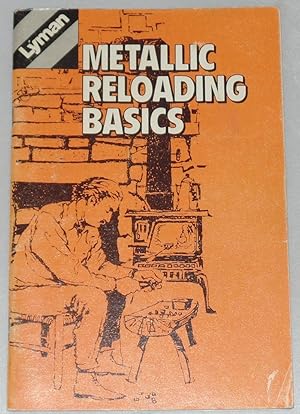
Lyman: Metallic Reloading Basics
Sprache: Englisch
Verlag: Lyman Publications, Middlefield, 1976
ISBN 10: 0912412119 ISBN 13: 9780912412115
Anbieter: Besleys Books PBFA, Diss, Vereinigtes Königreich
Verbandsmitglied: PBFA
Verkäuferbewertung 5 von 5 Sternen
Erstausgabe
EUR 21,38
EUR 20,76 Versand
Versand von Vereinigtes Königreich nach USAAnzahl: 1 verfügbar
In den WarenkorbSoft Cover. Zustand: Good. 1st Edition. Booklet, staple bound. 60pp. Illus. 1st edition 1976. Slight wear to covers. A pleasing copy. (bs112).
-

Lyman Pistol and Revolver Handbook
Sprache: Englisch
Verlag: Lyman Publications, Middlefield, Ct, 1978
ISBN 10: 0912412127 ISBN 13: 9780912412122
Anbieter: Ground Zero Books, Ltd., Silver Spring, MD, USA
Verkäuferbewertung 5 von 5 Sternen
Erstausgabe
Wraps. Zustand: Good. Presumed First Edition, First printing. 280 pages. Oversized book, measuring 11 inches by 8-1/4 inches. Three-hole punched, some spine wear. Illustrations. Topics covered include Acknowledgment; Lyman Handbook Staff; Foreword; Why Reload?; Getting Started Components; Reloading; Bullet Casting; Composite Cast Pistol Bullets; How Bullet Molds Are Made; Reference; Reloading Data Introduction; Metallic Date; Cap & Ball data Introduction; Cap & Ball Data; Exterior Ballistics; and Trajectory Tables. Lyman is the oldest current manufacturer of metallic aperture sights, telescopic rifle sights, bullet casting moulds and related equipment, metallic reloading dies and presses, reloading handbooks, and add on shot gun chokes in the United States. One hundred years in business is an accomplishment which would not have been possible without the interest and support of the American shooter. C. Kenneth Ramage, was an American retail company executive. He was a member of Connecticut State Rifle and Revolver Association (president 1985-1986), National Muzzleloading Rifle Association, Cast Bullet Association, Association Importers & Manufacturers for Muzzleloading 1980-1983. The proud tradition and history of Lyman Products began simply in the late 1800's when William Lyman, an avid outdoorsman and inventor, created a product that resolved problems with gun sights of his day. The commonly used vernier sights were adequate for daytime shooting, but almost useless if lighting was not perfect. Lyman's No. 1 Tang Sight featured a small disc and a large aperture, a combination that made the thin rim almost invisible and greatly improved the shooter's vision. His patented design launched the Lyman Gun Sight Company, and today, the Lyman tang and receiver sights still utilize the same principles originated over 137 years ago to enhance both the sight picture and the speed of aiming. Through the years, Lyman has continued to develop innovative products for shooters and reloaders, carrying on the legacy of William Lyman. In 1925, the Lyman family purchased Ideal reloading products, which included the well-known Ideal reloading handbooks. Since then, Lyman handbooks have become known as the "bible" of reloading, and are considered the most trusted source for data.
-

Lyman reloading handbook 46th edition
Verlag: Lyman Publications, USA, 1982
Anbieter: Book Express (NZ), Shannon, Neuseeland
Verkäuferbewertung 4 von 5 Sternen
Paperback. Zustand: Good. 3 filing holes against spine -cover & spine rubbed -some corner wear-hea vy book check postage with us.
-

Lyman black powder handbook
Verlag: Lyman Products, USA, 1975
Anbieter: Book Express (NZ), Shannon, Neuseeland
Verkäuferbewertung 4 von 5 Sternen
Paperback. Zustand: Good. 239 pages. covers rubbed at edges.
-

Lyman Cast Bullet Handbook; Third Edition
Verlag: Lyman Publications, Middlefield, Connecticut, 1980
Anbieter: Ground Zero Books, Ltd., Silver Spring, MD, USA
Verkäuferbewertung 5 von 5 Sternen
Trade paperback. Zustand: Very good. Third Edition. 416 pages. Oversized book, measuring 11 inches by 8/12 inches. Three-hole punched. Includes Foreword; A History of Cast Bullets; The Early Years; The Metallurgy of Molten Lead Alloys; Bullet Casting, Sizing and Lubrication; Reloading Preparation: Equipment and Components; Reloading Rifle and Pistol Cartridges; Accuracy Tips and Techniques; Hunting with Cast Bullets; An Introduction to Muzzleloading; Reference; Reloading Data; Pistol Data; and External Ballistics. Also includes Bullets to 1775; Bullets of the Revolution; The Elongated Bullet; Bullets of the Civil War; Whitworth and Berdan Bullets; Bullets for Metallic Cases; Bullets in Shotguns. Also discusses Bullet Casting Past to Present; The Metallurgy of Molten Lead Alloys; Bullet Casting, Sizing and Lubrication; How Lyman Moulds Are Made; Tuning and Trouble Shooting Your Moulds; Bullet Casting; Sizing and Lubrication; Reloading Preparation: Equipment and Components; Propellant; Projectiles and Lubricant; Reloading Rifle & Pistol Cartridges; Accuracy Tips & Techniques; Hunting with Cast Bullets; An Introduction to Muzzleloading; Loading and Shooting the Percussion Revolver; Reloading Data Introduction. Also contains a Historical Overview of Cast Bullet Ballistics. This is an invaluable reference for cast bullet shooters. A cast bullet is made by allowing molten metal to solidify in a mold. Most cast bullets are made of lead alloyed with tin and antimony; but zinc alloys have been used when lead is scarce, and may be used again in response to concerns about lead toxicity. Most commercial bullet manufacturers use swaging in preference to casting, but bullet casting remains popular with handloaders. 1 History 2 Cast bullet advantages 3 Safety 4 Bullet shapes 5 Gas checks 6 Bullet lubrication 7 Bullet alloys 8 Heat treating 9 Paper-patched bullets 10 Notes 11 References Early, spherical cast bullets, found on the site of the Battle of Naseby (1645), Northampton Museum and Art Gallery Firearms projectiles were being cast in the 14th century. Iron was used for cannon, while lead was the preferred material for small arms. Lead was more expensive than iron, but it was softer and less damaging to the relatively weak iron barrels of early muskets. Lead could be cast in a ladle over a wood fire used for cooking or home heating, while casting iron required higher temperatures. Greater density of lead allowed lead bullets to retain velocity and energy better than iron bullets of the same weight and initial firing velocity. Swaging, rather than casting, became a preferred manufacturing technique during the 19th century industrial revolution; but cast bullets remained popular in early rimmed black powder cartridges like the .32-20 Winchester, .32-40 Ballard, .38-40 Winchester, .38-55 Winchester, .44-40 Winchester, .45 Colt, and .45-70. Disadvantages became evident as loadings shifted to smokeless powder in the late 19th century. Higher velocity smokeless powder loadings caused lead to melt and be torn from soft bullets to remain in the barrel after firing in small deposits called leading. Manufacturers of high-velocity military ammunition modified their bullet swaging process to apply a thin sheet of stronger metal over the soft lead bullet. Although it took several decades to devise bullet jacket alloys and manufacturing procedures to duplicate the accuracy of cast bullets at lower velocities; jacketed bullets were more accurate at the velocity of 20th century military rifle cartridges.[4] Jacketed bullets also functioned more reliably and are less likely to be deformed in the mechanical loading process of self-loading pistols and machine-guns.


