

Gesamtpreis (1 Artikel Artikel):
Versandziel:

hoffenberg mason kenton maxwell (10 Ergebnisse)
Direkt zu den wichtigsten Suchergebnissen
Suchfilter
Produktart
- Alle Product Types
- Bücher (10)
- Magazine & Zeitschriften (Keine weiteren Ergebnisse entsprechen dieser Verfeinerung)
- Comics (Keine weiteren Ergebnisse entsprechen dieser Verfeinerung)
- Noten (Keine weiteren Ergebnisse entsprechen dieser Verfeinerung)
- Kunst, Grafik & Poster (Keine weiteren Ergebnisse entsprechen dieser Verfeinerung)
- Fotografien (Keine weiteren Ergebnisse entsprechen dieser Verfeinerung)
- Karten (Keine weiteren Ergebnisse entsprechen dieser Verfeinerung)
- Manuskripte & Papierantiquitäten (Keine weiteren Ergebnisse entsprechen dieser Verfeinerung)
Zustand Mehr dazu
- Neu (1)
- Wie Neu, Sehr Gut oder Gut Bis Sehr Gut (2)
- Gut oder Befriedigend (1)
- Ausreichend oder Schlecht (Keine weiteren Ergebnisse entsprechen dieser Verfeinerung)
- Wie beschrieben (6)
Einband
- alle Einbände
- Hardcover (Keine weiteren Ergebnisse entsprechen dieser Verfeinerung)
- Softcover (8)
Weitere Eigenschaften
- Erstausgabe (5)
- Signiert (Keine weiteren Ergebnisse entsprechen dieser Verfeinerung)
- Schutzumschlag (1)
- Angebotsfoto (7)
Sprache (3)
Preis
- Beliebiger Preis
- Weniger als EUR 20 (Keine weiteren Ergebnisse entsprechen dieser Verfeinerung)
- EUR 20 bis EUR 45
- Mehr als EUR 45
Gratisversand
Land des Verkäufers
Verkäuferbewertung
-

Candy
Anbieter: Revaluation Books, Exeter, Vereinigtes Königreich
Verkäuferbewertung 5 von 5 Sternen

EUR 53,96
EUR 11,58 Versand
Versand von Vereinigtes Königreich nach USAAnzahl: 1 verfügbar
In den WarenkorbPaperback. Zustand: Brand New. 224 pages. 8.25x5.50x0.75 inches. In Stock.
-
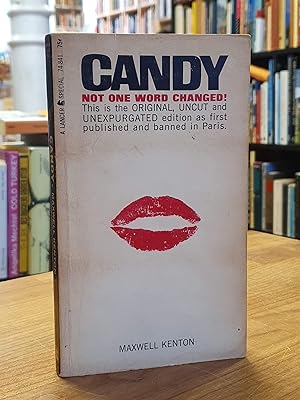
Candy
Sprache: Englisch
Verlag: New York, Lancer Books (= Lancer Special) 1965, 1965
Anbieter: Antiquariat Orban & Streu GbR, Frankfurt am Main, Deutschland
Verkäuferbewertung 5 von 5 Sternen
Erstausgabe
Taschenbuch-Erstausgabe, 8°, 189 S., Text: englisch, farbig illustr. original Kartonage (Paperback), Einband minimal berieben und mit leichten Haarlinien, Schnitt und Seitenränder leicht nachgedunkelt, sonst schönes, sauberes Exemplar. Originaltitel: "Candy" - Olympia Press, Paris (1958) Abholung im Ladengeschäft in Frankfurt am Main (Nordend ggü. Musterschule) möglich. Das spart die Portokosten. Pickup at the store in Frankfurt am Main (Nordend, close to Musterschule) is possible. It saves the shipping costs.
-

Lollipop. The Traveller`s Companion Series No. 64.
Sprache: Deutsch
Verlag: Paris / Olympia Press,, 1962
Anbieter: Antiquariat Willi Braunert, München, Deutschland
Verkäuferbewertung 4 von 5 Sternen

8°, paperback. Second edition. 189 pp Fine copy. Pre-owners name written inside covers. Sprache: Deutsch Gewicht in Gramm: 550.
-
Lollipop [Candy]
Verlag: The Olympia Press: The Traveller's Companion Series, no. 64. 1958. First edition, first printing of this title. 189 pp., 1958
Anbieter: Antiquariaat Hortus Conclusus, Bergambacht, Niederlande
Verkäuferbewertung 5 von 5 Sternen
Paperback - standard sedate green paper covers for The Traveller's Companion. Spine very lightly sunned / worn (esp. lower spine end), old booksellers label on back, old price of 1200 FF crossed out. A (very) good copy. Please see description or ask for photos.
-
Lollipop.
Verlag: Paris Olympia Press, 1962
Anbieter: Shapero Rare Books, London, Vereinigtes Königreich
Verbandsmitglied: ABA ILAB PBFA
Verkäuferbewertung 5 von 5 Sternen
Erstausgabe
EUR 298,14
EUR 17,37 Versand
Versand von Vereinigtes Königreich nach USAAnzahl: 1 verfügbar
In den WarenkorbSecond edition; small 8vo; unmarked internally; publisher's green wrappers, priced at 18 N.F. on rear cover, minor rubbing to extremities, else near-fine. Second edition of Lollipop by Maxwell Kenton, the joint pseudonym of Terry Southern and Mason Hoffenberg, who co-authored this highly sexual satirical take on Voltaire's Candide. Originally published as Candy in 1958, the novel was banned in France a year after its release. As such, new wrappers were printed with the substitute title, Lollipop, and applied to the remaining sheets of the first edition so that the Brigade Mondaine (the French vice squad) wouldn't be able to find the book alphabetically on the 'livre interdit' list. The publishers even went so far as to attribute the Voltaire quotation that opens the book to Rimbaud, successfully thwarting the authorities, particularly for the British export market. This second issue of Lollipop has the substitute title retained, but with the epigram restored and attributed to Voltaire.
-
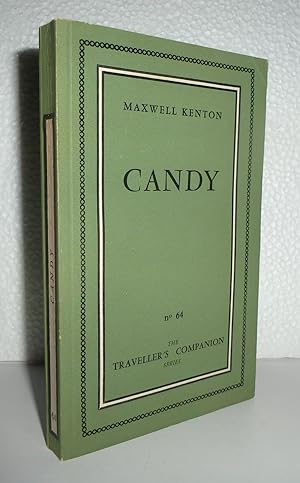
Candy
Verlag: Olympia Press, 1958
Anbieter: Sekkes Consultants, North Dighton, MA, USA
Verkäuferbewertung 5 von 5 Sternen
Erstausgabe
Soft cover. Zustand: Fine. 1st Edition. The work was published pseudonymously by Maurice Girodas, owner of the scandalous "Olympia Press", in October of 1958. Almost immediately noticed by the BRP. who seized copies of it in Paris bookshops. Candy was officially banned in France in May of 1959 (under the statute called the "1939 Decree", an amendment to the law of 1881, which gave the French government more power to ban offensive publications in foreign languages). Candy was the basis for the 1968 cult Marquand film of the same name and featured on Playboy Magazine's list of 25 Sexiest Novels Ever Written. First issue in green printed wraps with original price "1200 Francs" on rear cover, without later price overstamp. book.
-
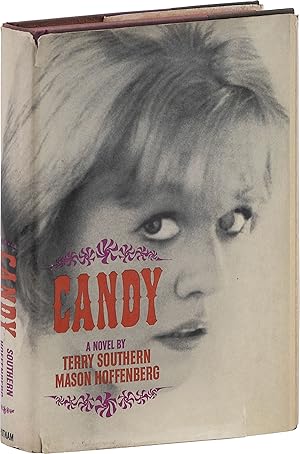
Candy
Verlag: G.P. Putnam's Sons, New York, 1964
Anbieter: Lorne Bair Rare Books, ABAA, Winchester, VA, USA
Verbandsmitglied: ABAA ILAB IOBA
Verkäuferbewertung 5 von 5 Sternen
Zustand des Schutzumschlags: dj. First Thus. First Putnam Printing. Octavo (21 cm.); 3/4 purple spine over black boards; red topstain; dustjacket; 224pp. Mild fading to cloth at board edges; top-stain subtly faded; Very Good+. In the original dustwrapper, unclipped (priced $5.00) crisp and unfaded with trivial rubbing at spine ends and a two small (.
-
Lollipop. The Traveller's Companion Series No. 64
Verlag: Paris: The Olympia Press, 1959
Anbieter: Zubal-Books, Since 1961, Cleveland, OH, USA
Verkäuferbewertung 5 von 5 Sternen
Zustand: Very Good. *Price HAS BEEN REDUCED by 10% until Monday, June 8 (weekend SALE item)* first edition thus; 189, [1] pp., original green paper wrappers, edges worn, else near very good. - If you are reading this, this item is actually (physically) in our stock and ready for shipment once ordered. We are not bookjackers. Buyer is responsible for any additional duties, taxes, or fees required by recipient's country. Photos available upon request.
-

Lollipop
Anbieter: Antikvariat Atlantis Malmö AB, Malmö, Schweden
Verkäuferbewertung 2 von 5 Sternen

Erstausgabe
Soft cover. Zustand: Near Fine. 1st Edition. Paris: The Olympia Press, copyrighted 1959, printed October 1958. 1st Edition. The Traveller's Companion Series no 64. 189 pp. Publisher's green wrappers. "Francs 1.200" has been above-stamped with the New Price NF 15 on rear wrapper. Printed dedication "To Master Boon and Master Badj". Quotation by Rimbaud on first page. Some wear to edges and corners.
-
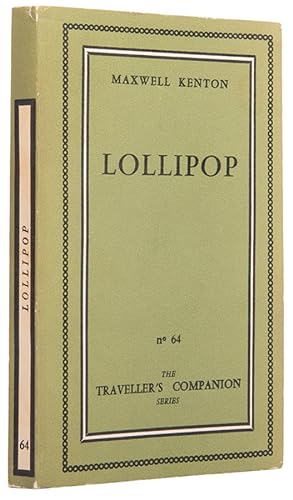
Candy. - [FIRST ISSUE OF ONE OF THE "25 SEXIEST NOVELS EVER WRITTEN"]
Anbieter: Herman H. J. Lynge & Søn ILAB-ABF, Copenhagen, Dänemark
Verkäuferbewertung 4 von 5 Sternen
Erstausgabe
Paris, The Olympia Press, (1958). Original printed green wrappers. Green border on title-page. Spine a bit worn, with minor loss of upper layer of paper to hinges and capitals. Light wear to extremities. Lower corner of front wrapper slightly bent. Internally nice and clean. The scarce first edition, first issue (Traveler's Companion Series, number 64, printed October 1958, with the Francs 1.200 to back wrapper, not overstamped. - N.B. the 1.200 has been crossed out by hand, with a pen, but it is NOT stamped over) of Southern and Hoffenberg's greatly scandalous novel, which was confiscated by the Brigade Mondaine (i.e. "La Brigade de répression du proxénétisme" (BRP)) and officially banned in France. "Candy" not only caused an inevitable furor for its vulgar take on contemporary culture, but brought about landmark changes in how the First Amendment applied to erotic literature. The work, which constitutes the unison of three greatly provocative and time-changing minds (Southern, Hoffenberg, and Girodias), quickly gained classic status and is now one of the most famous "Beat"-novels. It was famously made into an all-star film (starring Marlon Brando, Richard Burton, James Coburn, Charles Aznavour, John Huston, Ringo Starr, Walter Matthau, John Astin, and Ewa Aulin) by Christian Marquand in 1968, and in 2006 Playboy Magazine listed it among the "25 Sexiest Novels Ever Written", describing the story as a "young heroine's picaresque travels, a kind of sexual pinball machine that lights up academia, gardeners, the medical profession, mystics and bohemians."The work was published pseudonymously by Maurice Girodias, owner of the scandalous "Olympia Press", in October of 1958. Almost immediately noticed by the BRP, who seized copies of it in the Paris bookshops, "Candy" was officially banned in France in May of 1959 (under a statute called the "1939 Decree", an amendment to the law of 1881, which gave the French government more power to ban offensive publications in foreign languages).In December of 1958, Maurice Girodias changed the title of "Candy" and reissued it as "Lollipop" in order to fool sensors and sell the remaining copies of the work. This supposedly work quite well and many copies of the book survived thus, leaving the first edition with the original title quite a scarcity, both in the first (not-overstamped) issue and the second issue. Later on, "Candy" was published in North America, by Putnam, under the authors' own names, those being Terry Southern and Mason Hoffenberg. In an interview, Terry Southern explains the origin of the pseudonym as thus: "Yeah. And the name of the author was Maxwell Kenton. A name I first used with David Burnett, of all people. He was the son of Martha Foley and Whit Burnett of The Best American Short Stories fame. We were collaborating on some short detective stuff, and even sold a couple to Argosy Magazine, and we used the pseudonym 'Maxwell Kenton'. So when Mason at one point had an attack of conscience and said, "Man, I've decided I don't want my mother to know about this book," we took the name Maxwell Kenton so his mother would be spared anguish at her Mah-Jong parties." (Smoke Signals).Terry Southern, though mostly famous for his bestseller "Candy", which greatly influenced popular culture of the 1960'ies, was known for a lot of things, including writing much of the film dialogue of the landmark films "Dr. Strangelove" and "Easy Rider". In his "The Candy Men. The Rollicking Life and Times of the Notorious Novel "Candy", Nile Southern tells the story of the book, the men behind it, and the furor that it caused: "When I was in grade school in 1967, one of my six-year-old classmates, Daisy Friedman (now a writer), turned to me and said, "Your father is a dirty old man!" I asked how she knew that, and she said, "He wrote a book called "Candy" - and it's a dirty, dirty book!" Again, I asked how she knew all this, and she said, "Because my parents told me - they have it on their bookshelf.".




![Bild des Verkäufers für Candy. - [FIRST ISSUE OF ONE OF THE "25 SEXIEST NOVELS EVER WRITTEN"] zum Verkauf von Herman H. J. Lynge & Søn ILAB-ABF](https://pictures.abebooks.com/inventory/md/md7145865989.jpg)