

Gesamtpreis (1 Artikel Artikel):
Versandziel:

harry hogan (4 Ergebnisse)
Direkt zu den wichtigsten Suchergebnissen
Suchfilter
Produktart
- Alle Product Types
- Bücher (3)
- Magazine & Zeitschriften (1)
- Comics (Keine weiteren Ergebnisse entsprechen dieser Verfeinerung)
- Noten (Keine weiteren Ergebnisse entsprechen dieser Verfeinerung)
- Kunst, Grafik & Poster (Keine weiteren Ergebnisse entsprechen dieser Verfeinerung)
- Fotografien (Keine weiteren Ergebnisse entsprechen dieser Verfeinerung)
- Karten (Keine weiteren Ergebnisse entsprechen dieser Verfeinerung)
- Manuskripte & Papierantiquitäten (Keine weiteren Ergebnisse entsprechen dieser Verfeinerung)
Zustand Mehr dazu
- Neu (Keine weiteren Ergebnisse entsprechen dieser Verfeinerung)
- Wie Neu, Sehr Gut oder Gut Bis Sehr Gut (3)
- Gut oder Befriedigend (1)
- Ausreichend oder Schlecht (Keine weiteren Ergebnisse entsprechen dieser Verfeinerung)
- Wie beschrieben (Keine weiteren Ergebnisse entsprechen dieser Verfeinerung)
Einband
Weitere Eigenschaften
- Erstausgabe (3)
- Signiert (Keine weiteren Ergebnisse entsprechen dieser Verfeinerung)
- Schutzumschlag (1)
- Angebotsfoto (2)
Sprache (3)
Gratisversand
- Kostenloser Versand nach USA (Keine weiteren Ergebnisse entsprechen dieser Verfeinerung)
Land des Verkäufers
Verkäuferbewertung
-
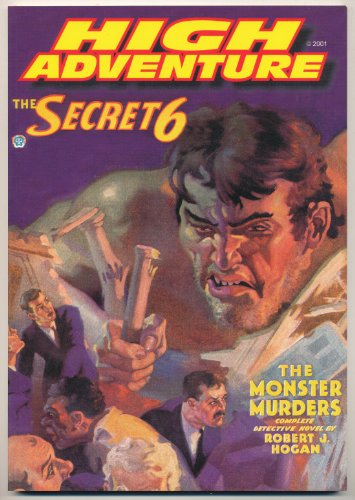
The Secret Six : The Monster Murders, High Adventure #58
Anbieter: Books Do Furnish A Room, Durham, NC, USA
Verkäuferbewertung 3 von 5 Sternen

Erstausgabe
Soft cover. Zustand: Fine. Harry Alan (illustrator). First Edition. New copy. Book.
-

ENTERTAINMENT IN VIDEO New In Town
Sprache: Deutsch
Verlag: EV 0.
Anbieter: bemeX, Villingen-Schwenningen, Deutschland
Verkäuferbewertung 5 von 5 Sternen

dvd. Zustand: Sehr gut. Seiten; Das CD/DVD ist in einem gutem Zustand.Seiten sind sauber ohne Markierungen.Wir bieten eine 100% Geld-zurÃck-Garantie. MCD-H19-118 Sprache: Deutsch Gewicht in Gramm: 500.
-
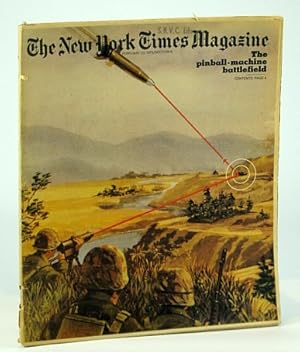
The New York Times Magazine, February (Feb.) 23, 1975 - Stevie Wonder
Verlag: The New York Times & Arno Press, New York, 1975
Anbieter: RareNonFiction, IOBA, Ladysmith, BC, Kanada
Verbandsmitglied: IOBA
Verkäuferbewertung 5 von 5 Sternen
Magazin / Zeitschrift Erstausgabe
Single Issue Magazine. Zustand: Good. Illustrated by Visalli, Santi; Durazzi, Aldo; Zimberoff, Tom;Furmantovsky, Jill; Korody, Tony; Coleman, B.; Fink, K.; Weiss, R.;Charles, Hogan; Weston, Cole; Skrebneski; Eberstadt, Frederick; Stein,Harvey (illustrator). First Edition. 96 pages. Features: A Dream Grows in Brooklyn - In Carroll Gardens a rising wave of new Italian immigrants blends with the old; The Automated Battlefield - Smart Bombs/Map-Reading Missiles/Fighting Satellites/Battlefield Sensors; Why Zoos? - they not only educate and please, but save species rarer than Rembrandts from extinction - article with photos, including a 1907 Bronx-bred bison; After the Cyclone - Photos and article on destruction in Darwin, Australia; A Sense of Wonder - Photo-illustrated feature article on musican Stevie Wonder; Crazy Edmos fabric ad with man wearing yellow shirt illustrated with an electrical plug, and lady wearing yellow shirt illustrated with plug receptacle; Child-Woman Clothes; International Style Revisited - the architecture of Richard Meier is exemplified in this three-story Westchester house designed by architect Christopher H.L. Owen; Rare one-page color-photo ad for Teacher's Scotch Whisky features caveman photo of Mel Brooks and humorous text referencing his movies; Photos of female twins inside back cover. Average wear. Small faint library stamp on each cover. A sound vintage copy.; Folio - over 12" - 15" tall; The New York Times Magazine, February (Feb.) 23, 1975 - Cyclone Hits Darwin, Australia Yolanda Simmons A Dream Grows in Brooklyn - In Carroll Gardens a rising wave of new Italian immigrants blends with the old; The Automated Battlefield - Smart Bombs/M.
-

WEAPONS SYSTEMS AND POLITICAL STABILITY: A History
Verlag: University Press of America, 1983
Anbieter: Arches Bookhouse, Portland, OR, USA
Verkäuferbewertung 5 von 5 Sternen
Erstausgabe
Hardcover. Zustand: FINE. First Edition. First Printing. 1043pp. 9x6' sewn binding in publisher's navy buckram with silver gilt lettering. Sans DJ as issued. FINE copy--entirely clean and sharp. Scarce first edition of this tragically incomplete would-be magnum opus by one of the great political and military analysts of modern times. The incomplete manuscript was edited and published posthumously by the author's colleagues. 'Carroll Quigley, historian and teacher at Georgetown University, died January 5, 1977, leaving unfinished a manuscript on *Weapons Systems and Political Stability: A History* upon which he had been working for the preceding twelve years. His colleagues and friends, upon reviewing the manuscript, decided to press forward with its publication. Although the manuscript is frustratingly incomplete in time sequence--it ends its narrative in the 15th century--it carries further toward completion the uniquely anthropological holistic analysis of history which is the theme of his earlier works, *Tragedy and Hope*, and *Evolution of Civilizations*. In Quigley's social analysis the dominance of democracy in the 20th century is attributable to the acceptance in the 19th century of a weapons system that favored democracy, the hand gun and rifle. In the consequent tilt toward an atomistic society, loyalties to the once strong social structures of family, church and workplace break down. With the immediate availability of weapons to alienated individuals, violence then becomes endemic. Yet weaponry such as the nuclear bomb, which a technologic society produces, is both irrelevant to the domestic need for order and threatening, in its requirements for corporate decision-making, to individual self-interest democracy. The temptation to explore further Quigley's speculations on the themes of history is difficult to resist. But the reader must undertake that responsibility and, in so doing, will join Quigley's friends in realizing their loss.' (From Harry Hogan's Introduction).


