

Gesamtpreis (1 Artikel Artikel):
Versandziel:

hahn hong (8 Ergebnisse)
Direkt zu den wichtigsten Suchergebnissen
Suchfilter
Produktart
- Alle Product Types
- Bücher (8)
- Magazine & Zeitschriften (Keine weiteren Ergebnisse entsprechen dieser Verfeinerung)
- Comics (Keine weiteren Ergebnisse entsprechen dieser Verfeinerung)
- Noten (Keine weiteren Ergebnisse entsprechen dieser Verfeinerung)
- Kunst, Grafik & Poster (Keine weiteren Ergebnisse entsprechen dieser Verfeinerung)
- Fotografien (Keine weiteren Ergebnisse entsprechen dieser Verfeinerung)
- Karten (Keine weiteren Ergebnisse entsprechen dieser Verfeinerung)
- Manuskripte & Papierantiquitäten (Keine weiteren Ergebnisse entsprechen dieser Verfeinerung)
Zustand Mehr dazu
- Neu (1)
- Wie Neu, Sehr Gut oder Gut Bis Sehr Gut (1)
- Gut oder Befriedigend (4)
- Ausreichend oder Schlecht (2)
- Wie beschrieben (Keine weiteren Ergebnisse entsprechen dieser Verfeinerung)
Einband
- alle Einbände
- Hardcover (8)
- Softcover (Keine weiteren Ergebnisse entsprechen dieser Verfeinerung)
Weitere Eigenschaften
- Erstausgabe (Keine weiteren Ergebnisse entsprechen dieser Verfeinerung)
- Signiert (Keine weiteren Ergebnisse entsprechen dieser Verfeinerung)
- Schutzumschlag (Keine weiteren Ergebnisse entsprechen dieser Verfeinerung)
- Angebotsfoto (1)
Sprache (2)
Gratisversand
Land des Verkäufers
Verkäuferbewertung
-
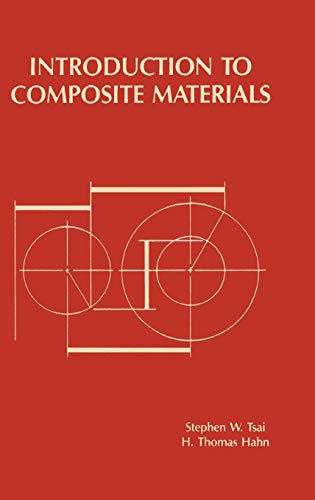
Introduction to Composite Materials
Anbieter: ThriftBooks-Dallas, Dallas, TX, USA
Verkäuferbewertung 5 von 5 Sternen

Hardcover. Zustand: Fair. No Jacket. Readable copy. Pages may have considerable notes/highlighting. ~ ThriftBooks: Read More, Spend Less.
-
Introduction to Composite Materials
Anbieter: ThriftBooks-Dallas, Dallas, TX, USA
Verkäuferbewertung 5 von 5 Sternen
Hardcover. Zustand: Fair. No Jacket. Missing dust jacket; Readable copy. Pages may have considerable notes/highlighting. ~ ThriftBooks: Read More, Spend Less.
-
Introduction to Composite Materials
Anbieter: ThriftBooks-Dallas, Dallas, TX, USA
Verkäuferbewertung 5 von 5 Sternen
Hardcover. Zustand: Good. No Jacket. Pages can have notes/highlighting. Spine may show signs of wear. ~ ThriftBooks: Read More, Spend Less.
-
Hardcover. Zustand: Very Good. The copy shows general external wear, but is in otherwise good condition.
-
Zustand: Gut. Zustand: Gut | Seiten: 466 | Sprache: Englisch | Produktart: Bücher | A widely used basic text by two recognized authorities. A unified and disciplined approach; advanced concepts reduced to easy-to-use charts, formulas and numerical examples.
-
Zustand: Sehr gut. Zustand: Sehr gut | Seiten: 466 | Sprache: Englisch | Produktart: Bücher | A widely used basic text by two recognized authorities. A unified and disciplined approach; advanced concepts reduced to easy-to-use charts, formulas and numerical examples.
-
Introduction to Composite Materials
Anbieter: Revaluation Books, Exeter, Vereinigtes Königreich
Verkäuferbewertung 5 von 5 Sternen
EUR 311,31
EUR 14,47 Versand
Versand von Vereinigtes Königreich nach USAAnzahl: 2 verfügbar
In den WarenkorbHardcover. Zustand: Brand New. 1st edition. 457 pages. 9.50x6.25x1.50 inches. In Stock.
-
ART OF THANGKA: A Catalogue of the Hahn Foundation for Museum (Volume 1)
Sprache: Koreanisch
Verlag: Hahn, Kwang-Ho, 1997
Anbieter: Jorge Welsh Books, Lisboa, Portugal
Verkäuferbewertung 5 von 5 Sternen
Hardcover. Zustand: Very Good. No Jacket. Korean and English text.; Hardcover (cloth without dust jacket - as issued, in slipcase).; 27.5 x 34.5 cm.; 2.3 kg.; 227 pages with colour illustrations.; Used with signs of wear on the exterior and interior. The slipcase shows minor signs of wear, namely minor edge wear, scuffs and scratches throughout. The bottom and top of the case show some wear marks. The hardcover cloth shows signs of wear, namely the back cover that shows some wrinkles. Interior with minor signs of wear. Signed card by Hahn, Kwang-Ho, Chairman, Hanh Foundation for Museum with dedication to the previous owner glued to title page. Remaining interior in very good condition.; "The one hundred Tibetan thangkas in this catalogue have been selected from among more than three hundred pieces, and are introduced under eleven headings beginning with the Mandalas which are at the core of Tibetan Buddhist paintings. Tibetan Esoteric Buddhism was introduced to our country during the Koryo dynasty by way of the Yuan dynasty. Among these thangkas, there are images of Buddhas, Bodhisattvas, Lohans which are not dissimilar to Korean Buddhist paintings, and the images of various devas are certainly valuable comparative materials for the study of the Buddhist art of the two countries. In the first half of the eighth century, during the golden period of the Silla dynasty, Monk Kim (680-756) who was a descendant of the Silla royal house, was active in China and he is regarded as an eminent monk who contributed to the rise of Buddhism in Tibet." excerpt from the introductory text by Chung, Yang-mo, Director-General, National Museum of Korea, Seoul, April 1997.


