Gesamtpreis (1 Artikel Artikel):
Versandziel:

gully john (11 Ergebnisse)
Direkt zu den wichtigsten Suchergebnissen
Suchfilter
Produktart
- Alle Product Types
- Bücher (10)
- Magazine & Zeitschriften (Keine weiteren Ergebnisse entsprechen dieser Verfeinerung)
- Comics (Keine weiteren Ergebnisse entsprechen dieser Verfeinerung)
- Noten (Keine weiteren Ergebnisse entsprechen dieser Verfeinerung)
- Kunst, Grafik & Poster (Keine weiteren Ergebnisse entsprechen dieser Verfeinerung)
- Fotografien (Keine weiteren Ergebnisse entsprechen dieser Verfeinerung)
- Karten (Keine weiteren Ergebnisse entsprechen dieser Verfeinerung)
- Manuskripte & Papierantiquitäten (1)
Zustand Mehr dazu
- Neu (2)
- Wie Neu, Sehr Gut oder Gut Bis Sehr Gut (1)
- Gut oder Befriedigend (4)
- Ausreichend oder Schlecht (Keine weiteren Ergebnisse entsprechen dieser Verfeinerung)
- Wie beschrieben (4)
Einband
Weitere Eigenschaften
- Erstausgabe (1)
- Signiert (Keine weiteren Ergebnisse entsprechen dieser Verfeinerung)
- Schutzumschlag (3)
- Angebotsfoto (5)
Sprache (2)
Gratisversand
Land des Verkäufers
Verkäuferbewertung
-

Stupefying Stories: It Came From The Slushpile (Stupefying Stories, Volume 1)
Verlag: Rampant Loon Press, 2010
ISBN 10: 0982897405 ISBN 13: 9780982897409
Anbieter: ThriftBooks-Atlanta, AUSTELL, GA, USA
Verkäuferbewertung 5 von 5 Sternen

Paperback. Zustand: Very Good. No Jacket. May have limited writing in cover pages. Pages are unmarked. ~ ThriftBooks: Read More, Spend Less.
-

New Zealand's Romantic Landscape: Paintings
Anbieter: Book Express (NZ), Shannon, Neuseeland
Verkäuferbewertung 4 von 5 Sternen

Hardcover. Zustand: Good. 182 pages. dj wornIncludes indexes. Catalogue of John Gully's paintings: p. 124-168. Bibliogr aphy: p. 169-172.
-

Open Field
Anbieter: Revaluation Books, Exeter, Vereinigtes Königreich
Verkäuferbewertung 5 von 5 Sternen
EUR 27,93
EUR 11,73 Versand
Versand von Vereinigtes Königreich nach USAAnzahl: 2 verfügbar
In den WarenkorbHardcover. Zustand: Brand New. 80 pages. 5.00x0.25x8.00 inches. In Stock.
-

New Zealand's Romantic Landscape: Paintings
Sprache: Englisch
Verlag: Millwood Press, Wellington, 1984
ISBN 10: 0908582684 ISBN 13: 9780908582686
Anbieter: Book Express (NZ), Shannon, Neuseeland
Verkäuferbewertung 4 von 5 Sternen
Hardcover. Zustand: Very Good. 182 pages.
-
New Zealand's romantic landscape painting by John Gully
Sprache: Englisch
Verlag: Millwood Press, 1984
Anbieter: Librairie du Bassin, Bordeaux, Frankreich
Verkäuferbewertung 5 von 5 Sternen
Couverture rigide. Zustand: Assez bon. Zustand des Schutzumschlags: Assez bon. Texte en anglais / Text in english ! 39x32 cm. 182 p. 39x32 cm. 182 p. Reliure éditeur. Etat correct. Rousseurs en tranche. Quelques rousseurs sur les 1ères pages sinon intérieur agréable Jaquette illustrée en couleurs en état correct. Jaquette illustrée en couleurs en état correct in-folio.
-

ELIZABETH - THE MAIDEN QUEEN (2 DVD)
Verlag: Documentaire / Visualize
Anbieter: Handled With Care, Bocholt, Belgien
Verkäuferbewertung 4 von 5 Sternen
Softcover/Paperback. Zustand: New. Nieuwstaat. DVD's. Nog in seal. Taal: Engels, Nederlands ondertiteld.
-

Zustand: Sehr gut. Zustand: Sehr gut | Sprache: Englisch | Produktart: Bücher | In the midst of an election, a career politician finds that he is unable to sleep at night. The bags under his eyes are becoming increasingly noticeable as he yawns his way through interviews. His eight-year-old daughter seems to be mimicking his poor sleep habits, but to her, staying up late is as cool as it gets. The current trend in politics is an age of spin. If one is not careful, they may spin so much that they find it hard to rest.
-

New Zealand s Romantic Landscape. Paintings by John Gully.
Verlag: Wellington, Millwood Press, (1983)., 1983
Anbieter: Antiquariat Dieter Zipprich, Bamberg, Deutschland
Verkäuferbewertung 5 von 5 Sternen
182 SS., sehr zahlreich farbig und s.w. bebildert. Werksverzeichnis! - Sehr gut und sauber erhalten. Falls nötig, senden wir Ihnen gerne Bilder dieses Titels via E-Mail. Sprache: Englisch Gewicht in Gramm: 0 Quer 4° (ca. 39 x 32 cm), original Pappband, Rückentitel und Vorderdeckel silbergeprägt. Im illustr. original Schutzumschlag. Compiled and written by the artist s great, great grandson John Sidney Gully.
-
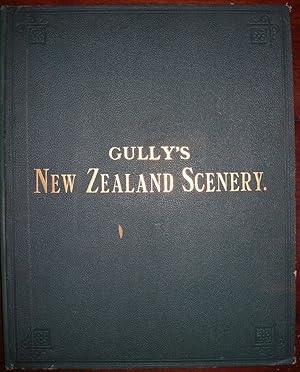
New Zealand Scenery Chromo-Lithographed after Original Water-Color Drawings, with Descriptive Letterpress by Dr. Julius von Haast
Verlag: London: Marcus Ward & Co., 1877., 1877
Anbieter: Arader Galleries - AraderNYC, New York, NY, USA
Verkäuferbewertung 5 von 5 Sternen
Hardcover. Folio (21 x 17 inches). Title leaf, two text leaves, and fifteen mounted chromolithographs, housed in the original green cloth-covered portfolio (some thumbing, chipping, other slight cosmetic blemishes, portfolio tattered). Provenance: The Estate of David Spinney. "It is impossible, without having seen them, to form any adequate idea of the grandeur of those gigantic masses of rock, snow, and ice which abound in the wild and desolate region of these Southern Alps. It was the privilege of the writer to have been the first explorer and delineator of these regions, it is almost impossible to convey through a small number of pictures and adequate representation of the varied scenery of these beautiful islands, but those which Mr. Gully has selected for publication are well chosen, and are sufficiently striking and characteristic to give the lover of nature some idea of the infinite beauty of that land" (Introduction). While drawing master at Nelson College, in New Zealand, from 1861 to 1863, Gully he sketched in the Nelson Lakes area and painted local scenes. "More importantly, he produced 12 watercolour paintings of South Island mountains and glaciers from sketches by Julius Haast. This set of paintings was used to illustrate Haast's lecture on the mountains and glaciers of the Canterbury province, which was read to the Royal Geographical Society in London on 8 February 1864. Gully exhibited at the New Zealand Exhibition in Dunedin in 1865, showing work on behalf of the survey office and on his own account. He gained a silver medal and sold all the paintings he exhibited. This recognition placed his name at the forefront of New Zealand watercolourists. His reputation was further enhanced by his exhibits at the Nelson Institute Exhibition in February 1866. The paintings included scenes of the town of Nelson, the Kaikoura Mountains, Mt Cook (from sketches by John Rochfort), and the West Coast. Some of the paintings went on to the Intercolonial Exhibition of Australasia in Melbourne in 1866-67. Two paintings sold for £60 each and Gully made arrangements for agents to sell his work in Melbourne. He began an association with the Victoria Academy of Arts and was represented at many of its exhibitions. In 1873 he visited Victoria briefly and praised the people as his first real patrons. In 1865 there had been an unsuccessful attempt to publish a portfolio of his paintings of New Zealand. In 1877 the project finally came to fruition with the publication in Dunedin and London of New Zealand scenery. The 15 chromolithographs based on Gully's original watercolours were accompanied by descriptive text written by Haast. The plates depict prominent landmarks and scenes, from Mt Taranaki and Lake Taupo in the north to Bradshaw Sound in the south. Gully was disappointed with the reproductions, which are gaudy by comparison with the light and airy originals" (The Encyclopedia of New Zealand online). For more information on this book, or a warm welcome to see other books and maps of our collection at 72nd Street NYC, please contact Natalie Zadrozna.
-
New Zealand Scenery chromolithographed after Original Water-colour Drawings.
Verlag: London: Marcus Ward & Co., 1877., 1877
Anbieter: Arader Galleries - AraderNYC, New York, NY, USA
Verkäuferbewertung 5 von 5 Sternen
Erstausgabe
Hardcover. 1st Edition. Folio (21 x 17 inches). 15 chromolithographed plates mounted on card (small tears in text leaver where plates have adhered). Original green cloth, gilt (rebacked to style). Provenance: with the bookplate of Forbes Library Northampton, Mass, on the front paste-down and their perforated library stamp on the title-page. "Mr. Gully ranks as one of the most accomplished artists New Zealand has produced" (Hocken). First English edition, first published in Dunedin, New Zealand, the same year. With an introduction and explanatory text by his friend and patron, the geologist, von Haast, who through "achievements and his encouragement, science in New Zealand came of age": "It is impossible, without having seen them, to form any adequate idea of the grandeur of those gigantic masses of rock, snow, and ice which abound in the wild and desolate region of these Southern Alps. It was the privilege of the writer to have been the first explorer and delineator of these regions, it is almost impossible to convey through a small number of pictures and adequate representation of the varied scenery of these beautiful islands, but those which Mr. Gully has selected for publication are well chosen, and are sufficiently striking and characteristic to give the lover of nature some idea of the infinite beauty of that land" (Introduction). While drawing master at Nelson College, in New Zealand, from 1861 to 1863, Gully he sketched in the Nelson Lakes area and painted local scenes. "More importantly, he produced 12 watercolour paintings of South Island mountains and glaciers from sketches by Julius Haast. This set of paintings was used to illustrate Haast's lecture on the mountains and glaciers of the Canterbury province, which was read to the Royal Geographical Society in London on 8 February 1864. Gully exhibited at the New Zealand Exhibition in Dunedin in 1865, showing work on behalf of the survey office and on his own account. He gained a silver medal and sold all the paintings he exhibited. This recognition placed his name at the forefront of New Zealand watercolourists. His reputation was further enhanced by his exhibits at the Nelson Institute Exhibition in February 1866. The paintings included scenes of the town of Nelson, the Kaikoura Mountains, Mt Cook (from sketches by John Rochfort), and the West Coast. Some of the paintings went on to the Intercolonial Exhibition of Australasia in Melbourne in 186667. Two paintings sold for £60 each and Gully made arrangements for agents to sell his work in Melbourne. He began an association with the Victoria Academy of Arts and was represented at many of its exhibitions. In 1873 he visited Victoria briefly and praised the people as his first real patrons. In 1865 there had been an unsuccessful attempt to publish a portfolio of his paintings of New Zealand. In 1877 the project finally came to fruition with the publication in Dunedin and London of New Zealand scenery. The 15 chromolithographs based on Gully's original watercolours were accompanied by descriptive text written by Haast. The plates depict prominent landmarks and scenes, from Mt Taranaki and Lake Taupo in the north to Bradshaw Sound in the south. Gully was disappointed with the reproductions, which are gaudy by comparison with the light and airy originals" (The Encyclopedia of New Zealand online). Ellis 926-940; NBNZ 2377. Catalogued by Kate Hunter.
-
[John Manby Gully, Malvern physician who pioneered 'water cure' treatment.] Two Autograph Letters Signed (both 'J M Gully') to the publisher John Churchill, one on patients including Lord Francis Egerton, the other on a vacant post.
Verlag: Great Malvern; 19 December no year. Malvern; 6 August no year
Anbieter: Richard M. Ford Ltd, London, Vereinigtes Königreich
Verkäuferbewertung 5 von 5 Sternen
Manuskript / Papierantiquität
EUR 301,98
EUR 5,28 Versand
Versand von Vereinigtes Königreich nach USAAnzahl: 1 verfügbar
In den WarenkorbBoth items in good condition, lightly aged, and each with thin strip of paper from mount adhering to reverse. ONE: Great Malvern; 19 December. 2pp, 12mo. Now that he has returned to Malvern, having been 'on a visit to Mr W. Whitman', he thanks Churchill for his 'kindness which I may say, I never found at fault'. He continues: 'Though away from Malvern I have not been idle: most of the neighbouring gentry came to Dudmaston to consult me'. Regarding the future Earl of Ellesmere (1800-1857) he continues: 'Lord Francis Egerton is in correspondence with me & tells me some queer tales about the manner in which doctors & laymen are hammering at him to fright him from the Water Curer. But he says he shall judge for himself, & doing so, he sees nothing to prevent his commencing it here in January, except the times: to [adapt?] which he thinks is difficult. He will come, however, I have no doubt. He brings all his family with him.' He is glad that Churchill has 'at length fixed on a suburban residence', which will be of benefit to him and his family regardless of the expence. He ends with a question regarding the identity of 'Mackensie'. TWO: Malvern; 6 August. 1p, 12mo. He is enclosing a 'statement touching a very desirable position for a surgeon of good abilities & good manners. The locality of the engagement is in the North Riding & the lady who has the appointment is a patient of mine.' He asks him to 'communicate this to any eligible man who should desire such a thing'. With a postscript concluding that the successful applicant 'will have chiefly to practise in the old way'. From the distinguished autograph collection of the psychiatrist Richard Alfred Hunter (1923-1981), whose collection of 7000 works relating to psychiatry is now in Cambridge University Library. Hunter and his mother Ida Macalpine had a particular interest in the illness of King George III, and their book 'George III and the Mad Business' (1969) suggested the diagnosis of porphyria popularised by Alan Bennett in his play 'The Madness of George III'.