
Forbin auguste comte (11 Ergebnisse)
 Weitere Bilder
Sprache: Französisch
Verlag: Imprimerie Royale, Paris 1819
- Hardcover
- Erstausgabe
Anbieter: FOLIOS LIMITED, Oxford, Vereinigtes KönigreichFOLIOS LIMITED
Verkäufer/-in kontaktierenVerkäufer/-in mit 5 SternenZustand: Gebraucht - Gut
EUR 19.094,46
EUR 40,55 VersandVersand von Vereinigtes Königreich nach USAAnzahl: 1 verfügbar
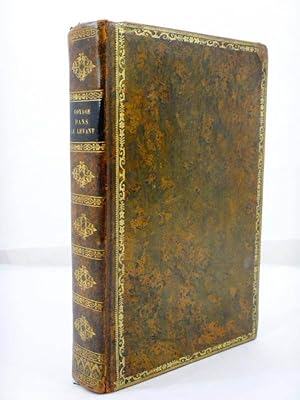
Hardcover. Zustand: Very Good. First Edition. [3], 132 pp., 80 plates numbered 1-78 (+2 unnumbered plates), of which 70 lithographed, 8 aquatinted, and 2 engraved, half-title, title vignette, contemporary full marbled calf binding, title gilt on red label on raised and decorated spine, the plates represent costumes and views of…Constantinople, Bethlehem, Jerusalem, Cairo, etc. occasional foxing, otherwise copy in very good condition. First edition, Brunet states that 325 copies were printed. Two editions, the one marked "Seconde", were also issued in 1819 with the text in 8vo and the folio plates to be purchased separately. Forbin's was one of the first important French books to use lithography on a grand scale, and the standard of production is equal to that of Napoleon's "Description de l'Égypte" or "Denon's Voyage". The plates are after drawings by Forbin, Isabey, Prevost, Fragonard and Carle Vernet. The aquatint plates are all after drawings by Forbin himself. Most of the plates illustrate scenes in Egypt and Syria, including one of Drovetti, French consul in Egypt, measuring a colossal head. The two unnumbered plates illustrate the catacombs of Milos and a diagram of the Holy Sepulchre. In 1816 Forbin replaced Dominique Denon as Director of Museums of France, and in August 1817 he undertook a semi-official year-long voyage to the Levant, having been authorised to purchase antiquities for the Louvre. He travelled to Milos, where his son-in-law Marcellus had negotiated the purchase of the recently discovered Venus de Milo and from there he continued to Athens, Contantinople, Asia Minor, Syria and Palestine. From Jaffa he travelled overland to Alexandria and visited Egypt. His party included the artist Prevost and the engineer Linant de Bellfonds. Bibliographic references: Atabey, 447; Blackmer, 614; Brunet II, 1337; Colas, 1089; Graesse II, 614; Röhricht, 1660; Tobler, 144-145; Hilmy I, 163 cites a copy with coloured plates. #34568.
 Weitere Bilder
Verlag: De l'Imprimerie Royale, Paris, 1819
- Hardcover
Anbieter: PY Rare Books, London, Vereinigtes KönigreichPY Rare Books
Verkäufer/-in kontaktierenVerkäufer/-in mit 5 SternenZustand: Gebraucht
EUR 352,05
EUR 23,17 VersandVersand von Vereinigtes Königreich nach USAAnzahl: 1 verfügbar
Famous account of the Middle East --- Text volume to accompany Forbin's illustrated atlas folio work on the Levant. Fine copy of the second edition complete with the folding engraved plate "Plan du Saint Sepulcre a Jerusalem". Forbin (1770 1841) succeeded Denon as director of museums in 1816 and was authorised to purchase antiqu…ities for the Louvre. In August 1817 he began a year-long journey to the Levant accompanied by the artist Pierre Prévost and the engineer de Bellefonds. They travelled to Athens, Constantinople, Asia Minor, Syria and Palestine. From Jaffa they went overland to Alexandria and visited Egypt. Forbin's findings and experiences are described in this book, which was published in two editions in 1819. Provenance: Physical description:Octavo (20,3 x 13,5 cm), [12], 460 pp., with large copper engraved folding plan of Saint Sepulcre. Contemporary brown marbled sheep, with gilt tooling to flat spine and boards, black morocco label with gilt lettering to spine. Condition:Binding a bit rubbed and worn; map with small closed tear, the odd spot. Bibliography.
 Weitere Bilder
Verlag: Imprimerie Royale 1819
- Hardcover
Anbieter: Librairie Voyage et Exploration, Cerny, FrankreichLibrairie Voyage et Exploration
Verkäufer/-in kontaktierenVerkäufer/-in mit 3 SternenZustand: Gebraucht - Gut bis sehr gut
EUR 330,00
EUR 45,00 VersandVersand von Frankreich nach USAAnzahl: 1 verfügbar
Couverture rigide. Zustand: Bon. 2ème Édition. Paris, Imprimerie Royale, Delaunay libraire, 1819, 1 vol.in 8, 460 pp., une planche dépliante, relié demi chagrin, dos lisse orné avec titre, tranches jaunes, ex-libris manuscrit Nommé en 1816 directeur général des musées royaux, le comte de Forbin (1777-1841) agrandit le musée du L…ouvre et étoffa les collections en acquérant entre autres, Les Sabines et Léonidas aux Thermopyles de David (1819), la Vénus de Milo (1820) ou bien encore le Radeau de la Méduse (1824). En 1817, poursuivant sa politique d'acquisition d'antiquités pour les musées français, Forbin entreprit un long voyage d'une année dans le Levant à travers l'Asie Mineure, la Palestine et l'Egypte où il remonta le Nil, accompagné des peintres Pierre Prévost et son neveu Léon Matthieu Cochereau ainsi que de l'architecte Jean-Nicolas Huyot : Milos, Athènes, Constantinople, Éphèse, Saint-Jean-d'Acre, Jérusalem, Gaza, Damiette, Le Caire, Louxor, Thèbes, Rosette et Alexandrie. L'expédition, après maintes aventures et accidents s'achèva le 24 avril 1818 au lazaret de Marseille et aura permis d'acquérir (selon les précisions de Forbin dans son récit) pour 28 000 Francs d'antiquités pour le musée Royal. M8-A.
 Weitere Bilder
Verlag: Challamel et Imprimerie Royale, Delaunay libraire 1819
- Hardcover
Anbieter: Librairie Voyage et Exploration, Cerny, FrankreichLibrairie Voyage et Exploration
Verkäufer/-in kontaktierenVerkäufer/-in mit 3 SternenZustand: Gebraucht - Sehr gut
EUR 400,00
EUR 45,00 VersandVersand von Frankreich nach USAAnzahl: 1 verfügbar
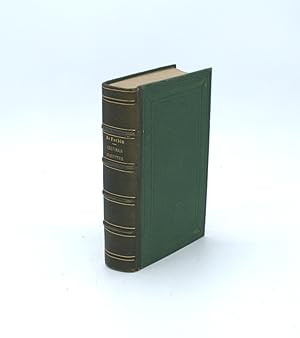
Couverture rigide. Zustand: Très bon. Paris, Challamel et Imprimerie Royale, Delaunay libraire,1843 et 1819, 1 vol.in 8, 298pp. et 460 pp., une planche dépliante in fine, relié demi chagrin vert, dos à nerfs avec auteur et titre. Nommé en 1816 directeur général des musées royaux, le comte de Forbin (1777-1841) agrandit le musée…du Louvre et étoffa les collections en acquérant entre autres, Les Sabines et Léonidas aux Thermopyles de David (1819), la Vénus de Milo (1820) ou bien encore le Radeau de la Méduse (1824). En 1817, poursuivant sa politique d'acquisition d'antiquités pour les musées français, Forbin entreprit un long voyage d'une année dans le Levant à travers l'Asie Mineure, la Palestine et l'Egypte où il remonta le Nil, accompagné des peintres Pierre Prévost et son neveu Léon Matthieu Cochereau ainsi que de l'architecte Jean-Nicolas Huyot : Milos, Athènes, Constantinople, Éphèse, Saint-Jean-d'Acre, Jérusalem, Gaza, Damiette, Le Caire, Louxor, Thèbes, Rosette et Alexandrie. L'expédition, après maintes aventures et accidents s'achèva le 24 avril 1818 au lazaret de Marseille et aura permis d'acquérir (selon les précisions de Forbin dans son récit) pour 28 000 Francs d'antiquités pour le musée Royal.
 Weitere Bilder
Verlag: Paris Imprimerie Royale 1819
- Hardcover
- Erstausgabe
Anbieter: Shapero Rare Books, London, Vereinigtes KönigreichShapero Rare Books
Verkäufer/-in kontaktierenVerkäufer/-in mit 5 SternenZustand: Gebraucht
EUR 26.851,59
EUR 17,38 VersandVersand von Vereinigtes Königreich nach USAAnzahl: 1 verfügbar
First edition; elephant folio; 80 plates, including 70 lithographs, 8 aquatints, & 2 engravings; contemporary calf over blue paper boards, red morocco label to upper cover, vellum tips; spine rubbed, corners worn; internally a fine clean uncut example. The scarce first edition of Forbin's Voyage with text and plates together of…which Brunet says only 325 copies were printed. Forbin's was one of the first important French books to use lithography on a grand scale, and the standard of production is equal to that of Napoleon's Description de l'Ãgypte. The plates are after drawings by Forbin, Isabey, Prevost, Fragonard and Carle Vernet. The aquatinted plates are all after drawings by Forbin himself. Most of the plates illustrate views in Egypt and Syria, including the famous view of Drovetti, French consul in Egypt, measuring a giant head. In 1816 Forbin replaced Denon as Director of Museums, and in 1817 he undertook a year-long voyage to the Levant, having been authorised to purchase antiquities for the Louvre. He travelled to Milos where his son-in-law had negotiated the purchase of the recently discovered Venus de Milo, and from there to Athens, Constantinople, Asia Minor, Syria, and Palestine. From Jaffa he travelled overland to Egypt and visited Alexandria. Atabey 447; Blackmer 614; Colas 1089; Hilmy I, 163; Koç I, 209; Weber 70.
 Weitere Bilder
Verlag: Imprimerie Royale, 1819., Paris: 1819
- Hardcover
- Erstausgabe
Anbieter: Jeff Weber Rare Books, Neuchatel, NEUCH, SchweizJeff Weber Rare Books
Verkäufer/-in kontaktierenVerkäufer/-in mit 5 SternenZustand: Gebraucht
EUR 13.562,72
EUR 25,00 VersandVersand von Schweiz nach USAAnzahl: 1 verfügbar
2 volumes. Text (sm. 8vo.) and Atlas folio. TEXT VOLUME: 8vo. [xii], 460 pp. Half-title ["se trouve chez Delaunay, libraire Palais-Royal, no. 243"], title vignette of the Armes Royale, dedication to the king, list of plates, with the rare folding engraved plate "Plan du Saint Sepulcre à Jerusalem"; plate is torn and mended (some… Kozo, etc.). Contemporary quarter calf, paste-paper overs boards, red morocco gilt-stamped spine label, spine with gilt bands. ATLAS VOLUME: Large oblong folio. [54 cm]: [2] pages, 78 leaves of plates (70 lithographs after Carle Vernet, Fragonard, Isabey, Pierre Prevost, and Forbin, 8 aquatints by Debucourt after Forbin, 2 engravings by Englemann and Debucourt after Forbin), plans (etchings). Original printed cover-title mounted as a title, "Voyage dans Le Levant en 1817 et 1818 » on rouge colored paper. Handsomely bound in modern half dark calf, gilt-stamped spine, original spine preserved, early green cloth over boards, decorative endpapers. Bookplate of the Prince of Lichtenstein library [Ex-libris Liechtenstensteininis] of Vienna. Handsome set. FIRST EDITION OF BOTH PARTS, which were issued separately and thereby seldom found together. Brunet notes the Atlas was printed in 325 copies -- this is repeated by Khatib, who explains the early publishing history thusly: "Two editions, one marked "Seconde", were issued in 1819 with the text in 8vo and the folio plates to be purchased separately." Dedicated to Louis XVIII (1755-1824). The year-long voyage went to Greece, Syria, and Egypt. Forbin had obtained permission to acquire specimens from Egypt for French museums. Forbin was accompanied by the artist Pierre Prevost (1764-1823) and a very young engineer de Louis Maurice Adolphe Linant de Bellefonds (1799-1883). The voyage was sponsored by Louis XVIII, the last king of France, who had himself lost many of royal powers subsequent to Napoleon's escape from Elba in 1815 and the 100 day campaign to retake the throne. Napoleon quickly gained support from military veterans still loyal to him. His campaign famously ended at Waterloo on June 18, 1815. This work is famous for the large number of large and remarkable plates. They were executed with the highest production methods and involved a number of qualified artists. Most "of the plates are scenes of Egypt and Palestine, after drawings by Forbin, Isabey, Prevost, Fragonard and Carle Vernet. The aquatint plates are all after drawings by Forbin himself." The travelers came first to Melos, Athens, Constantinople, Smyrna, Ephesus, Acre, Jafa, Jerusalem (noting the Temple of Solomon), The Dead Sea, Jordan, Cairo, Luxor, and Thebes. "In 1816 Forbin became Director of Museums in Paris and in August 1817 he made a semi-official year-long voyage to the Levant to purchase antiquities for the Louvre. He travelled to Athens, Constantinople, Asia Minor, Syria and Palestine. From Jaffa he went overland to Alexandria and visited Egypt. This book was the result; it was one of the first important French books to use lithography on a grand scale, and the standard of production is equal to that of Napoleon's Description de l'Egypte or Dominique Vivant Denon's Voyage dans la Basse et la Haute Egypte, 2 vols." -- Khatib, p. 152-3. More details on request. Postage extra.
 Weitere Bilder
Voyage dans Ie Levant en 1817 et 1818. First edition.
FORBIN, Louis Nicolas Philippe Auguste, Comte de (1777-1841); Philibert-Louis Debucourt, ( 1755 - 1832 (engraver)); G. Engelmann after Lecomte, Deseynes, Castellan, Carle and Horace Vernet, Fragonard, Thiénon, Legros, Isabey, lithographers.
Verlag: Paris: Imprimerie royale. 1819
- Hardcover
Anbieter: Wittenborn Art Books, San Francisco, CA, USAWittenborn Art Books
Verkäufer/-in kontaktierenVerkäufer/-in mit 5 SternenZustand: Gebraucht - Befriedigend
EUR 6.781,36
EUR 8,78 VersandVersand innerhalb von USAAnzahl: 1 verfügbar
Zustand: Good. Large folio. 67 x 50 cm. New half Sakora goatskin with marbled boards, preserving the original label, by the artisan binder Sasha Mosalov. Plate volume only with 71 of 80 plates, lacking plates 3, 15, 17, 25, 40, 52, 55, 73. Lacking the title page. Some stains in the margins. Very good.Colas, 1089; Brunet II, 1337…; not in OCLC.Written by Nicolas Nicolaides: Baron Louis Nicolas Philippe Auguste de Forbin, later count de Forbin (la Roque-d'Anthéron, 1777 - ??????, 1841) was a French painter, author and antiquarian. He was also a pupil of painter Jacques-Louis David. During the Bourbon restauration, Forbin served as general director of the Louvre Museum and other museums of France.Inspired by the travels of François-René de Chateaubriand, Forbin sailed out from Toulon on 22 August 1817 to tour the eastern Mediterranean. Like Chateaubriand, Forbin travelled on his own initiative, without an order from the French government; however, since the aim of his journey was to discover Greek and Roman antiquities and to draw landscapes of the places he would visit, he was able to travel on the ships of the French fleet of the Levant (Flotte du Levant).In his venture Forbin was accompanied by painters Pierre Prevost and Léon Matthieu Cochereau (also a pupil of David and a nephew of Prévost), as well as architect Jean-Nicolas Huyot. Abbé de Forbin-Janson, later bishop of Nancy, was also a member of the company for the first part of the journey, while Huyot had to retire when he fractured his leg on Milos island. In addition, twenty-four year old Cochereau died of dysentery off the coast of Cythera and was replaced by Linant de Bellefonds who at the time was a mate on "Cleopatra", the mission's ship. De Bellefonds resigned from his position on the ship and participated in the expedition as a painter and chartographer. When the expedition ended in December of 1817, de Bellefonds decided to stay on in Egypt, and explored its territory as member of several missions. From 1831 to 1869 he served the kingdom of Egypt as chief engineer of several public works, including the Suez Canal. The expedition sailed to Acre, Galilee, and thenceforth travelled by land. While in Palestine, the travellers visited the Dead Sea and Jordan river, reached Cairo and sailed the Nile down to Upper Egypt. The main places they visited includde Milos island, Athens, Constantinople, Ephesus, Acre, Jerusalem, Gaza, Damietta, Cairo, Luxor, Thebes, Rosetta and Alexandria. When the expedition returned to France in April 1818 Forbin had spent approximately 28.000 francs on the purchase and transportation of antiquities, some of which ended up in the Louvre collections (at the time Royal Museum of France). Prevost drew panoramic views of Jerusalem and Athens, but succumbed to pneumonia in 1823, without completing his panorama of Constantinople.The descriptions of Forbin show him to be a mature observer in possession of deep humanistic culture. His style sometimes resembles a clumsy imitation of Chateaubriand's "Journey to the Holy Land" (1806). However, as Forbin was not a professional author but a painter, his descriptions are way more exact than those of Chateaubriand.Forbin also travelled to Sicily in 1820, and published his travel account, as he had done with his expedition of 1817.
 Weitere Bilder
Verlag: Paris, De l Imprimerie Royale, 1823. 1823
- Hardcover
- Erstausgabe
Anbieter: LIBRAIRIE HÉRODOTE JEAN-LOUIS CECCARINI, Paris, FrankreichLIBRAIRIE HÉRODOTE JEAN-LOUIS CECCARINI
Verkäufer/-in kontaktierenVerkäufer/-in mit 5 SternenVerbandsmitglied: ILAB
Zustand: Gebraucht - Sehr gut
EUR 800,00
EUR 9,00 VersandVersand von Frankreich nach USAAnzahl: 1 verfügbar
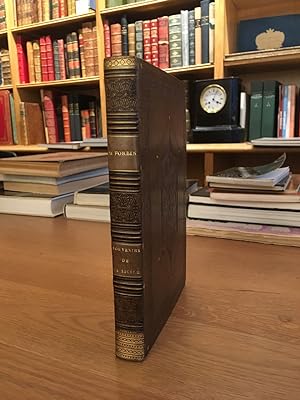
Couverture rigide. Zustand: Très bon. Edition originale. Gd in-8° ; 1 litho. front.-(2)-XX-394 pp.-(1)-2 pl. h.-t. [musique], plein veau glacé marron, dos à nerfs très richement orné, filets or, titre or, palettes or, palette à froid, plats richement estampés à froid, fers écoinssons or, tranches dorées, reliure de l'époque sign…ée de l atelier « SIMIER R[elieur]. du Roi », étui, un très bel exemplaire. Blanc, 953. Minischetti & Dotoli & Musnik, p. 284. ÉDITION ORIGINALE. FIRST EDITION. A VERY NICE COPY. Forbin : «Il ne serait jamais embarrassant de dire pourquoi on entreprend un voyage comme celui que je viens de faire en Sicile. Outre le désir de satisfaire une juste curiosité, la raison la plus naturelle peut-être se trouverait dans l état actuel de la société. Cet état est malheureusement hostile ; la vie devient chaque jour plus épineuse ; c est un travail malaisé que de vivre au milieu des hommes : il est donc permis de considérer un voyage comme une trêve particulière conclue avec eux. Le départ endort les aversions ; le retour les trouve souvent distraites de leur ancienne poursuite, et, par un juste emploi de leur temps, dirigeant ailleurs de nouvelles attaques.» Comte de Forbin, Souvenirs de la Sicile.
 Weitere Bilder
Sprache: Englisch
Anbieter: Meretseger Books, Paris, FrankreichMeretseger Books
Verkäufer/-in kontaktierenVerkäufer/-in mit 5 SternenZustand: Gebraucht
EUR 157,00
EUR 15,00 VersandVersand von Frankreich nach USAAnzahl: 1 verfügbar
Rare. Richard Phillips, London, 1819. First edition. In-8, frontispiece, 96 pages, 6 plates. 3/4 tan morocco with leather labels & marbled endpapers (spine chipped & rubbed, top joint repaired). A good copy. From the library of Egyptologist Andrew H. Gordon. Language: English. This book ships from the USA, shipping costs will be… updated accordingly (TXR). Relevant subjects: Egypt: Travelers & Egyptologists.
 Weitere Bilder
- Erstausgabe
- Signiert
Anbieter: LIBRAIRIE ÉRIC CASTÉRAN, TOULOUSE, MP, FrankreichLIBRAIRIE ÉRIC CASTÉRAN
Verkäufer/-in kontaktierenVerkäufer/-in mit 5 SternenVerbandsmitglied: ILAB
Zustand: Gebraucht
EUR 351,00
EUR 35,00 VersandVersand von Frankreich nach USAAnzahl: 1 verfügbar
Paris, Maradan, 1817. In-8 (143 X 212 mm) demi-basane blonde, dos lisse orné cloisonné et fleuronné, pièce de titre maroquin rouge (reliure de l'époque) ; VI pages de faux-titre, titre et avant-propos, frontispice gravé, 206 pages. TROISIÈME ÉDITION de ce TEXTE ROMANTIQUE RARE, paru pour la première fois en 1810. Complet du beau… frontispice gravé par B. Roger «qui annonce bien le romantisme » (Escoffier). Le comte Auguste de FORBIN (1777-1841), peintre, écrivain archéologue et directeur général du Musée du Louvre, s'illustra dans les lettres par cette mélancolique histoire d'amour et de mort qui, par son intrigue et par ses évocations magiques de Naples et de Rome, peut être considérée comme la source incontestable à laquelle Lamartine a puisé pour "Graziella". Le couteau du relieur a malheureusement coupé les trois dernières lettres d'un ENVOI AUTOGRAPHE DE L'AUTEUR en tête du faux-titre: «De la part de l'Aut[eur] ». (Escoffier, 194, pour l'édition originale de 1810 - Pas dans Talvart). BEL EXEMPLAIRE, très pur et d'une grande fraicheur. FINE COPY. PICTURES AND MORE DETAILS ON REQUEST.

Mohamed Ali Pacha Vice Roi d'Égypte. 1818. [caption title]
FORBIN, LOUIS NICOLAS PHILIPPE AUGUSTE, COMTE DE (AFTER); VERNET, HORACE (ARTIST AND ENGRAVER, 1789-1863)
Anbieter: Asia Bookroom ANZAAB/ILAB, Canberra, ACT, AustralienAsia Bookroom ANZAAB/ILAB
Verkäufer/-in kontaktierenVerkäufer/-in mit 5 SternenZustand: Gebraucht
EUR 748,04
EUR 18,65 VersandVersand von Australien nach USAAnzahl: 1 verfügbar
Hand-coloured lithograph 43.3 x 34.3 cm, in very good condition, mounted and preserved in a modern frame. One of the best known and frequently copied works of Horace Vernet's early Orientalist ?uvre, almost all reproduced examples, uncoloured. The French painter was one of the earliest adopters of the new technique of lithograph…y. Rare and a superb example. Beraldi 5. This item is held off-site. Please note there may be a few days delay while it is brought into our shop for viewing or mailing to you. Thank you for your understanding.


