
Edited introduction eric thompson (2 Ergebnisse)

Verlag: University of Oklahoma Press, Norman, 1958
- Hardcover
Anbieter: JBK Books, North Manchester, IN, USAJBK Books
Verkäufer/-in kontaktierenVerkäufer/-in mit 5 SternenZustand: Gebraucht - Gut
EUR 9,02
EUR 5,69 VersandVersand innerhalb von USAAnzahl: 1 verfügbar
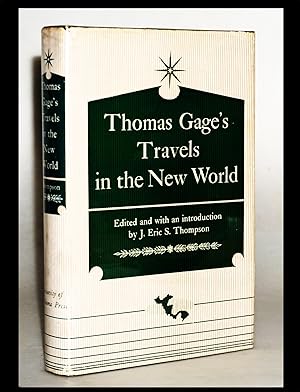
Hardcover. Zustand: Very Good. No Jacket. 379pp; Index. Green cloth with white stamping on spine. Contents clean, tight, textually unmarked. Former college library volume with customary labels and stamps. DJ blurb affixed to front paste-down. First published in 1648, first-hand account by priest of life in seventeenth-century Me…xico and Central America. Thomas Gage was Dominican friar from Spain, who lived and traveled in Mexico, Guatemala and Central America between 1623 and 1637. "It is the only firsthand description of early Spanish America written by a non-Spaniard or one who was not a citizen of the Holy Roman Empire.".
 Weitere Bilder
Verlag: University of Oklahoma Press, Norman, 1958
- Hardcover
Anbieter: Blind-Horse-Books (ABAA), DeLand, FL, USABlind-Horse-Books (ABAA)
Verkäufer/-in kontaktierenVerkäufer/-in mit 5 SternenZustand: Gebraucht - Gut
EUR 21,64
EUR 5,25 VersandVersand innerhalb von USAAnzahl: 1 verfügbar
Hardcover with Dust Jacket. Zustand: Very Good. Zustand des Schutzumschlags: Very Good. Green cloth with spine titles in a white decorative stencil; 9.25 inches tall; lii, 379 pages with an index; some in-text illustrations. The bindings are tight and square. Text clean, light even toning. Moderate shelf handling wear and ageing… on the edges of the text block; the dust jacket has modest handling wear. Gage's "A New Survey of the West Indias" offers a unique glimpse into Seventeenth-century Mexico and Central America. Spending twelve years as a Dominican priest in southern Mexico and Guatemala, Gage's narrative is the sole English record of the region for centuries. Despite Gage's self-disclosure as a bit of a rascal, his depiction of early missions in the area remains compelling. As a Dominican friar, Thomas Gage traversed Mexico and Guatemala from 1625 to 1637, overcoming immense challenges to eventually return to England via Central America and Panama. His account, first published in 1648 under the title "The English-American, his travail by sea and land," stands as the only firsthand description of early Spanish America by someone not of Spanish or Holy Roman Empire origin. Gage's narrative captivates with its vivid portrayal of life in the region and largely accurate representation of the era.
