

Gesamtpreis (1 Artikel Artikel):
Versandziel:

devos kennedy (2 Ergebnisse)
Direkt zu den wichtigsten Suchergebnissen
Suchfilter
Produktart
- Alle Product Types
- Bücher (2)
- Magazine & Zeitschriften (Keine weiteren Ergebnisse entsprechen dieser Verfeinerung)
- Comics (Keine weiteren Ergebnisse entsprechen dieser Verfeinerung)
- Noten (Keine weiteren Ergebnisse entsprechen dieser Verfeinerung)
- Kunst, Grafik & Poster (Keine weiteren Ergebnisse entsprechen dieser Verfeinerung)
- Fotografien (Keine weiteren Ergebnisse entsprechen dieser Verfeinerung)
- Karten (Keine weiteren Ergebnisse entsprechen dieser Verfeinerung)
- Manuskripte & Papierantiquitäten (Keine weiteren Ergebnisse entsprechen dieser Verfeinerung)
Zustand Mehr dazu
- Neu (Keine weiteren Ergebnisse entsprechen dieser Verfeinerung)
- Wie Neu, Sehr Gut oder Gut Bis Sehr Gut (Keine weiteren Ergebnisse entsprechen dieser Verfeinerung)
- Gut oder Befriedigend (1)
- Ausreichend oder Schlecht (Keine weiteren Ergebnisse entsprechen dieser Verfeinerung)
- Wie beschrieben (1)
Einband
- alle Einbände
- Hardcover (Keine weiteren Ergebnisse entsprechen dieser Verfeinerung)
- Softcover (2)
Weitere Eigenschaften
- Erstausgabe (Keine weiteren Ergebnisse entsprechen dieser Verfeinerung)
- Signiert (Keine weiteren Ergebnisse entsprechen dieser Verfeinerung)
- Schutzumschlag (Keine weiteren Ergebnisse entsprechen dieser Verfeinerung)
- Angebotsfoto (1)
Sprache (2)
Preis
- Beliebiger Preis
- Weniger als EUR 20 (Keine weiteren Ergebnisse entsprechen dieser Verfeinerung)
- EUR 20 bis EUR 45
- Mehr als EUR 45
Gratisversand
- Kostenloser Versand nach USA (Keine weiteren Ergebnisse entsprechen dieser Verfeinerung)
Land des Verkäufers
Verkäuferbewertung
-
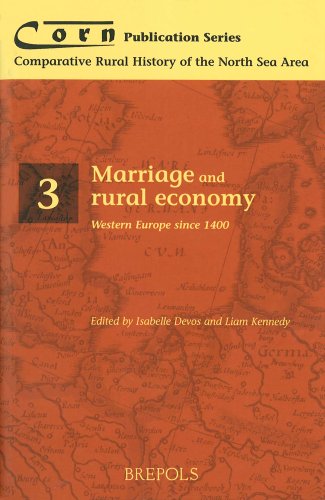
Marriage & Rural Economy: Western Europe Since 1400 (Corn Publication Series) (Volume 3)
Anbieter: Anybook.com, Lincoln, Vereinigtes Königreich
Verkäuferbewertung 5 von 5 Sternen

EUR 25,20
EUR 15,77 Versand
Versand von Vereinigtes Königreich nach USAAnzahl: 1 verfügbar
In den WarenkorbZustand: Good. Volume 3. This is an ex-library book and may have the usual library/used-book markings inside.This book has soft covers. Clean from markings. In good all round condition. Please note the Image in this listing is a stock photo and may not match the covers of the actual item,600grams, ISBN:9782503509631.
-

Marriage and Rural Economy. Western Europe since 1400,
Verlag: Turnhout, Brepols, 1999, 1999
Anbieter: BOOKSELLER - ERIK TONEN BOOKS, Antwerpen, Belgien
Verbandsmitglied: ILAB
Verkäuferbewertung 5 von 5 Sternen
Paperback, 304 p., 156 x 234 mm. ISBN 9782503509631. This volume examines rural marriage patterns in the long run, relating the patterns to changing economic conditions in the North Sea area, from c. 1400 to the present. The history of marriage in Western Europe, because of its peculiarities when viewed in a global setting, compels attention. This volume examines rural marriage patterns in the long run, relating these to changing economic conditions in the North Sea area, from c. 1400 to the present. More than thirty years after Hajnal's path-breaking publication it presents a state of the art as regards the study of the European Marriage Pattern in Ireland, Scotland, England, Belgium, the Netherlands, Germany and Scandinavia. By examining different forms of rural economy such as peasant farming, capitalist farming, prot-industry and other systems of production with differing implications for marriage and family formation, demographic and economic mechanisms emerge more clearly. Turning from description to explanation, a complex of interacting factors which regulate the formation of new households is identified and new directions into the research of this phenomenon are promoted. This volume comprises 11 article-chapters and introduction and conclusion and is the result of international collaboration from members of the CORN network. It is a work of richness, subtlety and historical depth, which makes essential reading for those interested in the evolution of marriage patterns, in the distant past and in more recent times. Languages: English. 0 g.
