

Gesamtpreis (1 Artikel Artikel):
Versandziel:

croft w d (2 Ergebnisse)
Direkt zu den wichtigsten Suchergebnissen
Suchfilter
Produktart
- Alle Product Types
- Bücher (2)
- Magazine & Zeitschriften (Keine weiteren Ergebnisse entsprechen dieser Verfeinerung)
- Comics (Keine weiteren Ergebnisse entsprechen dieser Verfeinerung)
- Noten (Keine weiteren Ergebnisse entsprechen dieser Verfeinerung)
- Kunst, Grafik & Poster (Keine weiteren Ergebnisse entsprechen dieser Verfeinerung)
- Fotografien (Keine weiteren Ergebnisse entsprechen dieser Verfeinerung)
- Karten (Keine weiteren Ergebnisse entsprechen dieser Verfeinerung)
- Manuskripte & Papierantiquitäten (Keine weiteren Ergebnisse entsprechen dieser Verfeinerung)
Zustand Mehr dazu
- Neu (Keine weiteren Ergebnisse entsprechen dieser Verfeinerung)
- Wie Neu, Sehr Gut oder Gut Bis Sehr Gut (Keine weiteren Ergebnisse entsprechen dieser Verfeinerung)
- Gut oder Befriedigend (1)
- Ausreichend oder Schlecht (Keine weiteren Ergebnisse entsprechen dieser Verfeinerung)
- Wie beschrieben (1)
Einband
Weitere Eigenschaften
- Erstausgabe (Keine weiteren Ergebnisse entsprechen dieser Verfeinerung)
- Signiert (Keine weiteren Ergebnisse entsprechen dieser Verfeinerung)
- Schutzumschlag (Keine weiteren Ergebnisse entsprechen dieser Verfeinerung)
- Angebotsfoto (2)
Sprache (1)
Preis
- Beliebiger Preis
- Weniger als EUR 20 (Keine weiteren Ergebnisse entsprechen dieser Verfeinerung)
- EUR 20 bis EUR 45
- Mehr als EUR 45
Gratisversand
- Kostenloser Versand nach USA (Keine weiteren Ergebnisse entsprechen dieser Verfeinerung)
Land des Verkäufers
Verkäuferbewertung
-

Three Years with the 9th (Scottish) Division
Verlag: John Murray, 1919
Anbieter: Chapter 1, Johannesburg, GAU, Südafrika
Verkäuferbewertung 5 von 5 Sternen

Hardcover. Zustand: Good. No Jacket. Second edition. The boards are quite shelf rubbed, edge worn and marked, with the corners knocked and frayed. Despite this, the boards are strong and sturdy. Internally, there is some age-related marking/wear sporadically throughout, but there are no other markings or inscriptions, and the pages within are neat and complete. The binding is secure. In good condition for its age. JK. Our orders are shipped using tracked courier delivery services.
-
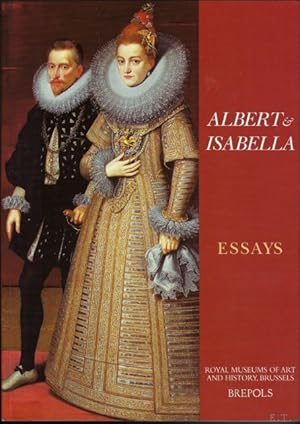
Albert & Isabella: ESSAYS: The Promise of a Golden Age.
Verlag: , MRAH - BREPOLS, 1998, 1998
Anbieter: BOOKSELLER - ERIK TONEN BOOKS, Antwerpen, Belgien
Verbandsmitglied: ILAB
Verkäuferbewertung 5 von 5 Sternen
Paperback , 368 pages, English/French /SP / NL. Illustrations. Fine. ISBN 9782503507262. Dit boek, uitgegeven naar aanleiding van de succesvolle tentoonstelling in 1998, is een unieke bron van informatie voor de regeerperiode van Albrecht en Isabella in de Nederlanden (1598-1621). Zo?n 400 jaar geleden was het hof te Brussel, dankzij hun mecenaat en cosmopolitische geest, een model voor de andere Europese vorstenhuizen van die tijd. De aartshertogen leverden een belangrijke bijdrage tot de uitstraling van wat later de ?Vlaamse barok? zal genoemd worden. De eeuw van Pieter Paul Rubens lijkt nu ondenkbaar zonder de steun van dit vorstenpaar. This book is a selected collection of essays on the court of Archdukes Albert and Isabella in the Low Countries as a flourishing centre of arts, and on their great contribution towards the radiation of the style later known as Flemish Baroque. The Rule of the Archdukes Albert & Isabella over the Low Countries began in 1598, exactly 400 years ago. Their highly cosmopolitan court became a flourishing centre of the arts, a showcase for other courts throughout Europe. The archdukes made a great contribution towards the radiation of the style later known as 'Flemish Baroque'. The century of Peter Paul Rubens would never have been the same without the support of Albert and Isabella. In the Habsburg Netherlands, a region split by civil war, the protestant Northern Provinces had broken away from Catholic Spain, while Spanish rule was established in the Southern Netherlands. The confidence between sovereign and subject would be restored by the Archdukes. The Twelve Year Truce (1609-1621) brought the necessary peace for a political, economic and in particular cultural revival. Albert and Isabella surrounded themselves with a score of artists, including the architects Wenzel Coebergher and Jacques Franckaert, the composer Peter Philips and the court painters, Peter Paul Rubens in the first place, but also Jan I Brueghel, Otto Van Veen and Theodoor van Loon. The South-Netherlandish humanists, Justus Lipsius in particular, brought about an intellectual apogee. With contributions by: W. Thomas, J. Martinez-Millan, R. Valladares, T. DaCosta Kaufmann, A. Jordan, E. Stols, B.J. Garcia Garcia, P. Croft, M.A. Echevarria Bacigalupe, M. Thofner, K. Van Honacker, H. De Schepper, D. Lanoye, G. Martijn, L. Duerloo, E. Put, J. Roegiers & P. Vandermeersch, B. Welzel, C. Banz, C. Schumann, K. De Jonge, E. Janssen, P. Arblaster, J. Verberckmoes, K. Proesmans, M. Ebben, F. Van Noten. 0 g.
