
Compton william d (5 Ergebnisse)
Sprache: Englisch
Verlag: United States Government Printing Office 1989
Serie: Dover Books on Astronomy, Buch 6 von 16. Buch 6 von 16 - Dover Books on Astronomy
- Softcover
Anbieter: Better World Books, Mishawaka, IN, USABetter World Books
Verkäufer/-in kontaktierenVerkäufer/-in mit 5 SternenZustand: Gebraucht - Befriedigend
EUR 8,48
Versand nach gratisVersand innerhalb von USAAnzahl: 1 verfügbar
Zustand: Good. Pages intact with minimal writing/highlighting. The binding may be loose and creased. Dust jackets/supplements are not included. Stock photo provided. Product includes identifying sticker. Better World Books: Buy Books. Do Good.
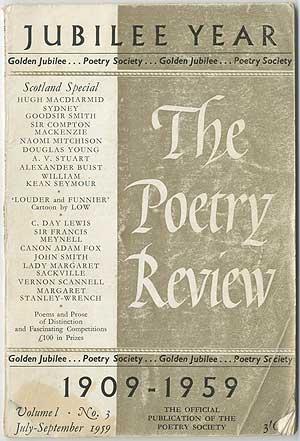
Verlag: The Poetry Review, London 1959
- Softcover
- Erstausgabe
Anbieter: Between the Covers-Rare Books, Inc. ABAA, Gloucester City, NJ, USABetween the Covers-Rare Books, Inc. ABAA
Verkäufer/-in kontaktierenVerkäufer/-in mit 5 SternenZustand: Gebraucht - Befriedigend
EUR 18,08
EUR 4,83 VersandVersand innerhalb von USAAnzahl: 1 verfügbar
Softcover. Zustand: Good. Magazine. Printed wrappers. Octavo. 59pp. Rubbing, edgewear, and a long tear on the rear panel, good. This issue features Hugh MacDiarmid, Sydney Goodsir Smith, Sir Compton Mackenzie, Naomi Mitchison, Douglas Young, A.V. Stuart, Alexander Buist, William Kean Seymour, David Low, C. Day Lewis, Sir Francis… Meynell, Canon Adam Fox, John Smith, Lady Margaret Sackville, Vernon Scannell, and Margaret Stanley-Wrench. Additional contributors include Gilbert Thomas, Paul Selver, Ilko Iliev, Paula Nelson, Phyllis M. Scott, Canon Adam Fox, Mary Field, Rita Spurr, M. Shand Smith, Evelyn D. Bangay, Stephen Graham, Kathleen Valmai Richardson, Joan Forman, Geoffrey Johnson, Geoggrey Dearmer, Herbert Palmer, Robert Armstrong, and Kennedy Williamson.
Dispensationalism Revisited: A Twenty-First Century Restatement
Bauder, Kevin T; Barrick, Dr. William D.; Beacham, Dr. Roy; Brown, Dr. Douglas; Glenny, Dr. W. Ed; Hudson, Dr. O. Andrew; Martin, Dr. Ryan; Pettegrew, Dr. Larry; Pratt, Dr. Johnathan
- Softcover
Anbieter: Ria Christie Collections, Uxbridge, Vereinigtes KönigreichRia Christie Collections
Verkäufer/-in kontaktierenVerkäufer/-in mit 5 SternenZustand: Neu
EUR 22,46
EUR 13,88 VersandVersand von Vereinigtes Königreich nach USAAnzahl: Mehr als 20 verfügbar
Zustand: New. In.

- Softcover
Anbieter: AHA-BUCH GmbH, Einbeck, DeutschlandAHA-BUCH GmbH
Verkäufer/-in kontaktierenVerkäufer/-in mit 5 SternenZustand: Neu
EUR 32,76
EUR 62,00 VersandVersand von Deutschland nach USAAnzahl: 2 verfügbar
Taschenbuch. Zustand: Neu. Neuware - Dispensationalism Revisited: A Twenty-First Century Restatement.
 Weitere Bilder
Électrons et Photons. Rapports et Discussions du Cinquieme Conseil de Physique tenu a Bruxelles du 24 au 29 Octobre 1927 sous les Auspices de L'Institut International de Physique de Solvay. Publiés par la Commission administrative de l'Institut
[BOHR, Niels; BORN, Max; BRAGG, William Lawrence; COMPTON, Arthur; DE BROGLIE, Louis; DIRAC, Paul; EINSTEIN, Albert; HEISENBERG, Werner; LORENTZ, Hendrik; SCHRÖDINGER, Erwin; et al.]
Verlag: Gauthier Villars, Paris 1928
- Softcover
- Erstausgabe
Anbieter: SOPHIA RARE BOOKS, Koebenhavn V, DänemarkSOPHIA RARE BOOKS
Verkäufer/-in kontaktierenVerkäufer/-in mit 5 SternenZustand: Gebraucht
EUR 3.164,64
Versand nach gratisVersand von Dänemark nach USAAnzahl: 1 verfügbar
First edition. The Bohr-Einstein Debate Begins. First edition, rare in the original printed wrappers, of the proceedings of the fifth Solvay Congress, where the debate between Bohr and Einstein on the consistency and completeness of quantum mechanics began. It was at this, the most famous of the Solvay conferences, that Einstein…, disenchanted with Heisenberg's uncertainly principle, made his famous remark that "God does not play dice," to which Niels Bohr replied, "Einstein, stop telling God what to do!" Seventeen of the twenty-nine attendees, which included nearly all the principal architects of the old and the new quantum theory, were or became Nobel Prize winners. "The three and a half years since the fourth Solvay Conference . were marked by enormous progress in quantum physics. Partly based on discoveries and ideas that had been available already before 1924 ? such as the Compton effect and matter waves ? the new atomic theory had arisen, which did more than throw new light on the difficulties discussed at the 1924 conference: quantum or wave mechanics went right to the heart of the problems posed by atomic phenomena. The two subjects put programmatically into the title of the fifth Solvay Conference ? electrons and photons ? designated the crucial points of interest, because 'electrons' also stood for the smallest, massive constituents of matter, and they now became associated with waves, and 'photons' (a name given only recently, in October 1926 by the physical chemist Gilbert N. Lewis, to Einstein's light-quanta) characterized the quantum-theoretical aspect of electromagnetic radiation. It was the declared intention of the Scientific Committee of the Institut International dePhysique Solvay to contribute by scientific reports and discussions about them to the clarification of the scientific concepts in the physics of the day. In retrospect, one may indeed attribute an important success to the 1927 Solvay Conference in marking the completion of the ideas that had first been discussed in the international physics community sixteen years previously at the first Solvay Conference of 1911" (Mehra & Rechenberg, pp. 233-4). Following a 'Notice nécrologique' by Lorentz, the present volume contains the following reports, and discussions about them by the participants (all articles in French): 'The Intensity of the Reflection of X-rays,' by Bragg; 'Disagreement between Experience and the Electromagnetic Theory of Radiation,' by Compton; 'The New Dynamics of Quanta,' by de Broglie; 'The Mechanics of Quanta,' by Born and Heisenberg; 'The Mechanics of Waves,' by Schrödinger; 'The Quantum Postulate and the New Development of Atomic Theory,' by Bohr. No copies located in auction records. In 1911 the Belgian industrialist Ernest Solvay invited a group of the world's most prominent physicists, including Einstein, Planck, Lorentz, Sommerfeld, Rutherford and Marie Curie, to participate in a scientific conference on the difficulties of reconciling classical physics with quantum theory. The conference "set the style for a new type of scientific meetings, in which a select group of the most well informed experts in a given field would meet to discuss the problems at its frontiers, and would seek to define the steps for their solution" (Mehra, Solvay Conferences, p. xv). The first Solvay Conference-widely considered a turning point in the history of modern physics-was so successful that in the following year Solvay established a foundation, now known as the International Solvay Institutes for Physics and Chemistry, "to encourage the researches which would extend and deepen the knowledge of natural phenomena" (ibid.) and to sponsor further conferences. The next two Solvay Conferences met in 1913 and 1921; subsequent conferences have been held every three years except during wartime. "From amongst the members of the Scientific Committee [of the 1927 Congress], two had already played a leading role in 1911: the Chairman Hendrik Lorentz and Albert Einstein; th.


