

Gesamtpreis (1 Artikel Artikel):
Versandziel:

barzizza (11 Ergebnisse)
Direkt zu den wichtigsten Suchergebnissen
Suchfilter
Produktart
- Alle Product Types
- Bücher (10)
- Magazine & Zeitschriften (Keine weiteren Ergebnisse entsprechen dieser Verfeinerung)
- Comics (Keine weiteren Ergebnisse entsprechen dieser Verfeinerung)
- Noten (1)
- Kunst, Grafik & Poster (Keine weiteren Ergebnisse entsprechen dieser Verfeinerung)
- Fotografien (Keine weiteren Ergebnisse entsprechen dieser Verfeinerung)
- Karten (Keine weiteren Ergebnisse entsprechen dieser Verfeinerung)
- Manuskripte & Papierantiquitäten (Keine weiteren Ergebnisse entsprechen dieser Verfeinerung)
Zustand Mehr dazu
- Neu (2)
- Wie Neu, Sehr Gut oder Gut Bis Sehr Gut (2)
- Gut oder Befriedigend (3)
- Ausreichend oder Schlecht (Keine weiteren Ergebnisse entsprechen dieser Verfeinerung)
- Wie beschrieben (4)
Einband
Weitere Eigenschaften
- Erstausgabe (Keine weiteren Ergebnisse entsprechen dieser Verfeinerung)
- Signiert (Keine weiteren Ergebnisse entsprechen dieser Verfeinerung)
- Schutzumschlag (Keine weiteren Ergebnisse entsprechen dieser Verfeinerung)
- Angebotsfoto (7)
Sprache (2)
Gratisversand
Land des Verkäufers
Verkäuferbewertung
-

Die älteste Briefsammlung des Gasparinus Barzizza.
Verlag: München : Rosenthal,, 1929
Anbieter: Antiquariat Hartmut R. Schreyer, Augsburg, Deutschland
Verkäuferbewertung 5 von 5 Sternen

S. 39-84 . Gr-8°. Brosch. (S.D. Beiträge zur Forschung. Studien aus dem Antiquariat Jacques Rosenthal. NF I, H. 2) - Gasparino Barzizza (lat. Gasparinus Barzizius Bergamensis; * um 1360 in Bergamo; ? um 1431 in Mailand; ) war einer der ersten italienischen Humanisten.
-
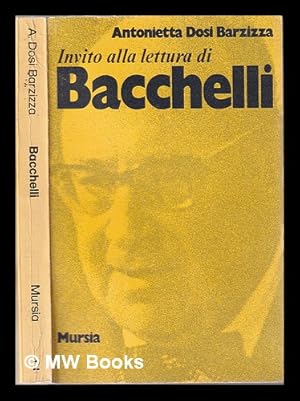
2nd Edition. Near fine paperback copy; edges very slightly dust-dulled. Remains particularly well-preserved overall; tight, bright, clean and especially sharp-cornered. Physical description: 156 pages 17 cm. Subjects:Bacchelli, Riccardo 1895-1985. Bacchelli, Riccardo. Bacchelli, Riccardo 1891- ; Correspondence. Bacchelli, Riccardo 1891-1985 Studies. Authors, Italian 20th century. 3 Kg.
-

Invito alla lettura di Bacchelli
Anbieter: libreriauniversitaria.it, Occhiobello, RO, Italien
Verkäuferbewertung 4 von 5 Sternen

EUR 9,50
EUR 17,95 Versand
Versand von Italien nach USAAnzahl: Mehr als 20 verfügbar
In den WarenkorbZustand: NEW.
-
Softcover. Zustand: Fine. Leichte Rillen / Abschürfungen / Risse / Knicke; Farbtonänderung.
-
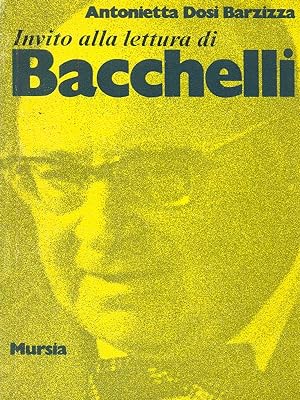
Invito alla lettura di Bacchelli
Verlag: Mursia, 1971
Anbieter: Librodifaccia, Alessandria, AL, Italien
Verkäuferbewertung 5 von 5 Sternen
Zustand: Buone. italiano Condizioni dell'esterno: Discrete con difetti, segni d'uso macchie Condizioni dell'interno: Discrete con Difetti, bruniture.
-

Strumenti per la domotica: Esercizi guidati con Arduino (Tecnologia e innovazione) (Italian Edition)
Buch 6 von 25: Tecnologia e innovazioneAnbieter: libreriauniversitaria.it, Occhiobello, RO, Italien
Verkäuferbewertung 4 von 5 Sternen
Zustand: NEW.
-

C'EST MA PRAIRIE la cazone del boscaiolo PARTITION POUR LE CHANT
Verlag: BOURCIER, 1942
Noten
Pas de couverture. Zustand: bon. RO50034603: 1942. In-8. En feuillets. Etat passable, Plats abîmés, Dos satisfaisant, Déchirures. 2 pages de partitions, premier plat illustré par Uderzo avec en plus un ephotographie de Victoria Marino. . . . Classification Dewey : 780.26-Partitions.
-
Gasparini Barzizii Bergomatis et Guiniforti filii Opera quorum pleraque ex mss. codicibus nunc primum in lucem eruta recensuit, ac edidit Joseph Alexander Furiettus Bergomas utriusque signaturæ referendarius, abbas SS. Simonis, & Judæ Bergomi, nec non B. Mariæ, omniumque sanctorum de Galgario perpetuus commendatarius. Pars prima (-secunda).
Verlag: Apud Salvioni,, Romae,, 1723
Anbieter: Studio Bibliografico Benacense, Riva del garda, TN, Italien
Verkäuferbewertung 5 von 5 Sternen
Due volumi legati in uno di cm. 23, pp. xlviii, 336; (4) 184. Primo frontespizio in rosso e nero, belle testate e capolettera incisi e 2 ritratti a piena pagina. Solida legatura coeva in piena pergamena rigida con titoli impressi al dorso. Esemplare genuino e ben conservato. Ottima edizione delle opere dei due umanisti bergamaschi.
-

Introductoriu(m) in medicinam legenti cuilibet perutile.
Verlag: Augsburg, Sigmund Grimm, 14.XII.1518., 1518
Anbieter: Universitätsbuchhandlung Herta Hold GmbH, Berlin, Deutschland
Verbandsmitglied: GIAQ ILAB VDA
Verkäuferbewertung 4 von 5 Sternen
EUR 5.250,00
EUR 30,00 Versand
Versand von Deutschland nach USAAnzahl: 1 verfügbar
In den Warenkorb4°. Holzschnitt-Titelbordüre, 63 unnum. Bl., 1 w. Bl. Älterer biegsamer Pergamentband (etwas fleckig, Vorsätze erneuert) Einzige Ausgabe des 16. Jahrhunderts, von größter Seltenheit. - VD 16, B 619; Durling 484; Hirsch/H. I, 367 (falsch 'Wien'); Panzer VI, 151, 127; nicht bei Adams, Bird, Lesky, Osler, Waller und Wellcome - Unseres Wissens eine der frühesten Einführungen in das wissenschaftliche Studium der Medizin aus der Feder des italienischen Gelehrten Christoph Barzizius. Eine Inkunabelausgabe, die 1494 in Pavia erschien, ging der hier vorliegenden voraus. "Christofo Barzizza, um 1400, aus Bergamo, Neffe des (Grammatikers) Gasparinus Barzizius, 1434-1440 Professor der Medizin zu Padua. Sicher eine von dem Humanisten gleichen Namens verschiedene Persönlichkeit" (GW 3672 zur EA Pavia 1494). - Dieser in der Offizin des Sigismund Grimm, Doktor der Medizin, entstandene Druck ist sicher als ein Versuch zu verstehen, die Erkenntnisse der berühmten italienischen medizinischen Kapazitäten aus den Universitäten Pavia und Padua nördlich der Alpen weiterzuverbreiten. Nach dem Titelblatt ist das Buch "legenti cuilibet perutile" (für jeden Leser sehr nützlich), was an eine allgemeinbildende Schrift denken läßt. Mehrfach erwähnt sind auch die iuvenes, also junge Leute, wobei man zuerst an Studenten denken wird. Jedoch hat Augsburg zu Beginn des 16. Jahrhunderts keine Universität besessen, so daß das Verlagsobjekt exportiert werden mußte oder zur Weiterbildung der in der Stadt oder im Umkreis ansässigen "fertigen" Ärzte dienen sollte. Die Schrift stützt sich auf die in der Medizin damals maßgeblichen Autoritäten wie Hippokrates, Almansor, Avicenna, Galen, Mesue oder Serapion und stellt die Probleme z. T. in der ersten Person Singular ("ich") durchaus nicht allgemeinverständlich dar. Sie beginnt mit "res naturales", auf denen die Medizin aufbaut, wie Luft, Feuer, Erde, Wasser (aer, ignis, terra, aqua) und den drei medizinischen Elementen "sperma viri mulieris et sanguis menstruus" (Same des Mannes und der Frau und Menstrualtionsblut). Nach Beschreibungen u.a. der besonderen Zeichen der Krankheit, ihres Ortes und ihrer Zeit enthält das 14. Kapitel "signa", Zeichen, die vom Kopf abwärts (Dolor in cute et ita de quolibet membro"; Schmerz in der Haut und in jedem Glied aufgelistet werden. Es folgt der "modus curandi", der Behandlungsmethoden und -regeln aufzeigt, wobei Wasser (kalt/warm), Luft, Abreibungen (fricatio), Bäder, Umschläge (epithimata), Aderlaß, Klistiere, Erbrechen etc. eingesetzt werden, ferner auch Heilpflanzen und Essenzen wie Aloe, Koriander oder Absinth. Diese Anweisungen wenden sich eindeutig an den Fachmann und sind kaum zur Medikation durch Laien geeignet. Die Ausgabe belegt, daß das "Introductorium" nicht nur 1494, also viele Jahre nach dem Tod des Autors, einem Kreis von Medizinern (als Herausgebern) und dem auf Medizin spezialisierten Drucker Antonius Carcanus wichtig und wertvoll erschien, sondern auch später in Augsburg als Zusammenfassung der spätmittelalterlichen Medizin-Praxis empfunden wurde (obwohl die Pest darin nur beiläufig erwähnt ist - und die Syphilis-Problematik nicht erörtert werden konnte, da die Krankheit noch nicht auf Europa übergegriffen hatte). - Die schöne Titelbordüre ist abgebildet bei Pflug-H., Taf. 14. - Wir danken Herrn Dr. Holger Nickel von der Staatsbibliothek Berlin für zeitaufwendige, detaillierte und umfangreiche Recherchen. - Tadellos erhaltenes, breitrandiges, rubriziertes Exemplar. Titel mit handschriftlichem Besitzvermerk (Cart. in Buxheim, deren Bibliothek 1883 versteigert wurde), altem Bibliotheksstempel, ein weiterer Stempel im Unterrand von Bl. 2. Vereinzelt minimale Wurmgänge. Sprache: Latein.
-
Opus aureum [] signa, causa et curas febrium
Verlag: n.p., 1517
Anbieter: Sokol Books Ltd. ABA ILAB, London, Vereinigtes Königreich
Verkäuferbewertung 5 von 5 Sternen
EUR 11.605,34
EUR 48,54 Versand
Versand von Vereinigtes Königreich nach USAAnzahl: 1 verfügbar
In den WarenkorbHardcover. Zustand: Good. 4to, ff. (iv) 263 (xiii). Gothic letter, typographical ornaments, woodcut floriated initials. T-p in red, mostly light age browning, last two gatherings somewhat stained mainly to margins, minor repaired tear to blank outer margin of 5 ll. (just touching a few ms. marginalia), very small adhesion to two ll. affecting 4 words, some contemporary Latin marginalia. A good, well margined copy in contemporary Italian dark goatskin, covers blind and gilt ruled to a panel design, gilt ivy leaves to corners and ornated centrepiece, spine with raised bands, cross-hatched blind stamped decoration in compartments, spine and joints repaired, missing ties, a.e. black. C19 ms. ex libris 'Ex Bibl: Casnacich' to fly, faded purple autograph stamp to lower margin of t-p, early ink manuscript references to text. A very good copy of this rare collection of treatises on fevers, their causes and treatment, one in its FIRST EDITION. This is the second and enlarged edition of the collection, by Michel de Capella (first 1514). The decoration of the fine contemporary Italian binding elegant and simple, with a single gilt rule border, delicate blind lines and 'aldine' leaves to corners is typical of the Venetian bindings of the period (see De Marinis II, pl. cccxxxiii). In particular, the style is close to Aldine bindings made by Andrea di Lorenzo, or "Mendoza Binder" (Venice, c. 1518-1555), and a similar example with black edges is recorded by Davis (The Henry Davis Gift n. 261). The first two essays are by members of the renowned family of physicians 'de Santa Sofia', of Padua. Marsilio (c. 1338-1405), was the most illustrious: after graduating, he taught logic and medicine in Padua from 1367 to 1381; later, he became physician to Gian Galeazzo Visconti, first duke of Milan. He dedicated his life to teaching and writing medical commentaries. His 'De febribus', first published in 1507, deals with all the symptoms of fever and how to treat them, then presents a series of different types of fever, including tertian and quartan, and the 'febris pestilentialis', a term which often referred to plague. Interestingly, Marsilio worked in Venice in 1393, when an episode of plague broke out in the city. Galeazzo (d. 1427) was Marsilio's nephew, who, after teaching medicine in Padova and Bologna, moved to Vienna as physician to Albert IV, duke of Austria. His treatise on fevers (first ed. 1514) is in two parts, the first concerns fever in general, how to treat acute fever, and it presents a series of 'regimina', or therapies to cure various symptoms; the second deals with the different fevers, including 'febris pestilentialis', 'febris colericis' and 'febris flegmatice'. The third treatise in the collection by Richardus Parisiensis, specifically focuses on fever's symptoms (signa). The author of the fourth treatise is Antonio de Gradi (fl.1458), a Milanese doctor mostly known for this particular essay on fevers. The last work, printed here for the first time, is by Cristoforo Barzizza (d. c. 1445). A native of Bergamo, he was a distinguished physician and a colleague of Galeazzo de Santa Sofia at the University of Padua. His 'de intentionibus habendis in omni febre' (here) considers synochal, syncopal, pestilential, quartan, quintan fevers, but also small pox and measles. Compared to the others, Barzizza devotes less attention to describing the symptoms of the illness and focuses more on treatment and cure. The manuscript ex libris most likely belongs to the Croatian physician and writer Ivan August Kaznačić (1817-1883), director of the Dubrovnik hospital for twenty years, literary critic and bibliographer. USTC 144786; Durling 2972; Wellcome I, 5750. Not in BM STC Fr. 16th century, Adams, Brunet, Graesse, Garrison-Morton or Stillwell. USTC and Worldcat record no copies in the US. L3693.
-
Gasparini Barzizii Bergomatis et Guiniforti filii Opera quorum pleraque ex mss. codicibus nunc primum in lucem eruta recensuit, ac edidit Joseph Alexander Furiettus Bergomas utriusque signaturæ referendarius, abbas SS. Simonis, & Judæ Bergomi, nec non B. Mariæ, omniumque sanctorum de Galgario perpetuus commendatarius. Pars prima (-secunda).
Verlag: Apud Salvioni, Romae, 1723
Anbieter: Studio Bibliografico Benacense, Riva del garda, TN, Italien
Verkäuferbewertung 5 von 5 Sternen
hardcover. Zustand: Good. Due volumi legati in uno di cm. 25, pp. xlviii, 336; (4) 184. Primo frontespizio in rosso e nero, belle testate e capolettera incisi e 2 ritratti a piena pagina. Solida legatura coeva in piena pergamena rigida con titoli in oro impressi al dorso. Esemplare genuino, marginoso ed in eccellente stato di conservazione. Ottima edizione delle opere dei due umanisti bergamaschi. Book.


