

Gesamtpreis (1 Artikel Artikel):
Versandziel:

aug wolf (27 Ergebnisse)
Direkt zu den wichtigsten Suchergebnissen
Suchfilter
Produktart
- Alle Product Types
- Bücher (27)
- Magazine & Zeitschriften (Keine weiteren Ergebnisse entsprechen dieser Verfeinerung)
- Comics (Keine weiteren Ergebnisse entsprechen dieser Verfeinerung)
- Noten (Keine weiteren Ergebnisse entsprechen dieser Verfeinerung)
- Kunst, Grafik & Poster (Keine weiteren Ergebnisse entsprechen dieser Verfeinerung)
- Fotografien (Keine weiteren Ergebnisse entsprechen dieser Verfeinerung)
- Karten (Keine weiteren Ergebnisse entsprechen dieser Verfeinerung)
- Manuskripte & Papierantiquitäten (Keine weiteren Ergebnisse entsprechen dieser Verfeinerung)
Zustand Mehr dazu
- Neu (13)
- Wie Neu, Sehr Gut oder Gut Bis Sehr Gut (Keine weiteren Ergebnisse entsprechen dieser Verfeinerung)
- Gut oder Befriedigend (1)
- Ausreichend oder Schlecht (Keine weiteren Ergebnisse entsprechen dieser Verfeinerung)
- Wie beschrieben (13)
Weitere Eigenschaften
- Erstausgabe (3)
- Signiert (Keine weiteren Ergebnisse entsprechen dieser Verfeinerung)
- Schutzumschlag (Keine weiteren Ergebnisse entsprechen dieser Verfeinerung)
- Angebotsfoto (11)
Sprache (5)
Gratisversand
Land des Verkäufers
Verkäuferbewertung
-

Kleine Schriften in Lateinischer und Deutscher Sprache, Vol. 2: Deutsche Aufs?tze (Classic Reprint)
Anbieter: PBShop.store US, Wood Dale, IL, USA
Verkäuferbewertung 5 von 5 Sternen

PAP. Zustand: New. New Book. Shipped from UK. Established seller since 2000.
-
Kleine Schriften in Lateinischer und Deutscher Sprache, Vol. 2: Deutsche Aufs?tze (Classic Reprint)
Anbieter: PBShop.store UK, Fairford, GLOS, Vereinigtes Königreich
Verkäuferbewertung 5 von 5 Sternen
EUR 32,70
EUR 6,76 Versand
Versand von Vereinigtes Königreich nach USAAnzahl: 15 verfügbar
In den WarenkorbPAP. Zustand: New. New Book. Shipped from UK. Established seller since 2000.
-

Vorlesungen über die vier Ersten Gesänge von Homer's Illias. Hrsg. Leonhard Usteri. 1. Bändchen: Enthaltend die Einleitung in das Studium Homer's und die Scholien zum ersten Gesang.
Verlag: C.A. Jenni, Bern,, 1830
Anbieter: Bouquinerie du Varis, Russy, FR, Schweiz
Verkäuferbewertung 5 von 5 Sternen
Pappband. 210x130mm, VIII- 192Seiten, En cas de problème de commande, veuillez nous contacter via notre page d'accueil / If there is a problem with the order, please contact us via our homepage.
-

Kleine Schriften in Lateinischer und Deutscher Sprache, Vol 2 Deutsche Aufstze Classic Reprint
Anbieter: PBShop.store US, Wood Dale, IL, USA
Verkäuferbewertung 5 von 5 Sternen
HRD. Zustand: New. New Book. Shipped from UK. Established seller since 2000.
-

Kleine Schriften in lateinischer und deutscher Sprache: Scripta Latina: Zweiter Band
Anbieter: Ria Christie Collections, Uxbridge, Vereinigtes Königreich
Verkäuferbewertung 5 von 5 Sternen
EUR 79,94
EUR 13,80 Versand
Versand von Vereinigtes Königreich nach USAAnzahl: Mehr als 20 verfügbar
In den WarenkorbZustand: New. In.
-
Kleine Schriften in Lateinischer und Deutscher Sprache, Vol 2 Deutsche Aufstze Classic Reprint
Anbieter: PBShop.store UK, Fairford, GLOS, Vereinigtes Königreich
Verkäuferbewertung 5 von 5 Sternen
EUR 41,01
EUR 7,79 Versand
Versand von Vereinigtes Königreich nach USAAnzahl: 15 verfügbar
In den WarenkorbHRD. Zustand: New. New Book. Shipped from UK. Established seller since 2000.
-

Kleine Schriften in lateinischer und deutscher Sprache: Scripta Latina: Zweiter Band
Anbieter: Ria Christie Collections, Uxbridge, Vereinigtes Königreich
Verkäuferbewertung 5 von 5 Sternen
EUR 101,21
EUR 13,80 Versand
Versand von Vereinigtes Königreich nach USAAnzahl: Mehr als 20 verfügbar
In den WarenkorbZustand: New. In.
-
Taschenbuch. Zustand: Neu. Kleine Schriften in lateinischer und deutscher Sprache: Scripta Latina | Zweiter Band | Fr. Aug. Wolf | Taschenbuch | 612 S. | Englisch | 2020 | Outlook | EAN 9783846055748 | Verantwortliche Person für die EU: Europäischer Geschichtsverlag, ein Imprint von Outlook Verlagsgesellschaft mbH, Zeilweg 44, 60439 Frankfurt, salzwasser[at]lais-systeme[dot]de | Anbieter: preigu.
-
Zustand: Hervorragend. Zustand: Hervorragend | Seiten: 612 | Sprache: Englisch | Produktart: Bücher | Reprint of the original, first published in 1869.
-

M. Tulli Ciceronis. Tusculanarum Disputationum, Libri Quinque.
Sprache: Latein
Verlag: Lipsiae (Leipzig), Frid. Christ. Guil. Vogelii (Vogel),, 1825
Anbieter: Buch & Cafe Antiquarius, Bonn, NRW, Deutschland
Verbandsmitglied: GIAQ
Verkäuferbewertung 5 von 5 Sternen
Erstausgabe
1. ed. XX, 283 p. Spine torn on one side, cover slightly rubbed, only few pages minimally spotted, otherwise fine copy. la Gewicht in Gramm: 0 8°, contemporary half-leather binding.
-

Kleine Schriften in lateinischer und deutscher Sprache: Scripta Latina (German Edition)
Anbieter: Ria Christie Collections, Uxbridge, Vereinigtes Königreich
Verkäuferbewertung 5 von 5 Sternen
EUR 79,94
EUR 13,80 Versand
Versand von Vereinigtes Königreich nach USAAnzahl: Mehr als 20 verfügbar
In den WarenkorbZustand: New. In.
-

Kleine Schriften in Lateinischer und Deutscher Sprache: II. Deutsche Aufsätze (German Edition)
Anbieter: Ria Christie Collections, Uxbridge, Vereinigtes Königreich
Verkäuferbewertung 5 von 5 Sternen
EUR 79,94
EUR 13,80 Versand
Versand von Vereinigtes Königreich nach USAAnzahl: Mehr als 20 verfügbar
In den WarenkorbZustand: New. In.
-
Homeri Ilias. Ex Veterum Criticorum Notationibus Optimorumque Exemplarium Fide Novis Curis Recensita. Pars I. Homeri et Homeridarum Opera et Reliquiae. Ex Recensione Frid. Aug. Wolfi. Vol I.
Sprache: Neugriechisch
Verlag: Göschen / Leipzig, 1804
Anbieter: Antiquariat an der Linie 3, Darmstadt, Deutschland
Verkäuferbewertung 5 von 5 Sternen
8° Halbleder. 421 S., 2 Stiche Halbledereinband mit aufmontiertem Rückenschild, 18 x 12 cm, altersgemäße Gebrauchsspuren, verblasster Rotschnitt, Innenseiten altersbedingt gebräunt und z. T. leicht fleckig, insges. aber in gutem, sauberen und intakten Zustand. Homer1804 el Gewicht in Gramm: 380.
-
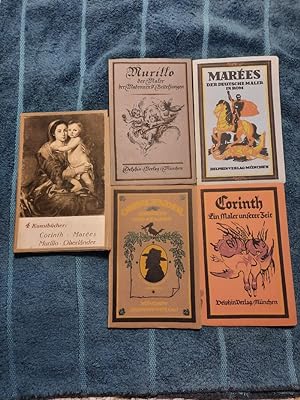
4 Delphin-Kunstbücher. in Originalschuber: Oberländer Heiteres und Ernstes.- Corinth Ein Maler unserer Zeit.- Marées Der Deutsche Maler in Rom.- Murillo Der Maler der Madonnen und Betteljungen
Sprache: Deutsch
Verlag: München, Delphin-Verlag
Anbieter: Aderholds Bücher & Lots, Kassel, Deutschland
Verkäuferbewertung 4 von 5 Sternen

8° , Broschiert. 4 Broschuren in Pappschuber. Mit vielen Abb. in s/w. Der Schuber ist berieben. Der Schuber ist bestoßen. Der Schuber hat Druckstellen. Der Schuber ist etwas verschmutzt. Der Schuber und die Broschuren sind etwas eingedrückt. Die Broschuren haben auf dem Vorsatz jeweils eine Zahlennotiz mit Bleistift. Die Broschuren sind jeweils gering bestoßen. Die Ecken sind jeweils etwas bestoßen. Die Kapitale sind jeweils wenig bestoßen. Die Ausgabe Corinth ist am Rand fleckig. H1 Sprache: Deutsch Gewicht in Gramm: 500.
-
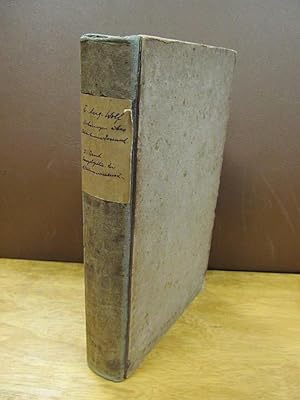
Fr. Aug. Wolf`s Vorlesung über die Encyclopädie der Alterthumswissenschaft ( = Erster Band der Vorlesungen über Alterthumswissenschaft )
Verlag: Lehnhold, Leipzig, 1831
Anbieter: Antiquariat Friederichsen e. K., Hamburg, Deutschland
Verbandsmitglied: BOEV
Verkäuferbewertung 5 von 5 Sternen
Mit VIII, 496 Seiten, 1 Blatt. Schlichter Pappband der Zeit mit von alter Hand handgeschriebenem Titelschildchen auf dem schmalen Einbandrücken und umlaufendem grünen Farbschnitt, 8° ( 21,5 x 13 cm ). Einband stärker stockfleckig, Ecken etwas bestoßen. Innen auf dem Innendeckel vorn ein paar alte Marginalien in Bleistift ( entfernbar ), Seiten teils etwas stockfleckig, wenige Seiten etwas angeknickt. ( Gewicht 450 Gramm ) ( Weitere Bilder auf Anfrage ) / Artikel 13829 /// With VIII, 496 pages, 1 sheet. A simple contemporary hardcover with a handwritten title label on the narrow spine and a green colored edge all the way around, 8° (21.5 x 13 cm). Cover heavily foxed, corners slightly bumped. A few old marginal notes in pencil (removable) on the inside front cover. Some pages slightly foxed, and a few pages slightly creased. (Weight 450 grams) (More images upon request) / Item 13829.
-

Kleine Schriften in lateinischer und deutscher Sprache: Scripta Latina (German Edition)
Anbieter: Ria Christie Collections, Uxbridge, Vereinigtes Königreich
Verkäuferbewertung 5 von 5 Sternen
EUR 101,21
EUR 13,80 Versand
Versand von Vereinigtes Königreich nach USAAnzahl: Mehr als 20 verfügbar
In den WarenkorbZustand: New. In.
-

Kleine Schriften in Lateinischer und Deutscher Sprache: II. Deutsche Aufsätze (German Edition)
Anbieter: Ria Christie Collections, Uxbridge, Vereinigtes Königreich
Verkäuferbewertung 5 von 5 Sternen
EUR 101,21
EUR 13,80 Versand
Versand von Vereinigtes Königreich nach USAAnzahl: Mehr als 20 verfügbar
In den WarenkorbZustand: New. In.
-
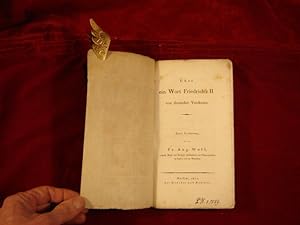
Über ein Wort Friedrich's II. von deutscher Verskunst. Eine Vorlesung von Fr. Aug. Wolf (Friedrich August Wolf).
Sprache: Deutsch
Verlag: Berlin, Duncker und Humblot, 1811
Anbieter: Antiquariat Olaf Drescher, Nuthe-Urstromtal OT Nettgendorf, Deutschland
Verkäuferbewertung 5 von 5 Sternen
VI, 64 S., 1 Bl. Verlagsanzeigen. Friedrich August Wolf war Mitglied der Königlichen Akademien zu Berlin u. München. Der Vortragende setzt sich vehement für die deutsche Dichtersprache ein unter Bezug auf den historischen französischen Einfluß.- Zustand: kl. Fehlstellen an den Kapitalen, alter datiertes Monogramm am unteren Rand des Titels, Schnitt fleckig, an den Seitenrändern teilweise mit kl. Fleckchen, sonst gut. Sprache: Deutsch Gewicht in Gramm: 200 21 x 12 cm, Interimsbroschur der Zeit mit breitem Rand, fadengeheftet, auf Bütten gedruckt.
-
Zustand: Hervorragend. Zustand: Hervorragend | Seiten: 632 | Sprache: Deutsch | Produktart: Bücher | Reprint of the original, first published in 1869.
-
Taschenbuch. Zustand: Neu. Kleine Schriften in lateinischer und deutscher Sprache: Scripta Latina | Fr. Aug. Wolf | Taschenbuch | 632 S. | Deutsch | 2020 | Outlook | EAN 9783846054666 | Verantwortliche Person für die EU: Europäischer Geschichtsverlag, ein Imprint von Outlook Verlagsgesellschaft mbH, Zeilweg 44, 60439 Frankfurt, salzwasser[at]lais-systeme[dot]de | Anbieter: preigu.
-
Taschenbuch. Zustand: Neu. Kleine Schriften in Lateinischer und Deutscher Sprache | II. Deutsche Aufsätze | Fr. Aug. Wolf | Taschenbuch | 620 S. | Deutsch | 2022 | Outlook | EAN 9783375049461 | Verantwortliche Person für die EU: Europäischer Geschichtsverlag, ein Imprint von Outlook Verlagsgesellschaft mbH, Zeilweg 44, 60439 Frankfurt, salzwasser[at]lais-systeme[dot]de | Anbieter: preigu.
-
Zustand: Hervorragend. Zustand: Hervorragend | Seiten: 632 | Sprache: Deutsch | Produktart: Bücher | Reprint of the original, first published in 1869.
-

Litterarische Analekten, vorzüglich für alte Litteratur und Kunst, deren Geschichte und Methodik. Herausgegeben von Fried. Aug. Wolf. (Band) I.
Sprache: Deutsch
Verlag: Berlin; bei G. C. Nauck, 1816
Anbieter: Borkert, Schwarz und Zerfaß GbR, Berlin, Deutschland
Verkäuferbewertung 5 von 5 Sternen
Zustand: Gut. XXII; 257 Seiten; 20,5 cm; fadengeh. Halblederband d.Zt. Gutes, stabiles Exemplar; Rücken lädiert (Leder stw. abgeplatzt); Einband berieben; Bibliotheksexemplar / ex-library; innen gut. - EINZELBAND / Band I. - Deutsch; stw. auch französisch. - Friedrich August Christian Wilhelm Wolf (* 15. Februar 1759 in Hainrode; 8. August 1824 in Marseille) war ein deutscher Altphilologe und Altertumswissenschaftler. Seine Hauptarbeit ist sein 1795 entstandenes, Fragment gebliebenes Werk Prolegomena ad Homerum, in dem er die Werke Homers kritisch auf ihre Entstehung hin untersuchte und ihn als einzigen Autor in Zweifel zog (Homerische Frage). Die Altertumswissenschaft verdankt Friedrich August Wolf ihre neue Anerkennung als universale Disziplin, im Sinne des Neuhumanismus (der letzte Zweck des Daseins ist die Bildung der Individualität), die er in enger Verbindung mit Wilhelm von Humboldt, Johann Wolfgang von Goethe und Friedrich Schiller begründete. Auch im Schulwesen sollte die klassische Philologie eine wesentliche Rolle spielen und den Menschen zu einer harmonischen Ausbildung verhelfen. (wiki) // INHALT (Kapitel) : Richard Bentley ----- In M. Con. Frontonis Epistolas Graecas ----- Neueste archäologische Verdienste der Engländer ----- Commentatio ad Tibulli I, 9, 23. ----- Zur Erklärung von Hor. Serm. I, 4, 11. ----- Sur la Vie de Mr. Larcher ----- Einige Verse aus der Odyssee ----- Das preussische Trier ----- Miscella litteraria ----- Chr. Wase's Schriften ----- Appendix notarum in Frontonem / (u.a.) --- Richard Bentley (* 27. Januar 1662 in Oulton bei Leeds, Yorkshire; 14. Juli 1742 in Cambridge) war ein englischer klassischer Philologe und Textkritiker. . (wiki) Sprache: Deutsch Gewicht in Gramm: 550.
-
Vermischte Schriften und Aufsätze in lateinischen und deutscher Sprache.
Anbieter: Herman H. J. Lynge & Søn ILAB-ABF, Copenhagen, Dänemark
Verkäuferbewertung 4 von 5 Sternen
Halle, rengerschen Buchhandlung, 1802. Small 8vo. Contemp. boards. Scratches to spine. Stamps on verso of titlepage. (4),456 pp.
-
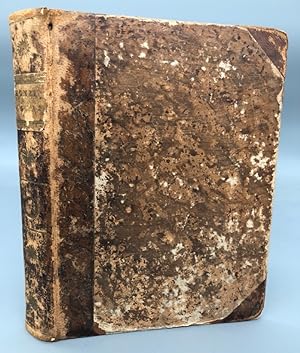
Prolegomena ad Homerum sive de Operum Homericum prisca et genuina forma variisque mutationibus et probabili ratione emendandi. Volumen I (all that appeared). - [THE NEW PHILOLOGY - PMM 248]
Anbieter: Herman H. J. Lynge & Søn ILAB-ABF, Copenhagen, Dänemark
Verkäuferbewertung 4 von 5 Sternen
Erstausgabe
Halis Saxonum (Halle), E Libreria Orphanotrophei, 1795. 8vo. Contemporary half calf with five raised bands and gilt title-and tome-labels. Very neatly rebacked. Very nice and clean. An excellent copy. (6), CCLXXX pp. Scarce first edition of the epoch-making work that founded modern philological scholarship and began the modern debate over the date of writing of Homer's works, creating in turn the two Homeric schools of thought, the Analysts and the Unitarians. Although the work bears on the title-page the words "Volumen I", no second volume ever appeared, and Wolf never made any attempt to compose it. "When Wolf took up his professorship in 1783, a critical point in the history of education had been reached. New ideas derived from Locke and Rousseau were at work and Wolf longed to enter the fray. He found able and enlightened allies in the ministers of Frederick the Great, and with their help and by his enthusiasm he was able to carry out his long-cherished plan to give a new basis to the science of philology. To Wolf this meant philology in the original sense - love of letters, of learning and of language. He defined it as "the knowledge of human nature as exhibited in antiquity"" its matter was everything that remained of ancient culture, to which an equal care and scholarship must be devoted. The "Prolegomena to Homer", the best exposition of Wolf's beliefs, were written in a great hurry to meet the needs of a lecture course, and they have all the merits of good lectures: command of method, the gift of inspiration, penetration and breadth of view. Wolf's thesis is no theory, but a collection of great ideas, which laid the foundations for the dominance of German scholarship in the nineteenth century. They have inspired and given purpose to education ever since." (Printing and the Mind of Man).With the 18th century came major developments in classical scholarship, the greatest of the classic epics being no exception - Homeric scholarship changed dramatically, and the end of the century saw the opening of the discussion which was to dominate the 19th and 20th centuries, namely that of the "Homeric question". The Homeric question is essentially the question of the identity of the poet(s) of the Homeric epics, and the nature of the relationship between "Homer" and the epics. In the 19th century it came to be the fulcrum between two opposed schools of thought, the Analysts and the Unitarians. The issue came about in the context of 18th-century Romantic interest in popular lays and folktale, and the growing recognition that the Homeric epics must have been transmitted orally before being written down, possibly much later than "Homer" himself. The key to determining who Homer was, lay in the answer to the question of when the poems were composed.The modern debate over exactly when they took on a fixed written form, began with the present work by Wolf. According to Wolf, the date of writing is among the first questions in the textual criticism of Homer. He considers the real mode of transmission of the poems and acknowledges that it was oral, arguing that they were composed in the mid-10th century BC. He further concludes that the Iliad and the Odyssey could not have been composed in the form in which we know them without the aid of writing and that they changed considerably over time in the hands of bards performing them orally and editors adapting written versions to contemporary tastes. The apparent artistic unity of the poems must have come about after their transcription.This new form of philological scholarship completely altered the way that philology has been done ever since the appearance of the present work.
-
Prolegomena ad Homerum sive de Operum Homericum prisca et genuina forma variisque mutationibus et probabili ratione emendandi. Volumen I (all that appeared). - [THE NEW PHILOLOGY - PMM 248]
Anbieter: Herman H. J. Lynge & Søn ILAB-ABF, Copenhagen, Dänemark
Verkäuferbewertung 4 von 5 Sternen
Erstausgabe
Halis Saxonum (Halle), E Libreria Orphanotrophei, 1795. 8vo. Contemporary half calf with a bit of wear, especially to corners and edges. Gilding to title-label worn off. Paper over boards loosening at edges. Overall fine and tight. A light damp stain to upper margin and a few leaves with some light brownspotting. Scarce first edition of the epoch-making work that founded modern philological scholarship and began the modern debate over the date of writing of Homer's works, creating in turn the two Homeric schools of thought, the Analysts and the Unitarians. Although the work bears on the title-page the words "Volumen I", no second volume ever appeared, and Wolf never made any attempt to compose it. "When Wolf took up his professorship in 1783, a critical point in the history of education had been reached. New ideas derived from Locke and Rousseau were at work and Wolf longed to enter the fray. He found able and enlightened allies in the ministers of Frederick the Great, and with their help and by his enthusiasm he was able to carry out his long-cherished plan to give a new basis to the science of philology. To Wolf this meant philology in the original sense - love of letters, of learning and of language. He defined it as "the knowledge of human nature as exhibited in antiquity"" its matter was everything that remained of ancient culture, to which an equal care and scholarship must be devoted. The "Prolegomena to Homer", the best exposition of Wolf's beliefs, were written in a great hurry to meet the needs of a lecture course, and they have all the merits of good lectures: command of method, the gift of inspiration, penetration and breadth of view. Wolf's thesis is no theory, but a collection of great ideas, which laid the foundations for the dominance of German scholarship in the nineteenth century. They have inspired and given purpose to education ever since." (Printing and the Mind of Man).With the 18th century came major developments in classical scholarship, the greatest of the classic epics being no exception - Homeric scholarship changed dramatically, and the end of the century saw the opening of the discussion which was to dominate the 19th and 20th centuries, namely that of the "Homeric question". The Homeric question is essentially the question of the identity of the poet(s) of the Homeric epics, and the nature of the relationship between "Homer" and the epics. In the 19th century it came to be the fulcrum between two opposed schools of thought, the Analysts and the Unitarians. The issue came about in the context of 18th-century Romantic interest in popular lays and folktale, and the growing recognition that the Homeric epics must have been transmitted orally before being written down, possibly much later than "Homer" himself. The key to determining who Homer was, lay in the answer to the question of when the poems were composed.The modern debate over exactly when they took on a fixed written form, began with the present work by Wolf. According to Wolf, the date of writing is among the first questions in the textual criticism of Homer. He considers the real mode of transmission of the poems and acknowledges that it was oral, arguing that they were composed in the mid-10th century BC. He further concludes that the Iliad and the Odyssey could not have been composed in the form in which we know them without the aid of writing and that they changed considerably over time in the hands of bards performing them orally and editors adapting written versions to contemporary tastes. The apparent artistic unity of the poems must have come about after their transcription.This new form of philological scholarship completely altered the way that philology has been done ever since the appearance of the present work.
-
Kleine Schriften in lateinischer und deutscher Sprache. I. Scripta latina. II. Deutsche Aufsätze.
Sprache: Deutsch
Verlag: Halle, Verlag der Buchhandlung des Waisenhauses,, 1869
Anbieter: Buch & Cafe Antiquarius, Bonn, NRW, Deutschland
Verbandsmitglied: GIAQ
Verkäuferbewertung 5 von 5 Sternen
1. Aufl. 2 Bde. XXXVIII, 1200 S. (fortlaufend paginiert). Hier die Originalausgabe. Rückensignatur, Stempel auf Titelverso, sonst schönes Ex. Sprache: Deutsch Gewicht in Gramm: 0 8°, Halbleinenbände späterer Zeit.





![Bild des Verkäufers für Prolegomena ad Homerum sive de Operum Homericum prisca et genuina forma variisque mutationibus et probabili ratione emendandi. Volumen I (all that appeared). - [THE NEW PHILOLOGY - PMM 248] zum Verkauf von Herman H. J. Lynge & Søn ILAB-ABF](https://pictures.abebooks.com/inventory/md/md13113955461.jpg)
![Bild des Verkäufers für Prolegomena ad Homerum sive de Operum Homericum prisca et genuina forma variisque mutationibus et probabili ratione emendandi. Volumen I (all that appeared). - [THE NEW PHILOLOGY - PMM 248] zum Verkauf von Herman H. J. Lynge & Søn ILAB-ABF](https://pictures.abebooks.com/inventory/md/md12294563253.jpg)