

Gesamtpreis (1 Artikel Artikel):
Versandziel:

arata laura (8 Ergebnisse)
Direkt zu den wichtigsten Suchergebnissen
Suchfilter
Produktart
- Alle Product Types
- Bücher (8)
- Magazine & Zeitschriften (Keine weiteren Ergebnisse entsprechen dieser Verfeinerung)
- Comics (Keine weiteren Ergebnisse entsprechen dieser Verfeinerung)
- Noten (Keine weiteren Ergebnisse entsprechen dieser Verfeinerung)
- Kunst, Grafik & Poster (Keine weiteren Ergebnisse entsprechen dieser Verfeinerung)
- Fotografien (Keine weiteren Ergebnisse entsprechen dieser Verfeinerung)
- Karten (Keine weiteren Ergebnisse entsprechen dieser Verfeinerung)
- Manuskripte & Papierantiquitäten (Keine weiteren Ergebnisse entsprechen dieser Verfeinerung)
Zustand Mehr dazu
- Neu (7)
- Wie Neu, Sehr Gut oder Gut Bis Sehr Gut (Keine weiteren Ergebnisse entsprechen dieser Verfeinerung)
- Gut oder Befriedigend (1)
- Ausreichend oder Schlecht (Keine weiteren Ergebnisse entsprechen dieser Verfeinerung)
- Wie beschrieben (Keine weiteren Ergebnisse entsprechen dieser Verfeinerung)
Einband
- alle Einbände
- Hardcover (Keine weiteren Ergebnisse entsprechen dieser Verfeinerung)
- Softcover (8)
Weitere Eigenschaften
- Erstausgabe (Keine weiteren Ergebnisse entsprechen dieser Verfeinerung)
- Signiert (Keine weiteren Ergebnisse entsprechen dieser Verfeinerung)
- Schutzumschlag (Keine weiteren Ergebnisse entsprechen dieser Verfeinerung)
- Angebotsfoto (3)
Sprache (1)
Preis
- Beliebiger Preis
- Weniger als EUR 20 (Keine weiteren Ergebnisse entsprechen dieser Verfeinerung)
- EUR 20 bis EUR 45
- Mehr als EUR 45
Gratisversand
Land des Verkäufers
Verkäuferbewertung
-

Race and the Wild West: Sarah Bickford, the Montana Vigilantes, and the Tourism of Decline, 1870-1930 (R&CCAW) (Volume 17)
Buch 13 von 13: Race and Culture in the American WestAnbieter: Ria Christie Collections, Uxbridge, Vereinigtes Königreich
Verkäuferbewertung 5 von 5 Sternen

EUR 25,96
EUR 13,90 Versand
Versand von Vereinigtes Königreich nach USAAnzahl: Mehr als 20 verfügbar
In den WarenkorbZustand: New. In.
-
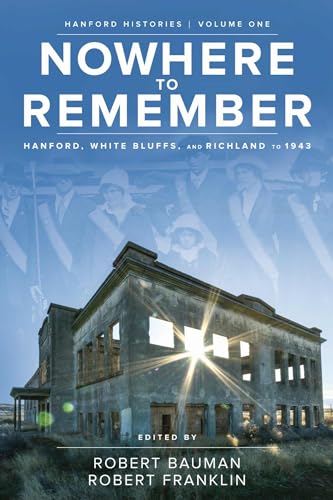
Nowhere to Remember: Hanford White Bluffs and Richland to 1943 (Hanford Histories)
Sprache: Englisch
Verlag: Washington State University Press, 2018
ISBN 10: 0874223601 ISBN 13: 9780874223606
Anbieter: Kennys Bookstore, Olney, MD, USA
Verkäuferbewertung 5 von 5 Sternen
Zustand: New. 2018. Illustrated. paperback. . . . . . Books ship from the US and Ireland.
-
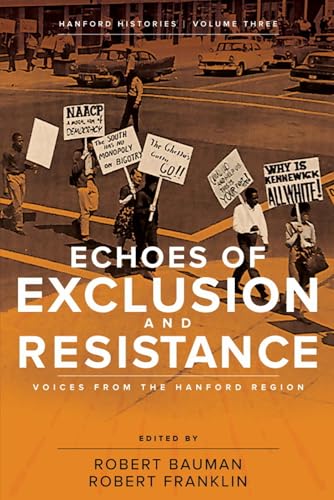
Echoes of Exclusion and Resistance: Voices from the Hanford Region
Sprache: Englisch
Verlag: Washington State University Press, 2021
ISBN 10: 0874223822 ISBN 13: 9780874223828
Anbieter: Kennys Bookstore, Olney, MD, USA
Verkäuferbewertung 5 von 5 Sternen
Zustand: New. 2021. Illustrated. paperback. . . . . . Books ship from the US and Ireland.
-
Race and the Wild West Sarah Bickford, the Montana Vigilantes, and the Tourism of Decline, 18701930
Buch 13 von 13: Race and Culture in the American WestAnbieter: Revaluation Books, Exeter, Vereinigtes Königreich
Verkäuferbewertung 5 von 5 Sternen
EUR 39,32
EUR 11,61 Versand
Versand von Vereinigtes Königreich nach USAAnzahl: 2 verfügbar
In den WarenkorbPaperback. Zustand: Brand New. 285 pages. 8.75x6.00x0.75 inches. In Stock.
-

EUR 23,74
EUR 48,99 Versand
Versand von Deutschland nach USAAnzahl: Mehr als 20 verfügbar
In den WarenkorbZustand: New. KlappentextThe first volume in the new Hanford Histories series, Nowhere to Remember highlights life in Hanford, White Bluffs, and Richland--three small, close-knit eastern Washington agricultural communities--until 1943, when .
-

Nowhere to Remember : Hanford, White Bluffs, and Richland to 1943
Sprache: Englisch
Verlag: Washington State University Press Sep 2018, 2018
ISBN 10: 0874223601 ISBN 13: 9780874223606
Anbieter: AHA-BUCH GmbH, Einbeck, Deutschland
Verkäuferbewertung 5 von 5 Sternen
Taschenbuch. Zustand: Neu. Neuware - There wasn't that many people, but they were good people.'--Madeline Gilles'First time I ever tasted cherries or even seen a cherry tree was [in White Bluffs]. Or ever ate an apricot or seen an apricotIt was covered with orchards and alfalfa fields.'--Leatris Boehmer ReidEuro-American Priest River Valley settlers turned acres of sagebrush into fruit orchards. Although farm life required hard work and modern conveniences were often spare, many former residents remember idyllic, close-knit communities where neighbors helped neighbors. Then, in 1943, families received forced evacuation notices. 'Fruit farmers had to leave their crops on their trees. And that was very hard on them, no future, no moneythey moved wherever they could get a place to live,' Catherine Finley recalled. Some were given just thirty days, and Manhattan Project restrictions meant they could not return.Drawn from Hanford History Project personal narratives, Nowhere to Remember highlights life in Hanford, White Bluffs, and Richland--three small agricultural communities in eastern Washington's mid-Columbia region. It covers their late 1800s to early 1900s origins, settlement and development, the arrival of irrigation, dependence on railroads, Great Depression struggles, and finally, their unique experiences in the early years of World War II.David W. Harvey examines the impact of wagon trade, steamships, and railroads, grounding local history within the context of American West history. Robert Franklin details the tight bonds between early residents as they labored to transform scrubland into an agricultural Eden. Laura Arata considers the early twentieth century experiences of women who lived and worked in the region. Robert Bauman utilizes oral histories to tell forced removal stories. Finally, Bauman and Franklin convey displaced occupants' reactions to their lost spaces and places of meaning--and explore ways they sought to honor their heritage.
-

Echoes of Exclusion and Resistance : Voices from the Hanford Region
Sprache: Englisch
Verlag: Washington State University Press Jan 2021, 2021
ISBN 10: 0874223822 ISBN 13: 9780874223828
Anbieter: AHA-BUCH GmbH, Einbeck, Deutschland
Verkäuferbewertung 5 von 5 Sternen
Taschenbuch. Zustand: Neu. Neuware - Like the rest of the American West, the mid-Columbia region has always been diverse. Its history mirrors common multiracial narratives, but with important nuances. In the late 1880s, Chinese railroad workers were segregated to East Pasco, a practice that later extended to all non-whites and continued for decades. Kennewick residents became openly proud of their status as a 'lily-white' town.In Echoes of Exclusion and Resistance, the third Hanford Histories volume, four scholars--Laura Arata, Robert Bauman, Robert Franklin, and Thomas E. Marceau--draw from Hanford History Project, Atomic Heritage Foundation, and Afro-American Community Cultural and Educational Society oral histories to focus on the experiences of non-white groups whose lives were deeply impacted by the Hanford Site. Linked in ways they likely could not know, each group resisted the segregation and discrimination they encountered, and in the process, challenged the region's dominant racial norms.The Wanapum, evicted by Hanford Nuclear Reservation construction, relate stories of their people, as well as their responses to dislocation and forced evacuation. Unable to interact with the ancient landscapes and utilize the natural resources of their traditional lands, they suffered painful, irretrievable losses. Early arrivals to the town of Pasco, the Yamauchi family built the American dream--including successful businesses and highly educated children--only to have their aspirations crushed by World War II Japanese-American internment. Thousands of African Americans migrated to the area for wartime jobs and discovered rampant segregation. Through negotiations, demonstrations, and protests, they fought the region's ingrained racial disparity. During the early years of the Cold War, Black women, mostly from East Texas, also relocated to work at Hanford. They offer a unique perspective on employment, discrimination, family, and faith.
-
Race and the Wild West Sarah B
Buch 13 von 13: Race and Culture in the American WestAnbieter: World of Books (was SecondSale), Montgomery, IL, USA
Verkäuferbewertung 5 von 5 Sternen
Zustand: Good. Item in good condition. Textbooks may not include supplemental items i.e. CDs, access codes etc.
