

Gesamtpreis (1 Artikel Artikel):
Versandziel:

ahuja jain mohan (18 Ergebnisse)
Direkt zu den wichtigsten Suchergebnissen
Suchfilter
Produktart
- Alle Product Types
- Bücher (18)
- Magazine & Zeitschriften (Keine weiteren Ergebnisse entsprechen dieser Verfeinerung)
- Comics (Keine weiteren Ergebnisse entsprechen dieser Verfeinerung)
- Noten (Keine weiteren Ergebnisse entsprechen dieser Verfeinerung)
- Kunst, Grafik & Poster (Keine weiteren Ergebnisse entsprechen dieser Verfeinerung)
- Fotografien (Keine weiteren Ergebnisse entsprechen dieser Verfeinerung)
- Karten (Keine weiteren Ergebnisse entsprechen dieser Verfeinerung)
- Manuskripte & Papierantiquitäten (Keine weiteren Ergebnisse entsprechen dieser Verfeinerung)
Zustand Mehr dazu
- Neu (15)
- Wie Neu, Sehr Gut oder Gut Bis Sehr Gut (1)
- Gut oder Befriedigend (Keine weiteren Ergebnisse entsprechen dieser Verfeinerung)
- Ausreichend oder Schlecht (Keine weiteren Ergebnisse entsprechen dieser Verfeinerung)
- Wie beschrieben (2)
Einband
Weitere Eigenschaften
- Erstausgabe (Keine weiteren Ergebnisse entsprechen dieser Verfeinerung)
- Signiert (Keine weiteren Ergebnisse entsprechen dieser Verfeinerung)
- Schutzumschlag (Keine weiteren Ergebnisse entsprechen dieser Verfeinerung)
- Angebotsfoto (9)
Sprache (1)
Gratisversand
- Kostenloser Versand nach USA (Keine weiteren Ergebnisse entsprechen dieser Verfeinerung)
Land des Verkäufers
Verkäuferbewertung
-
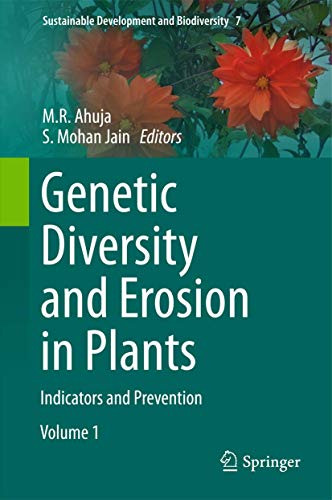
Genetic Diversity and Erosion in Plants. Indicators and Prevention, Volume 1.
Buch 7 von 32: Sustainable Development and BiodiversityAnbieter: Universitätsbuchhandlung Herta Hold GmbH, Berlin, Deutschland
Verbandsmitglied: GIAQ ILAB VDA
Verkäuferbewertung 4 von 5 Sternen

x, 323 p. Hardcover. Versand aus Deutschland / We dispatch from Germany via Air Mail. Einband bestoßen, daher Mängelexemplar gestempelt, sonst sehr guter Zustand. Imperfect copy due to slightly bumped cover, apart from this in very good condition. Stamped. Stamped. Sustainable Development and Biodiversity 7. Sprache: Englisch.
-

Genetic Diversity and Erosion in Plants. Case Histories, Volume 2.
Buch 9 von 32: Sustainable Development and BiodiversityAnbieter: Universitätsbuchhandlung Herta Hold GmbH, Berlin, Deutschland
Verbandsmitglied: GIAQ ILAB VDA
Verkäuferbewertung 4 von 5 Sternen
viii, 438 p. Hardcover. Versand aus Deutschland / We dispatch from Germany via Air Mail. Einband bestoßen, daher Mängelexemplar gestempelt, sonst sehr guter Zustand. Imperfect copy due to slightly bumped cover, apart from this in very good condition. Stamped. Sustainable Development and Biodiversity 8. Sprache: Englisch.
-

Genetic Diversity and Erosion in Plants: Indicators and Prevention (Sustainable Development and Biodiversity, 7)
Buch 7 von 32: Sustainable Development and BiodiversityAnbieter: Ria Christie Collections, Uxbridge, Vereinigtes Königreich
Verkäuferbewertung 5 von 5 Sternen

EUR 115,52
EUR 13,87 Versand
Versand von Vereinigtes Königreich nach USAAnzahl: Mehr als 20 verfügbar
In den WarenkorbZustand: New. In.
-
Genetic Diversity and Erosion in Plants: Indicators and Prevention (Sustainable Development and Biodiversity)
Buch 7 von 32: Sustainable Development and BiodiversityAnbieter: Revaluation Books, Exeter, Vereinigtes Königreich
Verkäuferbewertung 5 von 5 Sternen
EUR 152,97
EUR 14,47 Versand
Versand von Vereinigtes Königreich nach USAAnzahl: 2 verfügbar
In den WarenkorbPaperback. Zustand: Brand New. reprint edition. 323 pages. 9.25x6.10x1.02 inches. In Stock.
-
Taschenbuch. Zustand: Neu. Genetic Diversity and Erosion in Plants | Indicators and Prevention | M. R. Ahuja (u. a.) | Taschenbuch | Sustainable Development and Biodiversity | x | Englisch | 2016 | Springer | EAN 9783319352602 | Verantwortliche Person für die EU: Springer Verlag GmbH, Tiergartenstr. 17, 69121 Heidelberg, juergen[dot]hartmann[at]springer[dot]com | Anbieter: preigu.
-

Genetic Diversity and Erosion in Plants : Indicators and Prevention
Buch 7 von 32: Sustainable Development and BiodiversitySprache: Englisch
Verlag: Springer International Publishing, Springer International Publishing, 2016
ISBN 10: 3319352601 ISBN 13: 9783319352602
Anbieter: AHA-BUCH GmbH, Einbeck, Deutschland
Verkäuferbewertung 5 von 5 Sternen
Taschenbuch. Zustand: Neu. Druck auf Anfrage Neuware - Printed after ordering - Genetic erosion is the loss of genetic diversity within a species. It can happen very quickly, due to catastrophic events, or changes in land use leading to habitat loss. But it can also occur more gradually and remain unnoticed for a long time. One of the main causes of genetic erosion is the replacement of local varieties by modern varieties. Other causes include environmental degradation, urbanization, and land clearing through deforestation and brush fires. In order to conserve biodiversity in plants, it is important to targets three independent levels that include ecosystems, species and genes. Genetic diversity is important to a species' fitness, long-term viability, and ability to adapt to changing environmental conditions. Chapters in this book are written by leading geneticists, molecular biologists and other specialists on relevant topics on genetic erosion and conservation genetic diversity in plants. This divisible set of two volumes dealswith a broad spectrum of topics on genetic erosion, and approaches to biodiversity conservation in crop plants and trees. Volume 1 deals with indicators and prevention of genetic erosion, while volume 2 covers genetic diversity and erosion in a number of plants species. These two volumes will also be useful to botanists, biotechnologists, environmentalists, policy makers, conservationists, and NGOs working to manage genetic erosion and biodiversity.
-

Genetic Diversity and Erosion in Plants : Indicators and Prevention
Buch 7 von 32: Sustainable Development and BiodiversityAnbieter: AHA-BUCH GmbH, Einbeck, Deutschland
Verkäuferbewertung 5 von 5 Sternen
Buch. Zustand: Neu. Druck auf Anfrage Neuware - Printed after ordering - Genetic erosion is the loss of genetic diversity within a species. It can happen very quickly, due to catastrophic events, or changes in land use leading to habitat loss. But it can also occur more gradually and remain unnoticed for a long time. One of the main causes of genetic erosion is the replacement of local varieties by modern varieties. Other causes include environmental degradation, urbanization, and land clearing through deforestation and brush fires. In order to conserve biodiversity in plants, it is important to targets three independent levels that include ecosystems, species and genes. Genetic diversity is important to a species' fitness, long-term viability, and ability to adapt to changing environmental conditions. Chapters in this book are written by leading geneticists, molecular biologists and other specialists on relevant topics on genetic erosion and conservation genetic diversity in plants. This divisible set of two volumes dealswith a broad spectrum of topics on genetic erosion, and approaches to biodiversity conservation in crop plants and trees. Volume 1 deals with indicators and prevention of genetic erosion, while volume 2 covers genetic diversity and erosion in a number of plants species. These two volumes will also be useful to botanists, biotechnologists, environmentalists, policy makers, conservationists, and NGOs working to manage genetic erosion and biodiversity.
-
Genetic Diversity and Erosion in Plants: Case Histories (Sustainable Development and Biodiversity, 8)
Buch 9 von 32: Sustainable Development and BiodiversityAnbieter: Ria Christie Collections, Uxbridge, Vereinigtes Königreich
Verkäuferbewertung 5 von 5 Sternen
EUR 164,36
EUR 13,87 Versand
Versand von Vereinigtes Königreich nach USAAnzahl: Mehr als 20 verfügbar
In den WarenkorbZustand: New. In.
-

Genetic Diversity and Erosion in Plants: Case Histories (Sustainable Development and Biodiversity, 8)
Buch 9 von 32: Sustainable Development and BiodiversityAnbieter: Ria Christie Collections, Uxbridge, Vereinigtes Königreich
Verkäuferbewertung 5 von 5 Sternen
EUR 164,36
EUR 13,87 Versand
Versand von Vereinigtes Königreich nach USAAnzahl: Mehr als 20 verfügbar
In den WarenkorbZustand: New. In.
-
Zustand: Sehr gut. Zustand: Sehr gut | Seiten: 336 | Sprache: Englisch | Produktart: Bücher | Genetic erosion is the loss of genetic diversity within a species. It can happen very quickly, due to catastrophic events, or changes in land use leading to habitat loss. But it can also occur more gradually and remain unnoticed for a long time. One of the main causes of genetic erosion is the replacement of local varieties by modern varieties. Other causes include environmental degradation, urbanization, and land clearing through deforestation and brush fires. In order to conserve biodiversity in plants, it is important to targets three independent levels that include ecosystems, species and genes. Genetic diversity is important to a species¿ fitness, long-term viability, and ability to adapt to changing environmental conditions. Chapters in this book are written by leading geneticists, molecular biologists and other specialists on relevant topics on genetic erosion and conservation genetic diversity in plants. This divisible set of two volumes dealswith a broad spectrum of topics on genetic erosion, and approaches to biodiversity conservation in crop plants and trees. Volume 1 deals with indicators and prevention of genetic erosion, while volume 2 covers genetic diversity and erosion in a number of plants species. These two volumes will also be useful to botanists, biotechnologists, environmentalists, policy makers, conservationists, and NGOs working to manage genetic erosion and biodiversity.
-
Taschenbuch. Zustand: Neu. Genetic Diversity and Erosion in Plants | Case Histories | M. R. Ahuja (u. a.) | Taschenbuch | Sustainable Development and Biodiversity | viii | Englisch | 2019 | Springer | EAN 9783319798639 | Verantwortliche Person für die EU: Springer Verlag GmbH, Tiergartenstr. 17, 69121 Heidelberg, juergen[dot]hartmann[at]springer[dot]com | Anbieter: preigu.
-

Genetic Diversity and Erosion in Plants : Case Histories
Buch 9 von 32: Sustainable Development and BiodiversitySprache: Englisch
Verlag: Springer International Publishing, Springer International Publishing, 2019
ISBN 10: 3319798634 ISBN 13: 9783319798639
Anbieter: AHA-BUCH GmbH, Einbeck, Deutschland
Verkäuferbewertung 5 von 5 Sternen
Taschenbuch. Zustand: Neu. Druck auf Anfrage Neuware - Printed after ordering - Genetic erosion is the loss of genetic diversity within a species. It can happen very quickly, due to catastrophic events, or changes in land use leading to habitat loss. But it can also occur more gradually and remain unnoticed for a long time. One of the main causes of genetic erosion is the replacement of local varieties by modern varieties. Other causes include environmental degradation, urbanization, and land clearing through deforestation and brush fires. In order to conserve biodiversity in plants, it is important to targets three independent levels that include ecosystems, species and genes. Genetic diversity is important to a species' fitness, long-term viability, and ability to adapt to changing environmental conditions. Chapters in this book are written by leading geneticists, molecular biologists and other specialists on relevant topics on genetic erosion and conservation genetic diversity in plants. This divisible set of two volumes deals with a broad spectrum of topics ongenetic erosion, and approaches to biodiversity conservation in crop plants and trees. Volume 1 deals with indicators and prevention of genetic erosion, while volume 2 covers genetic diversity and erosion in a number of plants species. These two volumes will also be useful to botanists, biotechnologists, environmentalists, policy makers, conservationists, and NGOs working to manage genetic erosion and biodiversity.
-

Genetic Diversity and Erosion in Plants : Case Histories
Buch 9 von 32: Sustainable Development and BiodiversitySprache: Englisch
Verlag: Springer International Publishing, 2015
ISBN 10: 3319259539 ISBN 13: 9783319259536
Anbieter: AHA-BUCH GmbH, Einbeck, Deutschland
Verkäuferbewertung 5 von 5 Sternen
Buch. Zustand: Neu. Druck auf Anfrage Neuware - Printed after ordering - Genetic erosion is the loss of genetic diversity within a species. It can happen very quickly, due to catastrophic events, or changes in land use leading to habitat loss. But it can also occur more gradually and remain unnoticed for a long time. One of the main causes of genetic erosion is the replacement of local varieties by modern varieties. Other causes include environmental degradation, urbanization, and land clearing through deforestation and brush fires. In order to conserve biodiversity in plants, it is important to targets three independent levels that include ecosystems, species and genes. Genetic diversity is important to a species' fitness, long-term viability, and ability to adapt to changing environmental conditions. Chapters in this book are written by leading geneticists, molecular biologists and other specialists on relevant topics on genetic erosion and conservation genetic diversity in plants. This divisible set of two volumes deals with a broad spectrum of topics ongenetic erosion, and approaches to biodiversity conservation in crop plants and trees. Volume 1 deals with indicators and prevention of genetic erosion, while volume 2 covers genetic diversity and erosion in a number of plants species. These two volumes will also be useful to botanists, biotechnologists, environmentalists, policy makers, conservationists, and NGOs working to manage genetic erosion and biodiversity.
-
Genetic Diversity and Erosion in Plants: Case Histories
Buch 9 von 32: Sustainable Development and BiodiversityAnbieter: Revaluation Books, Exeter, Vereinigtes Königreich
Verkäuferbewertung 5 von 5 Sternen
EUR 235,18
EUR 14,47 Versand
Versand von Vereinigtes Königreich nach USAAnzahl: 2 verfügbar
In den WarenkorbPaperback. Zustand: Brand New. reprint edition. 448 pages. 9.25x6.10x1.01 inches. In Stock.
-
Genetic Diversity and Erosion in Plants: Case Histories: Vol 2
Buch 9 von 32: Sustainable Development and BiodiversityAnbieter: Revaluation Books, Exeter, Vereinigtes Königreich
Verkäuferbewertung 5 von 5 Sternen
EUR 237,21
EUR 14,47 Versand
Versand von Vereinigtes Königreich nach USAAnzahl: 2 verfügbar
In den WarenkorbHardcover. Zustand: Brand New. 448 pages. 9.25x6.25x1.25 inches. In Stock.
-

Taschenbuch. Zustand: Neu. Biodiversity and Conservation of Woody Plants | M. R. Ahuja (u. a.) | Taschenbuch | Sustainable Development and Biodiversity | xii | Englisch | 2018 | Springer | EAN 9783319882420 | Verantwortliche Person für die EU: Springer Verlag GmbH, Tiergartenstr. 17, 69121 Heidelberg, juergen[dot]hartmann[at]springer[dot]com | Anbieter: preigu.
-

Biodiversity and Conservation of Woody Plants
Buch 16 von 32: Sustainable Development and BiodiversitySprache: Englisch
Verlag: Springer International Publishing, 2018
ISBN 10: 3319882422 ISBN 13: 9783319882420
Anbieter: AHA-BUCH GmbH, Einbeck, Deutschland
Verkäuferbewertung 5 von 5 Sternen
Taschenbuch. Zustand: Neu. Druck auf Anfrage Neuware - Printed after ordering - This book provides complete, comprehensive, and broad subject-based reviews for students, teachers, researchers, policymakers, conservationists, and NGOs interested in the biodiversity and conservation of woody plants.Forests cover approximately 31 percent of the world's total landmass; 93 percent is natural forest and only 7 percent consists of planted trees. Forest decline is progressing at an alarming rate worldwide. In addition to human activities (logging, deforestation, and exploiting forest lands for agriculture and industrial use), a number of other factors - including pests and diseases, drought, soil acidity, radiation, and ozone - are cumulatively contributing to global forest decline. The present situation forces us to focus on forest conservation strategies for the present and future. Gene conservation and maintaining genetic diversity in forest ecosystems are crucial to the preservation of forest genetic resources. This calls for integrated action to implement both the in situ (on site) preservation of forest stands and ex situ (distant from the original site) strategies for the conservation of woody plants' genetic resources. Selected priority areas include: 1) assessing patterns of genetic diversity and threats, 2) understanding the biological processes regulating genetic diversity, 3) assessing the impact of human activities and climate change on genetic diversity, and 5) finding methods for prioritizing species and populations for the conservation of forest trees genetic resources.All chapters were written by leading scientists in their respective fields, which include: woody plant diversity, ecology and evolution; assessment of genetic diversity in forest tree populations; conservation planning under climate change; and in situ and ex situ strategies, including biotechnological approaches, for the conservation of woody plants genetic resources.
-

Biodiversity and Conservation of Woody Plants
Buch 16 von 32: Sustainable Development and BiodiversitySprache: Englisch
Verlag: Springer International Publishing, 2017
ISBN 10: 3319664255 ISBN 13: 9783319664255
Anbieter: AHA-BUCH GmbH, Einbeck, Deutschland
Verkäuferbewertung 5 von 5 Sternen
Buch. Zustand: Neu. Druck auf Anfrage Neuware - Printed after ordering - This book provides complete, comprehensive, and broad subject-based reviews for students, teachers, researchers, policymakers, conservationists, and NGOs interested in the biodiversity and conservation of woody plants.Forests cover approximately 31 percent of the world's total landmass; 93 percent is natural forest and only 7 percent consists of planted trees. Forest decline is progressing at an alarming rate worldwide. In addition to human activities (logging, deforestation, and exploiting forest lands for agriculture and industrial use), a number of other factors - including pests and diseases, drought, soil acidity, radiation, and ozone - are cumulatively contributing to global forest decline. The present situation forces us to focus on forest conservation strategies for the present and future. Gene conservation and maintaining genetic diversity in forest ecosystems are crucial to the preservation of forest genetic resources. This calls for integrated action to implement both the in situ (on site) preservation of forest stands and ex situ (distant from the original site) strategies for the conservation of woody plants' genetic resources. Selected priority areas include: 1) assessing patterns of genetic diversity and threats, 2) understanding the biological processes regulating genetic diversity, 3) assessing the impact of human activities and climate change on genetic diversity, and 5) finding methods for prioritizing species and populations for the conservation of forest trees genetic resources.All chapters were written by leading scientists in their respective fields, which include: woody plant diversity, ecology and evolution; assessment of genetic diversity in forest tree populations; conservation planning under climate change; and in situ and ex situ strategies, including biotechnological approaches, for the conservation of woody plants genetic resources.


