Gesamtpreis (1 Artikel Artikel):
Versandziel:

adams clay (14 Ergebnisse)
Direkt zu den wichtigsten Suchergebnissen
Suchfilter
Produktart
- Alle Product Types
- Bücher (14)
- Magazine & Zeitschriften (Keine weiteren Ergebnisse entsprechen dieser Verfeinerung)
- Comics (Keine weiteren Ergebnisse entsprechen dieser Verfeinerung)
- Noten (Keine weiteren Ergebnisse entsprechen dieser Verfeinerung)
- Kunst, Grafik & Poster (Keine weiteren Ergebnisse entsprechen dieser Verfeinerung)
- Fotografien (Keine weiteren Ergebnisse entsprechen dieser Verfeinerung)
- Karten (Keine weiteren Ergebnisse entsprechen dieser Verfeinerung)
- Manuskripte & Papierantiquitäten (Keine weiteren Ergebnisse entsprechen dieser Verfeinerung)
Zustand Mehr dazu
Einband
Weitere Eigenschaften
Sprache (3)
Gratisversand
Land des Verkäufers
Verkäuferbewertung
-
Hardcover. Zustand: Good. No Jacket. Pages can have notes/highlighting. Spine may show signs of wear. ~ ThriftBooks: Read More, Spend Less.
-

Bushwhacked (Atlantic large print)
Anbieter: ThriftBooks-Atlanta, AUSTELL, GA, USA
Verkäuferbewertung 5 von 5 Sternen

Paperback. Zustand: Fair. No Jacket. Former library book; Readable copy. Pages may have considerable notes/highlighting. ~ ThriftBooks: Read More, Spend Less.
-
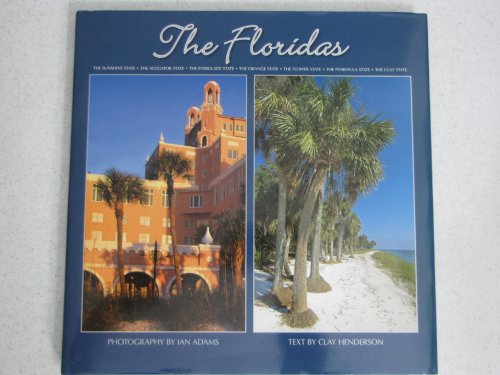
The Floridas
Sprache: Englisch
Verlag: Browntrout Pub (edition First Edition), 2006
ISBN 10: 0763197815 ISBN 13: 9780763197810
Erstausgabe
Hardcover. Zustand: Very Good. First Edition. It's a well-cared-for item that has seen limited use. The item may show minor signs of wear. All the text is legible, with all pages included. It may have slight markings and/or highlighting.
-

The Energy Thief
Sprache: Englisch
Verlag: CreateSpace Independent Publishing Platform, 2012
ISBN 10: 1479269026 ISBN 13: 9781479269020
Anbieter: World of Books (was SecondSale), Montgomery, IL, USA
Verkäuferbewertung 5 von 5 Sternen
Zustand: Good. Adams, Lincoln (illustrator). Item in good condition. Textbooks may not include supplemental items i.e. CDs, access codes etc.
-

NIGHTMARE THEATER 2 - Revenge of the Horror Comic Anthology
Verlag: Adams, Clay
ISBN 10: 1736362615 ISBN 13: 9781736362617
Anbieter: ThriftBooks-Dallas, Dallas, TX, USA
Verkäuferbewertung 5 von 5 Sternen
Paperback. Zustand: Good. No Jacket. Pages can have notes/highlighting. Spine may show signs of wear. ~ ThriftBooks: Read More, Spend Less.
-

A Darker Justice: One widowed mother's journey of revenge
Verlag: Independently published, 2023
Anbieter: Books From California, Simi Valley, CA, USA
Verkäuferbewertung 4 von 5 Sternen

paperback. Zustand: Very Good.
-
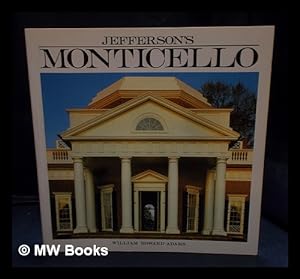
Jefferson's Monticello / by William Howard Adams ; with principal photography by Langdon Clay
Sprache: Englisch
Verlag: New York : Abbeville Press, 1983
ISBN 10: 0896599507 ISBN 13: 9780896599505
Erstausgabe
First Edition. Near fine paperback copy; edges very slightly dust-dulled. Remains particularly well-preserved overall; tight, bright, clean and especially sharp-cornered. Physical description; x, 276 pages : illustrations (some color) ; 26 cm. Notes; Illus. (many col., 1 on title-page) incl. sections, elevations plans, maps, diagr., end-papers and facsimiles. Includes bibliographical references (pages 269-271) and index. Contents; The architect -- The first Monticello -- The second Monticello -- The landscape -- The interior life -- The epilogue. Subjects; Jefferson, Thomas 1743-1826 Homes and haunts Virginia Albemarle County. Homes. Virginia Albemarle County. Virginia Monticello. Monticello (Va.) Studies. 3 Kg.
-

EUR 14,02
EUR 48,99 Versand
Versand von Deutschland nach USAAnzahl: Mehr als 20 verfügbar
In den WarenkorbZustand: New. Adams, Lincoln (illustrator).
-
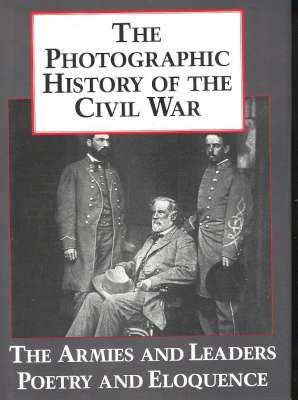
The photographic history of the Civil War : complete and unabridged ; Volume 5. Poetry and eloquence of Blue and Gray. Armies and leaders. Index.
Sprache: Englisch
Verlag: Secaucus, NJ : Blue & Grey Press, 1987., 1987
ISBN 10: 1555212026 ISBN 13: 9781555212025
Anbieter: Joseph Valles - Books, Stockbridge, GA, USA
Verkäuferbewertung 5 von 5 Sternen
Hardcover. Zustand: Fine. Zustand des Schutzumschlags: Fine. 320, [2], 253, [38] pp. ; illustrated throughout, portraits ; 28 cm. ; 1555212026 (v. 5); 9781555212025 (v. 5) ; LC: E468.7; Dewey: 973.7 ; OCLC: 17757174 ; Reprint. Originally published: New York : Review of Reviews, 1911 ; blue and grey cloth in photographic dustjacket ; poems and writings by Oliver Wendell Holmes, Henry Timrod, James Maurice Thompson, Edmund Clarence Stedman, George Parsons Lathrop, Francis Ticknor, Thomas Read, Joseph O'Connor, Robert Burns Wilson, Elbridge Jefferson Cutl er, Sidney Lanier, Kate Brownlee Sherwood, William Tuckey Meredith, Richard Watson Gilder, Henry Abbey, Horace Porter, Julia Ward Howe, Charles Francis Adams, Walt Whitman, Margaret Junkin Preston, Nathaniel Graham Shepherd, Ethel Lynn Beers, Elizab eth Stuart Phelps Ward, William Gordon McCabe, James Ryder Randall, Albert Pike, Samuel Hawkins Marshall Byers, Charles Graham Halpine, Henry Clay Work, Horace Porter, Francis Brete Harte, B enjamin Sledd, John Reuben Thompson, Frank H. Gassaway, Ch arles Dawson Shanly, James Jeffrey Roche, Will Henry Thompson, Kate Putnam Osgood, William Winter, Abram Joseph Ryan, Abraham Lincoln, James Russell Lowell, Francis Miles Finch, John Albee, Henry Jerome Stockard, Mary Ashley Townsend, Henry Peterson , Ulysses Simpson Grant, Jefferson Davis, L. Q. C. Lamar, Henry Woodfin Grady, John Jerome Rooney, Wallace Rice, John Howard Jewett, Frank Lebby Stanton ; photographs of all the principal officers of many regiments ; FINE/FINE. Book.
-
The Floridas Clay Henderson (Text); Ian Adams (Fotos)
Anbieter: BUCHSERVICE / ANTIQUARIAT Lars Lutzer, Wahlstedt, Deutschland
Verkäuferbewertung 5 von 5 Sternen
Hardcover. Zustand: gut. 2005. The Floridas In englischer Sprache. pages.
-
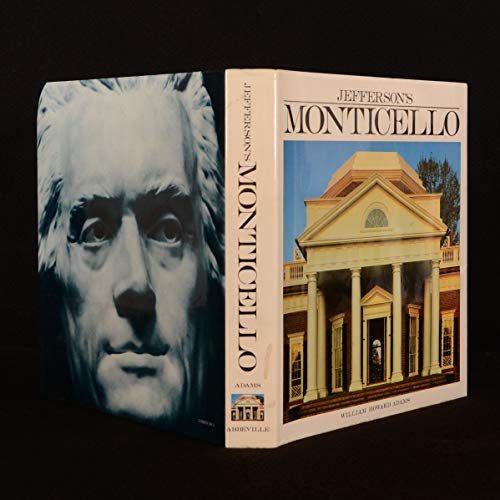
Jefferson's Monticello
Verlag: Abbeville Press, New York, 1983
Anbieter: Rooke Books PBFA, Bath, Vereinigtes Königreich
Verbandsmitglied: PBFA
Verkäuferbewertung 5 von 5 Sternen
Erstausgabe
EUR 54,50
EUR 22,33 Versand
Versand von Vereinigtes Königreich nach USAAnzahl: 1 verfügbar
In den WarenkorbCloth. Zustand: Fine. Zustand des Schutzumschlags: Near Fine. Langdon Clay (illustrator). First edition. A lovely first edition copy of this the major study of Thomas Jefferson's Monticello; copiously illustrated throughout and complete with the original unclipped dustwrapper. This work examines both the striking architecture of the building as well as the political and private life of its architect, inhabitant, and the third President of the United States Thomas Jefferson. Monticello was Jefferson's primary plantation, inherited from his father when was twenty six. Located on the outskirts of Charlottesville Virginia, the plantation was originally 5,000 acres and cultivated tobacco and mixed crops through the use of slaves. Indeed, Jefferson used a combination of free workers, indentured servants and enslaved laborers in constructing and developing the plantation and its outbuildings, including the lage main house in its notable neoclassical design. This work is copiously illustrated throughout, with both black and white and coloured illustrations. In the publisher's original cloth binding, with the original unclipped dustwrapper. Externally lovely, with slight fading to head and tail of spine. Dustwrapper lovely, with slight bumping to head and tail of spine, with small marks. Internally firmly bound. Pages very bright and clean throughout. Fine. book.
-
Jefferson's Monticello
Anbieter: Versandantiquariat Felix Mücke, Grasellenbach - Hammelbach, Deutschland
Verkäuferbewertung 5 von 5 Sternen
hardcover. Zustand: Gut. Profusely Illustrated (illustrator). Seiten; Artikel stammt aus Nichtraucherhaushalt! F25-23 Sprache: Deutsch Gewicht in Gramm: 4.
-
Message from the President of the United States, Transmitting the Information Required By a resolution of the House of Representatives of 2d instant, Respecting the Recovery of Debts, &c. in the Mexican States, from Persons Absconding from the United States: Also, Respecting the Boundary Line Between the United States and the Province of Texas
Verlag: Printed by Gales & Seaton, Washington, 1828
Anbieter: Dennis Holzman Antiques, Cohoes, NY, USA
Verkäuferbewertung 5 von 5 Sternen
Softcover. Zustand: Good. Zustand des Schutzumschlags: No Dust Jacket. Edition Unstated. Size: 8 3/4" x 5 3/4". Text body is clean, and free from previous owner annotation, underlining and highlighting. Disbound 4-page pamphlet regarding "Fugitives from United States to Mexico" put out by the U.S. Congress, signed in type by John Quincy Adams and Henry Clay. Minor staining and slight wrinkling near spine. Quantity Available: 1. Shipped Weight: 1 lb 0 oz. Category: Politics & Government; Pictures of this item not already displayed here available upon request. Inventory No: 016073.
-
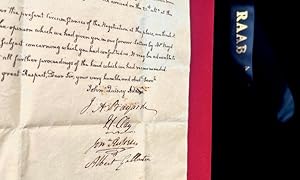
An Important Diplomatic Communique Written and Signed by John Quincy Adams, as well as Henry Clay, Albert Gallatin, Jonathan Russell, and James Bayard (The Age of the Great American Diplomat: All the American Ghent Treaty Negotiators, In a Confidential Diplomatic Communiqu? to the US Ambassador in Paris, Instruct the Ambassador That the Negotiations Progress and Efforts to Bring French Troops into the War Should be Suspended)
Anbieter: The Raab Collection, Ardmore, PA, USA
Verbandsmitglied: ABAA ILAB PADA
Verkäuferbewertung 4 von 5 Sternen
Signiert
On August 8, 1814, talks began at Ghent, Belgium, that would ultimately result in a treaty ending the War of 1812. The head of the American negotiating team was John Quincy Adams, the U.S.?s most experienced diplomat. The four men who served with him were carefully selected by President Madison to reflect the varieties of political sentiment in the United States. Foremost among them was Henry Clay, Speaker of the House of Representatives, and a noted War Hawk. Albert Gallatin had served as Secretary of the Treasury for both Thomas Jefferson and James Madison. James Bayard was a U.S. Senator belonging to the Federalist Party who had been an opponent of the war, and was one of the 13 Senators to vote against declaring it. However, once the war began he supported the war effort. Jonathan Russell was acting U.S. ambassador to Britain when war was declared. Sent to Ghent as a negotiator, he was also serving as ambassador to Sweden and Norway. He proved instrumental in achieving the final peace terms.William H. Crawford was U.S. ambassador to France during the negotiations, and was responsible for superintending the American consuls in Europe and keeping them informed of developments. More than that, he was an advisor to the President on the happenings on the Continent. As Ambassador to the Court of one of the two major adversaries in the conflicts in Europe, he was also actively involved in the Ghent negotiation process, advising the negotiators and responding to their confidential communiqu?s.? He would later serve as Secretary of War and Secretary of the Treasury under Presidents Madison and Monroe.At the start, the U.S. negotiators had their instructions: "the impressment of seamen and illegal blockades were the principal cause of the war," which would "cease as soon as these rights are respected." British cruisers must not be allowed to stop and search U.S. vessels, which practice "withholds the respect due our flag?It is expected that all American seamen who have been impressed will be discharged.? Another major object of the negotiations was to end the British blockades. ?We also need to be assured that no further interference with our commerce" will take place. Next the instructions took up the question of the British arming and supplying the Indians. The article in the Treaty of 1794 allowing "British traders from Canada and the North to trade with the Indian Tribes in the U.S., must not be renewed." Nor must Britain continue to use native forces against "our Western States and Territories.? Thus, the U.S. negotiators must insist on an end to impressment, and ship seizures, and a stop to aiding the Indians in the American west.In late June, Secretary of State James Monroe had written Crawford, ?If the war goes on, some skillful French officers?may be useful. This is merely a hint??On October 14, pursuant to Monroe?s instructions, Crawford wrote to the Commissioners in code of a secret offer that had been made by the French, to the effect that experienced French troops would come to the US side to fight against the English in America.? ?It is my duty to communicate to you certain propositions which have been made and which it is believed have been made with a sincere desire to fulfil them. It is also believed that engagements of the same kind may be offered to a considerable extent and that the demand for advances [of cash from the U.S.] may be greatly diminished.In the latter event I cannot see any objection which can be offered to it on our part. The difficulty of executing these engagements excludes the idea that they can be very extensive but the advantages which they offer even upon a contracted scale ought not to be overlooked.?? Faced with more stalling from the British, U.S. delegation sent George Boyd, a messenger and secretary, to meet with Crawford in Paris and give a short but optimistic response to the French offer.? John Quincy Adams describes this incident in some detail in his Memoirs.Meanwhile, the British w.