
Verwandte Artikel zu Fencer's Start-Up: A Beginner's Guide to Fencing:...
Fencer's Start-Up: A Beginner's Guide to Fencing: A Beginner's Guide to Traditional and Sport Fencing (Start-Up Sports, 8, Band 8) - Softcover
Buch 8 von 11: Start-Up Sports series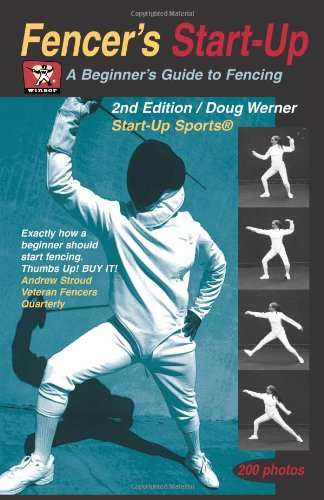
Inhaltsangabe
Debunking the sport's rumored reputation of being outdated, this newly revised edition explores the ancient yet powerfully rich and entertaining art of fencing. Covering Olympic-style foil, epee, and saber methods, this comprehensive guide also features tips on safety, etiquette, and technique. With a brief history on the sport and an updated resource section, this examination tackles the fencing experience with humor and style.
Die Inhaltsangabe kann sich auf eine andere Ausgabe dieses Titels beziehen.
Über die Autorin bzw. den Autor
Doug Werner is the author of the bestselling Start-Up Sports® series. He is also the author of Adopting in China, Fighting Fit, Fitness Training for Girls, Skateboarding: Book of Tricks, and Skateboarding: New Levels. He lives in San Diego.
Auszug. © Genehmigter Nachdruck. Alle Rechte vorbehalten.
Fencer's Start-Up
A Beginner's Guide to Traditional and Sport Fencing
By Doug WernerTracks Publishing
Copyright © 2010 Doug Werner
All rights reserved.
ISBN: 978-1-884654-77-0All rights reserved.
Contents
Introduction: You've Got to Be Kidding!,
Chapter One: Inna Nutshell: The Game,
Chapter Two: A Place to Fence,
Chapter Three: Basic Gear,
Chapter Four: Safety,
Chapter Five: About Manners,
Chapter Six: Fencer's Fandango!,
Chapter Seven: Fencing 101 : Foil,
Chapter Eight: Anything Goes! Epee,
Chapter Nine: Charge! Saber,
Chapter Ten: Funstuff: Sport Fencing,
Chapter Eleven: A Beginner's Journal,
Chapter Twelve: A Brief History,
Glossary,
Resources,
Bibliography,
Index,
Special Thanks,
CHAPTER 1
Inna Nutshell The Game
Two guys face off and try to touch the other with their weapons. The idea is to touch the other guy before he touches you. Best of five usually wins.
The playing field is a long and narrow strip, or piste (pist), 46 feet long and 6 feet, 7 inches wide. It's a forward and backward thing. You can't fence in circles or hang from the rafters like they do in the movies.
In top competition, electrical devices are used to keep track of touches and a judge or judges controls the action. Otherwise it's just the judges. When fencers fence for fun, they keep track of the hits, misses and fouls themselves as best they can.
It's a very fast game and hard to understand at first because the weapons move and hit so quickly.
In the beginning it's one darn drill or awkward foot and hand position after another. But the miracle of fencing instruction is that if you learn with conviction, it all just sort a sinks in (really!).
And then you're hooked.
CHAPTER 2A Place to Fence
Better Shop Around!
You'll need more than a mirror and a broomstick.
A good fencing school or club will provide the facility, the instruction, the gear and the camaraderie you'll need as a start-up fencer.
Get in touch with the United States Fencing Association (USFA) to find the fencing location nearest you (usfencing.org). If there's more than one option, take the time to visit and compare. Check it out before you commit!
It's very important to learn in a place that has the goods with a group you're comfortable with. It's wise to find a bunch that you really like because there's no getting around the need for camaraderie. Interplay is a very big deal in fencing. The instructor teaches you, of course, but the students always pair off and help to teach each other as well. That's how it's done unless you can afford private lessons. Even so, you'll want to fence with someone other than your teacher one of these days. Fencing is not a game of solitaire!
As you visit the clubs and schools, ask yourself these questions:
1. Is the place kept up?
A dirty joint is a turnoff and probably indicates something about the overall quality of the club.
2. Is the rental gear clean and in good repair?
You'll probably rent stuff at first so check out the gear students are wearing and using. Are the jackets grimy? Are the swords bent and beat? Do the masks smell like a stray dog?
3. Is everyone happy?
Does the instructor speak English?
Don't laugh. There are world-class fencers teaching out there who would make a New York cabbie wince.
4. Does every student stay the entire class?
Stay the course of a lesson (about an hour) and see how many "need to leave" before the buzzer. This is an excellent indicator of teaching quality.
5. Is everyone in the class occupied all the time?
If giant clumps of students are moping around doing nothing while the instructor is teaching one or two, there's a problem.
6. Is there a spirit of engagement?
This you can feel. There's a crisp feeling of endeavor in the air!
7. Do you want to be there?
The importance of finding a comfortable and friendly fencing home cannot be overstated. Fencers need other fencers. It always takes two, but to really improve you need the help of all the others, with their different styles and temperaments, in order to round out your fencing experience. You're just beginning, and there's a few months of basic training ahead of you. Choose your club or school carefully.
This is Very Important
The instructor will make it or break it for you.
Make sure you hit it off. Make sure you understand each other. Make sure it's someone you want to see at least twice a week. Make sure they know how to run a class. Make sure they know how to teach you!
Learning is a personal thing and fencing is a personal endeavor. Above all else, look for a teacher you trust and admire. A careless, insensitive instructor will make lessons seem like boot camp (and who needs that!). A good instructor who loves to teach makes learning fun and fulfilling (as it should be!).
I'd like to say that this book will teach you all you need to know about start-up fencing, but it won't. You'll need a good coach above all else!
CHAPTER 3Basic Gear
All You Need
You don't need much in the beginning. In fact, your club or school will probably have stuff you can use or rent. Just wear sweat pants, a T-shirt and white-soled sneakers to class.
Mask
Your mask should fit comfortably and snug. No rattling around. Make sure the bib underneath your chin covers your neck. If you're interested in fencing at all, you'll buy the mask before anything else. You'll soon grow disgusted with public masks.
Jacket
The jacket should also fit comfy and snug. No loose fabric. The sleeves should cover the wrists. Too long is OK. Just fold them back.
Glove
Your sword hand needs a glove. It should fit snug, fingers to the tips. The sleeve of your jacket must tuck inside the collar of your glove.
Weapon
As a rule beginners start with the foil and learn foil fencing. It's the most popular form of fencing for one thing and many believe it builds the best foundation for learning. There are two other ways to fence and each has its own special sword. They are epee and saber.
Make sure your foil isn't too beat up, bent along the blade or unraveled at the handle.
Hand Towel
I sweat up a storm in my mask. It's hot in there! I need to towel off frequently when I'm drilling or bouting and the sleeve of my jacket doesn't cut it.
There you go.
Anatomy of a Foil
The foil is light and flexible. It can have either a straight French grip handle or a fitted pistol grip handle. The French grip is longer (the length can be used to advantage during a thrust) and can be manipulated by fingers and thumb only. The pistol grip has more of a handle to it and is less likely to be wrenched from the hand.
The French grip has been the preferred handle for
All you need to bring to your first lesson are sweat pants, sneakers and a smile. Your club will have everything else.
Mask, jacket and glove. The mask sets firm on the noggin, the jacket is strapped, snug and buttoned down, and the glove fits snug over hand and sleeve.
Of all your protective gear, the mask is by far the most important. Only your weapon will mean as much to you. With a mask, you'll probably never get hurt. Without it, you probably...
„Über diesen Titel“ kann sich auf eine andere Ausgabe dieses Titels beziehen.
Suchergebnisse für Fencer's Start-Up: A Beginner's Guide to Fencing:...

Beispielbild für diese ISBN
Fencer's Start-Up: A Beginner's Guide to Fencing
Anbieter: ThriftBooks-Atlanta, AUSTELL, GA, USA
Verkäuferbewertung 5 von 5 Sternen

Paperback. Zustand: Fair. No Jacket. Former library book; Readable copy. Pages may have considerable notes/highlighting. ~ ThriftBooks: Read More, Spend Less. Artikel-Nr. G1884654770I5N10
Gebraucht kaufen
EUR 8,04
Versand gratis
Versand innerhalb von USA
Versand innerhalb von USA
Anzahl: 1 verfügbar
Beispielbild für diese ISBN
Fencer's Start-Up: A Beginner's Guide to Fencing (Start-Up Sports): 08 (Start-Up Sports series)
Anbieter: WorldofBooks, Goring-By-Sea, WS, Vereinigtes Königreich
Verkäuferbewertung 5 von 5 Sternen
Paperback. Zustand: Very Good. The book has been read, but is in excellent condition. Pages are intact and not marred by notes or highlighting. The spine remains undamaged. Artikel-Nr. GOR005565509
Gebraucht kaufen
EUR 5,54
EUR 6,60 Versand
Versand von Vereinigtes Königreich nach USA
Versand von Vereinigtes Königreich nach USA
Anzahl: 3 verfügbar
Foto des Verkäufers
Fencer's Start-Up A Beginner's Guide to Fencing
Anbieter: True Oak Books, Highland, NY, USA
Verkäuferbewertung 5 von 5 Sternen
Paperback. Zustand: Good. Second Edition; First Printing. Start-Up Sports Series; 5.5 X 0.5 X 8.5 inches; 192 pages; Sticker on back cover. Scuff marks (small) to exterior edge of pages. Edges of pages curled from use. Good overall condition otherwise. No other noteworthy defects. No writing. ; - We offer free returns for any reason and respond promptly to all inquiries. Your order will be packaged with care and ship on the same or next business day. Buy with confidence. Artikel-Nr. TOB218-33629-A-0.84
Gebraucht kaufen
EUR 12,81
Versand gratis
Versand innerhalb von USA
Versand innerhalb von USA
Anzahl: 1 verfügbar
Foto des Verkäufers
Fencer's Start-Up: A Beginner's Guide to Fencing (Start-Up Sports): 08 (Start-Up Sports series)
Anbieter: WeBuyBooks, Rossendale, LANCS, Vereinigtes Königreich
Verkäuferbewertung 5 von 5 Sternen
paperback. Zustand: Very Good. Most items will be dispatched the same or the next working day. A copy that has been read, but is in excellent condition. Pages are intact and not marred by notes or highlighting. The spine remains undamaged. Artikel-Nr. rev5725041915
Gebraucht kaufen
EUR 2,39
EUR 11,84 Versand
Versand von Vereinigtes Königreich nach USA
Versand von Vereinigtes Königreich nach USA
Anzahl: 1 verfügbar
Foto des Verkäufers
Fencer's Start-Up: A Beginner's Guide to Fencing (Start-Up Sports): 08 (Start-Up Sports series)
Anbieter: WeBuyBooks, Rossendale, LANCS, Vereinigtes Königreich
Verkäuferbewertung 5 von 5 Sternen
paperback. Zustand: Good. Most items will be dispatched the same or the next working day. A copy that has been read but remains in clean condition. All of the pages are intact and the cover is intact and the spine may show signs of wear. The book may have minor markings which are not specifically mentioned. Ex library copy with usual stamps & stickers. Artikel-Nr. rev6352402558
Gebraucht kaufen
EUR 2,39
EUR 11,84 Versand
Versand von Vereinigtes Königreich nach USA
Versand von Vereinigtes Königreich nach USA
Anzahl: 1 verfügbar
Beispielbild für diese ISBN
Fencer's Start-Up: A Beginner's Guide to Traditional and Sport Fencing
Anbieter: Revaluation Books, Exeter, Vereinigtes Königreich
Verkäuferbewertung 5 von 5 Sternen
Paperback. Zustand: Brand New. 2nd edition. 192 pages. 8.30x5.40x0.50 inches. In Stock. Artikel-Nr. x-1884654770
Neu kaufen
EUR 15,24
EUR 11,78 Versand
Versand von Vereinigtes Königreich nach USA
Versand von Vereinigtes Königreich nach USA
Anzahl: 2 verfügbar
Beispielbild für diese ISBN
Fencer's Start-Up
Anbieter: Kennys Bookstore, Olney, MD, USA
Verkäuferbewertung 5 von 5 Sternen
Zustand: New. 2010. Second Edition, Second edition. Paperback. Num Pages: 192 pages, 200 b/w photos. BIC Classification: WSTF. Category: (G) General (US: Trade). Dimension: 216 x 140 x 12. Weight in Grams: 282. . . . . . Books ship from the US and Ireland. Artikel-Nr. V9781884654770
Neu kaufen
EUR 19,93
EUR 9,36 Versand
Versand innerhalb von USA
Versand innerhalb von USA
Anzahl: Mehr als 20 verfügbar
Beispielbild für diese ISBN
Fencer's Start-up
Anbieter: Mooney's bookstore, Den Helder, Niederlande
Verkäuferbewertung 4 von 5 Sternen

Zustand: Very Good. Artikel-Nr. 980D0237DCD2BF2
Gebraucht kaufen
EUR 32,02
EUR 14,95 Versand
Versand von Niederlande nach USA
Versand von Niederlande nach USA
Anzahl: 1 verfügbar
Foto des Verkäufers
Fencer\ s Start-Up: A Beginner\ s Guide to Fencing
Anbieter: moluna, Greven, Deutschland
Verkäuferbewertung 5 von 5 Sternen
Kartoniert / Broschiert. Zustand: New. Über den AutorDoug Werner is the author of the bestselling Start-Up Sports(R) series. He is also the author of Adopting in China, Fighting Fit, Fitness Training for Girls, Skateboarding: Book of Tricks. Artikel-Nr. 905718559
Neu kaufen
EUR 14,97
EUR 48,99 Versand
Versand von Deutschland nach USA
Versand von Deutschland nach USA
Anzahl: 5 verfügbar