
Verwandte Artikel zu Boxing's Ten Commandments: Essential Training for...
Inhaltsangabe
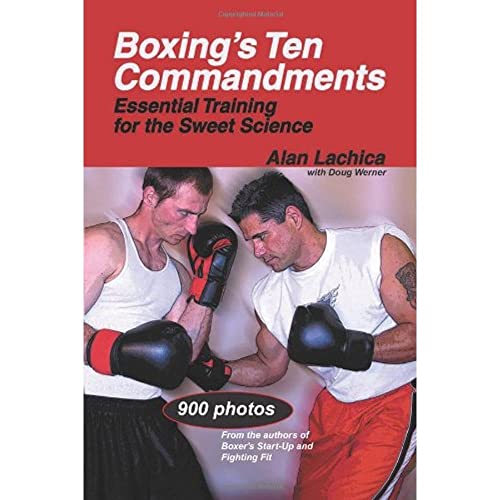
This boxing handbook provides up-to-date, in-depth coaching for serious contenders. Weaving fundamental skills into a progression of drills that hone technique in increasingly complex, demanding, and realistic fighting situations, the handbook aids fighters in developing the reflexes of a complete boxer and teaches the move from a process-and-react mentality to one of seeing-and-reacting. Hundreds of sequential images illustrate vital steps in the progression&;from proper stance, effective footwork, and range to defense and counters, the importance of angles, and creating winning strategies.
Die Inhaltsangabe kann sich auf eine andere Ausgabe dieses Titels beziehen.
Über die Autorin bzw. den Autor
Alan Lachica is the coauthor of Boxer&;s Start-Up, Fighting Fit, and Fitness Training for Girls. He is a certified USA amateur-boxing coach and the owner of Bulldog Boxing Gyms. His boxing exhibitions have been featured on local and national television, including the CBS News' Eye on America. He lives in Inman, South Carolina. Doug Werner has written more than a dozen sport instructional guides, including the Start-Up Sports series and is the coauthor of Boxer&;s Start-Up and Fighting Fit. He lives in Chula Vista, California.
Auszug. © Genehmigter Nachdruck. Alle Rechte vorbehalten.
Boxing's Ten Commandments
Essential Training for the Sweet Science
By Alan Lachica, Doug WernerTracks Publishing
Copyright © 2007 Doug Werner
All rights reserved.
ISBN: 978-1-884654-28-2All rights reserved.
Contents
Introduction,
1 Stance and rhythm Fight from the boxer's stance with rhythm,
2 Footwork Learn to move skillfully in all directions,
3 Range Know and master your range,
4 Laws of punching Obey the laws of punching and punch power,
5 The jab Make the jab your best punch,
6 Punch mechanics for fundamental punches Master the mechanics of the major punches,
7 Defense and counters Master the defenses against each punch and know how to counter every attack,
8 Angles Angle in and out on different lines,
9 Putting it all together Blend and master offensive and defensive skills through focused sparring drills,
10 Making a plan Follow a plan every round — be it workout, sparring or competition,
Resources,
Index,
CHAPTER 1
1 Stance and rhythm
First Commandment: Fight from the boxer's stance with rhythm
A classic on guard stance is the foundation upon which everything is built.
Even the great Roy Jones Jr. learned how to keep his hands up and elbows in before gravitating to his famous left arm down style. A classic on guard stance gives you the ability to punch and defend at the same time. And in a nutshell, that's boxing! — being able to throw and defend simultaneously.
Your stance should allow for a sideways facing upper body (shows less target with more rotational power) and a slightly open lower body with your front toes in line with your back heel. This allows for a quicker and longer right hand and better balance.
The spine should be angled a little forward. This activates the core muscles of your trunk. This is the ideal ready and athletic stance to be in. Look at top tennis, football and baseball players at the moment before they react. You will see that they assume this posture. Boxers should do the same!
It goes like this:
Align the toe of your lead foot with the heel of your back foot. Angle your spine slightly forward. Position your head behind your lead foot. Bring your hands up with the lead hand a bit in front of your lead shoulder. The back hand should be slightly in front of, or next to, the chin. Place your elbows in front of your body pointing down with forearms parallel. Your chin is down as if you're holding a tennis ball between it and your chest.
A good way to build your stance is in front of a mirror. Begin with your feet together, then step with your lead foot slightly more than a regular step toward the mirror. This should pull your back heel off the ground. Next, turn your shoulders so that they're square to the side wall. Turn your head so that you're looking at the mirror. Bring your arms around until they rest in front of you. Note that your shoulders remain turned. Slightly tilt your spine toward the mirror. Keep your head behind your front foot. Your weight should be equally distributed over each foot.
There's some disagreement regarding fist clinching. Some coaches say a hand should be loose and made into a fist only before impact. Others say hands should stay fisted from bell to bell. I believe they should be free. I liken it to a cat ready to pounce. Its joints are free but muscles are ready to explode.
There's also some debate on where to stare. I like looking at the upper chest area. This allows you to look at your opponent from head to feet.
Long and short rhythm
Rhythm should be addressed along with stance. Physics 101 states that a body in motion tends to stay in motion and a body at rest tends to stay at rest. That's why a shortstop in baseball moves his feet before the batter starts his swing. He's ready and doesn't have to create start-up strength. Rhythm makes it much easier to react offensively or defensively. You give your opponent a moving target difficult to hit. He has to time you and get in your rhythm. In other words, he has to think about hitting you.
Although there are several types, long and short rhythm are the most popular. Most people think of Mohammed Ali when talking about long rhythm. Short rhythm is associated with Joe Frazier. Basically a long rhythm is moving in, out and side to side with total body movement. Short rhythm is more side to side (to avoid straight punches) with a little in and out and a lot of head movement. Short rhythm is brisker than long rhythm. That's because you're usually moving forward, spending more time in the boxing zone where you can get hit.
CHAPTER 2Footwork
Second Commandment: Learn to move skillfully in all directions
A boxer must learn to move forward, back, left and right effortlessly.
A boxer's most overlooked asset is his feet. They can keep you out of a bad situation. They keep you balanced and ready to react offensively or defensively. Good footwork is essential in ring generalship. Learning how to fight moving in all four directions gives you tremendous advantage over an opponent who cannot.
Footwork should be one of the first elements in your workout. It's fundamental to all your offensive and defense maneuvers. Simply put, the foot closest to the direction you are going moves first. Stay in your stance while moving to maintain balance and to stay protected. Keep your feet close to the ground. Small steps are usually sufficient. Always push off and slide the second foot. This keeps you from over-stepping. Overstepping will throw you off balance and slows reaction time. If you take big steps and your opponent does something unexpected, you have to get that foot down before you can react. By sliding the second foot, you can react offensively or defensively instantly.
Keeping your movement efficient keeps you moving quickly and powerfully. Remember, maintaining a slightly wider than shoulder-width stance promotes smaller steps. Smaller steps promote quicker reactions.
CHAPTER 3Range
Third Commandment: Know and master your range
A boxer's range should be 2-4 inches outside his opponent's reach.
The better you become at relaxing, the closer you should be — but still just out of his reach. This helps in several ways. Your opponent must step to hit you. This gives you an extra fraction of a second to react either offensively or defensively. And you will not "freak out" every time your opponent punches at you because you know his punch will fall short. Lastly, it keeps the pressure on him.
After all, it's the perception of being hit that tires most boxers. Every now and then slip a punch. This closes the distance and gives you a good chance at countering him with a surprise attack. Remember, if he's out of range to hit you, chances are you're out of range to hit him.
It's common for novice boxers to stand either too far from or too close to their opponent. Standing too far away allows your opponent to rest and limits what you can do offensively. Standing too close doesn't give you enough time to react and plan an intelligent offensive attack. It's more of the rock 'em sock 'em, robot approach.
Even if you're giving up reach in order to infight, standing at the end of your opponent's punch (impact position) isn't the way to do it. Taking two to give one isn't a fair trade unless you're a tremendous power puncher and your opponent is not.
Mike Tyson won most of his fights because of his...
„Über diesen Titel“ kann sich auf eine andere Ausgabe dieses Titels beziehen.
Suchergebnisse für Boxing's Ten Commandments: Essential Training for...

Beispielbild für diese ISBN
Boxing's Ten Commandments : Essential Training for the Sweet Science
Anbieter: Better World Books, Mishawaka, IN, USA
Verkäuferbewertung 5 von 5 Sternen

Zustand: Very Good. Former library copy. Pages intact with possible writing/highlighting. Binding strong with minor wear. Dust jackets/supplements may not be included. Includes library markings. Stock photo provided. Product includes identifying sticker. Better World Books: Buy Books. Do Good. Artikel-Nr. 14076572-20
Gebraucht kaufen
EUR 6,09
Versand gratis
Versand innerhalb von USA
Versand innerhalb von USA
Anzahl: 1 verfügbar
Beispielbild für diese ISBN
Boxing's Ten Commandments : Essential Training for the Sweet Science
Anbieter: Better World Books, Mishawaka, IN, USA
Verkäuferbewertung 5 von 5 Sternen
Zustand: Good. Pages intact with minimal writing/highlighting. The binding may be loose and creased. Dust jackets/supplements are not included. Stock photo provided. Product includes identifying sticker. Better World Books: Buy Books. Do Good. Artikel-Nr. 7905082-6
Gebraucht kaufen
EUR 6,09
Versand gratis
Versand innerhalb von USA
Versand innerhalb von USA
Anzahl: 1 verfügbar
Beispielbild für diese ISBN
Boxing's Ten Commandments : Essential Training for the Sweet Science
Anbieter: Better World Books, Mishawaka, IN, USA
Verkäuferbewertung 5 von 5 Sternen
Zustand: Very Good. Pages intact with possible writing/highlighting. Binding strong with minor wear. Dust jackets/supplements may not be included. Stock photo provided. Product includes identifying sticker. Better World Books: Buy Books. Do Good. Artikel-Nr. 12355158-75
Gebraucht kaufen
EUR 6,09
Versand gratis
Versand innerhalb von USA
Versand innerhalb von USA
Anzahl: 1 verfügbar
Beispielbild für diese ISBN
Boxing's Ten Commandments: Essential Training for the Sweet Science
Anbieter: Wonder Book, Frederick, MD, USA
Verkäuferbewertung 5 von 5 Sternen
Zustand: Very Good. Very Good condition. A copy that may have a few cosmetic defects. May also contain light spine creasing or a few markings such as an owner's name, short gifter's inscription or light stamp. Artikel-Nr. V01C-04706
Gebraucht kaufen
EUR 6,33
Versand gratis
Versand innerhalb von USA
Versand innerhalb von USA
Anzahl: 1 verfügbar
Beispielbild für diese ISBN
Boxing's Ten Commandments: Essential Training for the Sweet Science
Anbieter: ThriftBooks-Atlanta, AUSTELL, GA, USA
Verkäuferbewertung 5 von 5 Sternen
Paperback. Zustand: As New. No Jacket. Pages are clean and are not marred by notes or folds of any kind. ~ ThriftBooks: Read More, Spend Less. Artikel-Nr. G1884654282I2N00
Gebraucht kaufen
EUR 6,50
Versand gratis
Versand innerhalb von USA
Versand innerhalb von USA
Anzahl: 1 verfügbar
Beispielbild für diese ISBN
Boxing's Ten Commandments: Essential Training for the Sweet Science
Anbieter: ThriftBooks-Reno, Reno, NV, USA
Verkäuferbewertung 5 von 5 Sternen
Paperback. Zustand: Very Good. No Jacket. May have limited writing in cover pages. Pages are unmarked. ~ ThriftBooks: Read More, Spend Less. Artikel-Nr. G1884654282I4N00
Gebraucht kaufen
EUR 6,50
Versand gratis
Versand innerhalb von USA
Versand innerhalb von USA
Anzahl: 1 verfügbar
Beispielbild für diese ISBN
Boxing's Ten Commandments: Essential Training for the Sweet Science
Anbieter: ThriftBooks-Atlanta, AUSTELL, GA, USA
Verkäuferbewertung 5 von 5 Sternen
Paperback. Zustand: Good. No Jacket. Pages can have notes/highlighting. Spine may show signs of wear. ~ ThriftBooks: Read More, Spend Less. Artikel-Nr. G1884654282I3N00
Gebraucht kaufen
EUR 6,50
Versand gratis
Versand innerhalb von USA
Versand innerhalb von USA
Anzahl: 1 verfügbar
Beispielbild für diese ISBN
Boxing's Ten Commandments: Essential Training for the Sweet Science
Anbieter: ThriftBooks-Atlanta, AUSTELL, GA, USA
Verkäuferbewertung 5 von 5 Sternen
Paperback. Zustand: Very Good. No Jacket. May have limited writing in cover pages. Pages are unmarked. ~ ThriftBooks: Read More, Spend Less. Artikel-Nr. G1884654282I4N00
Gebraucht kaufen
EUR 6,50
Versand gratis
Versand innerhalb von USA
Versand innerhalb von USA
Anzahl: 1 verfügbar
Beispielbild für diese ISBN
Boxing's Ten Commandments: Essential Training for the Sweet Science
Anbieter: ThriftBooks-Dallas, Dallas, TX, USA
Verkäuferbewertung 5 von 5 Sternen
Paperback. Zustand: Very Good. No Jacket. May have limited writing in cover pages. Pages are unmarked. ~ ThriftBooks: Read More, Spend Less. Artikel-Nr. G1884654282I4N00
Gebraucht kaufen
EUR 6,50
Versand gratis
Versand innerhalb von USA
Versand innerhalb von USA
Anzahl: 1 verfügbar
Beispielbild für diese ISBN
Boxing's Ten Commandments
Anbieter: WorldofBooks, Goring-By-Sea, WS, Vereinigtes Königreich
Verkäuferbewertung 5 von 5 Sternen
Paperback. Zustand: Very Good. The book has been read, but is in excellent condition. Pages are intact and not marred by notes or highlighting. The spine remains undamaged. Artikel-Nr. GOR002718752
Gebraucht kaufen
EUR 3,35
EUR 6,51 Versand
Versand von Vereinigtes Königreich nach USA
Versand von Vereinigtes Königreich nach USA
Anzahl: 2 verfügbar