
Verwandte Artikel zu Caffeine: Chemistry, Analysis, Function and Effects...
Caffeine: Chemistry, Analysis, Function and Effects (Food and Nutritional Components in Focus) - Hardcover
Inhaltsangabe
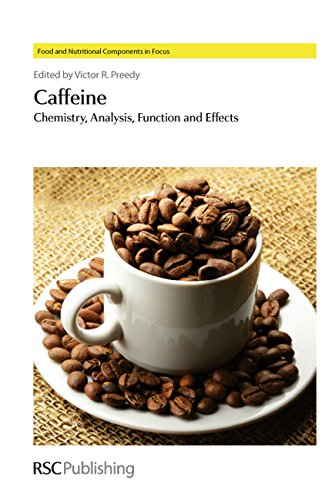
Caffeine is known to stimulate the central nervous system but what other functions does it have? This book covers the latest scientific knowledge in a uniquely structured format and is specifically designed to link chemistry with health and nutrition to provide a broad, appealing book. Coverage begins with caffeine in relation to nutrition focussing on beverages, then concentrates on chemistry, crystal structures of complexes in caffeine and biochemistry. In the analysis chapters, assays are conducted by LC-MS, capillary electrophoresis, automated flow methods and immunoassay methods. The effects of caffeine on the brain, cognitive performance, sleep, oxidative damage, exercise and pulmonary function are all considered in the closing section of the book. Delivering high quality information, this book will be of benefit to anyone researching this area of health and nutritional science. It will bridge scientific disciplines so that the information is more meaningful and applicable to health in general. Part of a series of books, it is specifically designed for chemists, analytical scientists, forensic scientists, food scientists, dieticians and health care workers, nutritionists, toxicologists and research academics. Due to its interdisciplinary nature it could also be suitable for lecturers and teachers in food and nutritional sciences and as a college or university library reference guide.
Die Inhaltsangabe kann sich auf eine andere Ausgabe dieses Titels beziehen.
Über die Autorinnen und Autoren
Victor Preedy is currently Professor of Nutritional Biochemistry and Director of Genomics Centre, King's College London and Professor of Clinical Biochemistry at King's College Hospital London. After graduating with a BSc degree in Physiology with Pharmacology and Biology, Professor Preedy carried out a period of research on protein metabolism in the Department of Nutrition at the London School of Hygiene and Tropical Medicine. After the successful award of his PhD he studied aspects of cardiac protein metabolism at the National Heart Hospital. After 4 years, he then moved to the MRC Clinical Research Centre in Harrow, which was followed by his appointment as a lecturer to Kings College in 1988. He was promoted to Reader in 1995 and Professor in 2003. Professor Preedy has published over 550 articles, which includes over 160 peer-reviewed manuscripts based on original research and 90 reviews as well as 35 books.
Victor Preedy is currently Professor of Nutritional Biochemistry and Director of Genomics Centre, King's College London and Professor of Clinical Biochemistry at King's College Hospital London. After graduating with a BSc degree in Physiology with Pharmacology and Biology, Professor Preedy carried out a period of research on protein metabolism in the Department of Nutrition at the London School of Hygiene and Tropical Medicine. After the successful award of his PhD he studied aspects of cardiac protein metabolism at the National Heart Hospital. After 4 years, he then moved to the MRC Clinical Research Centre in Harrow, which was followed by his appointment as a lecturer to Kings College in 1988. He was promoted to Reader in 1995 and Professor in 2003. Professor Preedy has published over 550 articles, which includes over 160 peer-reviewed manuscripts based on original research and 90 reviews as well as 35 books.
Von der hinteren Coverseite
Caffeine is known to stimulate the central nervous system but what other functions does it have? This book covers the latest scientific knowledge in a uniquely structured format and is specifically designed to link chemistry with health and nutrition to provide a broad, appealing book. Coverage begins with caffeine in relation to nutrition focussing on beverages, then concentrates on chemistry, crystal structures of complexes in caffeine and biochemistry. In the analysis chapters, assays are conducted by LC-MS, capillary electrophoresis, automated flow methods and immunoassay methods. The effects of caffeine on the brain, cognitive performance, sleep, oxidative damage, exercise and pulmonary function are all considered in the closing section of the book. Delivering high quality information, this book will be of benefit to anyone researching this area of health and nutritional science. It will bridge scientific disciplines so that the information is more meaningful and applicable to health in general. Part of a series of books, it is specifically designed for chemists, analytical scientists, forensic scientists, food scientists, dieticians and health care workers, nutritionists, toxicologists and research academics. Due to its interdisciplinary nature it could also be suitable for lecturers and teachers in food and nutritional sciences and as a college or university library reference guide.
Auszug. © Genehmigter Nachdruck. Alle Rechte vorbehalten.
Caffeine
Chemistry, Analysis, Function and Effects
By Victor R. PreedyThe Royal Society of Chemistry
Copyright © 2012 The Royal Society of Chemistry
All rights reserved.
ISBN: 978-1-84973-367-0All rights reserved.
Contents
Caffeine in Context,
Chapter 1 Caffeine and Nutrition: an Overview Rubem Carlos Araujo Guedes, Márlison José Lima de Aguiar and Cilene Rejane Ramos Alves-de-Aguiar, 3,
Chapter 2 Caffeine as an Ingredient in Sugar Sweetened Beverages Lynn J. Riddell, Dhoungsiri Sayompark, Penny Oliver and Russell S. J. Keast, 22,
The Chemistry of Caffeine,
Chapter 3 The Chemistry of Caffeine José João Carvalho, Franziska Emmerling and Rudolf J. Schneider, 41,
Chapter 4 Chemistry and Crystal Structures of Complexes of Caffeine and Tea Catechins Takashi Ishizu and Hiroyuki Tsutsumi, 53,
Chapter 5 Synthesis of Labeled Caffeine Frédéric Balssa, 72,
Chapter 6 Diffusion of Caffeine in Different Aqueous Media at Physiological Temperature Ana C. F. Ribeiro, Victor M. M. Lobo, Cecília I. A. V. Santos and Miguel A. Esteso, 89,
Analysis,
Chapter 7 Analysis of Caffeine by Liquid Chromatography-Mass Spectrometry Daniel Perrone and Adriana Farah, 103,
Chapter 8 Simultaneous Determination of Caffeine and Phenolic Compounds in Tea and Coffee Carolyne B. Faria, Juliana M. Prado, Mauricio A. Rostagno, Flavio L. Schmidt, M. Angela A. Meireles, 130,
Chapter 9 Analysis of Caffeine in Dietary Products by Multiple Injection Capillary Electrophoresis Ahmad Amini, 154,
Chapter 10 Determination of Caffeine in Various Coffee Types by Capillary Electrophoresis Through the Anionic Complex with 3,4-Dimethoxycinnamate Thiago Nogueira and Claudimir Lucio do Lago, 179,
Chapter 11 Analysis of Caffeine and Related Compounds by Automated Flow Methods Paraskevas D. Tzanavaras and Constantinos K. Zacharis, 193,
Chapter 12 Analysis of Caffeine by Immunoassay José João Carvalho and Rudolf J. Schneider, 213,
Chapter 13 Quantification of Self-Reported Caffeine Use Merideth Addicott, 230,
Function and Effects,
Chapter 14 Caffeine and the Brain: An Overview Elio Acquas, Maria Antonietta De Luca, Sandro Fenu, Rosanna Longoni and Liliana Spina, 247,
Chapter 15 Caffeine and Cognitive Performance Ana Adan and Josep Maria Serra-Grabulosa, 268,
Chapter 16 Neuroprotective Effects of Caffeine in Sleep Deprivation Karim A. Alkadhi, Munder A. Zagaar, Ibrahim A. Alhaider and Karem H. Alzoubi, 287,
Chapter 17 Caffeine and Exercise Performance Todd A. Astorino and Ailish C. White, 314,
Chapter 18 The Effects of Caffeine on Ventilation and Pulmonary Function During Exercise Robert F. Chapman, Daniel P. Wilhite and Timothy D. Mickleborough, 337,
Chapter 19 Dietary Caffeine and Young Children: Implications for Health William J. Warzak, Shelby Evans, Luis F. Morales Knight, Laura Needelman and Rebecca K. Dogan, 353,
Chapter 20 Caffeine and Type 2 Diabetes Atsushi Goto and Simin Liu, 369,
Chapter 21 Caffeine and Apoptosis Weinong Han, Yu-Ying He, 382,
Subject Index, 400,
CHAPTER 1
Caffeine and Nutrition: an Overview
RUBEM CARLOS ARAUJO GUEDES, MARLISON JOSE LIMA DE AGUIAR AND CILENE REJANE RAMOS ALVES-DE-AGUIAR
1.1 Introduction: Caffeine Consumption and its Effects on the Organism
Caffeine is extracted on a large scale from the plant Coffea arabica (Figure 1.1 (A)), which originated in Ethiopia and spread to other regions of the world between the twelfth and fifteenth centuries A.D. The daily consumption of caffeine (1,3,7-trimethylxanthine; Figure 1.1 (B)) is common in modern society. In most parts of the world, people largely consume caffeine regardless of age and economic status. The chemical is present in our diet in the form of beverages like coffee (Figure 1.1 (C)), tea, soft drinks and energy drinks, chocolate, and other foods, and also in medicines (Table 1). All of these products are characterized by containing substances from the group of the xanthines (caffeine, theophylline, and theobromine), the most potent of which is caffeine. This substance can be ingested through infusions, medications, or caffeine-laced soft drinks (McKim, 1996) and acts on brain function to produce both positive and negative effects.
The frequent consumption of drugs like caffeine, as well as malnutrition induced by the dietary deficiency of protein, can disrupt the behavioral and electrophysiological organization of brain function. This disruption is especially severe if occurring early in life, during the period of intense brain development (Guedes, 2011). The capacity that normal organisms have of focusing attention to optimally perform a task, as well as the production of normal brain electrical activity, are basic neural functions that caffeine and the nutritional status of the organism can influence. The relevance of this theme and the lack of studies on the caffeine–nutrition interface highlight the need for systematic investigation with clinical and experimental approaches. In this chapter, we present experimental results on the behavioral phenomenon designated as "latent inhibition (LI) and on the brain electrophysiological phenomenon known as "cortical spreading depression" (CSD). We demonstrate how LI and CSD can be used in studies, comparing their features in malnourished and well-nourished rats.
Although the relationships between caffeine and normal and abnormal function of the brain are detailed in specific sections of this book, we briefly comment here on the two experimental models mentioned above that we have used to explore the theme "caffeine and nutrition." With the use of the LI behavioral model, it is possible to study the effects of behaviorally active substances like caffeine and to observe disturbances in behavioral parameters (Bakshi et al, 1995; Aguiar et al, 2011). Recent studies have targeted verifying the effect of caffeine on attention deficit and hyperactivity disorder and suggest that caffeine acts on cognitive performance by improving the state of concentration in novel environments (Caballero et al, 2011; Mahoney et al, 2011).
Caffeine at moderate doses seems to produce several behavioral effects in humans. Among these, we can highlight (i) increased alertness and reduced fatigue, especially under conditions of little stimulation, such as working at night, and (ii) improved performance on tasks that involve vigilance, or long-lasting responses when the alertness has been reduced (Smith, 2002). Furthermore, caffeine enables users to have control over its consumption; i.e., users seem to use caffeine when they need to benefit from its positive effects on, for instance, mental performance and fatigue (Dagan and Doljansky, 2006; Giesbrecht et al, 2010).
The excessive consumption of caffeine can produce negative effects in the organism. Under these conditions, attenuation of the effect of sedatives, increased anxiety, and worsening of the symptoms of anxiety disorders have been reported (Pan and Chen, 2007). The action of caffeine on cognition and memory still requires further investigation; it seems to depend on the type of task used. In activities involving operational skills (operating machinery, car driving), caffeine intake appears to be beneficial. In the execution of complex cognitive tasks (involving intelligence, memory, and learning), data are not yet clear. Studies reveal that the time of day in which these tasks are carried out seems to strongly influence mental...
„Über diesen Titel“ kann sich auf eine andere Ausgabe dieses Titels beziehen.
Suchergebnisse für Caffeine: Chemistry, Analysis, Function and Effects...

Beispielbild für diese ISBN
Caffeine
Anbieter: Majestic Books, Hounslow, Vereinigtes Königreich
Verkäuferbewertung 4 von 5 Sternen

Zustand: New. pp. 442. Artikel-Nr. 53994285
Neu kaufen
EUR 39,60
EUR 7,58 Versand
Versand von Vereinigtes Königreich nach USA
Versand von Vereinigtes Königreich nach USA
Anzahl: 4 verfügbar

Internationale Ausgabe
CAFFEINE CHEMISTRY ANALYSIS FUNCTION AND EFFECTS (HB 2012)
Internationale AusgabeAnbieter: Romtrade Corp., STERLING HEIGHTS, MI, USA
Verkäuferbewertung 5 von 5 Sternen

Zustand: New. Brand New. Soft Cover International Edition. Different ISBN and Cover Image. Priced lower than the standard editions which is usually intended to make them more affordable for students abroad. The core content of the book is generally the same as the standard edition. The country selling restrictions may be printed on the book but is no problem for the self-use. This Item maybe shipped from US or any other country as we have multiple locations worldwide. Artikel-Nr. ABBB-73067
Beispielbild für diese ISBN
Caffeine: Chemistry, Analysis, Function And Effects
Anbieter: Romtrade Corp., STERLING HEIGHTS, MI, USA
Verkäuferbewertung 5 von 5 Sternen
Zustand: New. This is a Brand-new US Edition. This Item may be shipped from US or any other country as we have multiple locations worldwide. Artikel-Nr. ABBB-203716
Beispielbild für diese ISBN
Caffeine: Chemistry, Analysis, Function and Effects
Anbieter: Romtrade Corp., STERLING HEIGHTS, MI, USA
Verkäuferbewertung 5 von 5 Sternen
Zustand: New. This is a Brand-new US Edition. This Item may be shipped from US or any other country as we have multiple locations worldwide. Artikel-Nr. ABBB-137080
Beispielbild für diese ISBN
Caffeine
Anbieter: PBShop.store US, Wood Dale, IL, USA
Verkäuferbewertung 5 von 5 Sternen
HRD. Zustand: New. New Book. Shipped from UK. Established seller since 2000. Artikel-Nr. CW-9781849733670
Beispielbild für diese ISBN
Caffeine: Chemistry, Analysis, Function and Effects (Food and Nutritional Components in Focus, Volume 2)
Anbieter: Ria Christie Collections, Uxbridge, Vereinigtes Königreich
Verkäuferbewertung 5 von 5 Sternen
Zustand: New. In English. Artikel-Nr. ria9781849733670_new
Neu kaufen
EUR 218,82
EUR 13,17 Versand
Versand von Vereinigtes Königreich nach USA
Versand von Vereinigtes Königreich nach USA
Anzahl: 6 verfügbar
Foto des Verkäufers
Caffeine
Anbieter: moluna, Greven, Deutschland
Verkäuferbewertung 5 von 5 Sternen
Gebunden. Zustand: New. Caffeine covers the latest knowledge in a uniquely structured format and is specifically designed to link chemistry with health and nutrition to provide a broad, appealing book.Über den AutorrnrnVictor Preedy is currently Professor of N. Artikel-Nr. 597106770
Neu kaufen
EUR 211,88
EUR 48,99 Versand
Versand von Deutschland nach USA
Versand von Deutschland nach USA
Anzahl: 5 verfügbar
Beispielbild für diese ISBN
Caffeine
Anbieter: PBShop.store UK, Fairford, GLOS, Vereinigtes Königreich
Verkäuferbewertung 5 von 5 Sternen
HRD. Zustand: New. New Book. Shipped from UK. Established seller since 2000. Artikel-Nr. CW-9781849733670
Neu kaufen
EUR 255,60
EUR 6,85 Versand
Versand von Vereinigtes Königreich nach USA
Versand von Vereinigtes Königreich nach USA
Anzahl: 3 verfügbar
Beispielbild für diese ISBN
Caffeine: Chemistry, Analysis, Function and Effects
Anbieter: Revaluation Books, Exeter, Vereinigtes Königreich
Verkäuferbewertung 5 von 5 Sternen
Hardcover. Zustand: Brand New. 1st edition. 424 pages. 9.50x6.50x1.25 inches. In Stock. Artikel-Nr. x-1849733678
Neu kaufen
EUR 288,00
EUR 14,58 Versand
Versand von Vereinigtes Königreich nach USA
Versand von Vereinigtes Königreich nach USA
Anzahl: 1 verfügbar
Foto des Verkäufers
Caffeine : Chemistry, Analysis, Function and Effects
Anbieter: AHA-BUCH GmbH, Einbeck, Deutschland
Verkäuferbewertung 5 von 5 Sternen
Buch. Zustand: Neu. Neuware - Caffeine covers the latest knowledge in a uniquely structured format and is specifically designed to link chemistry with health and nutrition to provide a broad, appealing book. Coverage begins with caffeine in relation to nutrition focussing on beverages, then concentrates on chemistry, crystal structures of complexes in caffeine and biochemistry. In the analysis chapters, assays are conducted by LC-MS, capillary electrophoresis, automated flow methods and immunoassay methods. The effects of caffeine on the brain, cognitive performance, sleep, oxidative damage, exercise and pulmonary function are all considered in the closing section of the book. Artikel-Nr. 9781849733670
Neu kaufen
EUR 405,45
EUR 30,50 Versand
Versand von Deutschland nach USA
Versand von Deutschland nach USA
Anzahl: 2 verfügbar