
Verwandte Artikel zu The Maillard Reaction: Interface Between Aging, Nutrition...
The Maillard Reaction: Interface Between Aging, Nutrition and Metabolism (Special Publication, 322) - Hardcover
Inhaltsangabe
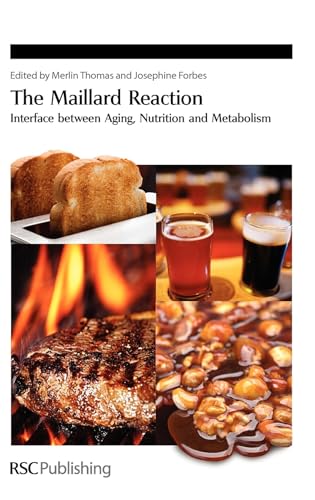
In September 2009, a meeting was held in Palm Cove, Australia, which brought together the world experts in the Maillard or 'browning' reaction. This reaction causes the browning of foods when they are heated and in chocolate, caramel and beer, this reaction is appetizing, contributing to aroma, taste and texture. But when these products accumulate in the body, this same process contributes to disease and ageing. The book is the proceedings of that meeting, held in response to a growing recognition of the role reactive carbonyl compounds play in food technology, nutrition and tissue ageing in biology and medicine. Reactive carbonyls now touch every aspect of food science, biology and medicine. Efforts to counteract the damage caused by these products are gaining acceptance as a basis for novel therapeutic approaches, and the fields of food technology, ageing and preventive medicine are experiencing an upsurge of interest in strategies to minimize the unwanted effects of the Maillard reaction. The meeting also fostered a balanced approach to understanding both the advantageous and deleterious properties of carbonyl compounds and their end products in food science, technology and medicine. The major audience of this book is the large body of scientists and worldwide industries with an interest in the Maillard reaction in foods and biology and medicine, with both basic and applied researchers and industry representatives from diverse fields, who have interests in: * Chemistry of the Maillard Reaction * Biology and the Maillard Reaction * Enzymology, Receptors and Signal Transduction * Bioinformatics and Systems Biology * Physiology, Disease and Therapeutics * Food Science and Nutrition and the Maillard Reaction
Die Inhaltsangabe kann sich auf eine andere Ausgabe dieses Titels beziehen.
Über die Autorinnen und Autoren
Merlin Christopher Thomas is at the Baker IDI Heart and Diabetes Institute, Melbourne, Australia. Josephine Forbes is at the Baker IDI Heart and Diabetes Institute, Melbourne, Australia.
Merlin Christopher Thomas is at the Baker IDI Heart and Diabetes Institute, Melbourne, Australia. Josephine Forbes is at the Baker IDI Heart and Diabetes Institute, Melbourne, Australia.
Von der hinteren Coverseite
In September 2009, a meeting was held in Palm Cove, Australia, which brought together the world experts in the Maillard or 'browning' reaction. This reaction causes the browning of foods when they are heated and in chocolate, caramel and beer, this reaction is appetizing, contributing to aroma, taste and texture. But when these products accumulate in the body, this same process contributes to disease and ageing. The book is the proceedings of that meeting, held in response to a growing recognition of the role reactive carbonyl compounds play in food technology, nutrition and tissue ageing in biology and medicine. Reactive carbonyls now touch every aspect of food science, biology and medicine. Efforts to counteract the damage caused by these products are gaining acceptance as a basis for novel therapeutic approaches, and the fields of food technology, ageing and preventive medicine are experiencing an upsurge of interest in strategies to minimize the unwanted effects of the Maillard reaction. The meeting also fostered a balanced approach to understanding both the advantageous and deleterious properties of carbonyl compounds and their end products in food science, technology and medicine. The major audience of this book is the large body of scientists and worldwide industries with an interest in the Maillard reaction in foods and biology and medicine, with both basic and applied researchers and industry representatives from diverse fields, who have interests in: * Chemistry of the Maillard Reaction * Biology and the Maillard Reaction * Enzymology, Receptors and Signal Transduction * Bioinformatics and Systems Biology * Physiology, Disease and Therapeutics * Food Science and Nutrition and the Maillard Reaction
Auszug. © Genehmigter Nachdruck. Alle Rechte vorbehalten.
The Maillard Reaction
Interface Between Aging, Nutrition and Metabolism
By Merlin C Thomas, Josephine ForbesThe Royal Society of Chemistry
Copyright © 2010 The Royal Society of Chemistry
All rights reserved.
ISBN: 978-1-84973-079-2All rights reserved.
Contents
The Maillard Reaction – A Journey from the Discovery of Advanced Glycation Endproducts to their Chief Cellular Receptor, RAGE: A Mechanism Underlying Diabetic Complications and the Inflammatory Response Ravichandran Ramasamy, Shi Fang Yan and Ann Marie Schmidt, 1,
Activation of Cellular Antioxidative Defense Mechanisms by CML-RAGE Interaction Sebastian Foth and Veronika Somoza, 12,
The Pathogenic Potential of Different Sized AGE Modified Molecules via RAGE Signalling Pathways Sally A. Penfold, Karly C. Sourris, Melinda T. Coughlan, Adeline L. Tan, David M Kaye, Mark E. Cooper and Josephine M Forbes, 21,
Glycated Proteins Bind to ERM Proteins and Modulate their Actions Leon A Bach, Andrea Young, Marisa A Gallicchio, and E Anne McRobert, 31,
Modification of Human Serum Albumin with Reactive Aldehydes Alters the Antioxidant Activity Katsumi Mera, Kazuhiro Takeo, Daisuke Honda, Toru Maruyama, Masaki Otagiri and Ryoji Nagai, 38,
A Novel Mechanism of Mental Illness: Carbonyl Stress Induced Schizophrenia: A Glyoxalase I Deficit Pedigree with Psychosis Masanari Itokawal, Makoto Arail, Takeo Yoshikawa, Yuji Okazaki and Toshio Miyata, 46,
Glyceraldehyde-derived Advanced Glycation End Products Decrease White Adipose Tissue Weight and Downregulate Leptin, Adiponectin, and Macrophage Marker Hirohito Watanabe, Yuki Yoshid and Fumitaka Hayase, 51,
Methylglyoxal Modification of Heat-shock Protein 27 in Colon Mucosa of Human Ulcerative Colitis Tomoko Oya-Ito, Yuji Naito, Tomohisa Takagi, Osamu Handa, Hirofumi Matsui, Koji Uchida, Masaki Yamada, Keisuke Shima and Toshikazu Yoshikawa, 58,
Extracellular Matrix Glycation and Pathogenesis of Diabetic Complications Paul A. Voziyan and Billy G. Hudson, 68,
Structural Analysis of a Skin Collagen-linked Fluorophore that increases in Diabetes and End-stage Renal Disease David R. Sell, Ina Nemet and Vincent Monnier, 76,
Advanced Glycation End-products: Biomarkers for Age-related Macular Degeneration Jiaqian Ni, Ram H. Nagaraj and John W. Crabb, 85,
Metal Catalyzed Lens Crystallin Oxidation During Aging and in Diabetes: the Role of Glutathione Xingjun Fan, Jianye Zhang, Ina Nemet and Vincent M Monnier, 92,
Impaired Oxygen Metabolism in Diabetic Nephropathy: Advanced Glycation, Hypoxia, and Oxidative Stress Toshio Miyata and Masashi Okamura, 101,
Role of Carbonyl/Oxidative Stress on the Pathogenesis of Chronic Kidney Disease and the Metabolic Syndrome Takefumi Mori, Qi Guo, Takashi Nakamichi, Toshio Miyata, Masaaki Nakayama, Susumu Ogawa, Kyozo Suyama and Sadayoshi Ito, 109,
Role of the Glyoxalase System in Renal Senescence Yoichiro Ikeda, Masaomi Nangaku, and Reiko Inagi, 118,
Serum Low Molecular Weight Fluorescent AGEs are Higher in Neonates than in Adults: Role of Kidney Metabolism Alejandro Gugliucci, Satoshi Kimura, Teresita Menini, Jennifer Taing and Masahide Numaguchi, 125,
The Renin-Angiotensin System and Advanced Glycation End-products in Diabetic Nephropathy. How Important are these Pathways as Therapeutic Targets? Karly C. Sourris and Josephine M. Forbes, 133,
Attenuation of Diabetes-associated Atherosclerosis with LR-90, a Novel Inhibitor of Age Formation Anna Watson, Merlin C. Thomas, Philip Koh, James L. Figarola, Samuel Rahbar and Karin Jandeliet Dahm, 137,
Nε-Carboxymethyllysine: Its Origin in Selected Foods and its Urinary and Faecal Excretion in Healthy Humans Frederic J Tessier, Celine Niquet, Larbi Rhazi, Karima Hedhili, Pilar Navarro, Isabel Seiquer and Cristina Delgado-Andrade, 144,
Oxidative Stress and the Maillard Reaction in Food Monika Pischetsrieder, 151,
Dicarbonyls in Cola Drinks Sweetened with Sucrose or High Fructose Corn Syrup Paul J Thornalley and Naila Rabbani, 158,
Formation of Mutagens/Carcinogens Under Physiological Conditions and the Inhibitory Effects of Daily Foods on their Formation and the Induction of Genotoxicity Naohide Kinae Motomi Hirano Tomoko Urahira, Misako Iio, Shoji Masumori and Shuichi Masuda, 164,
Antitumor Effects of the Early Maillard Reaction Products Valeri V. Mossine, Vladislav V. Glinsky and Thomas P. Mawhinney, 170,
AGEs Fluorescence of Plasma, Urine and Skin Reflects Dietary Exposure to Maillard Products in Formula-fed Infants Katarína Sebeková, Giselle Saavedra, Kristina Klenovicsová, Peter Boor and Ines Birlouez-Aragon, 180,
Novel Maillard Pigments Formed from Furfural and Xylose with Lysine Under Weakly Acidic Conditions Masatsune Murata, 188,
Urinary Excretion of Non-Toxic and Toxic Carbonyls as Urea Derivatives Kyozo Suyama, Misaki Endo, Takefumi Mori and Toshio Miyata, 194,
Isolation of Glucose Ureide, Urea Derivative of Glucose, in Human Urine Kyozo Suyama and Atsusi Sasaki, 199,
Some Natural Products Extracts Inhibit the Formation of Nw–(Carboxymetyl)arginine Yukio Fujiwara, Makiko Yoshitomi, Katsumi Meral, Mime Nagai, Motohiro Takeya, Tsuyoshi Ikeda and Ryoji Nagai, 206,
Screening of AGE Inhibitors by Antibody Library Ryoji Nagai, Satoko Shimasakia, Ayako Horikoshia, Masako Nakanoa, Mime Nagaia, Katsumi Merab and Yukio Fujiwarab, 211,
Taste Modulating Maillard Reaction Products of Creatinine Christof Kunert, Tessa Sonntag, Alesia Walker and Thomas Hofmann, 217,
Improved Extraction of Acrylamide and Its Quantification in Pork Sausages Margarethe Plotkowiak, Stewart Floyd and Linda Farmer, 225,
Chemistry of Pigments as Intermediate of Melanoidins Fumitaka Hayase, Yoshinobu Sshirahashi, Tomomi Machida, Takashi Ito, Teruyuki Usui, and Hirohito Watanabe, 232,
Subject Index, 241,
CHAPTER 1
THE MAILLARD REACTION – A JOURNEY FROM THE DISCOVERY OF ADVANCED GLYCATION ENDPRODUCTS TO THEIR CHIEF CELLULAR RECEPTOR, RAGE: A MECHANISM UNDERLYING DIABETIC COMPLICATIONS AND THE INFLAMMATORY RESPONSE
R, Ramasamy, S.F. Yan and A.M. Schmidt
1 INTRODUCTION
An emerging theme in the biology of chronic disease is that modifications of proteins may play major roles in re-routing biological reactions from preservation of homeostasis to induction of tissue injury. Atop the list of potential modifications in diabetes that may significantly alter cellular properties is the process of glycation. From Maillard's discovery that heating proteins particularly in the presence of sugars resulted in their "browning," was born the field of AGEs. In recent years, the identification of the diverse settings in which AGEs may form has greatly expanded our understanding of how proteins subjected to fundamental posttranslational modifications of proteins may experience both loss- and gain-of function properties.
The products of non-enzymatic glycation and oxidation of proteins, the advanced glycation end-products (AGEs), may be formed by multiple means, such as hyperglycaemia, aging, inflammation, oxidation (such as of oxidized low density lipoprotein, oxLDL), hypoxia or ischaemia/reperfusion (I/R) injury, or by specific fonns of food preparation. AGEs may exert diverse effects in biological systems; the discovery that the Receptor for AGE (RAGE) was a signal transduction receptor for this class of modified species suggested specific means by which modified proteins gain functions such as the ability to modulate transcription, translation and activity of proteins in...
„Über diesen Titel“ kann sich auf eine andere Ausgabe dieses Titels beziehen.
Suchergebnisse für The Maillard Reaction: Interface Between Aging, Nutrition...

Beispielbild für diese ISBN
Maillard Reaction
Anbieter: PBShop.store UK, Fairford, GLOS, Vereinigtes Königreich
Verkäuferbewertung 5 von 5 Sternen

HRD. Zustand: New. New Book. Shipped from UK. Established seller since 2000. Artikel-Nr. CX-9781849730792
Neu kaufen
EUR 145,46
EUR 5,94 Versand
Versand von Vereinigtes Königreich nach USA
Versand von Vereinigtes Königreich nach USA
Anzahl: 15 verfügbar
Beispielbild für diese ISBN
Maillard Reaction
Anbieter: PBShop.store US, Wood Dale, IL, USA
Verkäuferbewertung 5 von 5 Sternen
HRD. Zustand: New. New Book. Shipped from UK. Established seller since 2000. Artikel-Nr. CX-9781849730792
Neu kaufen
EUR 152,11
Versand gratis
Versand innerhalb von USA
Versand innerhalb von USA
Anzahl: 15 verfügbar
Beispielbild für diese ISBN
Maillard Reaction: Interface between Aging (Special Publications)
Anbieter: Ria Christie Collections, Uxbridge, Vereinigtes Königreich
Verkäuferbewertung 5 von 5 Sternen
Zustand: New. In English. Artikel-Nr. ria9781849730792_new
Neu kaufen
EUR 176,50
EUR 13,36 Versand
Versand von Vereinigtes Königreich nach USA
Versand von Vereinigtes Königreich nach USA
Anzahl: Mehr als 20 verfügbar
Foto des Verkäufers
The Maillard Reaction
Anbieter: moluna, Greven, Deutschland
Verkäuferbewertung 5 von 5 Sternen
Gebunden. Zustand: New. Proceedings of a meeting on the role reactive carbonyl compounds play in food technology, nutrition and tissue ageing in biology and medicine.Über den AutorrnrnMerlin Christopher Thomas is at the Baker IDI Heart and Diabetes Institute, . Artikel-Nr. 597106669
Neu kaufen
EUR 149,68
EUR 48,99 Versand
Versand von Deutschland nach USA
Versand von Deutschland nach USA
Anzahl: Mehr als 20 verfügbar
Beispielbild für diese ISBN
The Maillard Reaction: Interface Between Aging, Nutrition and Metabolism (Special Publication)
Anbieter: Revaluation Books, Exeter, Vereinigtes Königreich
Verkäuferbewertung 5 von 5 Sternen
Hardcover. Zustand: Brand New. 1st edition. 240 pages. 9.50x6.25x0.75 inches. In Stock. Artikel-Nr. x-1849730792
Neu kaufen
EUR 207,81
EUR 14,79 Versand
Versand von Vereinigtes Königreich nach USA
Versand von Vereinigtes Königreich nach USA
Anzahl: 2 verfügbar
Foto des Verkäufers
Maillard Reaction : Interface Between Aging
Anbieter: AHA-BUCH GmbH, Einbeck, Deutschland
Verkäuferbewertung 5 von 5 Sternen
Buch. Zustand: Neu. Neuware - In September 2009, a meeting was held in Palm Cove, Australia, which brought together the world experts in the Maillard or 'browning' reaction. This reaction causes the browning of foods when they are heated and in chocolate, caramel and beer, this reaction is appetizing, contributing to aroma, taste and texture. But when these products accumulate in the body, this same process contributes to disease and ageing. The book is the proceedings of that meeting, held in response to a growing recognition of the role reactive carbonyl compounds play in food technology, nutrition and tissue ageing in biology and medicine. Reactive carbonyls now touch every aspect of food science, biology and medicine. Efforts to counteract the damage caused by these products are gaining acceptance as a basis for novel therapeutic approaches, and the fields of food technology, ageing and preventive medicine are experiencing an upsurge of interest in strategies to minimize the unwanted effects of the Maillard reaction. The meeting also fostered a balanced approach to understanding both the advantageous and deleterious properties of carbonyl compounds and their end products in food science, technology and medicine. The major audience of this book is the large body of scientists and worldwide industries with an interest in the Maillard reaction in foods and biology and medicine, with both basic and applied researchers and industry representatives from diverse fields, who have interests in: \* Chemistry of the Maillard Reaction \* Biology and the Maillard Reaction \* Enzymology, Receptors and Signal Transduction \* Bioinformatics and Systems Biology \* Physiology, Disease and Therapeutics \* Food Science and Nutrition and the Maillard Reaction. Artikel-Nr. 9781849730792
Neu kaufen
EUR 251,11
EUR 35,00 Versand
Versand von Deutschland nach USA
Versand von Deutschland nach USA
Anzahl: 2 verfügbar