
Verwandte Artikel zu Energy Crops (Rsc Energy and Enviroment)
Inhaltsangabe
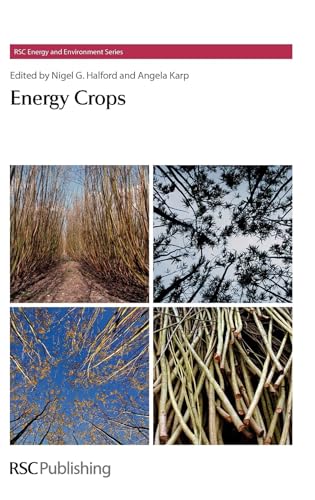
The last few years have seen the concept of bioenergy and biofuels come of age. Rising oil prices have lead to more food crops being grown for energy as well as food. This has created controversy by adding to the upward pressure on crop commodity prices that was already being created by the increasing demand for food from an expanding population. More attention has, therefore, focussed on meeting the rising demand for bioenergy and biofuels in more sustainable ways. A wider range of crops is being explored, including non-food crops, as well as the use of crop residues rather than grain or seed. Energy Crops is a comprehensive reference source which looks at this topic from the plant and agricultural science perspective. It covers energy crops that are already in use and those that are being developed or researched. Species that have been cultivated by humankind for millennia, and some that have never been considered as crops before, fall within its coverage. The introductory chapter defines energy crops before reviewing the development and current state of the technology. It also gives an historical perspective and introduces the ethical issues. Each of the subsequent chapters is dedicated to a single crop and describes the current usage of that crop for energy, its potential for future development, the economics of its use for energy production, and the research that is being undertaken to tailor it for use as an energy crop. Where appropriate, the implications for food and feed security are balanced against the benefits in terms of fuel security, the impending oil supply 'peak', the need to reduce CO2 emissions, and the implications for climate change mitigation. Each chapter is written by a specialist author or authors of international standing. The chapters by representatives of the plant breeding and biofuel industries give an industrial perspective on why energy crops have 'come of age'. They also describe how the sector is expected to develop with a wish list of crop improvements that industry would like to see realized. These include higher levels of fermentable starch, cellulose, fibres and oil quality through to the production of pure hydrocarbons. The book is suitable for undergraduates, postgraduates, academics, and those working in industry.
Die Inhaltsangabe kann sich auf eine andere Ausgabe dieses Titels beziehen.
Über die Autorinnen und Autoren
Nigel G. Halford is a Research Leader at Rothamsted Research, the UK's premier crop and agricultural research institute. He graduated from Liverpool University in 1983, obtained a Masters Degree from University College London in 1984 and, in 1989, was awarded a PhD for his work at Rothamsted on wheat seed protein genes. He transferred to Long Ashton Research Station near Bristol in 1991, but returned to Rothamsted in 2002. He runs a research programme on metabolic regulation in plants, with strategic objectives in crop yield, stress tolerance and food safety as well as bioenergy production. Professor Halford has authored more than 100 scientific papers and has written one book. He also and edited another book on plant biotechnology. He frequently lectures on plant biotechnology to schools, farmers and environmental groups, and has debated the issue in many media interviews and public meetings in the UK and abroad. He is a member of the Advisory Committee for Animal Feedingstuffs (ACAF), one of the committees that advise the UK government on the use of GM crops, foods and animal feed. He also holds an honorary chair at the Shanghai Academy of Agricultural Sciences. Angela Karp is Scientific Director of the Rothamsted Centre for Bioenergy and Climate Change, and Deputy Head of the Plant and Invertebrate Ecology Division at Rothamsted Research. She is a geneticist by training, having graduated with a First in Genetics at Queen Mary College, London University. Dr. Karp leads an internationally recognised, integrated programme on bioenergy aimed at improving biomass crops within a sustainable land use context. She is the overall coordinator of the UK DEFRA Genetic Improvement Network on SRC willow which involves willow breeding underpinned by trait mapping and genomics. She also coordinates a project on the social, environmental and economic implications of increasing rural land use under energy crops, which focuses on She also coordinates a project on the social, environmental and economic implications of increasing rural land use under energy crops.
Nigel G. Halford is a Research Leader at Rothamsted Research, the UK's premier crop and agricultural research institute. He graduated from Liverpool University in 1983, obtained a Masters Degree from University College London in 1984 and, in 1989, was awarded a PhD for his work at Rothamsted on wheat seed protein genes. He transferred to Long Ashton Research Station near Bristol in 1991, but returned to Rothamsted in 2002. He runs a research programme on metabolic regulation in plants, with strategic objectives in crop yield, stress tolerance and food safety as well as bioenergy production. Professor Halford has authored more than 100 scientific papers and has written one book. He also and edited another book on plant biotechnology. He frequently lectures on plant biotechnology to schools, farmers and environmental groups, and has debated the issue in many media interviews and public meetings in the UK and abroad. He is a member of the Advisory Committee for Animal Feedingstuffs (ACAF), one of the committees that advise the UK government on the use of GM crops, foods and animal feed. He also holds an honorary chair at the Shanghai Academy of Agricultural Sciences. Angela Karp is Scientific Director of the Rothamsted Centre for Bioenergy and Climate Change, and Deputy Head of the Plant and Invertebrate Ecology Division at Rothamsted Research. She is a geneticist by training, having graduated with a First in Genetics at Queen Mary College, London University. Dr. Karp leads an internationally recognised, integrated programme on bioenergy aimed at improving biomass crops within a sustainable land use context. She is the overall coordinator of the UK DEFRA Genetic Improvement Network on SRC willow which involves willow breeding underpinned by trait mapping and genomics. She also coordinates a project on the social, environmental and economic implications of increasing rural land use under energy crops, which focuses on She also coordinates a project on the social, environmental and economic implications of increasing rural land use under energy crops.
Von der hinteren Coverseite
The last few years have seen the concept of bioenergy and biofuels, come of age. Rising oil prices have lead to more food crops being grown for energy as well as food, as significant contributors to global energy supply. This has created controversy as it has added to the upward pressure on crop commodity prices already being created by an increasing demand for food of an expanding world population. More attention has therefore been focussed on meeting the rising demand for bioenergy and biofuels in more sustainable ways. A wider range of crops is being explored, including non-food crops as well as the use of crop residues rather than grain or seed. Energy Crops is a comprehensive reference that looks at this topic from the plant and agricultural science perspective. The introductory chapter defines energy crops, reviews the development and state of the technology, gives an historical perspective and introduces the ethical issues. Each of the subsequent chapters is dedicated to a single crop and describes the current usage of that crop for energy, its potential for future development, the economic case and the research that is being undertaken to tailor the crop for use as an energy crop. Where appropriate, the implications for feed and food security are also discussed. The chapters by world-renowned experts of the plant breeding and biofuel industries will be essential reading for agricultural and environmental scientists, plant biologists, chemical and energy engineers, biotechnologists, and all those involved in developing policy on climate change and bioenergy production.
Auszug. © Genehmigter Nachdruck. Alle Rechte vorbehalten.
Energy Crops
By Nigel G Halford, Angela KarpThe Royal Society of Chemistry
Copyright © 2011 Royal Society of Chemistry
All rights reserved.
ISBN: 978-1-84973-032-7All rights reserved.
Contents
Chapter 1 Energy Crops: Introduction Angela Karp and Nigel G. Halford, 1,
Chapter 2 Challenges and Opportunities for Using Wheat for Biofuel Production Peter R Shewry, Jackie Freeman, Mark Wilkinson, Till Pellny and Rowan A C Mitchell, 13,
Chapter 3 Maize Stephen H. Howell, 27,
Chapter 4 Sweet Sorghum as a Biofuel Crop Gene Stevens and Roland A.Y. Holou, 56,
Chapter 5 Sugarcane A. D. Santiago, R. Rossetto, W. de Mello Ivo and S. Urquiaga, 77,
Chapter 6 Sugar Beet Mike May, 104,
Chapter 7 Oilseed Rape Richard Weightman, Peter Gladders and Pete Berry, 116,
Chapter 8 Soybeans Anthony J. Kinney and Tom E. Clemente, 148,
Chapter 9 Perspectives on Sunflower as an Energy Crop Zina Flagella and Massimo Monteleone, 165,
Chapter 10 Palm Oil as an Energy Crop Keat Teong Lee and Kok Tat Tan, 187,
Chapter 11 Jatropha curcas: A Source of Energy and Other Applications Satyawati Sharma and Ashwani Kumar, 196,
Chapter 12 Pongamia pinnata, a Sustainable Feedstock for Biodiesel Production Stephen H. Kazakoff, Peter M. Gresshoff and Paul T. Scott, 233,
Chapter 13 Willow S. J. Hanley, 259,
Chapter 14 Poplar S. Y. Dillen, O. El Kasmioui, N. Marron, C. Calfapietra and R. Ceulemans, 275,
Chapter 15 Developing Miscanthus for Bioenergy John Clifton Brown, Steve Renvoize, Yu-Chung Chiang, Yasushi Ibaragi, Richard Flavell, Joerg Greef, Lin Huang, Tsai Wen Hsu, Do-Soon Kim, Astley Hastings, Kai Schwarz, Paul Stampfl, John Valentine, Toshihiko Yamada, Qingguo Xi and Iain Donnison, 301,
Chapter 16 Subtropical and Tropical Reeds for Biomass Mihály Czakó and László Márton, 322,
Chapter 17 Switchgrass Kenneth P. Vogel, Gautam Sarath, Aaron J. Saatho. and Robert B. Mitchell, 341,
Chapter 18 Algae Ira A. Levine, 380,
Subject Index, 416,
CHAPTER 1
Energy Crops: Introduction
ANGELA KARP AND NIGEL G. HALFORD
Departments of Plant and Invertebrate Ecology and Plant Science, Centre for Bioenergy and Climate Change, Rothamsted Research, Harpenden, Herts AL5 2JQ, UK
1.1 Introduction
Two major events that impacted significantly on the development of humankind involved the use of plants: our ability to make fire and our change from being hunter-gatherers to food-producers. The exact dates in which these advances first occurred are subject to debate but it is certain that they occurred in this order. Estimates suggest that agriculture arose some 10 000 years ago, whilst the control of fire may date back some 790 000 years. As food production became more efficient, it became possible for larger numbers of people to live together. Human populations expanded and civilisations were born. During this expansion, the requirement for plants to provide fuel was not in conflict with food production. Rather, this requirement diminished as alternative sources of energy were developed. As a result, twenty-five years ago, although plants were still being used for fuel in underdeveloped regions of the world, it was oil, coal, natural gas and nuclear power that together fulfilled most of the world's energy needs.
Within a remarkably short timeframe, a major change then took place. The first steps of this process can be traced to the first oil crisis of the 1970s, when a sudden rise in the price of oil led to the first push for the development of renewable energies. In addition to food production, many governments supported the development of novel nonfood crops (see Chapters 11–18). These crops were harvested and combusted to produce heat and power, a contribution that continues today. However, a drop in oil prices in the 1990s stemmed enthusiasm and, other than the production of bioethanol in Brazil (see Chapter 5), bioenergy markets remained small.
A culmination of events then precipitated a "green energy" boom. Oil prices spiked and there was increasing concern over energy security. Moreover, numerous reports, particularly from the Intergovernmental Panel on Climate Change (IPCC) and from Nicholas Stern, focused attention on the substantial cost to humankind of not acting to reduce the current rate of increase in greenhouse gas (GHG) emissions. As the use of fossil fuels is a major contributor to climate change, the need for alternative sources of energy, which save carbon and are renewable, was placed quickly and firmly back at the top of global agendas.
There are many possible alternatives to fossil fuels, particularly for heat and power generation, e.g. wind, hydro, solar, as well as plant biomass, all of which are expected to play a role. However, there are few alternatives to replace transport fuels (e.g. electric, hydrogen). As the number of vehicles on the roads is continually rising, it is clear that, unless emissions from the transport sector can be curbed, they will counter any reductions achieved by other sectors. Combined with the desire of some nations to reduce their reliance on the fuel supplies of a few major producers, this resulted in a swift, strong push to increase the production of liquid transport fuels from crops and many food crops were exploited for this purpose (see Chapter 2–10). Simultaneously, the need for fossil-fuel substitutes for a whole range of products that currently rely on the refining of oil became apparent to the chemical industries.
As a consequence of these environmental and political drivers, three new markets have emerged for plants, all of which are potentially huge: bioenergy, biofuels and biorenewable materials (Figure 1.1). However, securing sufficient food for future populations remains a major challenge, particularly in the face of climate change. To balance all of these demands on plants will require little short of another revolution. One decade into this millennium, major challenges face humankind. "A Perfect Storm" were the words adopted by Professor Beddington, the UK government's chief scientific adviser, to draw attention to this recently. He pointed specifically to research that indicated that by 2030 "a whole series of events come together": The world's population will rise from 6bn to 8bn (33%); demand for food will increase by 50%; demand for water will increase by 30% and; demand for energy will increase by 50%.
Whilst crops certainly hold solutions to these challenges, they are also part of the problem. Agriculture is a major user of resource, including energy from fossil fuels, and is also another major contributor to GHG emissions. Research has drawn attention to the fact that producing energy from crops could have the opposite effect to what is intended, if the energy inputs exceed the carbon benefits and if the GHG emissions associated with any new cultivation for displaced food production are not taken into account.
In this book, the potential contributions of different energy crops will be reviewed within the context of the different and sometimes conflicting challenges and drivers that are currently acting. By way of introduction, this chapter will introduce various bioenergy terms, outline how feedstock from energy crops can be converted into energy, briefly define the different types of energy crops and finally draw attention to the main components of the debate surrounding energy crop production. The principle aim will be to introduce the topics and not to comprehensively review them, as the subsequent chapters will provide...
„Über diesen Titel“ kann sich auf eine andere Ausgabe dieses Titels beziehen.
Suchergebnisse für Energy Crops (Rsc Energy and Enviroment)

Beispielbild für diese ISBN
Energy Crops
Anbieter: Majestic Books, Hounslow, Vereinigtes Königreich
Verkäuferbewertung 4 von 5 Sternen

Zustand: New. pp. 444 Illus., Maps. Artikel-Nr. 5277877
Neu kaufen
EUR 39,35
EUR 7,57 Versand
Versand von Vereinigtes Königreich nach USA
Versand von Vereinigtes Königreich nach USA
Anzahl: 4 verfügbar
Beispielbild für diese ISBN
Energy Crops
Verlag:
Royal Society of Chemistry, The, 2010
ISBN 10: 1849730326
ISBN 13: 9781849730327
Gebraucht
Hardcover
Anbieter: Better World Books Ltd, Dunfermline, Vereinigtes Königreich
Verkäuferbewertung 5 von 5 Sternen

Zustand: Good. Former library copy. Pages intact with minimal writing/highlighting. The binding may be loose and creased. Dust jackets/supplements are not included. Includes library markings. Stock photo provided. Product includes identifying sticker. Better World Books: Buy Books. Do Good. Artikel-Nr. 67678517-20
Gebraucht kaufen
EUR 50,04
EUR 5,82 Versand
Versand von Vereinigtes Königreich nach USA
Versand von Vereinigtes Königreich nach USA
Anzahl: 1 verfügbar
Beispielbild für diese ISBN
Energy Crops
Anbieter: Romtrade Corp., STERLING HEIGHTS, MI, USA
Verkäuferbewertung 5 von 5 Sternen
Zustand: New. This is a Brand-new US Edition. This Item may be shipped from US or any other country as we have multiple locations worldwide. Artikel-Nr. ABBB-69160
Beispielbild für diese ISBN
Energy Crops
Anbieter: Romtrade Corp., STERLING HEIGHTS, MI, USA
Verkäuferbewertung 5 von 5 Sternen
Zustand: New. This is a Brand-new US Edition. This Item may be shipped from US or any other country as we have multiple locations worldwide. Artikel-Nr. ABBB-185122
Beispielbild für diese ISBN
Energy Crops
Anbieter: PBShop.store US, Wood Dale, IL, USA
Verkäuferbewertung 5 von 5 Sternen
HRD. Zustand: New. New Book. Shipped from UK. Established seller since 2000. Artikel-Nr. CX-9781849730327
Neu kaufen
EUR 186,01
Versand gratis
Versand innerhalb von USA
Versand innerhalb von USA
Anzahl: 15 verfügbar
Beispielbild für diese ISBN
Energy Crops
Anbieter: PBShop.store UK, Fairford, GLOS, Vereinigtes Königreich
Verkäuferbewertung 5 von 5 Sternen
HRD. Zustand: New. New Book. Shipped from UK. Established seller since 2000. Artikel-Nr. CX-9781849730327
Neu kaufen
EUR 180,75
EUR 6,84 Versand
Versand von Vereinigtes Königreich nach USA
Versand von Vereinigtes Königreich nach USA
Anzahl: 15 verfügbar
Beispielbild für diese ISBN
Energy Crops (Energy and Environment Series, Volume 3)
Anbieter: Ria Christie Collections, Uxbridge, Vereinigtes Königreich
Verkäuferbewertung 5 von 5 Sternen
Zustand: New. In English. Artikel-Nr. ria9781849730327_new
Neu kaufen
EUR 199,15
EUR 13,15 Versand
Versand von Vereinigtes Königreich nach USA
Versand von Vereinigtes Königreich nach USA
Anzahl: 1 verfügbar
Foto des Verkäufers
Energy Crops
Anbieter: moluna, Greven, Deutschland
Verkäuferbewertung 5 von 5 Sternen
Gebunden. Zustand: New. This book is a comprehensive reference for energy crops from the plant perspective with expert authors for each crop. Of particular importance are the chapters covering the sustainability aspects (social, economic and environmental), including food security. Artikel-Nr. 597106645
Neu kaufen
EUR 194,16
EUR 48,99 Versand
Versand von Deutschland nach USA
Versand von Deutschland nach USA
Anzahl: Mehr als 20 verfügbar
Beispielbild für diese ISBN
Energy Crops (RSC Energy and Environment Series)
Anbieter: Revaluation Books, Exeter, Vereinigtes Königreich
Verkäuferbewertung 5 von 5 Sternen
Hardcover. Zustand: Brand New. 442 pages. 9.20x6.30x1.20 inches. In Stock. Artikel-Nr. x-1849730326
Neu kaufen
EUR 256,60
EUR 14,56 Versand
Versand von Vereinigtes Königreich nach USA
Versand von Vereinigtes Königreich nach USA
Anzahl: 2 verfügbar
Foto des Verkäufers
Energy Crops
Anbieter: AHA-BUCH GmbH, Einbeck, Deutschland
Verkäuferbewertung 5 von 5 Sternen
Buch. Zustand: Neu. Neuware - This book is a comprehensive reference for energy crops from the plant perspective with expert authors for each crop. Of particular importance are the chapters covering the sustainability aspects (social, economic and environmental), including food security. The chapters from representatives of the plant breeding and biofuel industries give an industrial perspective on the development of energy crops - why they have 'come of age' from a business point of view, the economics and the potential. They also describe how industry expects the sector to develop, with a wish-list of crop improvements that industry would like to see. The book is aimed at undergraduate and MSc courses covering bioenergy, climate change or environmental sciences and will also be of interest to those developing policy on bioenergy production. Artikel-Nr. 9781849730327
Neu kaufen
EUR 247,51
EUR 30,50 Versand
Versand von Deutschland nach USA
Versand von Deutschland nach USA
Anzahl: 2 verfügbar