
Verwandte Artikel zu Introduction to the U.S. Food System: Public Health,...
Inhaltsangabe
A public health approach to the US food system
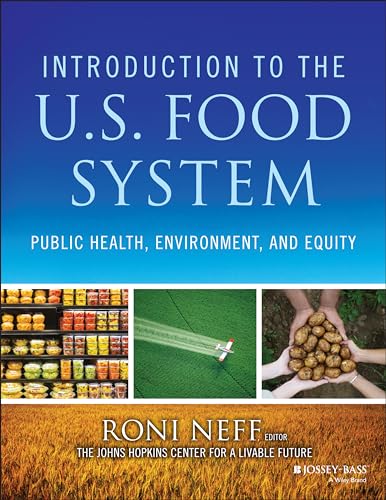
Introduction to the US Food System: Public Health, Environment, and Equity is a comprehensive and engaging textbook that offers students an overview of today's US food system, with particular focus on the food system's interrelationships with public health, the environment, equity, and society. Using a classroom-friendly approach, the text covers the core content of the food system and provides evidence-based perspectives reflecting the tremendous breadth of issues and ideas important to understanding today's US food system. The book is rich with illustrative examples, case studies, activities, and discussion questions.
The textbook is a project of the Johns Hopkins Center for a Livable Future (CLF), and builds upon the Center's educational mission to examine the complex interrelationships between diet, food production, environment, and human health to advance an ecological perspective in reducing threats to the health of the public, and to promote policies that protect health, the global environment, and the ability to sustain life for future generations.
Issues covered in Introduction to the US Food System include food insecurity, social justice, community and worker health concerns, food marketing, nutrition, resource depletion, and ecological degradation.
- Presents concepts on the foundations of the US food system, crop production, food system economics, processing and packaging, consumption and overconsumption, and the environmental impacts of food
- Examines the political factors that influence food and how it is produced
- Ideal for students and professionals in many fields, including public health, nutritional science, nursing, medicine, environment, policy, business, and social science, among others
Introduction to the US Food System presents a broad view of today's US food system in all its complexity and provides opportunities for students to examine the food system's stickiest problems and think critically about solutions.
Die Inhaltsangabe kann sich auf eine andere Ausgabe dieses Titels beziehen.
Über die Autorin bzw. den Autor
RONI NEFF, PHD, EDITOR, is an assistant professor in the Department of Environmental Health Sciences at the Johns Hopkins Bloomberg School of Public Health and directs the Food System Sustainability Program at the Johns Hopkins Center for a Livable Future (CLF). She has worked in a wide variety of food system and public health research, policy, and practice roles throughout her career.
THE JOHNS HOPKINS CENTER FOR A LIVABLE FUTURE (CLF) is an interdisciplinary academic center focused on the interrelationships between food and public health.
Von der hinteren Coverseite
INTRODUCTION TO THE U.S. FOOD SYSTEM Public Health, Environment, and Equity
Introduction to the U.S. Food System: Public Health, Environment, and Equity is an engaging and evidence-based examination of the food system and its relationship to issues like environmental quality, sustainability, and resilience; nutrition and diet-related disease; food security; social justice; and individual and community well-being. With contributions from more than 100 food system experts, this book presents students with a comprehensive overview of the U.S. food system.
A project of the Johns Hopkins Center for a Livable Future, the textbook examines broad food system issues and highlights connections to public health and other fields. Using a classroom-friendly approach, the text covers the core content of the food system and provides evidence-based perspectives reflecting the tremendous breadth of issues and ideas important to understanding today's U.S. food system. The book is rich with illustrative examples, case studies, activities, and discussion questions.
Introduction to the U.S. Food System explains the public health, environmental, social, economic, and political factors that play into what we eat and how it is produced. It provides students with an in-depth analysis of the complex relationships among the people, processes, policies, inputs, and outputs that move food from farm to community to table and beyond.
Aus dem Klappentext
INTRODUCTION TO THE U.S. FOOD SYSTEM Public Health, Environment, and Equity
Introduction to the U.S. Food System: Public Health, Environment, and Equity is an engaging and evidence-based examination of the food system and its relationship to issues like environmental quality, sustainability, and resilience; nutrition and diet-related disease; food security; social justice; and individual and community well-being. With contributions from more than 100 food system experts, this book presents students with a comprehensive overview of the U.S. food system.
A project of the Johns Hopkins Center for a Livable Future, the textbook examines broad food system issues and highlights connections to public health and other fields. Using a classroom-friendly approach, the text covers the core content of the food system and provides evidence-based perspectives reflecting the tremendous breadth of issues and ideas important to understanding today's U.S. food system. The book is rich with illustrative examples, case studies, activities, and discussion questions.
Introduction to the U.S. Food System explains the public health, environmental, social, economic, and political factors that play into what we eat and how it is produced. It provides students with an in-depth analysis of the complex relationships among the people, processes, policies, inputs, and outputs that move food from farm to community to table and beyond.
„Über diesen Titel“ kann sich auf eine andere Ausgabe dieses Titels beziehen.
Suchergebnisse für Introduction to the U.S. Food System: Public Health,...

Beispielbild für diese ISBN
Introduction to the U.S. Food System: Public Health, Environment, and Equity
Verlag:
Jossey-Bass (edition 1), 2014
ISBN 10: 1118063384
ISBN 13: 9781118063385
Gebraucht
Paperback
Anbieter: BooksRun, Philadelphia, PA, USA
Verkäuferbewertung 5 von 5 Sternen

Paperback. Zustand: Fair. 1. The item might be beaten up but readable. May contain markings or highlighting, as well as stains, bent corners, or any other major defect, but the text is not obscured in any way. Artikel-Nr. 1118063384-7-1
Gebraucht kaufen
EUR 22,71
Versand gratis
Versand innerhalb von USA
Versand innerhalb von USA
Anzahl: 1 verfügbar
Beispielbild für diese ISBN
Introduction to the U.S. Food System: Public Health, Environment, and Equity
Verlag:
Jossey-Bass (edition 1), 2014
ISBN 10: 1118063384
ISBN 13: 9781118063385
Gebraucht
Paperback
Anbieter: BooksRun, Philadelphia, PA, USA
Verkäuferbewertung 5 von 5 Sternen
Paperback. Zustand: Very Good. 1. It's a well-cared-for item that has seen limited use. The item may show minor signs of wear. All the text is legible, with all pages included. It may have slight markings and/or highlighting. Artikel-Nr. 1118063384-11-1
Gebraucht kaufen
EUR 39,52
Versand gratis
Versand innerhalb von USA
Versand innerhalb von USA
Anzahl: 1 verfügbar
Beispielbild für diese ISBN
Introduction to the U.S. Food System: Public Health, Environment, and Equity
Anbieter: World of Books (was SecondSale), Montgomery, IL, USA
Verkäuferbewertung 5 von 5 Sternen
Zustand: Good. Item in good condition. Textbooks may not include supplemental items i.e. CDs, access codes etc. Artikel-Nr. 00100733588
Gebraucht kaufen
EUR 41,49
Versand gratis
Versand innerhalb von USA
Versand innerhalb von USA
Anzahl: 3 verfügbar
Beispielbild für diese ISBN
Introduction to the U.S. Food System: Public Health, Environment, and Equity
Anbieter: World of Books (was SecondSale), Montgomery, IL, USA
Verkäuferbewertung 5 von 5 Sternen
Zustand: Very Good. Item in very good condition! Textbooks may not include supplemental items i.e. CDs, access codes etc. Artikel-Nr. 00100941742
Gebraucht kaufen
EUR 41,49
Versand gratis
Versand innerhalb von USA
Versand innerhalb von USA
Anzahl: 2 verfügbar
Beispielbild für diese ISBN
Introduction to the U.S. Food System
Anbieter: PBShop.store UK, Fairford, GLOS, Vereinigtes Königreich
Verkäuferbewertung 5 von 5 Sternen
PAP. Zustand: New. New Book. Shipped from UK. Established seller since 2000. Artikel-Nr. FW-9781118063385
Neu kaufen
EUR 91,47
EUR 7,90 Versand
Versand von Vereinigtes Königreich nach USA
Versand von Vereinigtes Königreich nach USA
Anzahl: 1 verfügbar
Beispielbild für diese ISBN
Introduction to the US Food System: Public Health,.
Anbieter: Majestic Books, Hounslow, Vereinigtes Königreich
Verkäuferbewertung 4 von 5 Sternen

Zustand: New. pp. 576. Artikel-Nr. 141777490
Neu kaufen
EUR 110,43
EUR 7,60 Versand
Versand von Vereinigtes Königreich nach USA
Versand von Vereinigtes Königreich nach USA
Anzahl: 3 verfügbar
Beispielbild für diese ISBN
Introduction to the U.S. Food System: Public Health, Environment, and Equity
Anbieter: Revaluation Books, Exeter, Vereinigtes Königreich
Verkäuferbewertung 5 von 5 Sternen
Paperback. Zustand: Brand New. 1st edition. 542 pages. 12.00x10.00x1.50 inches. In Stock. Artikel-Nr. __1118063384
Neu kaufen
EUR 115,53
EUR 17,53 Versand
Versand von Vereinigtes Königreich nach USA
Versand von Vereinigtes Königreich nach USA
Anzahl: 2 verfügbar
Beispielbild für diese ISBN
Introduction to the US Food System: Public Health, Environment, and Equity
Anbieter: Kennys Bookstore, Olney, MD, USA
Verkäuferbewertung 5 von 5 Sternen
Zustand: New. A public health approach to the US food system Introduction to the US Food System: Public Health, Environment, and Equity is a comprehensive and engaging textbook that offers students an overview of today's US food system, with particular focus on the food system's interrelationships with public health, the environment, equity, and society. Editor(s): Neff, Roni. Num Pages: 576 pages, black & white illustrations, colour tables, figures. BIC Classification: 1KBB; KNAC; MBN; RNFF. Category: (P) Professional & Vocational. Dimension: 280 x 216 x 31. Weight in Grams: 1332. . 2014. 1st Edition. Paperback. . . . . Books ship from the US and Ireland. Artikel-Nr. V9781118063385
Neu kaufen
EUR 132,02
EUR 9,24 Versand
Versand innerhalb von USA
Versand innerhalb von USA
Anzahl: 11 verfügbar