
Verwandte Artikel zu The Laurel's Kitchen Bread Book: A Guide to Whole-Grain...
Inhaltsangabe
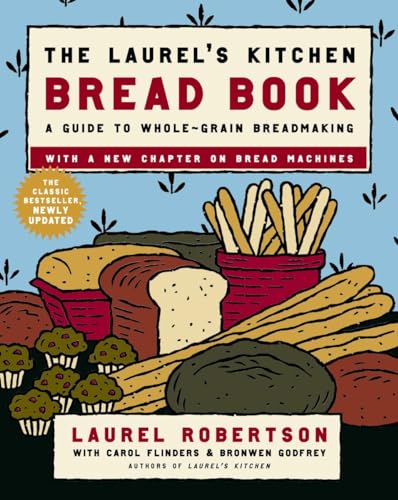
The Laurel’s Kitchen Bread Book is the classic bestselling cookbook devoted to baking light, healthful, delicious bread entirely from whole grains. This specially updated edition includes an entirely new chapter on making excellent whole-grain loaves in a bread machine. Now even the busiest among us can bake the delectable loaves for which Laurel’s Kitchen is famous.
New research proves what we’ve known all along: Eating whole grains really is better for your health! Here, the switch from “white” is made fun and easy.
Like a good friend, the “Loaf for Learning” tutorial guides you step-by-step through the baking process. You’ll make perfect loaves every time, right from the start.
Here you’ll find recipes for everything—from chewy Flemish Desem Bread and mouthwatering Hot Cross Buns to tender Buttermilk Rolls, foolproof Pita Pockets, tangy Cheese Muffins, and luscious Banana Bread—all with clear explanations and helpful woodcut illustrations.
The brand-new chapter on bread machines teaches you to make light “electric” loaves from whole-grain flour. No matter what your schedule, you can come home to the wonderful smell of baking bread, fresh, hot, and ready to enjoy.
Die Inhaltsangabe kann sich auf eine andere Ausgabe dieses Titels beziehen.
Über die Autorin bzw. den Autor
To hundreds of thousands, Laurel Robertson has become a guiding spirit whose kitchen symbolizes whole-food cookery at its best. She is the author of Laurel’s Kitchen, a vegetarian cookbook first published in 1976 that was a major contributor to the increasing awareness of vegetarian eating in the United States. With her co-contributors, including Carol Flinders, Bronwen Godfrey, and Brian Ruppenthal, she has written several more Laurel’s Kitchen books, including The Laurel’s Kitchen Bread Book, Laurel’s Kitchen Recipes, and Laurel’s Kitchen Caring.
Von der hinteren Coverseite
The Laurel's Kitchen Bread Book is the classic bestselling cookbook devoted to baking light, healthful, delicious bread entirely from whole grains. This specially updated edition includes an entirely new chapter on making excellent whole-grain loaves in a bread machine. Now even the busiest among us can bake the delectable loaves for which Laurel's Kitchen is famous.
New research proves what we've known all along: Eating whole grains really is better for your health! Here, the switch from "white" is made fun and easy.
Like a good friend, the "Loaf for Learning" tutorial guides you step-by-step through the baking process. You'll make perfect loaves every time, right from the start.
Here you'll find recipes for everything--from chewy Flemish Desem Bread and mouthwatering Hot Cross Buns to tender Buttermilk Rolls, foolproof Pita Pockets, tangy Cheese Muffins, and luscious Banana Bread--all with clear explanations and helpful woodcut illustrations.
The brand-new chapter on bread machines teaches you to make light "electric" loaves from whole-grain flour. No matter what your schedule, you can come home to the wonderful smell of baking bread, fresh, hot, and ready to enjoy.
Auszug. © Genehmigter Nachdruck. Alle Rechte vorbehalten.
Always a Choice
THE GREAT IDEAS of the nineteen-seventies haven’t all stood the test of time. You don’t hear a lot about geodesic domes today, or open marriage, or macrame vests. But certain innovations took hold and never went away—not, typically, as mass movements, and not in a big public way, but quietly and steadily, moved along lovingly by individuals whose dedication seems to get a little deeper by the year.
The organic gardening movement, for instance, has unfurled into a global network of activists who advocate a wide spectrum of inter-connected programs like Sustainable Agriculture, Community Supported Agriculture, cooperative urban gardens, and the use of fresh locally-grown produce in school lunches, and who defend the rights of small farmers everywhere, opposing vehemently the use of genetically modified organisms and the patenting of plant and animal species.
Whole-grain bread is another of those new/old “Well, whyever not?” ideas that sprang up alongside solar panels and vegetarianism and went on to win tenure. Not, mind you, that scads of people actually bake it: the workaholism of the last couple of decades, and the seductive availability of not-bad take-out, caught up with just about everyone.
(“Cook?” says one friend, “Not for years. I heat.”)
People may not all bake bread at home, but inspired by the steady influx of good news about the nutritional benefits of whole-grain bread, they do go out of their way to find the best-baked loaves in their areas, and the number of small independent bakeries that specialize in bread made with unrefined flour is steadily growing. The authors of the Laurel’s Kitchen Bread Book know this to be true, because we hear regularly from the bakers themselves, who write to say how grateful they are for this very book.
Why grateful?
Because it is the ONLY guide to baking bread that focuses entirely on whole grain flours and that tells you everything you need to know about how to turn out light, evenly textured loaves that are entirely free of refined flour.
Were we extremists in our desire to push past the faux whole-wheat breads that line today’s supermarket shelves? I’d rather think of us as romantics: because, in fact, a certain kind of romance had attached itself to the very idea of wholeness. In every area of life, we kept finding out that the given—what was natural and right at hand—was substantially advantageous over the fractioned and manufactured surrogates most of us had grown up with. In questions of diet, transportation, housing, child rearing, clothing, and more, it became an almost conditioned reflex to ask oneself what the “whole” and “natural” alternative might be, and guess that it would be the better one.
Breast milk, for instance, turned out to benefit babies in so many ways that formulated products couldn’t, including (pediatricians are just now telling us) protecting them against childhood obesity. And breast-feeding didn’t just facilitate bonding between a mother and infant, it lowered the mother’s risk of breast cancer as well. Natural fiber clothing was good for the environment, but it felt so good against the skin, too, and learning to spin and weave and knit linked us up with our grandmothers and great grandmothers.
No, if we’d really been extremists—if we’d made a cult of “wholeness”—we’d have gone on eating the kind of whole grain bread we started out making, which was pretty dense for the most part, and, for reasons that went on eluding us, never quite the same from one baking to the next. In fact, because we did not believe that eating should be an ascetic exercise for anybody but ascetics, we began paying closer and closer attention to the happy anomalies—loaves that came out shapely and high, evenly grained and unusually flavorful. What had we done differently? What could other experienced bakers tell us? What was the science behind all this? It made sense to think there was a science to whole grain baking because, in fact, our “romantic” fixation on wholeness was grounded in sound scientific research. Unrefined cereal grains—whole wheat, brown rice, kasha, spelt, oats, etc.—meet human nutritional needs with uncanny precision. Take protein, for instance. As long as we thought more was better, we really could not see whole grains as anything but accessories to milk, cheese, eggs, tofu, etc. But now that excessive protein has been linked with a wide range of disorders that includes osteoporosis, hypertension, kidney problems, and cancer, the relatively modest protein content of whole grains appears to work to our advantage. Still, half a dozen slices of plain whole wheat bread does offer 24 grams of protein—almost half the RDA—no mean contribution to anyone’s daily needs, even considering that wheat’s amino acid pattern is not quite complete by itself.
“Starch” was pretty much a dirty word until, under the more respectable designation “complex carbohydrate,” it won a brief moment of glory. The twist: complex carbohydrates have proven to be healthful foods only when they are not refined. “White” bread, cereal, and pasta contribute to heart disease, diabetes, stroke, and some cancers. Whole grain foods help prevent these, maybe because they include a couple-dozen vitamins and minerals, and soluble and insoluble fibers, that are removed when whole becomes white.
On nutritional and gastronomic grounds, then, we are more certain than ever that whole cereal grains, along with vegetables, legumes, and fruits, make the foundation for an ideal diet. But there is more to life than a smoothly functioning digestive system and a baby-smooth complexion—more, for that matter, than a long and healthy life. There is the vast rest of the world, too.
Clear connections between hunger abroad and the meat-based diet of the wealthy West enhance our motivation for choosing a diet “low on the food chain.” Today, as we rely more heavily (and happily) on good brown bread, and feel even less need for relatively expensive concentrated protein foods like cheese and eggs, it seems more ironic than ever that there should seem not to be enough food in the world to feed everyone.
It is abundantly clear now that the diet which is most healthful for the individual is also the supremely democratic one; the one that offers the best chance of feeding us all. It has in fact fed most of us down through the ages. Cereal grains supplemented with legumes are the basis of a host of ethnic specialties ranging from falafel and fejoida, to pasta fazool and peanut butter sandwiches.
Today we know—Ms. Lappé has been among the first to alert us—that it will take a whole lot more to alleviate world hunger than just cutting out hamburgers. But it is equally clear that adopting a cereal-based diet is a most suitable place to start. In Ms. Lappé’s own words, “… Where do we get the courage to begin? I believe part of the answer lies in making ourselves more powerful people—more convincing to ourselves and therefore to others. For me, part of that process is making our individual life choices more and more consistent with the world we are working towards.” (F.M. Lappé, Food First News, Summer, 1982).
Ms. Lappé’s remarks have exceedingly wide application: changing one’s diet is really only a small part of what is implied. But my own grasp of what she is saying, and my wholehearted agreement, does have to do with food: There was a particular...
„Über diesen Titel“ kann sich auf eine andere Ausgabe dieses Titels beziehen.
Suchergebnisse für The Laurel's Kitchen Bread Book: A Guide to Whole-Grain...

Beispielbild für diese ISBN
The Laurel's Kitchen Bread Book: A Guide to Whole-Grain Breadmaking: A Baking Book
ISBN 10: 0812969677
ISBN 13: 9780812969672
Gebraucht
Paperback
Anbieter: BooksRun, Philadelphia, PA, USA
Verkäuferbewertung 5 von 5 Sternen

Paperback. Zustand: Fair. Updated,Subsequent. The item might be beaten up but readable. May contain markings or highlighting, as well as stains, bent corners, or any other major defect, but the text is not obscured in any way. Artikel-Nr. 0812969677-7-1
Gebraucht kaufen
EUR 6,13
Versand gratis
Versand innerhalb von USA
Versand innerhalb von USA
Anzahl: 1 verfügbar
Beispielbild für diese ISBN
The Laurel's Kitchen Bread Book: A Guide to Whole-Grain Breadmaking: A Baking Book
Verlag:
Random House Publishing Group, 2003
ISBN 10: 0812969677
ISBN 13: 9780812969672
Gebraucht
Paperback
Anbieter: ThriftBooks-Dallas, Dallas, TX, USA
Verkäuferbewertung 5 von 5 Sternen
Paperback. Zustand: Good. No Jacket. Pages can have notes/highlighting. Spine may show signs of wear. ~ ThriftBooks: Read More, Spend Less. Artikel-Nr. G0812969677I3N00
Gebraucht kaufen
EUR 6,34
Versand gratis
Versand innerhalb von USA
Versand innerhalb von USA
Anzahl: 2 verfügbar
Beispielbild für diese ISBN
The Laurel's Kitchen Bread Book: A Guide to Whole-Grain Breadmaking: A Baking Book
Verlag:
Random House Publishing Group, 2003
ISBN 10: 0812969677
ISBN 13: 9780812969672
Gebraucht
Paperback
Anbieter: ThriftBooks-Reno, Reno, NV, USA
Verkäuferbewertung 5 von 5 Sternen
Paperback. Zustand: Good. No Jacket. Pages can have notes/highlighting. Spine may show signs of wear. ~ ThriftBooks: Read More, Spend Less. Artikel-Nr. G0812969677I3N00
Gebraucht kaufen
EUR 6,34
Versand gratis
Versand innerhalb von USA
Versand innerhalb von USA
Anzahl: 2 verfügbar
Beispielbild für diese ISBN
The Laurel's Kitchen Bread Book: A Guide to Whole-Grain Breadmaking: A Baking Book
Verlag:
Random House Publishing Group, 2003
ISBN 10: 0812969677
ISBN 13: 9780812969672
Gebraucht
Paperback
Anbieter: ThriftBooks-Phoenix, Phoenix, AZ, USA
Verkäuferbewertung 5 von 5 Sternen
Paperback. Zustand: Good. No Jacket. Pages can have notes/highlighting. Spine may show signs of wear. ~ ThriftBooks: Read More, Spend Less. Artikel-Nr. G0812969677I3N00
Gebraucht kaufen
EUR 6,34
Versand gratis
Versand innerhalb von USA
Versand innerhalb von USA
Anzahl: 2 verfügbar
Beispielbild für diese ISBN
The Laurel's Kitchen Bread Book: A Guide to Whole-Grain Breadmaking: A Baking Book
Verlag:
Random House Publishing Group, 2003
ISBN 10: 0812969677
ISBN 13: 9780812969672
Gebraucht
Paperback
Anbieter: ThriftBooks-Atlanta, AUSTELL, GA, USA
Verkäuferbewertung 5 von 5 Sternen
Paperback. Zustand: Good. No Jacket. Pages can have notes/highlighting. Spine may show signs of wear. ~ ThriftBooks: Read More, Spend Less. Artikel-Nr. G0812969677I3N00
Gebraucht kaufen
EUR 6,34
Versand gratis
Versand innerhalb von USA
Versand innerhalb von USA
Anzahl: 2 verfügbar
Beispielbild für diese ISBN
The Laurel's Kitchen Bread Book: A Guide to Whole-Grain Breadmaking: A Baking Book
Verlag:
Random House Publishing Group, 2003
ISBN 10: 0812969677
ISBN 13: 9780812969672
Gebraucht
Paperback
Anbieter: ThriftBooks-Dallas, Dallas, TX, USA
Verkäuferbewertung 5 von 5 Sternen
Paperback. Zustand: Fair. No Jacket. Readable copy. Pages may have considerable notes/highlighting. ~ ThriftBooks: Read More, Spend Less. Artikel-Nr. G0812969677I5N00
Gebraucht kaufen
EUR 6,34
Versand gratis
Versand innerhalb von USA
Versand innerhalb von USA
Anzahl: 1 verfügbar
Beispielbild für diese ISBN
The Laurel's Kitchen Bread Book: A Guide to Whole-Grain Breadmaking: A Baking Book
Anbieter: World of Books (was SecondSale), Montgomery, IL, USA
Verkäuferbewertung 5 von 5 Sternen
Paperback. Zustand: Good. The Laurel's Kitchen Bread Book is the classic bestselling cookbook devoted to baking light, healthful, delicious bread entirely from whole grains. This specially updated edition includes an entirely new chapter on making excellent whole-grain loaves in a bread machine. Now even the busiest among us can bake the delectable loaves for which Laurel's Kitchen is famous. New research proves what we've known all along: Eating whole grains really is better for your health! Here, the switch from "white" is made fun and easy. Like a good friend, the "Loaf for Learning" tutorial guides you step-by-step through the baking process. You'll make perfect loaves every time, right from the start. Here you'll find recipes for everything--from chewy Flemish Desem Bread and mouthwatering Hot Cross Buns to tender Buttermilk Rolls, foolproof Pita Pockets, tangy Cheese Muffins, and luscious Banana Bread--all with clear explanations and helpful woodcut illustrations. The brand-new chapter on bread machines teaches you to make light "electric" loaves from whole-grain flour. No matter what your schedule, you can come home to the wonderful smell of baking bread, fresh, hot, and ready to enjoy. Artikel-Nr. 00108193629
Gebraucht kaufen
EUR 8,14
Versand gratis
Versand innerhalb von USA
Versand innerhalb von USA
Anzahl: 2 verfügbar
Beispielbild für diese ISBN
The Laurel's Kitchen Bread Book : A Guide to Whole-Grain Breadmaking: a Baking Book
Verlag:
Random House Publishing Group, 2003
ISBN 10: 0812969677
ISBN 13: 9780812969672
Gebraucht
Softcover
Anbieter: Better World Books, Mishawaka, IN, USA
Verkäuferbewertung 5 von 5 Sternen
Zustand: Good. Pages intact with minimal writing/highlighting. The binding may be loose and creased. Dust jackets/supplements are not included. Stock photo provided. Product includes identifying sticker. Better World Books: Buy Books. Do Good. Artikel-Nr. 5024105-6
Gebraucht kaufen
EUR 8,79
Versand gratis
Versand innerhalb von USA
Versand innerhalb von USA
Anzahl: 1 verfügbar
Beispielbild für diese ISBN
The Laurel's Kitchen Bread Book : A Guide to Whole-Grain Breadmaking: a Baking Book
Verlag:
Random House Publishing Group, 2003
ISBN 10: 0812969677
ISBN 13: 9780812969672
Gebraucht
Softcover
Anbieter: Better World Books: West, Reno, NV, USA
Verkäuferbewertung 5 von 5 Sternen
Zustand: Very Good. Pages intact with possible writing/highlighting. Binding strong with minor wear. Dust jackets/supplements may not be included. Stock photo provided. Product includes identifying sticker. Better World Books: Buy Books. Do Good. Artikel-Nr. 8581459-6
Gebraucht kaufen
EUR 8,79
Versand gratis
Versand innerhalb von USA
Versand innerhalb von USA
Anzahl: 1 verfügbar
Beispielbild für diese ISBN
The Laurel's Kitchen Bread Book : A Guide to Whole-Grain Breadmaking: a Baking Book
Verlag:
Random House Publishing Group, 2003
ISBN 10: 0812969677
ISBN 13: 9780812969672
Gebraucht
Softcover
Anbieter: Better World Books: West, Reno, NV, USA
Verkäuferbewertung 5 von 5 Sternen
Zustand: Good. Pages intact with minimal writing/highlighting. The binding may be loose and creased. Dust jackets/supplements are not included. Stock photo provided. Product includes identifying sticker. Better World Books: Buy Books. Do Good. Artikel-Nr. 5024105-6
Gebraucht kaufen
EUR 8,79
Versand gratis
Versand innerhalb von USA
Versand innerhalb von USA
Anzahl: 1 verfügbar