
Inhaltsangabe
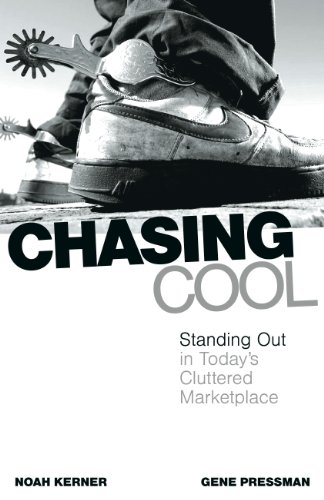
Cool isn't just a state of mind, a celebrity fad, or an American obsession -- it's a business. In boardrooms across America, product managers are examining vodka bottles and candy bars, tissue boxes and hamburgers, wondering how do we make this thing cool? How do we make this gadget into the iPod of our industry? How do we do what Nike did? How do we get what Target got? How do we infuse this product with that very desirable, nearly unattainable it factor?
In this wide-ranging exploration the authors Noah Kerner, a celebrated marketing maverick, and Gene Pressman, legendary creative visionary and former co-CEO of Barneys New York, have uncovered surprising and universal patterns and trends. They systematically parse the successes and failures of the last few decades -- in music and fashion, magazines and food, spirits and hip-hop culture. Their discoveries are pulled together in this definitive book on the commerce of cool.
Nike and Target endure as relevant brands not because of a shortsighted and gimmicky campaign. A dash of bling and a viral website don't amass long-term value. Brands are effectively developed when companies take substantial risk -- and face the possibility of real failure -- in order to open up the opportunity for real success.
Chasing Cool includes interviews with more than seventy of today's most respected innovators from Tom Ford and Russell Simmons to Ian Schrager and Christina Aguilera. And through this accomplished assemblage, Pressman and Kerner dig beneath the surface and reveal how emphasizing long-lasting relevance trumps a fleeting preoccupation with what's hot and what's not. In a multidimensional, entertaining, and eminently readable book that redefines how to appeal to today's savvy consumer, Kerner and Pressman explore the lessons to be learned by America's ongoing search for the ever-changing concept of cool. Readers will learn how to apply these lessons to their own businesses and creative projects in order to stand out in today's cluttered marketplace.
"Simply chasing cool is really a bad idea; inspired by cool is a great idea. Walk the street, see what's going on, and spit it out in your own way. Don't do it because you research it, do it because you breathe it."
-- Russell Simmons, chairman and CEO of Rush Communications
"I can't imagine having to hire a so-called Cool Hunter. If I had to go to someone else to be cool, I'd just pack up my bags and find a new profession."
-- Tony Hawk, professional skateboarder
"It's possible to be both mainstream and edgy. You can be the Goliath but you always have to think and behave like the David."
-- Scott Bedbury, former Nike and Starbucks marketing executive
"I love looking at trend reports because then I know exactly what I shouldn't be doing."
-- John Demsey, group president, Estée Lauder, MAC Cosmetics, Prescriptives, Sean John, and Tom Ford Beauty
"I don't believe in creation by committee. I think it's impossible."
-- Bonnie Fuller, chief editorial director and executive vice president of American Media Inc.
"We had to make a big decision at MTV when I was there. Do we grow old with our audience or are we going to be the voice of young America? We made the decision to be the voice of young America, which meant we had to let people grow out of MTV."
-- Bob Pittman, cofounder of MTV, former president of AOL
Die Inhaltsangabe kann sich auf eine andere Ausgabe dieses Titels beziehen.
Über die Autorinnen und Autoren
Noah Kerner began his music career as a DJ at the age of four-teen spinning in nightclubs across the country, performing as stage DJ for artists like Jennifer Lopez, and appearing on shows such as Today and The Tonight Show with Jay Leno. He is now cofounder and CEO of the marketing agency Noise (noisemarketing.com), which has been featured on 60 Minutes as the company "to go to if you want to influence the choices of that fickle, unpredictable 20-something demographic." Kerner was recently highlighted in Billboard magazine's "Top 30 Under 30" most influential business executives. He is a graduate of Cornell University.
Gene Pressman was co-CEO, creative director, and head of merchandising and marketing for Barneys New York for more than twenty-seven years, where he brought high-end brands like Armani, Versace, Prada, and Manolo Blahnik to the United States. Under Pressman's leadership, Barneys New York emerged as the defining force in retailing for upscale men's and women's ready-to-wear, accessories, and home furnishings. Pressman has been featured in such publications as The New York Times and Vogue and has appeared on the cover of New York magazine. He is a graduate of the Newhouse School at Syracuse University.
Auszug. © Genehmigter Nachdruck. Alle Rechte vorbehalten.
Chapter One: The iPod of My Industry: Whatever They Did, I Want That
A killer application is a powerful thing, which is why people are always looking for one.
In the age when more and more people believe there is a shortcut to cool, however, companies are increasingly frantic in their chase for one of those killer apps. And as a result, they're more likely than ever to be looking in someone else's backyard.
Of course, companies have always looked longingly into other company's yards. "In the '50s you wanted to be the General Motors of something," adman and Adweek columnist Tom Messner told us. "In the early '60s you wanted to be the Xerox of something, then it became the IBM of something, then the Nike of something, and the list goes on and on. At one point people even wanted to be the Japan of something. My friend Bill McGowan, CEO of MCI from 1968 to 1987, said this to me: there's always something that somebody wants to be the something of."
Today, the paradigm has shifted to another popular brand, and everyone wants a piece of it. What used to be about being like IBM or Japan has been replaced by something white, plastic, and highly portable. Today, everyone wants to be the...iPod of their industry!
How many times have you heard someone utter that phrase or a phrase just like it? And how many times have you thought to yourself, Like, who doesn't, dude?
Of course people want to be the iPod of their industry. Who doesn't want to be behind an amazing, original idea that single-handedly revolutionizes a business model?
(Exactly how revolutionary? Here's one eye-opening stat: according to the New York City Police Department, after years of falling numbers, subway crime recently went up 18 percent. The cause? iPod theft.)
But as Martin Puris, an advertising legend responsible for such campaigns as BMW's "Ultimate Driving Machine," told us, this Peeping Tom approach is usually the first step to not being the iPod of your industry. "Looking in another person's backyard is usually a replacement to thinking for yourself -- and unless you can execute better than your neighbor it's a surefire way to be second-best."
The next time someone says they want to be the iPod of their industry, ask them this: before he came up with the iPod, did Steve Jobs walk around telling people he wanted to be the Sony Walkman of his industry?
Think different is what should define every company, not Me-Too. The question is, How do you operate according to that philosophy? Do you give consumers what they want, what they're already expecting? Or do you give consumers what they don't yet know they want?
We believe that you give consumers what they don't yet know they want -- just when they're ready for it. In order to do that, it's necessary to go to market with a perfectly timed disruptive idea that breaks from the norm and fulfills an unmet need.
Fortunately, there are different ways to get there. Sometimes creating what feels as original as an iPod is a manicured illusion. Sometimes it has to do with change in the face of popular wisdom. Sometimes it's about being first to market; sometimes it's about being second. At times, it's both, or neither. And other times, as they used to say in the Rocky Horror Picture Show, it's just a step to the right. The trick is seeing the difference between that surefooted side step and the flatfooted chase for consequence.
AN ACQUIRED TASTE
There is nothing quite like the story of Grey Goose vodka to illustrate the complexities of creating a killer app. Consider for a moment the plight of the clear spirits industry. Modern vodka brands suffer from the same dilemma that plagues all digital audio players that aren't iPods. Not only are they peddling an often indistinct product that has very little color, taste, or character, but they must also compete with the iPod of their industry: Grey Goose.
By any objective standard, in less than seven years since it hit the market, Grey Goose has drowned the competition. Walk into any nightclub in New York City and you'll see the "it" vodka on about 80 percent of the tables. Goose can be found at all the high-end fashion events. Meanwhile, its urban cred is massive: rappers namecheck it while guzzling it down in videos. After rap duo 8Ball & MJG's Almost Famous came out in November 2001, sales of Grey Goose went up 600 percent. Goose is "super-premium." Sometimes, it gets upgraded to "ultrapremium." Just the feel of the brand name slipping past your lips -- "Goose, rocks, two limes, please" -- is considered prestigious.
Yes, there's no doubt that Grey Goose has succeeded in becoming the iPod of its industry. The fascinating part is how it got there.
A Matter of Taste
Is Grey Goose really the world's best tasting vodka? Is the iPod the best functioning portable music device? It doesn't matter. As the infamous expression goes, print the legend.
But let's seriously consider the question for a minute. Or, better yet, let's respond with another question: what, exactly, makes a vodka taste great?
The fact is that the appeal of a premium vodka is more about the absence of taste, the lack of any notable distinction: the less a vodka tastes like "liquor," the more likely one will be to guzzle it down. It was this very reason why the flavored-vodka market soared: all those peach and vanilla vodkas happened to taste even less like straight vodka. Vodka, for most consumers, is about mixing. The so-called "highly sophisticated" vodka drinker will scoff at that notion. But as Mr. T used to say, "Who the fool?" For is there really such a thing as a sophisticated vodka drinker (as opposed to, say, a sophisticated Bordeaux drinker), or is this a personal branding device?
Does anybody "taste" vodka when they're drinking it with cranberry, orange, tonic, or the ever-so-delicious Red Bull?
The factors that make vodka palatable are highly subjective. You can hang the prestige of your brand on taste, but there will always be yet another taste test, with a brand-new champ -- as the following well-documented New York Times study makes clear. If you're one of those lucky people who can actually discern the putative superiority of Grey Goose, the winner of this study may surprise you:
It was not exactly a victory for the underdog, but chalk it up as a triumph of the unexpected. The idea for the Dining section's tasting panel was to sample a range of the new high-end unflavored vodkas that have come on the market in the last few years in their beautifully designed bottles and to compare them with a selection of established super-premium brands. To broaden the comparison, or possibly as a bit of mischief, our tasting coordinator, Bernard Kirsch, added to our blind tasting a bottle of Smirnoff, the single best-selling unflavored vodka in the United States, but a definite step down in status, marketing and bottle design. After the 21 vodkas were sipped and the results compiled, the Smirnoff was our hands-down favorite.
Wait? Smirnoff? The best-tasting vodka? As the Times wrote, "Shocking." They concluded by adding, "[by] the end of our tasting it was Smirnoff at the top of our list, ahead of many other names that are no doubt of higher status in stylish bars and lounges. Some of those names did not even make our Top 10. Grey Goose, from France, one of the most popular vodkas, was felt to lack balance and seemed to have more than a touch of sweetness" (italics ours). Clearly, there's a critical lesson to be learned here: in a category that is based almost exclusively on a bland product -- a commodity like, say, vodka, tissues, water, whatever -- to truly break through, your point of...
„Über diesen Titel“ kann sich auf eine andere Ausgabe dieses Titels beziehen.
Weitere beliebte Ausgaben desselben Titels

Suchergebnisse für Chasing Cool: Standing Out in Today's Cluttered...

Beispielbild für diese ISBN
Chasing Cool Standing Out in T
Anbieter: World of Books (was SecondSale), Montgomery, IL, USA
Verkäuferbewertung 5 von 5 Sternen

Zustand: Acceptable. Item in acceptable condition! Textbooks may not include supplemental items i.e. CDs, access codes etc. Artikel-Nr. 00105803753
Gebraucht kaufen
EUR 4,32
Versand gratis
Versand innerhalb von USA
Versand innerhalb von USA
Anzahl: 1 verfügbar
Beispielbild für diese ISBN
Chasing Cool Standing Out in T
Anbieter: World of Books (was SecondSale), Montgomery, IL, USA
Verkäuferbewertung 5 von 5 Sternen
Zustand: Very Good. Item in very good condition! Textbooks may not include supplemental items i.e. CDs, access codes etc. Artikel-Nr. 00101867020
Gebraucht kaufen
EUR 4,32
Versand gratis
Versand innerhalb von USA
Versand innerhalb von USA
Anzahl: 4 verfügbar
Beispielbild für diese ISBN
Chasing Cool Standing Out in T
Anbieter: World of Books (was SecondSale), Montgomery, IL, USA
Verkäuferbewertung 5 von 5 Sternen
Zustand: Good. Item in good condition. Textbooks may not include supplemental items i.e. CDs, access codes etc. Artikel-Nr. 00104297164
Gebraucht kaufen
EUR 4,32
Versand gratis
Versand innerhalb von USA
Versand innerhalb von USA
Anzahl: 2 verfügbar
Beispielbild für diese ISBN
Chasing Cool : Standing Out in Today's Cluttered Marketplace
Anbieter: Better World Books: West, Reno, NV, USA
Verkäuferbewertung 5 von 5 Sternen
Zustand: Fine. 1 Edition. Used book that is in almost brand-new condition. May contain a remainder mark. Better World Books: Buy Books. Do Good. Artikel-Nr. 16785333-75
Gebraucht kaufen
EUR 6,47
Versand gratis
Versand innerhalb von USA
Versand innerhalb von USA
Anzahl: 1 verfügbar
Beispielbild für diese ISBN
Chasing Cool : Standing Out in Today's Cluttered Marketplace
Anbieter: Better World Books, Mishawaka, IN, USA
Verkäuferbewertung 5 von 5 Sternen
Zustand: Good. 1 Edition. Former library copy. Pages intact with minimal writing/highlighting. The binding may be loose and creased. Dust jackets/supplements are not included. Includes library markings. Stock photo provided. Product includes identifying sticker. Better World Books: Buy Books. Do Good. Artikel-Nr. 810068-6
Gebraucht kaufen
EUR 6,47
Versand gratis
Versand innerhalb von USA
Versand innerhalb von USA
Anzahl: 1 verfügbar
Beispielbild für diese ISBN
Chasing Cool: Standing Out in Today's Cluttered Marketplace
Anbieter: ThriftBooks-Phoenix, Phoenix, AZ, USA
Verkäuferbewertung 5 von 5 Sternen
Hardcover. Zustand: Very Good. No Jacket. Missing dust jacket; May have limited writing in cover pages. Pages are unmarked. ~ ThriftBooks: Read More, Spend Less. Artikel-Nr. G0743497090I4N01
Gebraucht kaufen
EUR 8,47
Versand gratis
Versand innerhalb von USA
Versand innerhalb von USA
Anzahl: 1 verfügbar
Beispielbild für diese ISBN
Chasing Cool: Standing Out in Today's Cluttered Marketplace
Anbieter: ThriftBooks-Atlanta, AUSTELL, GA, USA
Verkäuferbewertung 5 von 5 Sternen
Hardcover. Zustand: Very Good. No Jacket. Missing dust jacket; May have limited writing in cover pages. Pages are unmarked. ~ ThriftBooks: Read More, Spend Less. Artikel-Nr. G0743497090I4N01
Gebraucht kaufen
EUR 8,47
Versand gratis
Versand innerhalb von USA
Versand innerhalb von USA
Anzahl: 1 verfügbar
Beispielbild für diese ISBN
Chasing Cool: Standing Out in Today's Cluttered Marketplace
Anbieter: ThriftBooks-Dallas, Dallas, TX, USA
Verkäuferbewertung 5 von 5 Sternen
Hardcover. Zustand: Very Good. No Jacket. May have limited writing in cover pages. Pages are unmarked. ~ ThriftBooks: Read More, Spend Less. Artikel-Nr. G0743497090I4N00
Gebraucht kaufen
EUR 8,47
Versand gratis
Versand innerhalb von USA
Versand innerhalb von USA
Anzahl: 2 verfügbar
Beispielbild für diese ISBN
Chasing Cool: Standing Out in Today's Cluttered Marketplace
Anbieter: ThriftBooks-Atlanta, AUSTELL, GA, USA
Verkäuferbewertung 5 von 5 Sternen
Hardcover. Zustand: Very Good. No Jacket. May have limited writing in cover pages. Pages are unmarked. ~ ThriftBooks: Read More, Spend Less. Artikel-Nr. G0743497090I4N00
Gebraucht kaufen
EUR 8,47
Versand gratis
Versand innerhalb von USA
Versand innerhalb von USA
Anzahl: 1 verfügbar
Beispielbild für diese ISBN
Chasing Cool: Standing Out in Today's Cluttered Marketplace
Anbieter: ThriftBooks-Reno, Reno, NV, USA
Verkäuferbewertung 5 von 5 Sternen
Hardcover. Zustand: Very Good. No Jacket. May have limited writing in cover pages. Pages are unmarked. ~ ThriftBooks: Read More, Spend Less. Artikel-Nr. G0743497090I4N00
Gebraucht kaufen
EUR 8,47
Versand gratis
Versand innerhalb von USA
Versand innerhalb von USA
Anzahl: 1 verfügbar