
Verwandte Artikel zu The Chinese Takeout Cookbook: Quick and Easy Dishes...
Inhaltsangabe
America’s love affair with Chinese food dates back more than a century. Today, such dishes as General Tso’s Chicken, Sweet and Sour Pork, and Egg Rolls are as common as hamburgers and spaghetti. Probably at this moment, a drawer in your kitchen is stuffed with Chinese takeout menus, soy sauce packets, and wooden chopsticks, right?
But what if you didn’t have to eat your favorites out of a container?
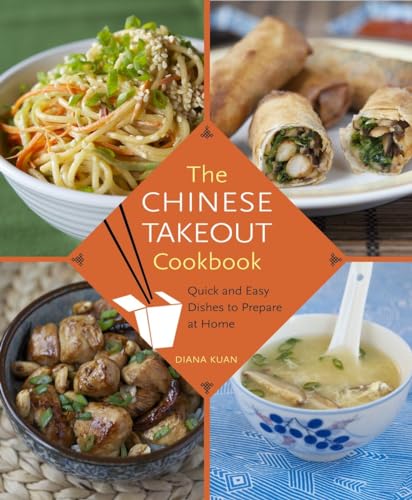
In The Chinese Takeout Cookbook, Chinese food blogger and cooking instructor Diana Kuan brings Chinatown to your home with this amazing collection of more than eighty popular Chinese takeout recipes—appetizers, main courses, noodle and rice dishes, and desserts—all easy-to-prepare and MSG-free. Plus you’ll discover how to
• stock your pantry with ingredients you can find at your local supermarket
• season and master a wok for all your Chinese cooking needs
• prepare the flavor trifecta of Chinese cuisine—ginger, garlic, and scallions
• wrap egg rolls, dumplings, and wontons like a pro
• steam fish to perfection every time
• create vegetarian variations that will please everyone’s palate
• whip up delectable sweet treats in time for the Chinese New Year
The Chinese Takeout Cookbook also features mouthwatering color photos throughout as well as sidebars that highlight helpful notes, including how to freeze and recook dumplings; cooking tidbits, such as how to kick up your dish with a bit of heat; and the history behind some of your favorite comfort foods, including the curious New York invention of the pastrami egg roll and the influence of Tiki culture on Chinese cuisine. So, put down that takeout menu, grab the wok, and let’s get cooking!
Here for the first time—in one fun, easy, and tasty collection—are more than 80 favorite Chinese restaurant dishes to make right in your own kitchen:
• Cold Sesame Noodles
• Kung Pao Chicken
• Classic Barbecue Spareribs
• Beef Chow Fun
• Homemade Chili Oil
• Hot and Sour Soup
• Chinatown Roast Duck
• Moo Shu Pork
• Dry-Fried String Beans
• Black Sesame Ice Cream
• And of course, perfectly fried Pork and Shrimp Egg Rolls!
“Diana Kuan chronicles America’s love affair with Chinese food. The Chinese Takeout Cookbook is the perfect reason to throw out those menus cluttering your kitchen drawers!”—Patricia Tanumihardja, author of The Asian Grandmothers Cookbook
Die Inhaltsangabe kann sich auf eine andere Ausgabe dieses Titels beziehen.
Über die Autorin bzw. den Autor
Diana Kuan is a food writer and cooking instructor who has taught Chinese cooking in Beijing and New York. Her writing on food and travel has appeared in The Boston Globe, Gourmet, Food & Wine, and Time Out New York, among other publications. She has appeared on the CBS Early Show and other broadcast media. She is the author of the blog Appetite for China, which has more than 6.5 million page views, and teaches Chinese cooking at Whole Foods and the Institute for Culinary Education (ICE) in New York, where she currently resides.
Auszug. © Genehmigter Nachdruck. Alle Rechte vorbehalten.
chapter 1
the chinese pantry
ingredients
Ingredients used in Chinese cooking can be found in Asian markets, the international aisles of supermarkets, and increasingly online (see Resources, page 179). Below is a list of common items used in the recipes in this book.
vegetables
Bamboo shoots - The tender and edible stems of the bamboo plant are called bamboo shoots. While fresh bamboo shoots are hard to find, canned bamboo shoots are available year-round in most supermarkets. You can buy them as slices or thin strips. Once the cans are open, the shoots can be stored in a water-filled container in the fridge for up to two weeks; just be sure to change the water every other day.
bean sprouts - Short for “mung bean sprouts,” bean sprouts are about three inches long with small yellow heads and are sold fresh at both Chinese and Western markets. They shouldn’t be confused with soybean sprouts, which are greenish and more curled. When buying mung bean sprouts, select the sprouts with crisp white bodies, without any browning. The Chinese usually pluck off the head (bean) and tail (root) of the sprouts for aesthetic and textural purposes, though both the head and tail are still perfectly edible. Use the sprouts on the day of purchase or store them in your fridge’s produce crisper bin in a plastic bag for up to three days.
bok choy - This member of the cabbage family is a versatile vegetable that can be used in a number of ways, from stir-frying to steaming to soups. Regular bok choy, which are almost a foot long, are also called bok choy sum, or “heart” of the bok choy. The recipes in this book, however, call for either regular small baby bok choy, about 3 inches long, with bright white stems and dark green leaves, or the slightly larger variety of baby bok choy called Shanghai bok choy, about 4 inches long, which have pale yellow stems and lighter green leaves. When shopping, look for crisp stalks and leaves that aren’t wilting.
chili peppers - In Chinese cuisine, fresh bird’s eye chilies, also called Thai chilies, are often chopped and made into chili sauce. Dried chilies, on the other hand, are stir-fried into dishes such as Kung Pao Chicken (page 65) and Dry-Fried Green Beans (page 128) to add a smoky, spicy flavor. You can keep them whole or, for a much spicier dish, split the chilies in half lengthwise to release the seeds, which contain most of the heat.
chinese broccoli - Called gai lan in Cantonese, Chinese broccoli is sold in large bunches year-round in Chinese markets. Instead of the big florets that Western broccoli has, Chinese broccoli has thick glossy leaves. It’s also slightly more bitter in its raw state than its Western counterpart. Select the bunch with dark green, crisp leaves and small closed white buds that are somewhat hidden within the leaves. Yellowing leaves and open flowers indicate the broccoli isn’t very fresh.
chinese eggplant - Unlike Western eggplant, Chinese eggplant is long and slender in appearance and less bitter in taste. Look for eggplants with smooth exteriors, a firm texture, and little to no bruising in the lavender skin.
cilantro - Also known as fresh coriander, cilantro is frequently used in Chinese cuisine to both heighten other flavors and cut the richness of a dish, for example, for Taiwanese-Style Pork Belly Buns (page 46). It is also used extensively to cook with and to garnish seafood.
ginger - One of the key ingredients in almost all Chinese dishes, ginger is part of the flavor trifecta of Chinese seasonings, along with garlic and scallions. In stir-frying, the three are often cooked first before the other ingredients, forming a strong flavor base. Ginger’s clean sharpness makes both seafood and meat taste fresher, and also cuts the richness of fatty dishes. Look for ginger that is heavy and hard; lightness in weight and wrinkled skin indicate that it’s not very fresh. Ginger should always be peeled before use (see The Flavor Trifecta: Ginger, Garlic, and Scallions, page 16).
napa cabbage - This Asian cabbage variety is more oblong than green cabbage, with white or yellow crinkly leaves. Napa cabbage is commonly used in stir-frying, braising, or as a dumpling filling because of its delicate flavor. It can be stored in the crisper bin of the refrigerator for up to a week.
shiitake mushrooms - The most commonly used mushrooms in Chinese cooking are sold both fresh and dried. Fresh shiitakes are widely available in Western markets. When preparing fresh shiitake mushrooms, be sure to wipe the caps clean with a damp towel and remove the stems. Dried shiitakes are most easily found in Asian markets. They have an earthy aroma and contribute an umami flavor that is prized in Chinese cooking. The best dried shiitakes have thick caps with white fissures on top. Both types of shiitakes are extremely versatile; they can be stir-fried, steamed, grilled, braised, or added to soups.
scallions - Also called green onions, scallions add a delicious onion flavor to dishes ranging from stir-fries to dumplings to scallion pancakes. Often, a recipe will specify white parts only, green parts only, or both white and green parts. The general rule is that white parts, which have a stronger flavor, are used at the beginning of cooking, whereas the milder green parts are used toward the end of cooking or as a garnish. The traditional way to slice scallions is at an angle to expose more of the flavorful insides. See The Flavor Trifecta on page 16
water chestnuts - Lightly sweet in flavor, water chestnuts add a refreshing crispness to many Chinese dishes. Few Asian markets have them fresh, so it’s easiest to buy them canned in supermarkets. Just drain and discard the canning liquid and chop or slice the water chestnuts before use.
tofu - Sometimes called bean curd, tofu is formed by pressing soy milk solids into blocks. It’s sold in a few different varieties. The best types of tofu to use for stir-frying and braising are firm or extra firm. Soft tofu is good for simmering in soups or adding at the end in cooking Mapo Tofu (page 123). Once a sealed package of tofu is opened, use the tofu within two to three days.
water spinach - With stalks about 1½ feet long and narrow pointed leaves, water spinach is sold in Asian markets in very large bunches. The stalks are most commonly stir-fried, with a minimal amount of seasonings. (If water spinach is unavailable, you can substitute watercress or regular spinach.) While the bunch will look enormous, it actually cooks down a lot in the wok. To use, trim the thicker bottom half of the stems, then cut the remaining top half of the stems and the leaves into 3-inch lengths.
sauces, wines, vinegars, and other condiments.
bean sauce - This staple of Sichuan and Hunan cooking, also known as yellow bean paste, is made from fermented soybeans. An opened jar with a tight-fitting lid will keep indefinitely in the back of the fridge.
chili sauce and chili garlic sauce - Chinese chili sauces make a wonderful spicy addition to stir-fries. In recipes that call for chili sauce, you can also substitute chili garlic sauces that don’t have a very pronounced garlic flavor, such as the chili garlic sauce from Huy Fong Foods. Louisiana hot sauce is also a great substitute for Asian chili sauces. If you would like to try making your own chili sauce, see Basic Chili Sauce (page 174).
chili bean sauce - This spicy bean sauce is simply bean sauce spiked with chili oil or chili paste. Some brands include other flavorings, such as garlic, sesame oil, sugar, rice wine, and salt. As a substitute you can mix equal parts...
„Über diesen Titel“ kann sich auf eine andere Ausgabe dieses Titels beziehen.
Suchergebnisse für The Chinese Takeout Cookbook: Quick and Easy Dishes...

Beispielbild für diese ISBN
The Chinese Takeout Cookbook : Quick and Easy Dishes to Prepare at Home
Verlag:
Random House Publishing Group, 2012
ISBN 10: 034552912X
ISBN 13: 9780345529121
Gebraucht
Hardcover
Anbieter: Better World Books, Mishawaka, IN, USA
Verkäuferbewertung 5 von 5 Sternen

Zustand: Fine. Used book that is in almost brand-new condition. May contain a remainder mark. Better World Books: Buy Books. Do Good. Artikel-Nr. 68964685-6
Gebraucht kaufen
EUR 7,68
Versand gratis
Versand innerhalb von USA
Versand innerhalb von USA
Anzahl: 1 verfügbar
Beispielbild für diese ISBN
The Chinese Takeout Cookbook: Quick and Easy Dishes to Prepare at Home
Anbieter: ThriftBooks-Dallas, Dallas, TX, USA
Verkäuferbewertung 5 von 5 Sternen
Hardcover. Zustand: Good. No Jacket. Pages can have notes/highlighting. Spine may show signs of wear. ~ ThriftBooks: Read More, Spend Less. Artikel-Nr. G034552912XI3N00
Gebraucht kaufen
EUR 11,30
Versand gratis
Versand innerhalb von USA
Versand innerhalb von USA
Anzahl: 1 verfügbar
Beispielbild für diese ISBN
The Chinese Takeout Cookbook: Quick and Easy Dishes to Prepare at Home
Anbieter: World of Books (was SecondSale), Montgomery, IL, USA
Verkäuferbewertung 5 von 5 Sternen
Hardback. Zustand: Good. America's love affair with Chinese food dates back more than a century. Today, such dishes as General Tso's Chicken, Sweet and Sour Pork, and Egg Rolls are as common as hamburgers and spaghetti. Probably at this moment, a drawer in your kitchen is stuffed with Chinese takeout menus, soy sauce packets, and wooden chopsticks, right? But what if you didn't have to eat your favorites out of a container? In The Chinese Takeout Cookbook, Chinese food blogger and cooking instructor Diana Kuan brings Chinatown to your home with this amazing collection of more than eighty popular Chinese takeout recipes--appetizers, main courses, noodle and rice dishes, and desserts--all easy-to-prepare and MSG-free. Plus you'll discover how to * stock your pantry with ingredients you can find at your local supermarket * season and master a wok for all your Chinese cooking needs * prepare the flavor trifecta of Chinese cuisine--ginger, garlic, and scallions * wrap egg rolls, dumplings, and wontons like a pro * steam fish to perfection every time * create vegetarian variations that will please everyone's palate * whip up delectable sweet treats in time for the Chinese New Year The Chinese Takeout Cookbook also features mouthwatering color photos throughout as well as sidebars that highlight helpful notes, including how to freeze and recook dumplings; cooking tidbits, such as how to kick up your dish with a bit of heat; and the history behind some of your favorite comfort foods, including the curious New York invention of the pastrami egg roll and the influence of Tiki culture on Chinese cuisine. So, put down that takeout menu, grab the wok, and let's get cooking! Here for the first time--in one fun, easy, and tasty collection--are more than 80 favorite Chinese restaurant dishes to make right in your own kitchen: * Cold Sesame Noodles * Kung Pao Chicken * Classic Barbecue Spareribs * Beef Chow Fun * Homemade Chili Oil * Hot and Sour Soup * Chinatown Roast Duck * Moo Shu Pork * Dry-Fried String Beans * Black Sesame Ice Cream * And of course, perfectly fried Pork and Shrimp Egg Rolls! "Diana Kuan chronicles America's love affair with Chinese food. The Chinese Takeout Cookbook is the perfect reason to throw out those menus cluttering your kitchen drawers!"--Patricia Tanumihardja, author of The Asian Grandmothers Cookbook. Artikel-Nr. CIN034552912XG
Gebraucht kaufen
EUR 12,35
Versand gratis
Versand innerhalb von USA
Versand innerhalb von USA
Anzahl: 1 verfügbar
Beispielbild für diese ISBN
The Chinese Takeout Cookbook: Quick and Easy Dishes to Prepare at Home
Anbieter: World of Books (was SecondSale), Montgomery, IL, USA
Verkäuferbewertung 5 von 5 Sternen
Hardback. Zustand: Very Good. America's love affair with Chinese food dates back more than a century. Today, such dishes as General Tso's Chicken, Sweet and Sour Pork, and Egg Rolls are as common as hamburgers and spaghetti. Probably at this moment, a drawer in your kitchen is stuffed with Chinese takeout menus, soy sauce packets, and wooden chopsticks, right? But what if you didn't have to eat your favorites out of a container? In The Chinese Takeout Cookbook, Chinese food blogger and cooking instructor Diana Kuan brings Chinatown to your home with this amazing collection of more than eighty popular Chinese takeout recipes--appetizers, main courses, noodle and rice dishes, and desserts--all easy-to-prepare and MSG-free. Plus you'll discover how to * stock your pantry with ingredients you can find at your local supermarket * season and master a wok for all your Chinese cooking needs * prepare the flavor trifecta of Chinese cuisine--ginger, garlic, and scallions * wrap egg rolls, dumplings, and wontons like a pro * steam fish to perfection every time * create vegetarian variations that will please everyone's palate * whip up delectable sweet treats in time for the Chinese New Year The Chinese Takeout Cookbook also features mouthwatering color photos throughout as well as sidebars that highlight helpful notes, including how to freeze and recook dumplings; cooking tidbits, such as how to kick up your dish with a bit of heat; and the history behind some of your favorite comfort foods, including the curious New York invention of the pastrami egg roll and the influence of Tiki culture on Chinese cuisine. So, put down that takeout menu, grab the wok, and let's get cooking! Here for the first time--in one fun, easy, and tasty collection--are more than 80 favorite Chinese restaurant dishes to make right in your own kitchen: * Cold Sesame Noodles * Kung Pao Chicken * Classic Barbecue Spareribs * Beef Chow Fun * Homemade Chili Oil * Hot and Sour Soup * Chinatown Roast Duck * Moo Shu Pork * Dry-Fried String Beans * Black Sesame Ice Cream * And of course, perfectly fried Pork and Shrimp Egg Rolls! "Diana Kuan chronicles America's love affair with Chinese food. The Chinese Takeout Cookbook is the perfect reason to throw out those menus cluttering your kitchen drawers!"--Patricia Tanumihardja, author of The Asian Grandmothers Cookbook. Artikel-Nr. CIN034552912XVG
Gebraucht kaufen
EUR 12,35
Versand gratis
Versand innerhalb von USA
Versand innerhalb von USA
Anzahl: 1 verfügbar
Beispielbild für diese ISBN
The Chinese Takeout Cookbook: Quick and Easy Dishes to Prepare at Home
Anbieter: Wonder Book, Frederick, MD, USA
Verkäuferbewertung 5 von 5 Sternen
Zustand: Very Good. Very Good condition. Very Good dust jacket. A copy that may have a few cosmetic defects. May also contain light spine creasing or a few markings such as an owner's name, short gifter's inscription or light stamp. Artikel-Nr. R03Q-00688
Gebraucht kaufen
EUR 12,37
Versand gratis
Versand innerhalb von USA
Versand innerhalb von USA
Anzahl: 1 verfügbar
Beispielbild für diese ISBN
The Chinese Takeout Cookbook: Quick and Easy Dishes to Prepare at Home
Anbieter: medimops, Berlin, Deutschland
Verkäuferbewertung 5 von 5 Sternen
Zustand: very good. Gut/Very good: Buch bzw. Schutzumschlag mit wenigen Gebrauchsspuren an Einband, Schutzumschlag oder Seiten. / Describes a book or dust jacket that does show some signs of wear on either the binding, dust jacket or pages. Artikel-Nr. M0034552912X-V
Gebraucht kaufen
EUR 10,49
EUR 10,00 Versand
Versand von Deutschland nach USA
Versand von Deutschland nach USA
Anzahl: 1 verfügbar
Foto des Verkäufers
Chinese Takeout Cookbook: Quick and Easy Dishes to Prepare at Home
Verlag:
Ballantine Books, 2012
ISBN 10: 034552912X
ISBN 13: 9780345529121
Gebraucht
Hardcover
Erstausgabe
Signiert
Anbieter: Southampton Books, Sag Harbor, NY, USA
Verkäuferbewertung 5 von 5 Sternen
Hardcover. Zustand: Like New. Zustand des Schutzumschlags: Like New. First Edition. First Edition, First Printing. Not price-clipped ($30.00 price intact). Published by Ballantine Books, 2010. Quarto. Hardcover. Signed on flyleaf. Book is like new with slight spine lean. Dust jacket is like new with "Autographed Copy" sticker on front. 100% positive feedback. 30 day money back guarantee. NEXT DAY SHIPPING! Excellent customer service. All books packed carefully and ship with free delivery confirmation/tracking. All books come with free bookmarks. Ships from Sag Harbor, New York. Artikel-Nr. 195686
Gebraucht kaufen
EUR 32,11
EUR 4,44 Versand
Versand innerhalb von USA
Versand innerhalb von USA
Anzahl: 1 verfügbar
Beispielbild für diese ISBN
The Chinese Takeout Cookbook: Quick and Easy Dishes to Prepare at Home
Anbieter: Revaluation Books, Exeter, Vereinigtes Königreich
Verkäuferbewertung 5 von 5 Sternen
Hardcover. Zustand: Brand New. 11.11.2012 edition. 208 pages. 9.75x7.75x0.75 inches. In Stock. Artikel-Nr. 034552912X
Neu kaufen
EUR 32,89
EUR 14,85 Versand
Versand von Vereinigtes Königreich nach USA
Versand von Vereinigtes Königreich nach USA
Anzahl: 1 verfügbar
Foto des Verkäufers
The Chinese Takeout Cookbook : Quick and Easy Dishes to Prepare at Home
Verlag:
Random House Publishing Group Dez 2012, 2012
ISBN 10: 034552912X
ISBN 13: 9780345529121
Neu
Hardcover
Anbieter: AHA-BUCH GmbH, Einbeck, Deutschland
Verkäuferbewertung 5 von 5 Sternen
Buch. Zustand: Neu. Neuware - America's love affair with Chinese food dates back more than a century. Today, such dishes as General Tso's Chicken, Sweet and Sour Pork, and Egg Rolls are as common as hamburgers and spaghetti. Probably at this moment, a drawer in your kitchen is stuffed with Chinese takeout menus, soy sauce packets, and wooden chopsticks, right But what if you didn't have to eat your favorites out of a container In The Chinese Takeout Cookbook, Chinese food blogger and cooking instructor Diana Kuan brings Chinatown to your home with this amazing collection of more than eighty popular Chinese takeout recipesappetizers, main courses, noodle and rice dishes, and dessertsall easy-to-prepare and MSG-free. Plus you'll discover how to stock your pantry with ingredients you can find at your local supermarket season and master a wok for all your Chinese cooking needs prepare the flavor trifecta of Chinese cuisineginger, garlic, and scallions wrap egg rolls, dumplings, and wontons like a pro steam fish to perfection every time create vegetarian variations that will please everyone's palate whip up delectable sweet treats in time for the Chinese New Year The Chinese Takeout Cookbookalso features mouthwatering color photos throughout as well as sidebars that highlight helpful notes, including how to freeze and recook dumplings; cooking tidbits, such as how to kick up your dish with a bit of heat; and the history behind some of your favorite comfort foods, including the curious New York invention of the pastrami egg roll and the influence of Tiki culture on Chinese cuisine. So, put down that takeout menu, grab the wok, and let's get cooking!Here for the first timein one fun, easy, and tasty collectionare more than 80 favorite Chinese restaurant dishes to make right in your own kitchen: Cold Sesame Noodles Kung Pao Chicken Classic Barbecue Spareribs Beef Chow Fun Homemade Chili Oil Hot and Sour Soup Chinatown Roast Duck Moo Shu Pork Dry-Fried String Beans Black Sesame Ice Cream And of course, perfectly fried Pork and Shrimp Egg Rolls!"Diana Kuan chronicles America's love affair with Chinese food.The Chinese Takeout Cookbookis the perfect reason to throw out those menus cluttering your kitchen drawers!"Patricia Tanumihardja, author ofThe Asian Grandmothers Cookbook. Artikel-Nr. 9780345529121
Neu kaufen
EUR 37,72
EUR 35,00 Versand
Versand von Deutschland nach USA
Versand von Deutschland nach USA
Anzahl: 1 verfügbar
Foto des Verkäufers
The Chinese Takeout Cookbook
Verlag:
Random House Publishing Group, 2012
ISBN 10: 034552912X
ISBN 13: 9780345529121
Neu
Hardcover
Anbieter: moluna, Greven, Deutschland
Verkäuferbewertung 5 von 5 Sternen
Zustand: New. Diana Kuan is a food writer and cooking instructor who has taught Chinese cooking in Beijing and New York. Her writing on food and travel has appeared in The Boston Globe, Gourmet, Food & Wine, and Time Out New York, among other pub. Artikel-Nr. 897814189
Neu kaufen
EUR 28,16
EUR 48,99 Versand
Versand von Deutschland nach USA
Versand von Deutschland nach USA
Anzahl: Mehr als 20 verfügbar