
Verwandte Artikel zu Blood Pressure Down: The 10-Step Plan to Lower Your...
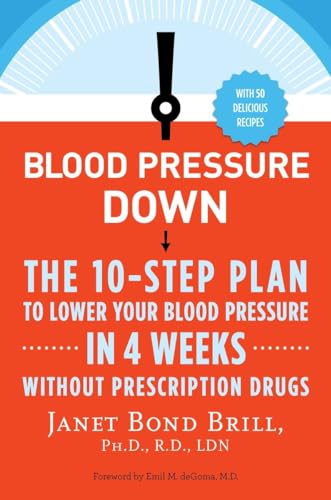
Blood Pressure Down: The 10-Step Plan to Lower Your Blood Pressure in 4 Weeks--Without Prescription Drugs - Softcover
Inhaltsangabe
For the nearly 78 million Americans with hypertension, a safe, effective lifestyle plan—incorporating the DASH diet principles and much more—for lowering blood pressure naturally
If you have high blood pressure, you're not alone: nearly a third of adult Americans have been diagnosed with hypertension, and another quarter are well on their way. Yet a whopping 56 percent of diagnosed patients do not have it under control. The good news? Hypertension is easily treatable (and preventable), and you can take action today to bring your blood pressure down in just four weeks—without the potential dangers and side effects of prescription medications.
In Blood Pressure Down, Janet Bond Brill distills what she's learned over decades of helping her patients lower their blood pressure into a ten-step lifestyle plan that's manageable for anyone. You'll:
• harness the power of blood pressure power foods like bananas, spinach, and yogurt
• start a simple regimen of exercise and stress reduction
• stay on track with checklists, meal plans, and more than fifty simple recipes
Easy, effective, safe—and delicious—Blood Pressure Down is the encouraging resource that empowers you, or your loved ones, to lower your blood pressure and live a longer, heart-healthy life.
Die Inhaltsangabe kann sich auf eine andere Ausgabe dieses Titels beziehen.
Über die Autorin bzw. den Autor
JANET BRILL, PhD., RD, LDN, is a nationally recognized expert in cardiovascular disease prevention and the author of Cholesterol Down and Prevent a Second Heart Attack, and she has been a nutritionist in private practice for many years.
Auszug. © Genehmigter Nachdruck. Alle Rechte vorbehalten.
Chapter 1
Understanding the Problem
The doctor of the future will give no medicine, but will interest his patients in the care of the human body, in diet, and in the cause and prevention of disease.
—Thomas Alva Edison
LOOSENING THE GRIP OF HIGH BLOOD PRESSURE
Why do so many people in this country have high blood pressure? What triggers the squeeze on the arteries that puts you at grave risk for heart disease and stroke, the first- and third-leading causes of death in the United States?
We used to think that high blood pressure was an inevitable consequence of aging. But in recent decades, research has revealed a surprising truth: high blood pressure doesn’t have to be a by-product of getting older. It is a lifestyle-borne illnessthat is more related to our daily habits than to our biological clock. A toxic mix of calorie overload—especially from processed foods high in salt, sugars, and damaging fats—inactivity, and middle-aged spread instigates the rising squeeze on the arteries,a relentless pressure cooker that eventually injures the fragile cells that line our inner arterial walls, causing irreparable and life-threatening damage. The good news? All this means that high blood pressure can be prevented and treated.
In the chapters that follow, you will discover how, when, and why your blood pressure began to rise. You will then learn about the exciting world of nonmedicinal approaches to lowering blood pressure and how you can take control of your blood pressurethe Blood Pressure Down way. These tools will allow you to conquer high blood pressure, reverse the course of your disease, and ultimately protect yourself against heart attacks and stroke—the most likely end product of years of uncontrolled high blood pressure—formany decades to come.
America’s Blood Pressure Burden
If you have been diagnosed with high blood pressure, you are certainly not alone. The number of Americans who have high blood pressure has risen sharply in the past few decades. According to the most recent Centers for Disease Control and Prevention estimate,more than 76 million adult Americans—about one-third of the population—suffer from this life-threatening condition. Early high blood pressure, which is also known as prehypertension and describes a blood pressure measurement that is higher than normalbut not yet in the high blood pressure range, afflicts an additional one-third of adult Americans. In fact, new survey data show that approximately 70 percent of adult Americans have an unhealthy blood pressure level (34 percent have full-blown hypertensionand 36 percent have prehypertension).1 The incidence of high blood pressure rises with age, such that more than half of all Americans sixty-five and older have the condition. This disease damages not only our nation’s health but also our wallets: high bloodpressure is estimated to cost the United States approximately $74 billion in health care services, medications, and missed days of work annually. Of all the cardiovascular diseases (high blood pressure, heart disease, heart failure, and stroke), hypertensionis the most expensive, with annual costs projected to increase to $200 billion by the year 2030.2
What Is Hypertension?
Hypertension is the medical term for high blood pressure. It is an extraordinarily common cardiovascular disease (CVD) in the United States. In fact, it is the most widespread chronic disease in Western society. Despite major medical advances in the understandingand treatment of high blood pressure over the past several decades, the disease remains the most common medical diagnosis in the United States and the condition that doctors write the most prescriptions for. It is also the number one cause of stroke and kidneydisease and a principal cause of heart disease and blindness. High blood pressure ranks among the most powerful risk factors for developing CVD and accounts for about 30 percent of all cardiovascular events (primarily heart attacks or stroke). No wonder yourdoctor is so concerned! Blood pressure is the vital sign that doctors monitor most often and treat most aggressively. And rightly so—in simple terms, walking around with untreated high blood pressure makes you a ticking time bomb, liable to suffer a heartattack or stroke.
You should also know that the odds are very good that you will die from some form of CVD—our nation’s deadliest epidemic. In the United States, one person dies from CVD approximately every thirty-nine seconds.3 Combine that overwhelming death tollwith the staggering direct cost to the global health care system of more than $500 billion annually and you will begin to grasp the magnitude of this huge public health concern.4
High blood pressure is also known as the “silent killer” because it is a largely symptomless disease. This is what makes high blood pressure so insidious: you can’t see or feel it, yet if it is left untreated, it will kill you. It is no wonder that 8 percentof the adult U.S. population has undiagnosed high blood pressure—they can’t feel that anything is wrong. Perhaps this is one reason that, of the over 76 million adult Americans already diagnosed with high blood pressure, a whopping 56 percent do not have it under control. If you are one of the people who believes that if there was really a problem you would feel it, think again. You are taking a chancewith your life. The fact is, the higher your numbers and the longer you have uncontrolled high blood pressure, the greater your risk of developing the devastating health consequences that often accompany high blood pressure—all the more reason for you tofind out your numbers and start today to get your blood pressure down.
Prolong Your Life, Preserve Your Health
The good news is that high blood pressure is one of the few risk factors for cardiovascular disease that is recognized as reversible. Scientific studies have proven that getting your blood pressure under control will preserve your health.5 High blood pressureis a lifestyle disease. So modifying your lifestyle is your most powerful protection against diseases of the heart and blood vessels. Healthy lifestyle modifications (exercise, consuming certain foods, and reducing intake of other foods) have proven to be themost effective medicine both for preventing new-onset high blood pressure and for reducing diagnosed high blood pressure quickly and safely.
What Do the Blood Pressure Numbers Mean?
Your blood pressure is one of the main vital signs, or measures of your physiology, that give your health care provider a picture of your general state of health. (Other vital signs typically include your heart rate, body temperature, and respiratory rate.)But what do the numbers mean? The heart is a muscle with the primary function of pumping blood. When the heart beats, it pumps blood around the large network of blood vessels in your body, and it must create pressure to propel the blood. The term blood pressure(also known as systemic blood pressure) typically refers to the pressure in the arteries, excluding those between the heart and lungs. (This is different from pulmonary blood pressure, which refers to the pressure in the specific arteries circulating bloodbetween the heart and the lungs.) Your blood pressure normally rises when the heart beats—when blood is being propelled out from the heart into the aorta or main artery—and falls when the heart...
„Über diesen Titel“ kann sich auf eine andere Ausgabe dieses Titels beziehen.
Suchergebnisse für Blood Pressure Down: The 10-Step Plan to Lower Your...

Beispielbild für diese ISBN
Blood Pressure Down: The 10-St
Anbieter: World of Books (was SecondSale), Montgomery, IL, USA
Verkäuferbewertung 5 von 5 Sternen

Zustand: Acceptable. Item in acceptable condition! Textbooks may not include supplemental items i.e. CDs, access codes etc. Artikel-Nr. 00110910023
Gebraucht kaufen
EUR 3,99
Versand gratis
Versand innerhalb von USA
Versand innerhalb von USA
Anzahl: 1 verfügbar
Beispielbild für diese ISBN
Blood Pressure Down: The 10-Step Plan to Lower Your Blood Pressure in 4 Weeks--Without Prescription Drugs
Verlag:
Potter/Ten Speed/Harmony/Rodale, 2013
ISBN 10: 0307986357
ISBN 13: 9780307986351
Gebraucht
Paperback
Anbieter: World of Books (was SecondSale), Montgomery, IL, USA
Verkäuferbewertung 5 von 5 Sternen
Paperback. Zustand: Very Good. The definitive, ten-step lifestyle plan for lowering blood pressure quickly and naturally, from a renowned expert in cardiovascular disease prevention If you have high blood pressure, you're not alone: nearly a third of adult Americans--over a hundred million people--have been diagnosed with hypertension, and another quarter are well on their way. Yet a whopping 56 percent of diagnosed patients do not have it under control. The good news? Hypertension is easily treatable (and preventable), and you can take action today to bring your blood pressure down in just four weeks--without the potential dangers and side effects of prescription medications. In Blood Pressure Down, Janet Bond Brill distills what she's learned over decades of helping her patients lower their blood pressure, as well as the DASH diet principles and much more, into a ten-step lifestyle plan that's manageable for anyone. You'll discover how to: * harness the power of blood pressure power foods like bananas, spinach, and yogurt * start a simple regimen of exercise and stress reduction * stay on track with checklists, meal plans, and more than fifty simple recipes Easy, effective, safe--and delicious--Blood Pressure Down is the encouraging resource that empowers you, or your loved ones, to lower your blood pressure and live a longer, heart-healthy life. Artikel-Nr. 00107836099
Gebraucht kaufen
EUR 4,01
Versand gratis
Versand innerhalb von USA
Versand innerhalb von USA
Anzahl: 2 verfügbar
Beispielbild für diese ISBN
Blood Pressure Down: The 10-Step Plan to Lower Your Blood Pressure in 4 Weeks--Without Prescription Drugs
Verlag:
Potter/Ten Speed/Harmony/Rodale, 2013
ISBN 10: 0307986357
ISBN 13: 9780307986351
Gebraucht
Paperback
Anbieter: World of Books (was SecondSale), Montgomery, IL, USA
Verkäuferbewertung 5 von 5 Sternen
Paperback. Zustand: Good. The definitive, ten-step lifestyle plan for lowering blood pressure quickly and naturally, from a renowned expert in cardiovascular disease prevention If you have high blood pressure, you're not alone: nearly a third of adult Americans--over a hundred million people--have been diagnosed with hypertension, and another quarter are well on their way. Yet a whopping 56 percent of diagnosed patients do not have it under control. The good news? Hypertension is easily treatable (and preventable), and you can take action today to bring your blood pressure down in just four weeks--without the potential dangers and side effects of prescription medications. In Blood Pressure Down, Janet Bond Brill distills what she's learned over decades of helping her patients lower their blood pressure, as well as the DASH diet principles and much more, into a ten-step lifestyle plan that's manageable for anyone. You'll discover how to: * harness the power of blood pressure power foods like bananas, spinach, and yogurt * start a simple regimen of exercise and stress reduction * stay on track with checklists, meal plans, and more than fifty simple recipes Easy, effective, safe--and delicious--Blood Pressure Down is the encouraging resource that empowers you, or your loved ones, to lower your blood pressure and live a longer, heart-healthy life. Artikel-Nr. 00103586484
Gebraucht kaufen
EUR 4,01
Versand gratis
Versand innerhalb von USA
Versand innerhalb von USA
Anzahl: Mehr als 20 verfügbar
Beispielbild für diese ISBN
Blood Pressure Down: The 10-Step Plan to Lower Your Blood Pressure in 4 Weeks--Without Prescription Drugs
Anbieter: ThriftBooks-Dallas, Dallas, TX, USA
Verkäuferbewertung 5 von 5 Sternen
Paperback. Zustand: Fair. No Jacket. Readable copy. Pages may have considerable notes/highlighting. ~ ThriftBooks: Read More, Spend Less. Artikel-Nr. G0307986357I5N00
Gebraucht kaufen
EUR 5,90
Versand gratis
Versand innerhalb von USA
Versand innerhalb von USA
Anzahl: 1 verfügbar
Beispielbild für diese ISBN
Blood Pressure Down: The 10-Step Plan to Lower Your Blood Pressure in 4 Weeks--Without Prescription Drugs
Anbieter: ThriftBooks-Atlanta, AUSTELL, GA, USA
Verkäuferbewertung 5 von 5 Sternen
Paperback. Zustand: Good. No Jacket. Former library book; Pages can have notes/highlighting. Spine may show signs of wear. ~ ThriftBooks: Read More, Spend Less. Artikel-Nr. G0307986357I3N10
Gebraucht kaufen
EUR 5,90
Versand gratis
Versand innerhalb von USA
Versand innerhalb von USA
Anzahl: 1 verfügbar
Beispielbild für diese ISBN
Blood Pressure Down: The 10-Step Plan to Lower Your Blood Pressure in 4 Weeks--Without Prescription Drugs
Anbieter: ThriftBooks-Dallas, Dallas, TX, USA
Verkäuferbewertung 5 von 5 Sternen
Paperback. Zustand: Good. No Jacket. Pages can have notes/highlighting. Spine may show signs of wear. ~ ThriftBooks: Read More, Spend Less. Artikel-Nr. G0307986357I3N00
Gebraucht kaufen
EUR 5,90
Versand gratis
Versand innerhalb von USA
Versand innerhalb von USA
Anzahl: 12 verfügbar
Beispielbild für diese ISBN
Blood Pressure Down : The 10-Step Plan to Lower Your Blood Pressure in 4 Weeks--Without Prescription Drugs
Verlag:
Potter/Ten Speed/Harmony/Rodale, 2013
ISBN 10: 0307986357
ISBN 13: 9780307986351
Gebraucht
Softcover
Erstausgabe
Anbieter: Better World Books, Mishawaka, IN, USA
Verkäuferbewertung 5 von 5 Sternen
Zustand: Good. 1st Edition. Pages intact with minimal writing/highlighting. The binding may be loose and creased. Dust jackets/supplements are not included. Stock photo provided. Product includes identifying sticker. Better World Books: Buy Books. Do Good. Artikel-Nr. 7652094-6
Gebraucht kaufen
EUR 6,09
Versand gratis
Versand innerhalb von USA
Versand innerhalb von USA
Anzahl: 7 verfügbar
Beispielbild für diese ISBN
Blood Pressure Down : The 10-Step Plan to Lower Your Blood Pressure in 4 Weeks--Without Prescription Drugs
Verlag:
Potter/Ten Speed/Harmony/Rodale, 2013
ISBN 10: 0307986357
ISBN 13: 9780307986351
Gebraucht
Softcover
Erstausgabe
Anbieter: Better World Books: West, Reno, NV, USA
Verkäuferbewertung 5 von 5 Sternen
Zustand: Good. 1st Edition. Pages intact with minimal writing/highlighting. The binding may be loose and creased. Dust jackets/supplements are not included. Stock photo provided. Product includes identifying sticker. Better World Books: Buy Books. Do Good. Artikel-Nr. 7652094-6
Gebraucht kaufen
EUR 6,09
Versand gratis
Versand innerhalb von USA
Versand innerhalb von USA
Anzahl: 3 verfügbar
Beispielbild für diese ISBN
Blood Pressure Down : The 10-Step Plan to Lower Your Blood Pressure in 4 Weeks--Without Prescription Drugs
Verlag:
Potter/Ten Speed/Harmony/Rodale, 2013
ISBN 10: 0307986357
ISBN 13: 9780307986351
Gebraucht
Softcover
Erstausgabe
Anbieter: Better World Books, Mishawaka, IN, USA
Verkäuferbewertung 5 von 5 Sternen
Zustand: Good. 1st Edition. Former library copy. Pages intact with minimal writing/highlighting. The binding may be loose and creased. Dust jackets/supplements are not included. Includes library markings. Stock photo provided. Product includes identifying sticker. Better World Books: Buy Books. Do Good. Artikel-Nr. 5487574-75
Gebraucht kaufen
EUR 6,09
Versand gratis
Versand innerhalb von USA
Versand innerhalb von USA
Anzahl: 4 verfügbar
Beispielbild für diese ISBN
Blood Pressure Down : The 10-Step Plan to Lower Your Blood Pressure in 4 Weeks--Without Prescription Drugs
Verlag:
Potter/Ten Speed/Harmony/Rodale, 2013
ISBN 10: 0307986357
ISBN 13: 9780307986351
Gebraucht
Softcover
Erstausgabe
Anbieter: Better World Books, Mishawaka, IN, USA
Verkäuferbewertung 5 von 5 Sternen
Zustand: Very Good. 1st Edition. Former library copy. Pages intact with possible writing/highlighting. Binding strong with minor wear. Dust jackets/supplements may not be included. Includes library markings. Stock photo provided. Product includes identifying sticker. Better World Books: Buy Books. Do Good. Artikel-Nr. 5912290-6
Gebraucht kaufen
EUR 6,09
Versand gratis
Versand innerhalb von USA
Versand innerhalb von USA
Anzahl: 5 verfügbar