
Verwandte Artikel zu History and Its Images: Art and the Interpretation...
Inhaltsangabe
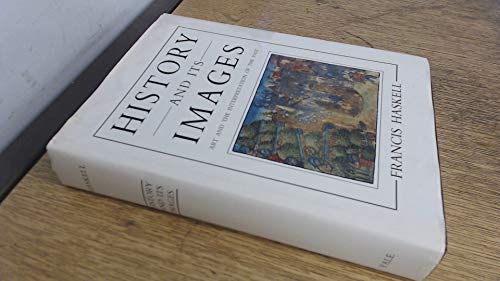
Over the last few centuries, historians have increasingly turned to images in their attempts to understand and visualize the past. This book surveys the various ways that they have adopted for making use of this material, and examines the specific objects that became available to them through excavation, the creation of private collections and public museums, easier means of travel, and the startling displacements brought about by vandalism and art exhibitions. Francis Haskell begins by discussing the antiquarians of the 16th and 17th centuries who brought to light and interpreted as historical evidence coins, sculptures, paintings discovered in the catacombs beneath Rome, and other relics surviving from earlier ages. He explains that, in the 18th century, historians gradually began to acknowledge the significance of such visual sources and to draw on them in order to validate and give colour to their narratives or to utilize them as foundation stones for a new branch of learning - the history of culture. Later writers followed the example of Michelet in making inferences from the visual arts to indicate the whole mentality of an age, while (more erratically) others saw in them the harbingers of political, religious, or social upheavals. Haskell concludes by discussing those cultural historians of the 19th and early 20th centuries, Burckhardt and Huizinga above all, who did not merely give the visual arts a prominent and necessary place in their interpretations of the past, but in some ways actually interpreted the past through the visual arts.
Die Inhaltsangabe kann sich auf eine andere Ausgabe dieses Titels beziehen.
Suchergebnisse für History and Its Images: Art and the Interpretation...

Beispielbild für diese ISBN
History and Its Images : Art and the Interpretation of the Past
Anbieter: Better World Books, Mishawaka, IN, USA
Verkäuferbewertung 5 von 5 Sternen

Zustand: Very Good. Former library copy. Pages intact with possible writing/highlighting. Binding strong with minor wear. Dust jackets/supplements may not be included. Includes library markings. Stock photo provided. Product includes identifying sticker. Better World Books: Buy Books. Do Good. Artikel-Nr. GRP63038892
Gebraucht kaufen
EUR 20,94
Versand gratis
Versand innerhalb von USA
Versand innerhalb von USA
Anzahl: 1 verfügbar
Beispielbild für diese ISBN
History and Its Images : Art and the Interpretation of the Past
Anbieter: Better World Books, Mishawaka, IN, USA
Verkäuferbewertung 5 von 5 Sternen
Zustand: Good. Former library copy. Pages intact with minimal writing/highlighting. The binding may be loose and creased. Dust jackets/supplements are not included. Includes library markings. Stock photo provided. Product includes identifying sticker. Better World Books: Buy Books. Do Good. Artikel-Nr. GRP8939667
Gebraucht kaufen
EUR 20,94
Versand gratis
Versand innerhalb von USA
Versand innerhalb von USA
Anzahl: 1 verfügbar
Beispielbild für diese ISBN
History and Its Images: Art and the Interpretation of the Past
Anbieter: WorldofBooks, Goring-By-Sea, WS, Vereinigtes Königreich
Verkäuferbewertung 5 von 5 Sternen
Hardback. Zustand: Very Good. The book has been read, but is in excellent condition. Pages are intact and not marred by notes or highlighting. The spine remains undamaged. Artikel-Nr. GOR001432802
Gebraucht kaufen
EUR 25,58
EUR 6,56 Versand
Versand von Vereinigtes Königreich nach USA
Versand von Vereinigtes Königreich nach USA
Anzahl: 1 verfügbar
Beispielbild für diese ISBN
History & its Images â" Art & the Interpretation of the Past
Verlag:
Yale University Press, United States, New Haven, 1993
ISBN 10: 0300055404
ISBN 13: 9780300055405
Gebraucht
Paperback
Anbieter: WorldofBooks, Goring-By-Sea, WS, Vereinigtes Königreich
Verkäuferbewertung 5 von 5 Sternen
Paperback. Zustand: Good. Over the last few centuries, historians have increasingly turned to images in their attempts to understand and visualize the past. This book surveys the various ways that they have adopted for making use of this material, and examines the specific objects that became available to them through excavation, the creation of private collections and public museums, easier means of travel, and the startling displacements brought about by vandalism and art exhibitions. Francis Haskell begins by discussing the antiquarians of the 16th and 17th centuries who brought to light and interpreted as historical evidence coins, sculptures, paintings discovered in the catacombs beneath Rome, and other relics surviving from earlier ages. He explains that, in the 18th century, historians gradually began to acknowledge the significance of such visual sources and to draw on them in order to validate and give colour to their narratives or to utilize them as foundation stones for a new branch of learning - the history of culture. Later writers followed the example of Michelet in making inferences from the visual arts to indicate the whole mentality of an age, while (more erratically) others saw in them the harbingers of political, religious, or social upheavals. Haskell concludes by discussing those cultural historians of the 19th and early 20th centuries, Burckhardt and Huizinga above all, who did not merely give the visual arts a prominent and necessary place in their interpretations of the past, but in some ways actually interpreted the past through the visual arts. The book has been read but remains in clean condition. All pages are intact and the cover is intact. Some minor wear to the spine. Artikel-Nr. GOR003541809
Gebraucht kaufen
EUR 25,58
EUR 6,56 Versand
Versand von Vereinigtes Königreich nach USA
Versand von Vereinigtes Königreich nach USA
Anzahl: 2 verfügbar
Beispielbild für diese ISBN
History and Its Images: Art and the Interpretation of the Past
Anbieter: Anybook.com, Lincoln, Vereinigtes Königreich
Verkäuferbewertung 5 von 5 Sternen
Zustand: Fair. This is an ex-library book and may have the usual library/used-book markings inside.This book has hardback covers. Clean from markings. In fair condition, suitable as a study copy. No dust jacket. Please note the Image in this listing is a stock photo and may not match the covers of the actual item,1750grams, ISBN:0300055404. Artikel-Nr. 9531129
Gebraucht kaufen
EUR 16,31
EUR 17,82 Versand
Versand von Vereinigtes Königreich nach USA
Versand von Vereinigtes Königreich nach USA
Anzahl: 1 verfügbar
Foto des Verkäufers
History and Its Images: Art and the Interpretation of the Past
Verlag:
Yale University Press, 1993
ISBN 10: 0300055404
ISBN 13: 9780300055405
Gebraucht
Hardcover
Erstausgabe
Anbieter: Southampton Books, Sag Harbor, NY, USA
Verkäuferbewertung 5 von 5 Sternen
Hardcover. Zustand: Like New. First Edition. First Edition, First Printing. Published by Yale University Press, 1993. Octavo. Hardcover. Book is like new with spotting to top page ends. Dust jacket is like new. Great copy of this engaging history title.100% positive feedback. 30 day money back guarantee. NEXT DAY SHIPPING! Excellent customer service. Please email with any questions. All books packed carefully and ship with free delivery confirmation/tracking. All books come with free bookmarks. Ships from Sag Harbor, New York. Artikel-Nr. 356249
Gebraucht kaufen
EUR 31,83
EUR 4,41 Versand
Versand innerhalb von USA
Versand innerhalb von USA
Anzahl: 1 verfügbar
Foto des Verkäufers
History and its images: art and the interpretation of the past / Francis Haskell
Verlag:
London; New Haven: Yale Univ. Press, 1993
ISBN 10: 0300055404
ISBN 13: 9780300055405
Gebraucht
Hardcover
Erstausgabe
Anbieter: MW Books, New York, NY, USA
Verkäuferbewertung 5 von 5 Sternen
First Edition. Fine cloth copy in a near-fine, very slightly edge-dulled dust wrapper. Pages very slightly tanned. Includes previous owner's inscription. Remains particularly well-preserved overall; tight, bright, clean and strong. Physical description: x, 558 p.: ill. (some col.); 27 cm. Notes: Includes bibliographical references (p. [520]-542) and index. Subjects: Art and history. History Sources. Art and society History. Art as historical evidence History. Visual Arts. Illustrations, images, etc. Interpre?tation. History Representation of historical events. History in art. Art and society. Genre: Art History. 1 Kg. Artikel-Nr. 318700
Gebraucht kaufen
EUR 37,10
Versand gratis
Versand innerhalb von USA
Versand innerhalb von USA
Anzahl: 1 verfügbar
Foto des Verkäufers
HISTORY AND ITS IMAGES Art and the Interpretation of the Past
Verlag:
Yale University Press, 1993. 0300055404, 1993
ISBN 10: 0300055404
ISBN 13: 9780300055405
Gebraucht
Hardcover
Erstausgabe
Anbieter: Rothwell & Dunworth (ABA, ILAB), Dulverton, Vereinigtes Königreich
Verkäuferbewertung 5 von 5 Sternen
1st edn 1st printing. Tall 8vo. Original gilt lelttered black cloth (Fine), dustwrapper (near Fine). Pp. x + 558, illus with coloured and b&w plates (no inscriptions). Artikel-Nr. 199729
Gebraucht kaufen
EUR 24,12
EUR 15,81 Versand
Versand von Vereinigtes Königreich nach USA
Versand von Vereinigtes Königreich nach USA
Anzahl: 1 verfügbar
Foto des Verkäufers
History and Its Images: Art and the Interpretation of the Past
Verlag:
Yale University Press, 1993, second printing,, 1993
ISBN 10: 0300055404
ISBN 13: 9780300055405
Gebraucht
Hardcover
Anbieter: BRIMSTONES, Lewes, Vereinigtes Königreich
Verkäuferbewertung 5 von 5 Sternen
hardback, 4to, x,558pp., illustrated, clean and tight, no inscriptions, Very Good / Very Good dustwrapper. wrapper slightly creased on front panel. ISBN: 0300055404. Artikel-Nr. 788300
Gebraucht kaufen
EUR 18,09
EUR 23,42 Versand
Versand von Vereinigtes Königreich nach USA
Versand von Vereinigtes Königreich nach USA
Anzahl: 1 verfügbar
Foto des Verkäufers
History and its images : art and the interpretation of the past
Verlag:
Yale University Press, 1993
ISBN 10: 0300055404
ISBN 13: 9780300055405
Gebraucht
Hardcover
Erstausgabe
Anbieter: Joseph Burridge Books, Dagenham, Vereinigtes Königreich
Verkäuferbewertung 5 von 5 Sternen
Hardcover. Zustand: Fine. Zustand des Schutzumschlags: Fine. 1st Edition. x, 558 pages : illustrations (some colour) ; 27 cm. Summary:Over the last four centuries, historians have increasingly turned to images in their attempts to understand and visualize the past. In this wide-ranging and engrossing book, a distinguished art historian surveys the various ways that they have adopted for making use of this material, and he examines the specific objects that became available to them through excavation, the creation of private collections and public museums, easier means of travel, and the startling displacements brought about by vandalism and art exhibitions. Francis Haskell begins by discussing the antiquarians of the sixteenth and seventeenth centuries who brought to light and interpreted as historical evidence coins, sculptures, paintings discovered in the catacombs beneath Rome and other relics surviving from earlier ages. He explains that, in the eighteenth century, historians gradually began to acknowledge the significance of such visual sources and to draw on them in order to validate and give colour to their narratives or to utilize them as foundation stones for a new branch of learning - the history of culture. Later writers followed the example of Michelet in making inferences from the visual arts to indicate the whole mentality of an age, while (more erratically) others saw in them the harbingers of political, religious or social upheavals. Haskell concludes by discussing those cultural historians of the nineteenth and early twentieth centuries, Burckhardt and Huizinga above all, who did not merely give the visual arts a prominent and necessary place in their interpretations of the past, but in some ways actually interpreted the past through the visual arts. Artikel-Nr. 3cb621
Gebraucht kaufen
EUR 24,12
EUR 26,93 Versand
Versand von Vereinigtes Königreich nach USA
Versand von Vereinigtes Königreich nach USA
Anzahl: 1 verfügbar