
Selwyn press (8 Ergebnisse)

- Softcover
Anbieter: PBShop.store UK, Fairford, GLOS, Vereinigtes KönigreichPBShop.store UK
Verkäufer/-in kontaktierenVerkäufer/-in mit 5 SternenZustand: Neu
EUR 18,58
EUR 3,87 VersandVersand von Vereinigtes Königreich nach USAAnzahl: Mehr als 20 verfügbar
PAP. Zustand: New. New Book. Shipped from UK. Established seller since 2000.

- Hardcover
Anbieter: Book Haven, Wellington, WLG, NeuseelandBook Haven
Verkäufer/-in kontaktierenVerkäufer/-in mit 5 SternenZustand: Gebraucht - Befriedigend
EUR 7,11
EUR 21,88 VersandVersand von Neuseeland nach USAAnzahl: 1 verfügbar
Hardback. Zustand: Good. Jean Begg CBE (7 October 1886 - 15 February 1971) was a New Zealand welfare worker, educator, and YWCA administrator. DJ; Owner's Name inside. DJ frayed along the top. 185 pages.
- Softcover
Anbieter: Revaluation Books, Exeter, Vereinigtes KönigreichRevaluation Books
Verkäufer/-in kontaktierenVerkäufer/-in mit 5 SternenZustand: Neu
EUR 20,53
EUR 11,77 VersandVersand von Vereinigtes Königreich nach USAAnzahl: 2 verfügbar
Paperback. Zustand: Brand New. 91 pages. 5.25x0.23x8.00 inches. In Stock.

- Hardcover
Anbieter: Book Express (NZ), Shannon, NeuseelandBook Express (NZ)
Verkäufer/-in kontaktierenVerkäufer/-in mit 4 SternenZustand: Gebraucht - Befriedigend
EUR 5,26
EUR 27,13 VersandVersand von Neuseeland nach USAAnzahl: 1 verfügbar
Hardcover. Zustand: Good. 185 pages. Dj ripped and worn.

Verlag: SElwyn Press, NZ, 1979
- Hardcover
- Signiert
Anbieter: Book Express (NZ), Shannon, NeuseelandBook Express (NZ)
Verkäufer/-in kontaktierenVerkäufer/-in mit 4 SternenZustand: Gebraucht - Befriedigend
EUR 4,74
EUR 27,13 VersandVersand von Neuseeland nach USAAnzahl: 1 verfügbar
Hardcover. Zustand: Good. 185 pages. Signed by Author(s).
 Weitere Bilder
Sprache: Englisch
Verlag: Selwyn & Blount/Shakespeare Head Press, London, 1921
- Hardcover
Anbieter: K Books Ltd ABA ILAB, York, YORKS, Vereinigtes KönigreichK Books Ltd ABA ILAB
Verkäufer/-in kontaktierenVerkäufer/-in mit 5 SternenZustand: Gebraucht - Gut
EUR 54,53
EUR 22,94 VersandVersand von Vereinigtes Königreich nach USAAnzahl: 1 verfügbar
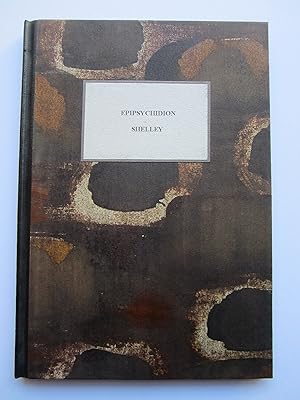
Boards. Zustand: Very Good. Limited Edition. Limited Edition of 500 copies, 21pp, title printed in red and black, 8vo, bound by Stephen Conway in hand-painted paper overlaid on boards, black cloth spine, very good condition, Selwyn & Blount/Shakespeare Head Press, London/Stratford Upon Avon,1921. * a beautifully contemporary bou…nd edition.

Verlag: London Selwyn & Blount The Curwen Press Undated
Anbieter: Stephen Wilkinson Fine Books, Near Ventnor, Isle of Wight, IOW, Vereinigtes KönigreichStephen Wilkinson Fine Books
Verkäufer/-in kontaktierenVerkäufer/-in mit 5 SternenZustand: Gebraucht
EUR 24,24
EUR 26,72 VersandVersand von Vereinigtes Königreich nach USAAnzahl: 1 verfügbar
Undated Edition: Decorative self-covers, black titles and decs. on buff paste-on labels, 100 x 165 mm., 75 grms., 66 pp., illustrated with line drawings by C. Lovat Fraser, ring mark on front cover, VG copy.
Sprache: Englisch
Verlag: Selwyn & Blount / Chapel River Press, London Uk, 1922
- Hardcover
- Erstausgabe
Anbieter: Arroyo Seco Books, Pasadena, Member IOBA, Pasadena, CA, USAArroyo Seco Books, Pasadena, Member IOBA
Verkäufer/-in kontaktierenVerkäufer/-in mit 4 SternenVerbandsmitglied: IOBA
Zustand: Gebraucht - Gut
EUR 588,14
EUR 7,00 VersandVersand innerhalb von USAAnzahl: 1 verfügbar
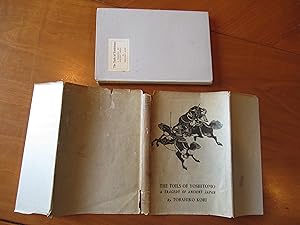
Hardcover. Zustand: Very Good. Zustand des Schutzumschlags: Good. 1st Edition. 87 Pp. Light Grey Boards With Spine And Front Cover Paper Labels Lettered In Brown. First Printing. Quite Scarce; Fraying At Ends Of Spine, Boards Beginning To Split Along Spine Gutters. Paternal Inscription Dated 1931, With Recipient's Elaborate Pasa…dena Blindstamp, On Verso And Recto, Respectively, Of The Front Free Endpaper. Quite Scarce. In The Illustrated Dust Jacket, Which Is Worn And Torn, Darkened And Slightly Soiled From Handling, Small Losses At Corners, No Loss Of Lettering Or Design. Torahiko Kori (1890-1924) Left Tokyo University Without Graduating To Join The Editorial Staff Of Shirakaba (A Literary Magazine) In 1909. Early In His Short Literary Career, Kori Torahiko Became An Enfant Terrible Of The Shirakaba School, A Group Of Writers And Artists Whose Works Reflected The Liberal, Democratic And Humanistic Spirit Of The Taisho Era (1912-1926). At The Age Of Twenty, Kori Began Editing And Publishing With Yanagi Muneyoshi (Soetsu), Founder Of The Mingei Movement, And Around 1923 Became A Frequent Contributor To The Major Literary Magazines Of The Day. In 1909 Kori Torahiko Won First Prize In The Contest Held By Taiyo (Sun) Magazine With His Play Titled "The Matsuyama Family," Which Brought Him Into Prominence As A Promising Dramatist. His Fame Was Established When The Imperial Theatre Staged His Play Dojoji (1912). The Following Year He Left For Europe. At London Kori Met Esther Sainsbury, The Poetess, And They Remained Friends Till His Death. He Wrote Plays In London; His First Drama To Be Staged There Was "Kanawa" (Iron Ring) (1917). Another Of His Plays "Toils Of Yoshitomo" Ran For Three Weeks At The Little Theatre, London. Other Plays Similarly Staged Were "Saul And David" And "Absalom." "The Toils Of Yoshitomo" Was Translated Into Several European Languages, Including German, French And Italian. He Was One Of The Few Japanese Writers Who Worked Abroad. Despite His Close Association With The Shirakaba School, Kori In His Taste For Romantic And Decadent Literature Was At Odds With The Prevailing Shirakaba Partiality For Realist Literature, Particularly That Of Tolstoy. In His Mature Prose Style Kori Also Turned Away From The Shirakaba Writers' Tendency To Sinewy Colloquialism And Airy Realism In Favour Of A More Flowery, Convoluted Prose Style À La D'Annunzio Or Walter Pater. An Unattributed Evaluation States " In Japan, One Lone Voice Persisted In Hailing The Greatness Of Kori Long After His Early Death. Mishima Yukio Saw In Kori'S Plays The Essence Of Tragedy. Mishima Rated Kori As The Natural Successor To Such Classic Japanese Tragedians As Zeami, Chikamatsu, And Mori Ogai. Mishima'S Modern Noh Plays Was Written In Implicit Homage To Kori And Stands Today As A Continuation Of Many Of The Themes That Kori Reworked So Successfully In His Dramas. Shiga Naoya Concluded His Reminiscence Of Kori With His Regret That He Had Let Kori Go To England. "Kori Should Have Stayed And Worked In Japan. If He Had, He Might Not Have Died So Young.' Kori'S Early Death Was Undeniably Tragic, But Given His Long History Of Sickness And The Fact That He Received The Best Medical Treatment Available At The Time, His Premature Death Would Have Been Unavoidable Whether He Had Been In Japan Or Europe. Had Kori Never Left Japan, He Might Now Be Known As A Renowned Writer Of The Shirakaba School But Because He Left For Europe And Britain, We Have The Toils Of Yoshimoto, Arguably The Greatest Dramatic Achievement By A Japanese Playwright ".


