

Gesamtpreis (1 Artikel Artikel):
Versandziel:

osiris kiado budapest (12 Ergebnisse)
Direkt zu den wichtigsten Suchergebnissen
Suchfilter
Produktart
- Alle Product Types
- Bücher (12)
- Magazine & Zeitschriften (Keine weiteren Ergebnisse entsprechen dieser Verfeinerung)
- Comics (Keine weiteren Ergebnisse entsprechen dieser Verfeinerung)
- Noten (Keine weiteren Ergebnisse entsprechen dieser Verfeinerung)
- Kunst, Grafik & Poster (Keine weiteren Ergebnisse entsprechen dieser Verfeinerung)
- Fotografien (Keine weiteren Ergebnisse entsprechen dieser Verfeinerung)
- Karten (Keine weiteren Ergebnisse entsprechen dieser Verfeinerung)
- Manuskripte & Papierantiquitäten (Keine weiteren Ergebnisse entsprechen dieser Verfeinerung)
Zustand Mehr dazu
- Neu (Keine weiteren Ergebnisse entsprechen dieser Verfeinerung)
- Wie Neu, Sehr Gut oder Gut Bis Sehr Gut (3)
- Gut oder Befriedigend (2)
- Ausreichend oder Schlecht (Keine weiteren Ergebnisse entsprechen dieser Verfeinerung)
- Wie beschrieben (7)
Einband
Weitere Eigenschaften
- Erstausgabe (Keine weiteren Ergebnisse entsprechen dieser Verfeinerung)
- Signiert (Keine weiteren Ergebnisse entsprechen dieser Verfeinerung)
- Schutzumschlag (4)
- Angebotsfoto (5)
Sprache (3)
Gratisversand
- Kostenloser Versand nach USA (Keine weiteren Ergebnisse entsprechen dieser Verfeinerung)
Land des Verkäufers
Verkäuferbewertung
-
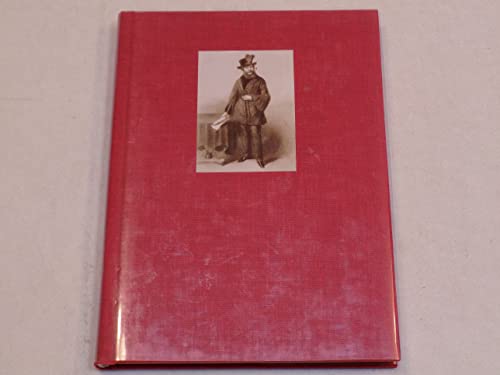
THE LIFE OF GOVERNOR LOUIS KOSSUTH : WITH HIS PUBLIC SPEECHES IN THE UNITED STATES, AND A BRIEF HISTORY OF THE HUNGARIAN WAR OF INDEPENDENCE
Anbieter: Second Story Books, ABAA, Rockville, MD, USA
Verkäuferbewertung 4 von 5 Sternen

Hardcover. Octavo, 199 pages + [13] pages of plates. In Very Good condition. Spine is red without print. In clear plastic sleeve. Boards are red with small pastedown portrait on front. Illustrated with b&w frontispiece and plates. Published under the auspices of the Embassy of Hungary in Washington, D.C. in honor of the 150th anniversary of Governor-President Louis Kossuth's visit to the United States"- copyright page. 1371023. FP New Rockville Stock.
-

Ókori keleti történeti chrestomathia.
Verlag: Budapest, Osiris Kiadó, ,, 2003
Anbieter: Antiquariat Gothow & Motzke, Berlin, Deutschland
Verkäuferbewertung 3 von 5 Sternen

430 S./pp., Originalpappband (publisher's cardboard covers), 1 Ecke gering gestaucht / 1 corner slightly bumped, sonst gutes Exemplar (otherwise fine), Sprache: ungarisch.
-
The Life of Governor Louis Kossuth with his Public Speeches in the United States,; and a Brief History of the Hungarian War of Independence
Anbieter: Ground Zero Books, Ltd., Silver Spring, MD, USA
Verkäuferbewertung 5 von 5 Sternen

Hardcover. Zustand: Very good. Zustand des Schutzumschlags: Very good. Variant reprint of 1852 item. 199, [1] pages plus unpaginated section of Illustrations. DJ is made of clear plastic. Illustration on front cover. This was published under the auspices of the Embassy of Hungary in Washington, D. C. in honor of the 150th anniversary of Governor-President Louis Kossuth's visit to the United States. Lajos Kossuth de Udvard et Kossuthfalva (English: Louis Kossuth) 19 September 1802 - 20 March 1894) was a Hungarian lawyer, journalist, politician, statesman and Governor-President of the Kingdom of Hungary during the revolution of 1848-49. With the help of his talent in oratory in political debates and public speeches, Kossuth emerged from a poor gentry family into regent-president of Kingdom of Hungary. As the most influential contemporary American journalist Horace Greeley said of Kossuth: "Among the orators, patriots, statesmen, exiles, he has, living or dead, no superior." Kossuth's powerful English and American speeches so impressed and touched the most famous contemporary American orator Daniel Webster, that he wrote a book about Kossuth's life. He was widely honored during his lifetime, including in Great Britain and the United States, as a freedom fighter and bellwether of democracy in Europe. Kossuth's bronze bust can be found in the United States Capitol with the inscription: "Father of Hungarian Democracy, Hungarian Statesman, Freedom Fighter, 1848-1849". In exile, from Britain Kossuth went to the United States of America. In early 1852, Kossuth, accompanied by his wife, Ferenc and Theresa Pulszky, toured the American Midwest, South, and New England. Kossuth was the second foreigner after the Marquis de Lafayette to address the Joint Meeting of the United States Congress. On December 6, 1851, this revolutionary hero arrived in New York to a reception that only Washington and Lafayette had received before. The report of The Sun about he arrival of Kossuth in New York: "Thus immediately previous to the Christmas of 1851 New York city underwent a period of Kossuth mania, and it affected the holiday presents. Every New Year's gift associated itself in some designation with Kossuth and Hungary. Restaurants abounded with Hungarian goulash, a savory dish of boiled beef and vegetables, strongly infused with red peppers; and there were Kossuth cravats (formidable bands of satin or silk wound around the neck, with ends liberally folded over the shirt front), Kossuth pipes, Kossuth umbrellas, Kossuth belts and buckles, Kossuth purses, Kossuth jackets, and Kossuth braid and tassels for wearing apparel.The American Museum on Broadway "was literally covered with paintings and flags. One, a portrait of Kossuth, in the folds of Hungarian and American flags, with the words at the bottom: 'Kossuth, the Washington of Hungary.'" President Millard Fillmore entertained Kossuth at the White House on December 31, 1851 and January 3, 1852. The US Congress organized a banquet for Kossuth, which was supported by all political parties. There is no evidence that Kossuth ever met Abraham Lincoln, although Lincoln did organize a celebration in Kossuth's honor in Springfield, IL., calling him a "most worthy and distinguished representative of the cause of civil and religious liberty on the continent of Europe". Kossuth believed that by appealing directly to European immigrants in the American heartland that he could rally them behind the cause of a free and democratic Hungary. United States officials feared that Kossuth's efforts to elicit support for a failed revolution were fraught with mischief. He would not denounce slavery or stand up for the Catholic Church, and when Kossuth declared George Washington had never intended for the policy of noninterference to serve as constitutional dogma, he caused further defection. Kossuth ruined all chances for backing when he openly recommended to German Americans they should chose Franklin Pierce for President. The gaffe brought him back to London in July 1852. Early the next year, he sent Ferenc Pulszky to m.
-

Ossez koltemenyei
Verlag: Osiris Kiado, BUDAPEST, 2006
ISBN 10: 9633892759 ISBN 13: 9789633892756
Anbieter: Biblioteca di Babele, Tarquinia, VT, Italien
Verkäuferbewertung 5 von 5 Sternen
Zustand: OTTIMO USATO. Ungherese Volume dal testo in lingua polacca. Sovraccoperta illustrata come da foto con quasi impercettibili segni di usura; Coperta rigida in cartonato rosso con titoli impressi in bianco e nero. Pagine in buono stato generale di conservazione anche se già lette e sdogliate. Numero pagine 1215.
-
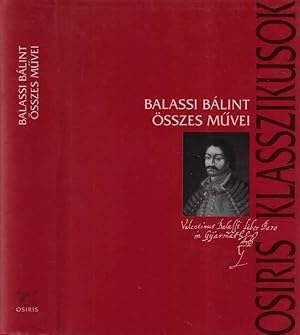
Osszes Muvei
Verlag: Osiris Kiado, BUDAPEST, 2004
ISBN 10: 9633896568 ISBN 13: 9789633896563
Anbieter: Biblioteca di Babele, Tarquinia, VT, Italien
Verkäuferbewertung 5 von 5 Sternen
Zustand: OTTIMO USATO. Ungherese Sovraccoperta illustrata come da foto con quasi impercettibili segni di usura; coperta rigida in cartonato rosso scuro con titoli impressi in nero e bianco. Pagine in buono stato di conservazione anche e già lette e sfogliate. Volume dal testo in lingua polacca. Numero pagine 564.
-
Rejtekutak.
Verlag: Budapest: Osiris Kiadó 2006, 2006
Anbieter: Antiquariat Ulrich Doege, Köln, NRW, Deutschland
Verkäuferbewertung 3 von 5 Sternen
8°, grauer OPpbd. mit grauem OU und weißem Lesebändchen; 337 (1) Seiten, 1 Bl. (= Sapientia Humana, Martin Heidegger Müvei. Sorozatszerkesztö Pongrácz Tibor); ungarische Sprache. ISBN 9633898412. - Sehr sauberes Exemplar.
-

Világpolitikai Lexikon ( Weltpolitisches Lexikon ) ( 1945 - 2005 )
Verlag: Osiris Kiadó Budapest, 2005
Anbieter: Klaus Kreitling, Berlin, Deutschland
Verkäuferbewertung 4 von 5 Sternen
Hardcover. Zustand: Gut. Format ca. 24 x 16,7 cm. 671 S. Ill. Orig.- Pbd. Nur in ungarischer Sprache. Only in hungarian language. Behandelt auch sehr ausführlich die deutsche Nachkriegsgeschichte und auch die Berlin-Frage. Kleiner Knick am hinteren Buchdeckel, ansonsten schönes Exemplar, das innerhalb Deutschlands schnellsten per Rechnung verschickt werden kann.
-
Egyházjog a középkori Magyarországon [=Canon law in medieval Hungary]
Verlag: Budapest, Osiris Kiadó 2001, 2001
Anbieter: Antiquariaat Pieter Judo (De Lezenaar), Hasselt, Belgien
Verbandsmitglied: ILAB
Verkäuferbewertung 5 von 5 Sternen
269pp., 25cm., cart.cover, very good condition, [text in Hungarian], ISBN 963 379 877 9, J75243.
-

Összes versei
Verlag: Osiris Kiadó, Budapest, 2004
ISBN 10: 9633895898 ISBN 13: 9789633895894
Anbieter: Antiquariat Wortschatz, Markt Hartmannsdorf, Österreich
Verkäuferbewertung 5 von 5 Sternen
Hardcover. Zustand: Sehr gut. kA (illustrator). kA. Auflage. Anzahl Bände: 1 - Bd.Nr.: kA - Sprache: un - Einband: Hardcover - Gewicht: 560 - Illust.: kA - Zustand: Sehr gut - leichte Benutzungspuren.
-

Az Újszövetség teológiája
Sprache: Ungarisch
Verlag: (Budapest), Osiris Kiadó,, 1998
ISBN 10: 963379305X ISBN 13: 9789633793053
Anbieter: Antiquariat Alte Seiten - Jochen Mitter, Göttingen, Deutschland
Verkäuferbewertung 5 von 5 Sternen
OPp. 1-2. 490 S., Wegen der EPR-Bestimmungen liefern wir nicht nach Bulgarien, Dänemark, Estland, Griechenland, Irland, Litauen, Luxemburg, Malta, Kroatien, Polen, Portugal, Rumänien, Schweden, Slowakei, Slowenien und Ungarn. hu Gewicht in Gramm: 920.
-

Összes Versei
Anbieter: Elops e.V. Offene Hände, Bad Windsheim, Deutschland
Verkäuferbewertung 5 von 5 Sternen
20 cm; , Hardcover/Pappeinband. 1204 S. gut erhalten hu Gewicht in Gramm: 1300.
-
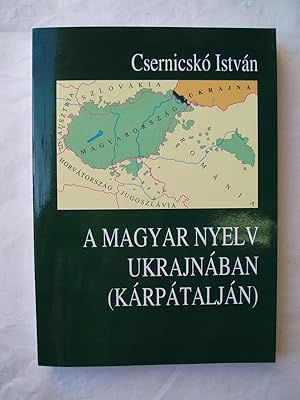
A Magyar Nyelv Ukrajnaban (Karpataljan)
Verlag: Osiris Kiado, Budapest, 1998
Anbieter: Expatriate Bookshop of Denmark, Svendborg, Dänemark
Verkäuferbewertung 5 von 5 Sternen
orig. wrappers. Zustand: Minor rubbing, VG. Textual graphs & tables (illustrator). 319 pp, 20x14cm, "The Hungarian Language in Ukraine (Subcarpathia)". Hungarian text. Includes a 2-page English summary.


