

Gesamtpreis (1 Artikel Artikel):
Versandziel:

metromedia (24 Ergebnisse)
Direkt zu den wichtigsten Suchergebnissen
Suchfilter
Produktart
- Alle Product Types
- Bücher (22)
- Magazine & Zeitschriften (Keine weiteren Ergebnisse entsprechen dieser Verfeinerung)
- Comics (Keine weiteren Ergebnisse entsprechen dieser Verfeinerung)
- Noten (1)
- Kunst, Grafik & Poster (Keine weiteren Ergebnisse entsprechen dieser Verfeinerung)
- Fotografien (Keine weiteren Ergebnisse entsprechen dieser Verfeinerung)
- Karten (Keine weiteren Ergebnisse entsprechen dieser Verfeinerung)
- Manuskripte & Papierantiquitäten (1)
Zustand Mehr dazu
- Neu (Keine weiteren Ergebnisse entsprechen dieser Verfeinerung)
- Wie Neu, Sehr Gut oder Gut Bis Sehr Gut (4)
- Gut oder Befriedigend (15)
- Ausreichend oder Schlecht (1)
- Wie beschrieben (4)
Einband
- alle Einbände
- Hardcover (Keine weiteren Ergebnisse entsprechen dieser Verfeinerung)
- Softcover (20)
Weitere Eigenschaften
Sprache (2)
Gratisversand
Land des Verkäufers
Verkäuferbewertung
-

Zustand: Good. Former library copy. Pages intact with minimal writing/highlighting. The binding may be loose and creased. Dust jackets/supplements are not included. Includes library markings. Stock photo provided. Product includes identifying sticker. Better World Books: Buy Books. Do Good.
-

John Brimhall Easy Piano Issue 23: Godspell
Verlag: Metromedia Music inc
Anbieter: Wonder Book, Frederick, MD, USA
Verkäuferbewertung 5 von 5 Sternen

Zustand: Very Good. Very Good condition. Issue 23. Paperback edition. (musicals, sheet music, songbook, songs) A copy that may have a few cosmetic defects. May also contain light spine creasing or a few markings such as an owner's name, short gifter's inscription or light stamp.
-
John Brimhall Easy Piano Issue 23: Godspell
Verlag: Metromedia Music inc
Anbieter: Wonder Book, Frederick, MD, USA
Verkäuferbewertung 5 von 5 Sternen
Zustand: Good. Good condition. Paperback edition. (musical, piano arrangements) A copy that has been read but remains intact. May contain markings such as bookplates, stamps, limited notes and highlighting, or a few light stains. Bundled media such as CDs, DVDs, floppy disks or access codes may not be included.
-

Fiddler on the Roof (Playbill)
Verlag: Playbill, Metromedia, 1969
Anbieter: Bookshop Baltimore, Baltimore, MD, USA
Verkäuferbewertung 5 von 5 Sternen
Softcover. Zustand: G. 40 pages. Harold Prince presents Paul Lipson in Fiddler on the Roof. Contents: Glamour Begins at Forty (with Julie Harris) by Barry Tarshis, The Play, One A Personal Bias by Bernice Peck; After Theatre Jump by Emory Lewis. Clean, former owner's name crossed out.
-
Music of New Hawaii - The Extraordinary Kui Lee
Verlag: Charles Hansen Educational Music and Books / Metromedia Music, Inc., New York, NY
Anbieter: Second Edition Books, Butte, MT, USA
Verkäuferbewertung 5 von 5 Sternen
Soft cover. Zustand: Very Good +. Binding tight; interior clean. Light crease to lower corner of front cover; slight edge wear. The sheet music and lyrics for the only album Kui Lee released before his death. 40pp.
-
Sandcastles
Verlag: Metromedia Productions
Anbieter: ThriftBooks-Atlanta, AUSTELL, GA, USA
Verkäuferbewertung 5 von 5 Sternen
Zustand: Fair. No Jacket. Readable copy. Pages may have considerable notes/highlighting. ~ ThriftBooks: Read More, Spend Less.
-
![Bild des Verkäufers für PLAYBILL MAGAZINE VOL. 6 DECEMBER 1969 ISSUE 12 - COCO - STARRING KATHERINE HEPBURN, BY ALAN JAY LERNER & ANDRE PREVIN, SETS AND COSTUMES BY CECIL BEATON [MARK HELLINGER THEATER NYC] zum Verkauf von Andre Strong Bookseller](https://pictures.abebooks.com/inventory/md/md30630055017.jpg)
PLAYBILL MAGAZINE VOL. 6 DECEMBER 1969 ISSUE 12 - COCO - STARRING KATHERINE HEPBURN, BY ALAN JAY LERNER & ANDRE PREVIN, SETS AND COSTUMES BY CECIL BEATON [MARK HELLINGER THEATER NYC]
Verlag: Playbill/ Metromedia, New York, 1969
Anbieter: Andre Strong Bookseller, Blue Hill, ME, USA
Verbandsmitglied: MABA
Verkäuferbewertung 5 von 5 Sternen
Erstausgabe
Paperback. Zustand: Very Good. First edition. 5 1/2 x 9 inches. 52 pages. Condition is Very Good; Very clean inside & out, not creased or folded. STK.
-
![Bild des Verkäufers für PLAYBILL MAGAZINE VOL .7 APRIL 1970 ISSUE 4 - HARVEY - STARRING JAMES [JIMMY] STEWART & HELEN HAYES. DIRECTED BY STEPHEN PORTER [ANTA THEATRE NYC] zum Verkauf von Andre Strong Bookseller](https://pictures.abebooks.com/inventory/md/md30630052369.jpg)
PLAYBILL MAGAZINE VOL .7 APRIL 1970 ISSUE 4 - HARVEY - STARRING JAMES [JIMMY] STEWART & HELEN HAYES. DIRECTED BY STEPHEN PORTER [ANTA THEATRE NYC]
Verlag: Playbill/ Metromedia, New York, 1970
Anbieter: Andre Strong Bookseller, Blue Hill, ME, USA
Verbandsmitglied: MABA
Verkäuferbewertung 5 von 5 Sternen
Erstausgabe
Paperback. Zustand: Very Good. First edition. 5 1/2 x 9 inches. 52 pages. Condition is Very Good; Very clean inside & out, not creased or folded. STK.
-

Hello, Dolly; Playbill. The National Magazine for Theatregoers. February 1970. Volume 7, Issue 2. St. James Theatre
Sprache: Englisch
Verlag: New York: Playbill; Metromedia, 1970
Anbieter: Elops e.V. Offene Hände, Bad Windsheim, Deutschland
Verkäuferbewertung 5 von 5 Sternen
48 S.; SW-Abbildungen sehr gut erhalten Sprache: Englisch Gewicht in Gramm: 100 23 cm, geheftet, Softcover/Paperback.
-

Fiddler on the roof; Playbill. The National Magazine for Theatregoers. June 1968. Volume 6, Issue 62. Majestic Theatre
Sprache: Englisch
Verlag: New York: Playbill; Metromedia, 1968
Anbieter: Elops e.V. Offene Hände, Bad Windsheim, Deutschland
Verkäuferbewertung 5 von 5 Sternen
64 S.; SW-Abbildungen; farbige Werbung gut erhalten Sprache: Englisch Gewicht in Gramm: 100 23 cm, geheftet, Softcover/Paperback.
-
ICE CAPADES PROGRAM "It's Magic Time"
Verlag: Metromedia
Anbieter: Wonder Book, Frederick, MD, USA
Verkäuferbewertung 5 von 5 Sternen
Zustand: Good. Good condition. (Ice Capades, souvenir program, Dorothy Hamill) A copy that has been read but remains intact. May contain markings such as bookplates, stamps, limited notes and highlighting, or a few light stains.
-
Indians. An Issue of Playbill, the National Magazine For Playgoers.
Verlag: New York: Metromedia., 1969
Anbieter: Wittenborn Art Books, San Francisco, CA, USA
Verkäuferbewertung 5 von 5 Sternen
Zustand: Good. 8vo. 56 pp., Very Good, Paper Wraps, yellowing throughout; sun-fading, rubbing, edge wear & some shelf wear. Illustrations and photographs.
-
![Bild des Verkäufers für [Playbill]: The River Niger zum Verkauf von Between the Covers-Rare Books, Inc. ABAA](https://pictures.abebooks.com/inventory/md/md345583786.jpg)
[Playbill]: The River Niger
Verlag: Metromedia, New York, 1973
Anbieter: Between the Covers-Rare Books, Inc. ABAA, Gloucester City, NJ, USA
Verbandsmitglied: ABAA ESA ILAB IOBA
Verkäuferbewertung 5 von 5 Sternen
Softcover. Zustand: Fine. Vol. 10, issue 5. Fine in stapled wrappers. The Negro Ensemble's production of *The River Niger* moved to the Brooks Atkinson Theatre due to the overwhelming demand for tickets at a smaller venue -- but the company denied that the Broadway engagement meant their activities or goals had changed.
-
Ice Capades Presents Special Guest Stars World Champions Tai Babilonia and Randy Gardner
Verlag: Ice Capades, Inc. (A Metromedia Company), Hollywood, CA, 1982
Anbieter: Ground Zero Books, Ltd., Silver Spring, MD, USA
Verkäuferbewertung 5 von 5 Sternen
Erstausgabe
Zustand: Very good. Harry Langton (photographer) (illustrator). The format is approximately 8.25 inches by 10.75 inches. 1 sheet. Front cover has a large full figure picture of both figure skaters in matching costumes. The other side has individual photographs of each skater in costume an illustrating a skating skill. There is also a small insert photograph of the two with Tai seated and Randy standing by her. There is a text section describing their performance and small 'blurbs' on each of the skaters. An ice show is an entertainment production which is primarily performed by ice skaters. The major ice shows were founded between 1936 and 1943, when professional skaters began to appear in shows. According to figure skating historian James R. Hines, ice shows "took spectacular skating to large audiences, contributing to the development of the sport's first major fan base". Such shows may be musical and/or dramatic in nature, using skating as a medium in order to accompany a musical work or to present a story. Many companies produce fixed or touring ice shows. Tai Reina Babilonia (born Sept. 22, 1959) is an American former pair skater. Together with Randy Gardner, she won the 1979 World Figure Skating Championships and five U.S. Figure Skating Championships (19761980). The pair qualified for the 1976 and 1980 Winter Olympics. Babilonia and Gardner toured with the Ice Capades for four years and with Champions on Ice for two years. Randy Gardner (born Dec. 2, 1958) is an American former pair skater. In 2008, Babilonia and Gardner announced their retirement from show skating due to a neck injury sustained by Gardner and their advancing ages. The Ice Capades were traveling entertainment shows featuring theatrical ice skating performances. Shows often featured former Olympic and US National Champion figure skaters who had retired from formal competition. Started in 1940, the Ice Capades grew rapidly and prospered for 50 years. A decline in popularity ensued in the 1980s, and the show went out of business around 1995. There have been several attempts to revive the show and its name. Ice Capades was founded in February 1940 in Hershey, Pennsylvania, by nine men who called themselves the Arena Managers Association. They met to discuss forming an ice show to play in their arenas during the 1940-1941 entertainment season. In 1936, Harris had hired the legendary skater Sonja Henie to perform between periods of ice hockey games. She created a sensation among Pittsburghers, confirming his faith in ice skating's potential as a spectator amusement. The other arena managers agreed with this assessment, chose the name "Ice Capades", and formed a group of skaters. Ice Capades program from 1945, showing the many production numbers, and the large size of the cast. Single-themed shows had not yet been developed. The group's first performance was four months after its founding, on June 16, 1940, at New Orleans Municipal Auditorium. The show closed there on June 29 and moved to Atlantic City Convention Hall, where it played nightly from July 19 through September 2. Famous skaters in the large cast included Belita, Vera Hruba, and Robin Lee. The group's first touring season under the Ice Capades name covered 24 cities between November 1940 and May 1941. The show's success spawned two films from Republic Pictures, Ice-Capades (1941), and Ice-Capades Revue (1942). The films featured actors and entertainers such as James Ellison, Ellen Drew, Jerry Colonna, and Phil Silvers, as well as the Ice Capades skaters. They were not considered to be films of quality, and the first one was panned by The New York Times. In 1942, the show featured world champion skater Megan Taylor, new talent Donna Atwood, and an acrobatic team from Boston called the Hub Trio featuring Leonard Mullen, Kenneth Mullen and Eddie Raiche. They were the first in the world to perform a back flip without the use of hands. From 1941 through 1981, the Ice Capades show was a summertime fixture at what was then known as Atlantic City Convention Hall. Start.
-
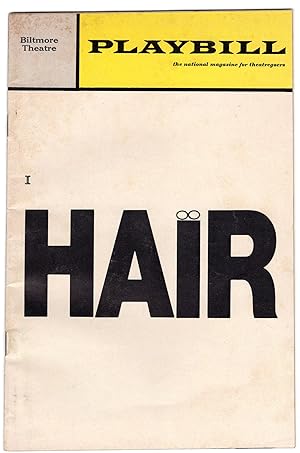
Hair
Verlag: Publishing Division of Metromedia, Inc, New York, 1969
Anbieter: Evening Star Books, ABAA/ILAB, Madison, WI, USA
Verbandsmitglied: ABAA ILAB IOBA
Verkäuferbewertung 5 von 5 Sternen
Pamphlet. Zustand: Near Fine. 8vo. 53.5 cm x 36 cm. [2], 3-32 pp. Pamphlet staple-bound, wrappers printed in yellow, black, grey, and green. Price of 35 cents on the publication information page. With several in-text and full-page photographs, the ad on the rear wrapper is for Silva Thins, a menthol cigarette. Hair premiered at the Biltmore Theater in April of 1968, this Playbill was published in August of 1969. The musical was a controversial one, due to its on-stage nudity, depiction of drug use and of other facets of hippie culture. Minor foxing to the front wrapper.
-
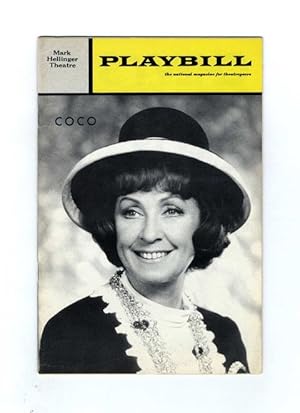
Playbill: Volume 8, Issue 9 (Sept. 1970) ; Frederick Brisson Presents Danielle Darrieux As Coco, a New Musical - 1st Edition/1st Printing
Verlag: Metromedia, Inc., New York, 1970
Anbieter: Books Tell You Why - ABAA/ILAB, Summerville, SC, USA
Verkäuferbewertung 2 von 5 Sternen

Erstausgabe
Magazine. Zustand: Fine. First Edition; First Printing. First edition/first printing in Fine condition with minor edgewear. From the collection of Betty Anderson, legendary art director of publisher Knopf in the late 20th century; This issue of the Playbill features a new Lerner, Alan Jay and Joan Alleman Rubin musical, Coco. The story follows a young woman, Coco, who moves to New York City to pursue her dream of becoming a singer. Despite obstacles in her life, Coco persists and finally succeeds in her musical career.; 8vo; FSA.
-
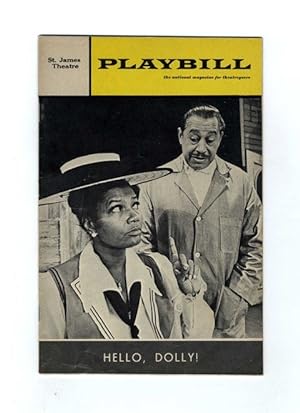
Playbill: Volume 5, Issue 7 (July 1968) ; David Merrick Presents Pearl Bailey in Hello, Dolly! Co-Starring Cab Calloway - 1st Edition/1st Printing
Verlag: Metromedia, Inc., New York, 1968
Anbieter: Books Tell You Why - ABAA/ILAB, Summerville, SC, USA
Verkäuferbewertung 2 von 5 Sternen
Erstausgabe
Magazine. Zustand: Fine. First Edition; First Printing. First edition/first printing in Fine condition with minor edgewear. From the collection of Betty Anderson, legendary art director of publisher Knopf in the late 20th century; The July 1968 issue of Playbill features Pearl Bailey in her role as Dolly Gallagher Levi in Hello, Dolly! Co-starring Cab Calloway. The editors' introduction provides a brief overview of the show and its cast.; 8vo; FSA.
-
Skates Alive!; Souvenir Program
Verlag: Ice Capades, Inc. (A Metromedia Company), Hollywood, CA, 1982
Anbieter: Ground Zero Books, Ltd., Silver Spring, MD, USA
Verkäuferbewertung 5 von 5 Sternen
Erstausgabe
Wraps. Zustand: Very good. Larry Secrist and Bob Young (illustrator). Presumed First Edition, First printing. The format is approximately 8.5 inches by 13.00 inches. Unpaginated (28 pages plus covers). Decorative cover. Profusely illustrated in color. Ink notation at the bottom of the program Order of Appearance. . Rare surviving copy. An ice show is an entertainment production which is primarily performed by ice skaters. The major ice shows were founded between 1936 and 1943, when professional figure skaters began to appear in shows and "at any place a sheet of ice could be set up . They were produced and toured North America, Europe, and throughout the world for many years in the years following World War II. According to figure skating historian James R. Hines, ice shows "took spectacular skating to large audiences, contributing to the development of the sport's first major fan base". Such shows may primarily be skating exhibitions, or may be musical and/or dramatic in nature, using skating as a medium in order to accompany a musical work or to present a story. The Smurfs were featured multiple times in the Ice Capades as the act for younger audiences, the program as a whole, officially titled as Skates Alive!, was usually referred to as Smurfs Alive! or Smurfs 'N' Ice Capades. The stories presented were based on the Smurfs cartoon show and featured audio of the voice actors speaking and singing as their respective characters. The first Smurfs production number was introduced in 1982, titled The Smurfcapades Winter Talent Show. This and the 1983 show, It's Fun To Be A Smurf, were featured acts for a few years. The Ice Capades were traveling entertainment shows featuring theatrical ice skating performances. Shows often featured former Olympic and US National Champion figure skaters who had retired from formal competition. Started in 1940, the Ice Capades grew rapidly and prospered for 50 years. A decline in popularity ensued in the 1980s, and the show went out of business around 1995. There have been several attempts to revive the show and its name. Ice Capades was founded in February 1940 in Hershey, Pennsylvania, by nine men who called themselves the Arena Managers Association. They met to discuss forming an ice show to play in their arenas during the 1940-1941 entertainment season. In 1936, Harris had hired the legendary skater Sonja Henie to perform between periods of ice hockey games. She created a sensation among Pittsburghers, confirming his faith in ice skating's potential as a spectator amusement. The other arena managers agreed with this assessment, chose the name "Ice Capades", and formed a group of skaters. Ice Capades program from 1945, showing the many production numbers, and the large size of the cast. Single-themed shows had not yet been developed. The group's first performance was four months after its founding, on June 16, 1940, at New Orleans Municipal Auditorium. The show closed there on June 29 and moved to Atlantic City Convention Hall, where it played nightly from July 19 through September 2. Famous skaters in the large cast included Belita, Vera Hruba, and Robin Lee. The group's first touring season under the Ice Capades name covered 24 cities between November 1940 and May 1941. The show's success spawned two films from Republic Pictures, Ice-Capades (1941), and Ice-Capades Revue (1942). The films featured actors and entertainers such as James Ellison, Ellen Drew, Jerry Colonna, and Phil Silvers, as well as the Ice Capades skaters. They were not considered to be films of quality, and the first one was panned by The New York Times. In 1942, the show featured world champion skater Megan Taylor, new talent Donna Atwood, and an acrobatic team from Boston called the Hub Trio featuring Leonard Mullen, Kenneth Mullen and Eddie Raiche. They were the first in the world to perform a back flip without the use of hands. From 1941 through 1981, the Ice Capades show was a summertime fixture at what was then known as Atlantic City Convention Hall. Starting in 1949, Ice Capades started adding Disney's character segment to th.
-

CARMELINA: Original March 1979 PLAYBILL for the St. James Theatre Broadway production of the MUSICAL by Joseph Stein and Alan Jay Lerner SIGNED by 5 MEMBERS OF THE CAST.
Verlag: New York: Metromedia, Inc., (1979). (1979)., 1979
Anbieter: Blue Mountain Books & Manuscripts, Ltd., Cadyville, NY, USA
Verkäuferbewertung 5 von 5 Sternen
Signiert
Zustand: Very good. New York: Metromedia, Inc., (1979)., (1979). Very good. - Octavo, 9 inches high by 5-3/4 inches wide. Softcover, bound in color pictorial stapled wraps. The corners are lightly bumped and there are a few minor spots of foxing. 70 pages, profusely illustrated in color and black & white. Very good. "Carmelina", the musical by Joseph Stein and Alan Jay Lerner with music by Burton Lane opened on Broadway at the St. James Theatre on April 18, 1979 after 11 previews. It only ran for 17 performances. Signed on the front cover by 5 members of the cast: Peter Gennaro (1919-2000, American dance choreographer), Virginia Martin (1927-2009, television and Broadway actress), Grace Keagy (1921-2009, stage actress), Cesare Siepi (1923-2010, Italian Opera bass), and Morgan Richardson (a minor ensemble player).
-
PLAYBILL FOR THE 1969 PRODUCTION OF "PLAY IT AGAIN SAM, PERFORMED AT THE BROADHURST THEATRE, SIGNED BY WOODY ALLEN
Verlag: Metromedia, Inc. Publishing Division: NY, 1969
Anbieter: John K King Used & Rare Books, Detroit, MI, USA
Verkäuferbewertung 5 von 5 Sternen
Signiert
Paperback. Zustand: Very Good. Pict stapled wraps, photos, ads, 9 x 6", 56pp. Light wear and foxing to covers, "83" written in pencil near top of ad on first page else good. Laid in loose is a typed notice that reads "At this performance the role of VANESSA will be played by BARBRA PRESS". SIGNED ON THE FRONT COVER BY THE PLAYWRIGHT AND STAR, WOODY ALLEN, IN BLUE BALLPOINT PEN.
-
"Just for You"; Souvenir Program
Verlag: Ice Capades, Inc. (A Metromedia Company), Hollywood, CA, 1975
Anbieter: Ground Zero Books, Ltd., Silver Spring, MD, USA
Verkäuferbewertung 5 von 5 Sternen
Erstausgabe
Wraps. Zustand: Good. Presumed First Edition, First printing. The format is approximately 10.25 inches by 12.00 inches. Unpaginated (28 pages plus covers). Decorative cover. Profusely illustrated in color. Ink notation inside front cover top left. Rare surviving copy. An ice show is an entertainment production which is primarily performed by ice skaters. The major ice shows were founded between 1936 and 1943, when professional figure skaters began to appear in shows and "at any place a sheet of ice could be set up . They were produced and toured North America, Europe, and throughout the world for many years in the years following World War II. According to figure skating historian James R. Hines, ice shows "took spectacular skating to large audiences, contributing to the development of the sport's first major fan base". Such shows may primarily be skating exhibitions, or may be musical and/or dramatic in nature, using skating as a medium in order to accompany a musical work or to present a story. Many companies produce fixed or touring ice shows, which are then performed for the general public in facilities such as multipurpose arenas or skating rinks which can accommodate spectators, or in theaters with a temporary ice surface installed on the stage. Alicia "JoJo" Starbuck (born February 14, 1951, Birmingham, Alabama), is an American figure skater. With partner Kenneth Shelley, she is a three-time United States pair skating champion (197072) and two-time Olympian (1968, 1972). Starbuck performed for a short time with the Ice Capades. From 1976 to 1983, she was married to football quarterback Terry Bradshaw. The Ice Capades were traveling entertainment shows featuring theatrical ice skating performances. Shows often featured former Olympic and US National Champion figure skaters who had retired from formal competition. Started in 1940, the Ice Capades grew rapidly and prospered for 50 years. A decline in popularity ensued in the 1980s, and the show went out of business around 1995. There have been several attempts to revive the show and its name. Ice Capades was founded in February 1940 in Hershey, Pennsylvania, by nine men who called themselves the Arena Managers Association. They met to discuss forming an ice show to play in their arenas during the 1940-1941 entertainment season. In 1936, Harris had hired the legendary skater Sonja Henie to perform between periods of ice hockey games. She created a sensation among Pittsburghers, confirming his faith in ice skating's potential as a spectator amusement. The other arena managers agreed with this assessment, chose the name "Ice Capades", and formed a group of skaters. Ice Capades program from 1945, showing the many production numbers, and the large size of the cast. Single-themed shows had not yet been developed. The group's first performance was four months after its founding, on June 16, 1940, at New Orleans Municipal Auditorium. The show closed there on June 29 and moved to Atlantic City Convention Hall, where it played nightly from July 19 through September 2. Famous skaters in the large cast included Belita, Vera Hruba, and Robin Lee. The group's first touring season under the Ice Capades name covered 24 cities between November 1940 and May 1941. The show's success spawned two films from Republic Pictures, Ice-Capades (1941), and Ice-Capades Revue (1942). The films featured actors and entertainers such as James Ellison, Ellen Drew, Jerry Colonna, and Phil Silvers, as well as the Ice Capades skaters. They were not considered to be films of quality, and the first one was panned by The New York Times. In 1942, the show featured world champion skater Megan Taylor, new talent Donna Atwood, and an acrobatic team from Boston called the Hub Trio featuring Leonard Mullen, Kenneth Mullen and Eddie Raiche. They were the first in the world to perform a back flip without the use of hands. From 1941 through 1981, the Ice Capades show was a summertime fixture at what was then known as Atlantic City Convention Hall. Starting in 1949, Ice Capades sta.
-
Honor Thy Father (Original screenplay for the 1973 television film)
Verlag: Metromedia Producers Corp, New York, 1972
Anbieter: Royal Books, Inc., ABAA, Baltimore, MD, USA
Verkäuferbewertung 5 von 5 Sternen
Manuskript / Papierantiquität
Revised Draft script for the 1973 television film which aired on March 1, 1973 on CBS. Copy belonging to uncredited still photographer Jack Stager, his name in manuscript marker on top of the title page with the annotations of production dates "12-11-72 to 12-22-72" in manuscript ink, and copy number "17" in manuscript green marker. Laid in are a four page and a single page Crew and Staff List, a two page Schedule, and a three and a single page Cast List, all with the annotation of Stager's name in manuscript marker to top right of first page. Based on the 1971 book by Gay Talese about the Bonanno crime family in the 1960s. Salvatore Bonanno takes control of the family business after the kidnapping of his father, causing a rift in the family and inciting a bloody Mafioso war. Yellow untitled card wrappers with a titled Metromedia Producers Corporation label. Title page present, dated 12-9-72, noted as REVISE, with credits for screenwriter Lewis John Carlino and author Gay Talese. 108 leaves, with last page of text numbered 99. Xerographic duplication, rectos only. Pages Near Fine, wrapper Near Fine, bound internally with a prong binding.
-
THAT CHAMPIONSHIP SEASON: Vintage March 1973 PLAYBILL Program for The Booth Theatre Broadway production, SIGNED by the ENTIRE CAST.
Verlag: New York: Metromedia, Inc., (1973). (1973)., 1973
Anbieter: Blue Mountain Books & Manuscripts, Ltd., Cadyville, NY, USA
Verkäuferbewertung 5 von 5 Sternen
Signiert
Zustand: Very good. New York: Metromedia, Inc., (1973)., (1973). Very good. SIGNED BY THE ENTIRE CAST - Octavo, 9 inches high by 5-3/4 inches wide. Softcover, bound in color pictorial stapled wraps. The covers are very slightly soiled and the corners bumped. 48 pages, profusely illustrated in color and black & white. Very good. Following an off-Broadway run, the Pulitzer Prize winning play opened on Broadway at The Booth Theatre on September 14, 1972. The production ran for 700 performances and won the the 1973 New York Drama Critics' Circle, Drama Desk and Tony Award for Best Play. Signed on the front cover by the entire cast: "Thank You / Joseph Mascolo", Richard A. Dysart (who received the "Drama Desk Award" for his role as "Coach"), Richard McKenzie, Michael McGuire (who received the "Drama Desk Award" and the "Outer Critics Circle Award") and Walter McGinn (who received the "Drama Desk Award". McGinn died in an auto accident in 1977).
-
![Bild des Verkäufers für Follies. A new musical (= Vocal score's from Broadway's best! Standard edition, i3067a). Vocal score [Klavierauszug]. zum Verkauf von Musikantiquariat Staub](https://pictures.abebooks.com/inventory/md/md31992918243.jpg)
Follies. A new musical (= Vocal score's from Broadway's best! Standard edition, i3067a). Vocal score [Klavierauszug].
Verlag: Charles Hansen Educational Music & Books / Metromedia Music Inc., New York, 1974
Anbieter: Musikantiquariat Staub, Leipzig, Deutschland
Verbandsmitglied: BOEV
Verkäuferbewertung 5 von 5 Sternen
Noten
Zustand des Schutzumschlags: Gut. Jahr: ca. 1974. Einband: Broschur. Beschreibung: ca. 1974 - Book by James Goldman. Music and lyrics by Stephen Sondheim. Piano reduction by Robert Noeltner. Textunterlegung Engl. First performance 4. April 1971. Gedruckte Widmung: For Jim Goldman. 30 x 22,5 cm. Umschlagkarton gebräunt. Innen sehr gut erhalten. Sprache: en. 265 S.


