

Gesamtpreis (1 Artikel Artikel):
Versandziel:

basic books nov 2025 (12 Ergebnisse)
Direkt zu den wichtigsten Suchergebnissen
Suchfilter
Produktart
- Alle Product Types
- Bücher (12)
- Magazine & Zeitschriften (Keine weiteren Ergebnisse entsprechen dieser Verfeinerung)
- Comics (Keine weiteren Ergebnisse entsprechen dieser Verfeinerung)
- Noten (Keine weiteren Ergebnisse entsprechen dieser Verfeinerung)
- Kunst, Grafik & Poster (Keine weiteren Ergebnisse entsprechen dieser Verfeinerung)
- Fotografien (Keine weiteren Ergebnisse entsprechen dieser Verfeinerung)
- Karten (Keine weiteren Ergebnisse entsprechen dieser Verfeinerung)
- Manuskripte & Papierantiquitäten (Keine weiteren Ergebnisse entsprechen dieser Verfeinerung)
Zustand Mehr dazu
- Neu (12)
- Wie Neu, Sehr Gut oder Gut Bis Sehr Gut (Keine weiteren Ergebnisse entsprechen dieser Verfeinerung)
- Gut oder Befriedigend (Keine weiteren Ergebnisse entsprechen dieser Verfeinerung)
- Ausreichend oder Schlecht (Keine weiteren Ergebnisse entsprechen dieser Verfeinerung)
- Wie beschrieben (Keine weiteren Ergebnisse entsprechen dieser Verfeinerung)
Einband
Weitere Eigenschaften
- Erstausgabe (Keine weiteren Ergebnisse entsprechen dieser Verfeinerung)
- Signiert (Keine weiteren Ergebnisse entsprechen dieser Verfeinerung)
- Schutzumschlag (Keine weiteren Ergebnisse entsprechen dieser Verfeinerung)
- Angebotsfoto (12)
Sprache (1)
Preis
- Beliebiger Preis
- Weniger als EUR 20
- EUR 20 bis EUR 45
- Mehr als EUR 45 (Keine weiteren Ergebnisse entsprechen dieser Verfeinerung)
Gratisversand
- Kostenloser Versand nach USA (Keine weiteren Ergebnisse entsprechen dieser Verfeinerung)
Land des Verkäufers
Verkäuferbewertung
-

Shadowplay : the second in this genre-defying, escapist fantasy trilogy set in a Victorian-era circus
Buch 2 von 3: Micah GreyAnbieter: AHA-BUCH GmbH, Einbeck, Deutschland
Verkäuferbewertung 5 von 5 Sternen

Taschenbuch. Zustand: Neu. Neuware - 'Lam vividly draws a tale like no other' SARAH REES BRENNANIn the second instalment of the Micah Grey Trilogy from the award-winning, Sunday Times bestselling author of Dragonfall, Micah must learn two types of magic - one for the stage, and one with deadlier consequences - while navigating a tender new love. Old magics are waking. Will the world survive their return Micah Grey almost died when he fled the circus with Drystan. Now he and the ex-clown must use Glamours to disguise themselves and hide in the once-grand Kymri Theatre, run by a once-renowned magician, Jasper Maske. Micah and Drystan wonder if Maske's stage magic is all smoke and mirrors, but when Maske's arch-nemesis challenges him-and by extension, Micah and Drystan-to a duel, they might truly discover the line between trickery and real power. Meanwhile, the Shadow still haunts Micah's steps, and as the duel draws near, Micah increasingly suffers from dark visions. Events that destroyed the ancient world are being replayed. Can Micah's latent powers break this deadly pattern that will seal all their fates In this rich and evocative second novel of the Micah Grey series, L.R. Lam blends a coming-of-age story, queer romance, and magical powers into a charming and original fantasy world, inspired by Victorian Scotland. Readers love SHADOWPLAY '[A] gorgeously written novel with so big a heart the pages can barely contain it.' ????? 'I wish I'd had this (and Pantomime) to read fifteen years ago.' ????? 'I read this in two sittings - it would have been one if I hadn't needed to go to work in between.' ????? 'Drystan is such a heartthrob! This series is incredibly enjoyable and I'm excited for book three.' ?????
-

Diogenes
Anbieter: buchversandmimpf2000, Emtmannsberg, BAYE, Deutschland
Verkäuferbewertung 5 von 5 Sternen
Buch. Zustand: Neu. Neuware -The life and thought of Diogenes the Cynic, an iconoclastic philosopher who pioneered a brash and free-thinking vision of life that inspired the philosophy of Stoicism "A rich, engaging portrait of intellectual fearlessness" (Stacy Schiff, Pulitzer Prizewinning author of Cleopatra) In his own day, the ancient philosopher Diogenes the Cynic had a reputation for eccentricity, heckling his fellow philosophers in the marketplace, living in a clay pot, and relieving himself in public. Since his death in 323 BCE, devoted followers made him and his ideas famous the world over. But what we think we know about Diogenes remains distorted and sanitized. In Diogenes, classicist Inger N.I. Kuin scours all existing evidence of Diogenes and his followers to offer an in-depth account of Diogenes' life and thought, revealing a man whose innovative ideas about power, death, nature, and the body have much to teach the contemporary world. He pioneered a vision of simplicity and autonomy in his day-to-day life, stressing the importance of living in the here and now, and of always thinking for oneself. Diogenes stands apart as history's first recorded critic of slavery and a proud exile from polite society whose challenging thought proved foundational for the Stoics and their successors.Diogenes rehabilitates Diogenes as a compelling thinker for the twenty-first century, one who demands that we look at our society with fresh eyes and be unafraid of changestarting with ourselves.Libri GmbH, Europaallee 1, 36244 Bad Hersfeld 320 pp. Englisch.
-

Pax : War and Peace in Rome's Golden Age
Anbieter: AHA-BUCH GmbH, Einbeck, Deutschland
Verkäuferbewertung 5 von 5 Sternen
Taschenbuch. Zustand: Neu. Neuware - From an award-winning historian, the definitive account of the golden age of Rome-an ultimate superpower at the pinnacle of its greatness.'Rarely has the distant past seemed so vividly alive.' -Financial Times The Pax Romana has long been shorthand for the empire's golden age. Stretching from Caledonia to Arabia, Rome ruled over a quarter of the world's population. It was the wealthiest and most formidable state in the history of humankind. Pax is a captivating narrative history of Rome at the height of its power. From the gilded capital to realms beyond the frontier, historian Tom Holland shows ancient Rome in all its glory: Nero's downfall, the destruction of Jerusalem and Pompeii, the building of the Colosseum and Hadrian's Wall, the conquests of Trajan. Vividly sketching the lives of Romans both ordinary and spectacular, from slaves to emperors, Holland shows that Roman peace was the fruit of unprecedented military violence. A stunning portrait of Rome's glory days, this is the epic history of the Pax Romana.
-

Crick
Anbieter: buchversandmimpf2000, Emtmannsberg, BAYE, Deutschland
Verkäuferbewertung 5 von 5 Sternen
Buch. Zustand: Neu. Neuware -A major new biography of Francis Crick, co-discoverer of the structure of DNA, pioneering neuroscientist, and twentieth-century genius 'Vivid and authoritative. [an] intriguing portrait of a gifted, self-absorbed, exuberant, and intuitive man.'The New York Times Named a Best Book of the Year by EconomistGuardian What are the moments that make a life In Francis Crick's, the decisive moment came in 1951, when he first met James Watson. Their ensuing discovery of the structure of DNA made Crick world-famous. But neither that chance meeting nor that discovery made Crick who he was. As Matthew Cobb shows in Crick, it is another chance encounter, with a line from the writing of Beat poet Michael McClure, that reveals Crick's character: "THIS IS THE POWERFUL KNOWLEDGE," it shouted. Crick, having read it, would keep it with him for the rest of his life, a token of his desire to solve the riddles of existence. John Keats once accused scientists of merely wanting to "unweave a rainbow," but it was an irrepressible, Romantic urge to wonder that defined Crick, as much as a desire to find the basis of life in DNA and the workings of our minds. For the first time ever, Cobb presents the full portrait of Crick, a scientist and a man: his triumphs and failings, insights and oversights. Crick set out to find the powerful knowledge. Almost miraculously, he did.Libri GmbH, Europaallee 1, 36244 Bad Hersfeld 608 pp. Englisch.
-

Diogenes : The Rebellious Life and Revolutionary Philosophy of the Original Cynic
Anbieter: AHA-BUCH GmbH, Einbeck, Deutschland
Verkäuferbewertung 5 von 5 Sternen
Buch. Zustand: Neu. Neuware - The life and thought of Diogenes the Cynic, an iconoclastic philosopher who pioneered a brash and free-thinking vision of life that inspired the philosophy of Stoicism "A rich, engaging portrait of intellectual fearlessness" (Stacy Schiff, Pulitzer Prizewinning author of Cleopatra) In his own day, the ancient philosopher Diogenes the Cynic had a reputation for eccentricity, heckling his fellow philosophers in the marketplace, living in a clay pot, and relieving himself in public. Since his death in 323 BCE, devoted followers made him and his ideas famous the world over. But what we think we know about Diogenes remains distorted and sanitized. In Diogenes, classicist Inger N.I. Kuin scours all existing evidence of Diogenes and his followers to offer an in-depth account of Diogenes' life and thought, revealing a man whose innovative ideas about power, death, nature, and the body have much to teach the contemporary world. He pioneered a vision of simplicity and autonomy in his day-to-day life, stressing the importance of living in the here and now, and of always thinking for oneself. Diogenes stands apart as history's first recorded critic of slavery and a proud exile from polite society whose challenging thought proved foundational for the Stoics and their successors.Diogenes rehabilitates Diogenes as a compelling thinker for the twenty-first century, one who demands that we look at our society with fresh eyes and be unafraid of changestarting with ourselves.
-

The Great Math War : How Three Brilliant Minds Fought for the Foundations of Mathematics
Anbieter: AHA-BUCH GmbH, Einbeck, Deutschland
Verkäuferbewertung 5 von 5 Sternen
Buch. Zustand: Neu. Neuware - A stirring account of the mathematicians who went looking for the bedrock philosophical foundations of their field and witnessed a house of cards collapse instead"A fascinating romp through one of the most consequential conflicts of the early 20th century."Johnjoe McFadden, author of Life on the Edge As the nineteenth century ended, mathematicians were celebrating a century of triumphs thatsurprisinglymade clear how little they knew: What is the nature of infinity Is math free from self-contradiction And what does math have to do with reality This was the Foundational Crisis in mathematics. In The Great Math War, Jason Socrates Bardi tells the story of three competing efforts by mathematicians to resolve itand the firefight that ensued. Bertrand Russell thought we could achieve certainty if we treated math as an extension of logic. David Hilbert believed redemption lay in accepting mathematics as a formal game of arbitrary rules, no different from the moves and pieces in chess. And L. E. J. Brouwer argued math is entirely rooted in human intuitionand that math is not based on logic but rather logic is based on math. It was a bitter struggle, intellectually and personally, as the three vied to set the course for mathematics in the twentieth century. Set against the backdrop of international warfare unfolding alongside it, The Great Math War brings the Foundational Crisis to radiant lifeand shows how it indelibly shaped twentieth-century intellectual life.
-
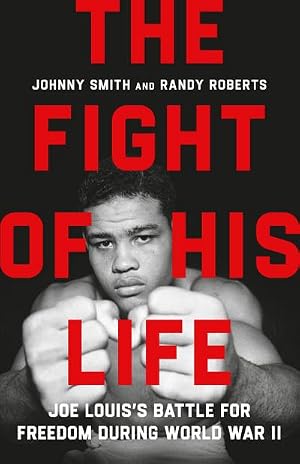
The Fight of His Life : Joe Louis's Battle for Freedom During World War II
Anbieter: AHA-BUCH GmbH, Einbeck, Deutschland
Verkäuferbewertung 5 von 5 Sternen
Buch. Zustand: Neu. Neuware - The boxing champion whose fight against the Nazis in and out of the ring made him a global icon "A sharp, hard-hitting, beautifully written account of one of the greatest sports figures in all American history."?Jonathan Eig, Pulitzer Prizewinning author of King: A Life During the 1930s and 1940s, no African American athlete commanded the spotlight more than heavyweight boxer Joe Louis. His 1938 knockout victory over German Max Schmeling struck an early blow against Nazi Germany. But it was Louis's service in the looming war that transformed him from a patriotic role model into history's first prominent Black athlete turned activist. In The Fight of His Life, award-winning sports historians Johnny Smith and Randy Roberts tell the story of heavyweight champion Joe Louis's battles both in and out of the ring. Already world-famous at the outset of World War II, Louis enlisted in the army, serving as a goodwill ambassador and promoting unity across military bases that crackled with racial tension. Yet Louis's experience with segregation in the army sparked his political awakening. As the war dragged on, he advocated for Black soldiers facing discrimination. Once the war ended, he joined veterans and civil rights activists to fight for voting rights and racial equality. Expertly revising the life story of one of America's most iconic Black athletes, Smith and Roberts's biography celebrates Joe Louis's forgotten fight against fascism abroad and racism at home.
-

Crick : A Mind in Motion
Anbieter: AHA-BUCH GmbH, Einbeck, Deutschland
Verkäuferbewertung 5 von 5 Sternen
Buch. Zustand: Neu. Neuware - A major new biography of Francis Crick, co-discoverer of the structure of DNA, pioneering neuroscientist, and twentieth-century genius 'Vivid and authoritative. [an] intriguing portrait of a gifted, self-absorbed, exuberant, and intuitive man.'The New York Times Named a Best Book of the Year by EconomistGuardian What are the moments that make a life In Francis Crick's, the decisive moment came in 1951, when he first met James Watson. Their ensuing discovery of the structure of DNA made Crick world-famous. But neither that chance meeting nor that discovery made Crick who he was. As Matthew Cobb shows in Crick, it is another chance encounter, with a line from the writing of Beat poet Michael McClure, that reveals Crick's character: "THIS IS THE POWERFUL KNOWLEDGE," it shouted. Crick, having read it, would keep it with him for the rest of his life, a token of his desire to solve the riddles of existence. John Keats once accused scientists of merely wanting to "unweave a rainbow," but it was an irrepressible, Romantic urge to wonder that defined Crick, as much as a desire to find the basis of life in DNA and the workings of our minds. For the first time ever, Cobb presents the full portrait of Crick, a scientist and a man: his triumphs and failings, insights and oversights. Crick set out to find the powerful knowledge. Almost miraculously, he did.
-

The Whispers of Rock : The Stories That Stone Tells about Our World and Our Lives
Anbieter: AHA-BUCH GmbH, Einbeck, Deutschland
Verkäuferbewertung 5 von 5 Sternen
Buch. Zustand: Neu. Neuware - A geologist's revelatory account of how our planet's seemingly inert bones pulse with unexpected vitality "Poetic and heartfelt."Robert Macfarlane, author of Is a River Alive A New Scientist Best Book of the Year If you listen, can you hear the stones speak The question seems absurd. After all, rocks are lifeless, inert, and silent. In The Whispers of Rock, earth scientist Anjana Khatwa asks us to think again and listen to their stories. Boldly alternating between modern science and ancient wisdom, Khatwa takes us on an exhilarating journey through deep time, from origins of the green pounamu that courses down New Zealand rivers to the wonder of the bluestone megaliths of Stonehenge, from the tuff-hewn churches of Lalibela, Ethiopia, to Manhattan's bedrock of schist. In unearthing those stories and more, Khatwa shows how rocks have always spoken to us, and we humans to them. She delicately intertwines Indigenous stories of Earth's creation with our scientific understanding of its development, deftly showing how our lives are intimately connected to time's ancient storytellers. Through tales of planetary change, ancient wisdom, and contemporary creativity, The Whispers of Rock offers the hope of reconnection with Earth. With Khatwa as your guide, you won't simply hear rocks speak--you, too, will feel the magic of deep time seep into your bones.
-

Wakara's America : The Life and Legacy of a Native Founder of the American West
Anbieter: AHA-BUCH GmbH, Einbeck, Deutschland
Verkäuferbewertung 5 von 5 Sternen
Buch. Zustand: Neu. Neuware - The forgotten life and complex legacies of Wakara, the mighty, once-notorious Native leader whose battles and conquests shaped the American West "Asobering reassessment of the history of the Great Basin and locates the disruptive and violent influences of colonialism at its center."Ned Blackhawk, National Book Awardwinning author of The Rediscovery of America The Native American leader Wakara (ca. 18151855) was among the most influential and feared men in the nineteenth-century American West, famed as a fierce warrior, a merciless trader of Indian slaves, and history's greatest horse thief. In Wakara's America, historian Max Perry Mueller illuminates Wakara's complex and sometimes paradoxical story, revealing a man who both helped build the settler American West and defended Native sovereignty. Wakara was baptized a Mormon and allied with Mormon settlers against other Indians to seize large parts of modern-day Utah. Yet a pan-tribal uprising against the Mormons that now bears Wakara's name stalled and even temporarily reversed colonial expansion. Through diplomacy and through violence, Wakara oversaw the establishment of settlements, built new trade routes, and helped create the boundaries that still define the region. Drawing together deep archival research with Native oral histories, archaeology, geology, and ecology, Wakara's America offers an innovative new vision of the history of the American West with Native people at its center. It serves as a powerful testament to Wakara's legacy, which endures in his story, in his tribal descendants, and in their stewardship of their ancestral lands today.Finalist for the 2026 Spur Awards Shortlisted for the 2026 Plutarch Award.
-

Violent Saviors : The West's Conquest of the Rest
Anbieter: AHA-BUCH GmbH, Einbeck, Deutschland
Verkäuferbewertung 5 von 5 Sternen
Buch. Zustand: Neu. Neuware - A celebrated economist argues that economic development is not really development unless everyone has the right to consent to their own progress"An innovative and exhilarating read."Angus Deaton, winner of the Nobel Prize in Economics A Financial Times Best Book of the Year For centuries, the developed Western world has exploited the less-developed "Rest" in the name of progress, conquering the Americas, driving the Atlantic slave trade, and colonizing Africa and Asia. Throughout, the West has justified this global conquest by the alleged material gains it brought to the conquered. But the colonial experiment unintentionally revealed how much of a demand there was for self-determination, and not just for relief from poverty. In Violent Saviors, renowned economist William Easterly examines how the demand for agency has always been at the heart of debates on development. Spanning nearly four centuries of global history, Easterly argues that commerce, rather than conquest, could meet the need for equal rights as well as the need for prosperity. Looking to the liberal economic ideas of thinkers like Adam Smith, Milton Friedman, and Amartya Sen, Easterly shows how the surge in global trade has given agency to billions of people for the first time. Narrating the long debate between conquest and commerce, Easterly offers a new and urgent perspective on global economics: the demands for agency, dignity, and respect must be at the center of the global fight against poverty.
-

Buch. Zustand: Neu. Neuware -The life and thought of Diogenes the Cynic, an iconoclastic philosopher who pioneered a brash and free-thinking vision of life that inspired the philosophy of Stoicism "A rich, engaging portrait of intellectual fearlessness" (Stacy Schiff, Pulitzer Prizewinning author of Cleopatra) In his own day, the ancient philosopher Diogenes the Cynic had a reputation for eccentricity, heckling his fellow philosophers in the marketplace, living in a clay pot, and relieving himself in public. Since his death in 323 BCE, devoted followers made him and his ideas famous the world over. But what we think we know about Diogenes remains distorted and sanitized. In Diogenes, classicist Inger N.I. Kuin scours all existing evidence of Diogenes and his followers to offer an in-depth account of Diogenes' life and thought, revealing a man whose innovative ideas about power, death, nature, and the body have much to teach the contemporary world. He pioneered a vision of simplicity and autonomy in his day-to-day life, stressing the importance of living in the here and now, and of always thinking for oneself. Diogenes stands apart as history's first recorded critic of slavery and a proud exile from polite society whose challenging thought proved foundational for the Stoics and their successors.Diogenes rehabilitates Diogenes as a compelling thinker for the twenty-first century, one who demands that we look at our society with fresh eyes and be unafraid of changestarting with ourselves. 320 pp. Englisch.

