

Gesamtpreis (1 Artikel Artikel):
Versandziel:

xpath xpointer locating content von simpson john (9 Ergebnisse)
Direkt zu den wichtigsten Suchergebnissen
Suchfilter
Produktart
- Alle Product Types
- Bücher (9)
- Magazine & Zeitschriften (Keine weiteren Ergebnisse entsprechen dieser Verfeinerung)
- Comics (Keine weiteren Ergebnisse entsprechen dieser Verfeinerung)
- Noten (Keine weiteren Ergebnisse entsprechen dieser Verfeinerung)
- Kunst, Grafik & Poster (Keine weiteren Ergebnisse entsprechen dieser Verfeinerung)
- Fotografien (Keine weiteren Ergebnisse entsprechen dieser Verfeinerung)
- Karten (Keine weiteren Ergebnisse entsprechen dieser Verfeinerung)
- Manuskripte & Papierantiquitäten (Keine weiteren Ergebnisse entsprechen dieser Verfeinerung)
Zustand Mehr dazu
- Neu (3)
- Wie Neu, Sehr Gut oder Gut Bis Sehr Gut (1)
- Gut oder Befriedigend (5)
- Ausreichend oder Schlecht (Keine weiteren Ergebnisse entsprechen dieser Verfeinerung)
- Wie beschrieben (Keine weiteren Ergebnisse entsprechen dieser Verfeinerung)
Einband
- alle Einbände
- Hardcover (Keine weiteren Ergebnisse entsprechen dieser Verfeinerung)
- Softcover (9)
Weitere Eigenschaften
- Erstausgabe (Keine weiteren Ergebnisse entsprechen dieser Verfeinerung)
- Signiert (Keine weiteren Ergebnisse entsprechen dieser Verfeinerung)
- Schutzumschlag (Keine weiteren Ergebnisse entsprechen dieser Verfeinerung)
- Angebotsfoto (2)
Sprache (1)
Gratisversand
Land des Verkäufers
Verkäuferbewertung
-
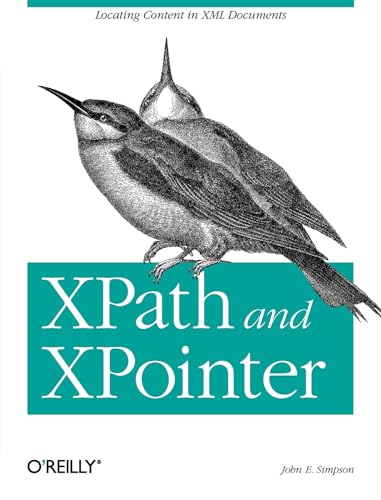
Paperback. Zustand: Very Good. No Jacket. May have limited writing in cover pages. Pages are unmarked. ~ ThriftBooks: Read More, Spend Less.
-
Xpath and Xpointer: Locating Content in XML Documents
Anbieter: ThriftBooks-Dallas, Dallas, TX, USA
Verkäuferbewertung 5 von 5 Sternen

Paperback. Zustand: Good. No Jacket. Pages can have notes/highlighting. Spine may show signs of wear. ~ ThriftBooks: Read More, Spend Less.
-
Xpath and Xpointer: Locating Content in XML Documents
Anbieter: ThriftBooks-Atlanta, AUSTELL, GA, USA
Verkäuferbewertung 5 von 5 Sternen
Paperback. Zustand: Good. No Jacket. Pages can have notes/highlighting. Spine may show signs of wear. ~ ThriftBooks: Read More, Spend Less.
-
Xpath and Xpointer: Locating Content in XML Documents
Anbieter: ThriftBooks-Dallas, Dallas, TX, USA
Verkäuferbewertung 5 von 5 Sternen
Paperback. Zustand: Very Good. No Jacket. May have limited writing in cover pages. Pages are unmarked. ~ ThriftBooks: Read More, Spend Less.
-
Xpath and Xpointer: Locating Content in XML Documents
Anbieter: ThriftBooks-Atlanta, AUSTELL, GA, USA
Verkäuferbewertung 5 von 5 Sternen
Paperback. Zustand: Very Good. No Jacket. May have limited writing in cover pages. Pages are unmarked. ~ ThriftBooks: Read More, Spend Less.
-
Softcover. Zustand: Très bon. Ancien livre de bibliothèque. Edition 2002. Ammareal reverse jusqu'à 15% du prix net de cet article à des organisations caritatives. ENGLISH DESCRIPTION Book Condition: Used, Very good. Former library book. Edition 2002. Ammareal gives back up to 15% of this item's net price to charity organizations.
-
Paperback. Zustand: New. In shrink wrap.
-

EUR 42,31
EUR 48,99 Versand
Versand von Deutschland nach USAAnzahl: Mehr als 20 verfügbar
In den WarenkorbZustand: New. This hands-on book fills an essential need for XML developers by dealing with a topic that has been addressed inadequately up til now. XPath is a language that helps programmers locate data in an XML document, and XPointer finds data through location and ch.
-

Xpath and Xpointer : Locating Content in XML Documents
Anbieter: AHA-BUCH GmbH, Einbeck, Deutschland
Verkäuferbewertung 5 von 5 Sternen
Taschenbuch. Zustand: Neu. Neuware - Referring to specific information inside an XML document is a little like finding a needle in a haystack: how do you differentiate the information you need from everything else XPath and XPointer are two closely related languages that play a key role in XML processing by allowing developers to find these needles and manipulate embedded information. XPath describes a route for finding specific items by defining a path through the hierarchy of an XML document, abstracting only the information that's relevant for identifying the data. XPointer extends XPath to identify more complex parts of documents. The two technologies are critical for developers seeking needles in haystacks in various types of processing.XPath and XPointer fills an essential need for XML developers by focusing directly on a critical topic that has been covered only briefly. Written by John Simpson, an author with considerable XML experience, the book offers practical knowledge of the two languages that underpin XML, XSLT and XLink. XPath and XPointer cuts through basic theory and provides real-world examples that you can use right away.Written for XML and XSLT developers and anyone else who needs to address information in XML documents, the book assumes a working knowledge of XML and XSLT. It begins with an introduction to XPath basics. You'll learn about location steps and paths, XPath functions and numeric operators. Once you've covered XPath in depth, you'll move on to XPointer--its background, syntax, and forms of addressing. By the time you've finished the book, you'll know how to construct a full XPointer (one that uses an XPath location path to address document content) and completely understand both the XPath and XPointer features it uses.XPath and XPointer contains material on the forthcoming XPath 2.0 spec and EXSLT extensions, as well as versions 1.0 of both XPath and XPointer. A succinct but thorough hands-on guide, no other book on the market provides comprehensive information on these two key XML technologies in one place.

