Gesamtpreis (1 Artikel Artikel):
Versandziel:

wall storm king (12 Ergebnisse)
Direkt zu den wichtigsten Suchergebnissen
Suchfilter
Produktart
- Alle Product Types
- Bücher (12)
- Magazine & Zeitschriften (Keine weiteren Ergebnisse entsprechen dieser Verfeinerung)
- Comics (Keine weiteren Ergebnisse entsprechen dieser Verfeinerung)
- Noten (Keine weiteren Ergebnisse entsprechen dieser Verfeinerung)
- Kunst, Grafik & Poster (Keine weiteren Ergebnisse entsprechen dieser Verfeinerung)
- Fotografien (Keine weiteren Ergebnisse entsprechen dieser Verfeinerung)
- Karten (Keine weiteren Ergebnisse entsprechen dieser Verfeinerung)
- Manuskripte & Papierantiquitäten (Keine weiteren Ergebnisse entsprechen dieser Verfeinerung)
Zustand Mehr dazu
- Neu (3)
- Wie Neu, Sehr Gut oder Gut Bis Sehr Gut (4)
- Gut oder Befriedigend (4)
- Ausreichend oder Schlecht (Keine weiteren Ergebnisse entsprechen dieser Verfeinerung)
- Wie beschrieben (1)
Einband
Weitere Eigenschaften
- Erstausgabe (4)
- Signiert (Keine weiteren Ergebnisse entsprechen dieser Verfeinerung)
- Schutzumschlag (7)
- Angebotsfoto (4)
Sprache (2)
Gratisversand
Land des Verkäufers
Verkäuferbewertung
-
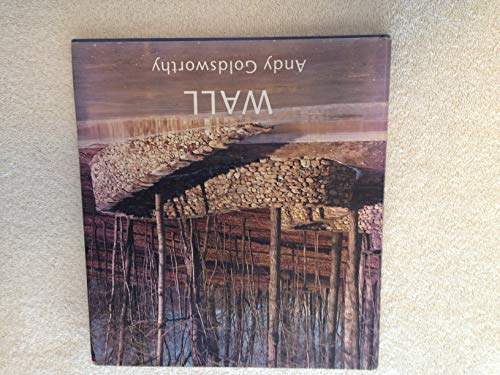
Wall: At Storm King
Anbieter: World of Books (was SecondSale), Montgomery, IL, USA
Verkäuferbewertung 5 von 5 Sternen

Zustand: Good. Item in good condition. Textbooks may not include supplemental items i.e. CDs, access codes etc.
-
Wall: At Storm King
Sprache: Englisch
Verlag: Harry N. Abrams (edition ), 2000
ISBN 10: 0810945592 ISBN 13: 9780810945593
Hardcover. Zustand: Very Good. With dust jacket. It's a well-cared-for item that has seen limited use. The item may show minor signs of wear. All the text is legible, with all pages included. It may have slight markings and/or highlighting.
-
Wall: At Storm King
Anbieter: Abacus Bookshop, Pittsford, NY, USA
Verkäuferbewertung 5 von 5 Sternen
Erstausgabe
hardcover. Zustand: Fine copy in fine dust jacket. Profusely illustrated (illustrator). 1st. 4to, 92 pp., Introduction by Kenneth Baker.
-
Wall At Storm King
Sprache: Englisch
Verlag: Harry N. Abrams, New York, 2000
ISBN 10: 0810945592 ISBN 13: 9780810945593
Anbieter: Dale A. Sorenson, Silver Spring, MD, USA
Verbandsmitglied: IOBA
Verkäuferbewertung 5 von 5 Sternen
Erstausgabe
Hardcover. Zustand: Fine. Zustand des Schutzumschlags: Near Fine. First Edition. Essay by Kenneth Baker. Photographs by Andy Goldsworthy and Jerry L. Thompson. New York: Harry N. Abrams, (2000). First Edition. 11 x 9.75 in. 93pp. Book in fine condition, dj near fine (price-clipped, short tear). 100 photographs in full color. Goldsworthy built this 2,278-foot wall at Storm King Art Center, a sculpture center on the Hudson River in Mountainville, New York. ISBN 0810945592; 11 x 9.75 inches; 93 pages.
-
Wall: At Storm King
Anbieter: WorldofBooks, Goring-By-Sea, WS, Vereinigtes Königreich
Verkäuferbewertung 5 von 5 Sternen
EUR 23,53
EUR 6,49 Versand
Versand von Vereinigtes Königreich nach USAAnzahl: 1 verfügbar
In den WarenkorbHardback. Zustand: Very Good. The book has been read, but is in excellent condition. Pages are intact and not marred by notes or highlighting. The spine remains undamaged.
-

Wall at Storm King
Anbieter: Ken Sanders Rare Books, ABAA, Salt Lake City, UT, USA
Verbandsmitglied: ABAA ILAB IOBA RMABA
Verkäuferbewertung 5 von 5 Sternen
Hardcover. Zustand: Very Good +. Fifth Printing. 92pp. Square quarto [28 cm] Dark blue paper covered boards with a silver stamped title on the spine. Photographically illustrated endsheets. Spine ends marginally bumped. In the dust jacket, with negligible wear. From the jacket- "British Artist Andy Goldsworthy, known for creating art outdoors and from natural materials, has now built a 2,278-foot stone wall at Storm King Art Center, a sculpture park on the Hudson River in Mountainville, New York.".
-
Hard. Zustand: New. Zustand des Schutzumschlags: New. Hard cover in dust jacket. Published NY: Harry N. Abrams, 2000. 4to., 9 3/4" x 11," 92pp., more than 60 photographs in full color, "British artist Andy Goldsworthy, known for creating art outdoors and from natural materials, has now built a 2,278-foot stone wall at Storm King Art Center, a sculpture park on the Hudson River in Mountainville, New York. This sensitive and detailed response to the land - former farmland in an area rich in stone walls - is one of his most impressive and important sculptures. The book's stunning color photographs show the wall from every vantage point and in all four seasons, and document ephemeral work made around it. Kenneth Baker's essay considers the Storm King wall in the context of Goldsworthy's previous work, in particular the other walls he has made in the United States, France, and Britain." New in dust jacket and publisher's shrink wrap.
-
Wall: At Storm King
Anbieter: Revaluation Books, Exeter, Vereinigtes Königreich
Verkäuferbewertung 5 von 5 Sternen
EUR 31,94
EUR 14,48 Versand
Versand von Vereinigtes Königreich nach USAAnzahl: 1 verfügbar
In den WarenkorbHardcover. Zustand: Brand New. early printing edition. 92 pages. 11.25x10.25x0.75 inches. In Stock.
-

Wall: At Storm King
Anbieter: Revaluation Books, Exeter, Vereinigtes Königreich
Verkäuferbewertung 5 von 5 Sternen
EUR 35,13
EUR 14,48 Versand
Versand von Vereinigtes Königreich nach USAAnzahl: 1 verfügbar
In den WarenkorbPaperback. Zustand: Brand New. reprint edition. 92 pages. 10.75x9.50x0.50 inches. In Stock.
-
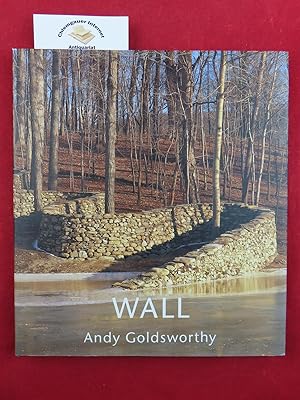
WALL: AT STORM KING. Essay by Kenneth Baker. Photographs: Andy Goldsworthy and Jerry L. Thompson. ISBN 10: 0810945592ISBN 13: 9780810945593
Sprache: Englisch
Verlag: Harry N. Abrams,, New York, 2000
Anbieter: Chiemgauer Internet Antiquariat GbR, Altenmarkt, BAY, Deutschland
Verkäuferbewertung 5 von 5 Sternen
Erstausgabe
Zustand: Wie neu. First edition. 92 Seiten. Mit zahlreichen farbigen Abbildungen. FRISCHES, SEHR schönes Exemplar der ERSTAUSGABE. In EXCELLENT shape. - Kenneth Baker's essay considers the Storm King wall in the context of Goldsworthy's previous work, in particular the other walls he has made in the United States, France, and Britain. Sprache: Englisch Gewicht in Gramm: 1100 Originalpappband mit Original-Schutzumschlag. 29 cm.
-
![Bild des Verkäufers für Walks and talks in the geological field. [The Gravel Pit -- Among the Glaciers -- The Hillside Spring and its Work -- The Floods of the Great Lakes -- The River Gorge -- A Walk Under the Sea -- By the Rocky Wall -- Liquid Sunlight -- Gaseous Sunlight -- Solidified Sunlight -- The Cemeteries of the Bad Lands -- Lone Burials in the Coal Lands -- Historical glimpses -- The Primeval Storm -- The World without a BackBone -- Courses of the Earths Masonry -- Among the Volcanoes -- Frozen Seas of Lava -- The Unstable Land -- The Framework of the Mountains -- Down in a Mine -- The King of Metals -- Mammalian Rule -- Anticipation and Retrospect in Life Plans -- The Reign of Ice -- The Earth Receives her King] zum Verkauf von Joseph Valles - Books](https://pictures.abebooks.com/inventory/md/md12200013705.jpg)
Walks and talks in the geological field. [The Gravel Pit -- Among the Glaciers -- The Hillside Spring and its Work -- The Floods of the Great Lakes -- The River Gorge -- A Walk Under the Sea -- By the Rocky Wall -- Liquid Sunlight -- Gaseous Sunlight -- Solidified Sunlight -- The Cemeteries of the Bad Lands -- Lone Burials in the Coal Lands -- Historical glimpses -- The Primeval Storm -- The World without a BackBone -- Courses of the Earths Masonry -- Among the Volcanoes -- Frozen Seas of Lava -- The Unstable Land -- The Framework of the Mountains -- Down in a Mine -- The King of Metals -- Mammalian Rule -- Anticipation and Retrospect in Life Plans -- The Reign of Ice -- The Earth Receives her King]
Verlag: New York : Chautauqua Press, C L S C Department, 805 Broadway, 1886, 1886
Anbieter: Joseph Valles - Books, Stockbridge, GA, USA
Verkäuferbewertung 5 von 5 Sternen
Erstausgabe
Hardcover. Zustand: Fine. No Jacket. 1st Edition. [1st edition, 1st printing ] ; 329 p. ; 21 cm. ; LCCN: 05-12338 ; LC: QE35; Dewey: 550 ; OCLC: 489611 ; Contents : The Gravel Pit -- Among the Glaciers -- The Hillside Spring and its Work -- The Floods of the Great Lakes -- The River Gorge -- A Walk Under the Sea -- By the Rocky Wall -- Liquid Sunlight -- Gaseous Sunlight -- Solidified Sunlight -- The Cemeteries of the Bad Lands -- Lone Burials in the Coal Lands -- Historical glimpses -- The Primeval Storm -- The World without a BackBone -- Courses of the Earths Masonry -- Among the Volcanoes -- Frozen Seas of Lava -- The Unstable Land -- The Framework of the Mountains -- Down in a Mine -- The King of Metals -- Mammalian Rule -- Anticipation and Retrospect in Life Plans -- The Reign of Ice -- The Earth Receives her King -- Retrospect ; "This work attempts to hold a position between textbooks and books of light reading. The formal textbook would not suit the class of readers addressed. The style of light reading would have been unworthy of the theme, and would not have supplied the substantial information here intended. The writer has often felt that graphic illustrations would have rendered portions of the text more intelligible, and therefore, more entertaining; but these would have enhanced the cost of the book beyond limits which for other reasons seemed desirable. The method of treatment is simple. The reader begins with the familiar objects at his very door. His observations are extended to the field, the lake, the torrent, the valley, and the mountain. They widen over the continent until all the striking phenomena of the surface have been surveyed. Occasionally, trains of reasoning suggested by the facts are followed out until the outlines of geological theories emerge. The course of observation and reasoning then penetrates beneath the surface. The various formations and their most striking fossils are described, first in descending order, to the oldest. We find here indications of heat which stimulate speculation and bring out the grounds of a nebular theory of worldorigin. From this starting point, the treatment now handles the subject in historical order, weaving into a narrative, the dry facts previously noted. Reaching the end of the history, the treatment pauses for retrospect and reflection; and here are brought to view some of the higher and more abstruse thoughts connected with the subject of the book. It is hoped the perusal of this work may impart some clear conceptions of that grand range of scientific truths with which it deals. It is hoped, also, that a relish may be stimulated which will seek its gratification in the scholarly study of works of higher range and more exacting method." ; decorative brown and black cloth with gold lettering and designs ; Signature of Lizzie Peek (1862-1923), graduate of the State Women's College in Valdosta Georgia and the daughter of Senator W L Peek (1837-1922) of Conyers, who made an unsuccessful bid for Governor of Georgia as a Farmer's Alliance candidate in 1892, when he was attacked by a mob ; FINE. Book.
-

Wall at Storm King. Introduction by Kenneth Baker. Photographs by Andy Goldsworthy and Jerry L. Thompson.
Anbieter: Fahrenheit 451 Antiquarian Booksellers, Nieuwerbrug, Niederlande
Verkäuferbewertung 4 von 5 Sternen

London, Thames & Hudson, n.d. (2000), 92 pag., coloured photographic illustrations, original hardcover with dustjacket, quarto (as new). = In 1989 Andy Goldsworthy constructed his Wall that Went for a Walk in Grizedale Forest, Cumbria, which drew on the walling traditions of that area. Now, aided by a team of wallers from Scotland and the north of England, he has made its successor at the Storm King Art Center, a sculpture park in New York State - another farming landscape rich in stone walls. Goldsworthy's wall takes its lead from an old, dilapidated wall which he found here. At first following the original foundations closely, his wall then describes a series of increasingly voluptuous arabesques before plunging down into a lake. Rising again on the other side, it heads straight up a grassy slope to stop dead when it reaches a major highway. As the seasons change, so does the wall. Heavily shaded in summer, smothered in a sea of yellow and brown leaves in the autumn, it has an almost calligraphic beauty in winter as it snakes through the bare trees and snow at the edge of a wood. This sculpture marks a continuation of the dialogue between wood and stone which Goldsworthy has been exploring for some years. The original wall at Storm King was built after the forest had been cleared, yet he discovered its course in the line of trees that had grown through and around it. Goldsworthy traces a new path with his wall, this time in sympathy with the trees, but in the knowledge that it may well one day be destroyed by them.